Whale sharkMarine biologyEcosystem role
How Whale Sharks Feed at Ocean Scale
How whale sharks feed: 12-metre filter feeders that sieve plankton through 20 gill pads, carry unique spot patterns and gather at Ningaloo and Mexico.
Why the whale shark feels like a contradiction
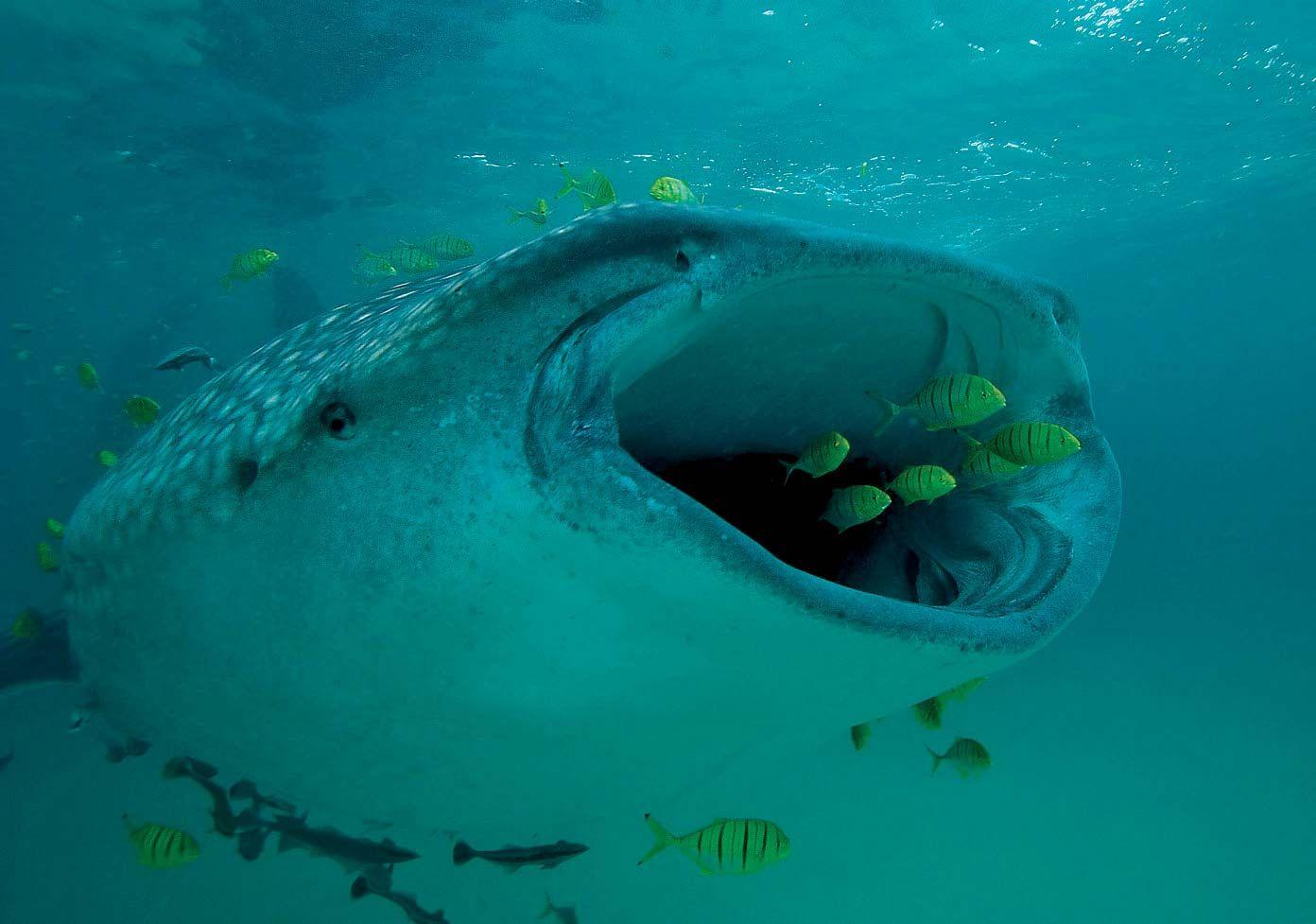
The whale shark (Rhincodon typus) is the largest fish alive. Adults commonly reach 8 to 12 metres and around 15 to 20 tonnes, and the largest reliably measured individual, a female in the Indian Ocean, was 18.8 metres long. Yet an animal that size eats some of the smallest prey in the sea: plankton, krill, fish eggs and larvae, and small schooling fish such as anchovies and sardines.
That contrast is the point. The whale shark proves that scale can come from processing water efficiently rather than from winning fights. It cruises at about 5 kilometres per hour, has 3,000 teeth it never uses to feed, and grows for decades on a diet it strains from the sea.
What makes a whale shark unique?
The mouth is at the front of the head rather than underneath, up to 1.5 metres wide, and lined with about 300 rows of tiny teeth that are an evolutionary leftover. Behind it sit 20 filter pads, sieve-like plates derived from the gill arches, with a mesh of about 1 millimetre. Water enters the mouth, passes across the pads and out through five huge gill slits, while particles are concentrated and swallowed. The filtering works by cross-flow: water sweeps along the pads rather than straight through, so the mesh clogs far less than a simple strainer would.
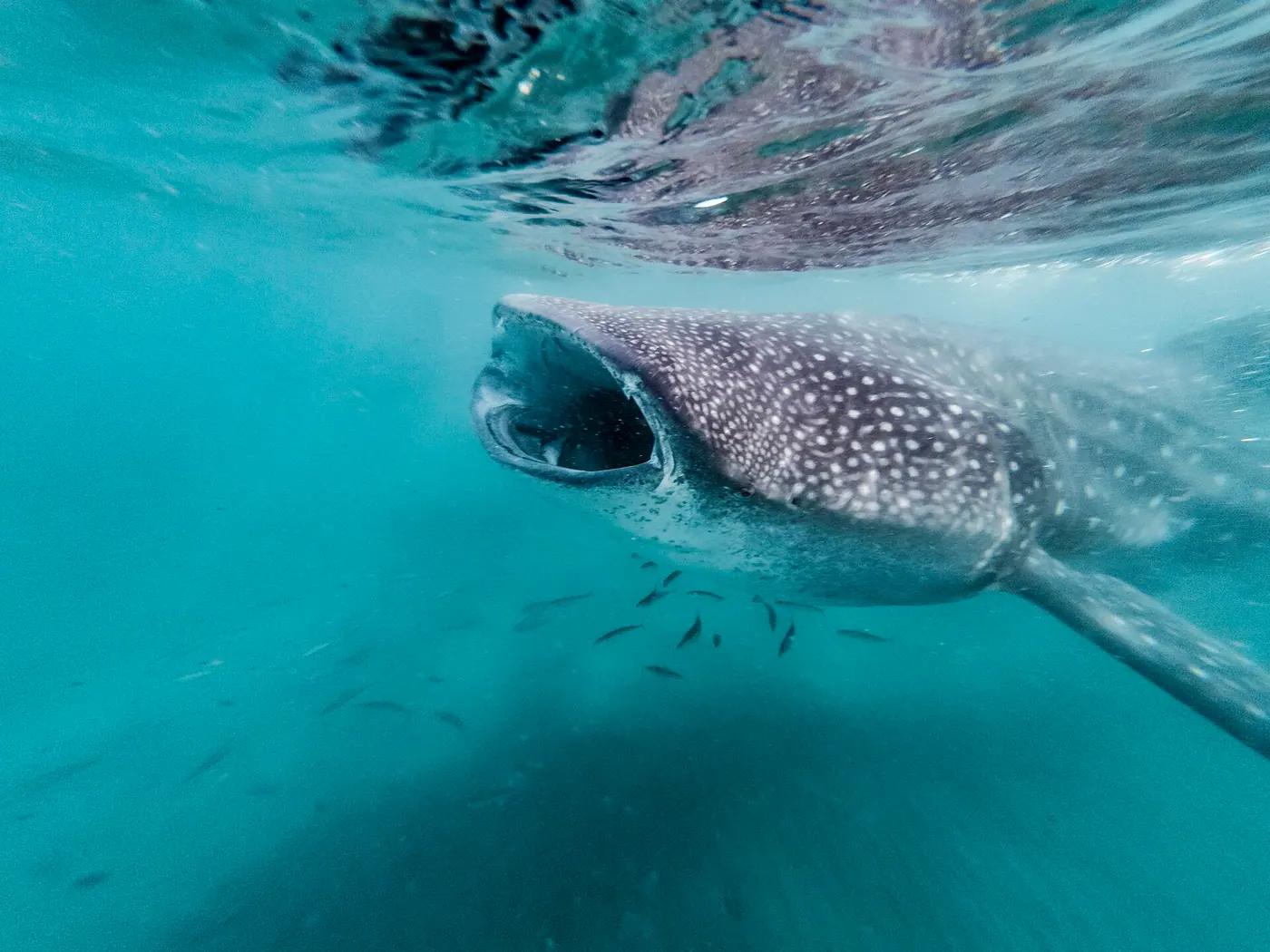
Whale sharks feed in three ways. Ram filter feeding is swimming forward with the mouth open. Active surface feeding is faster swimming with the head partly out of the water through a dense slick. Suction feeding is hanging vertically in the water and gulping, pumping prey-rich water across the pads while stationary. A single shark can process thousands of litres of water an hour.
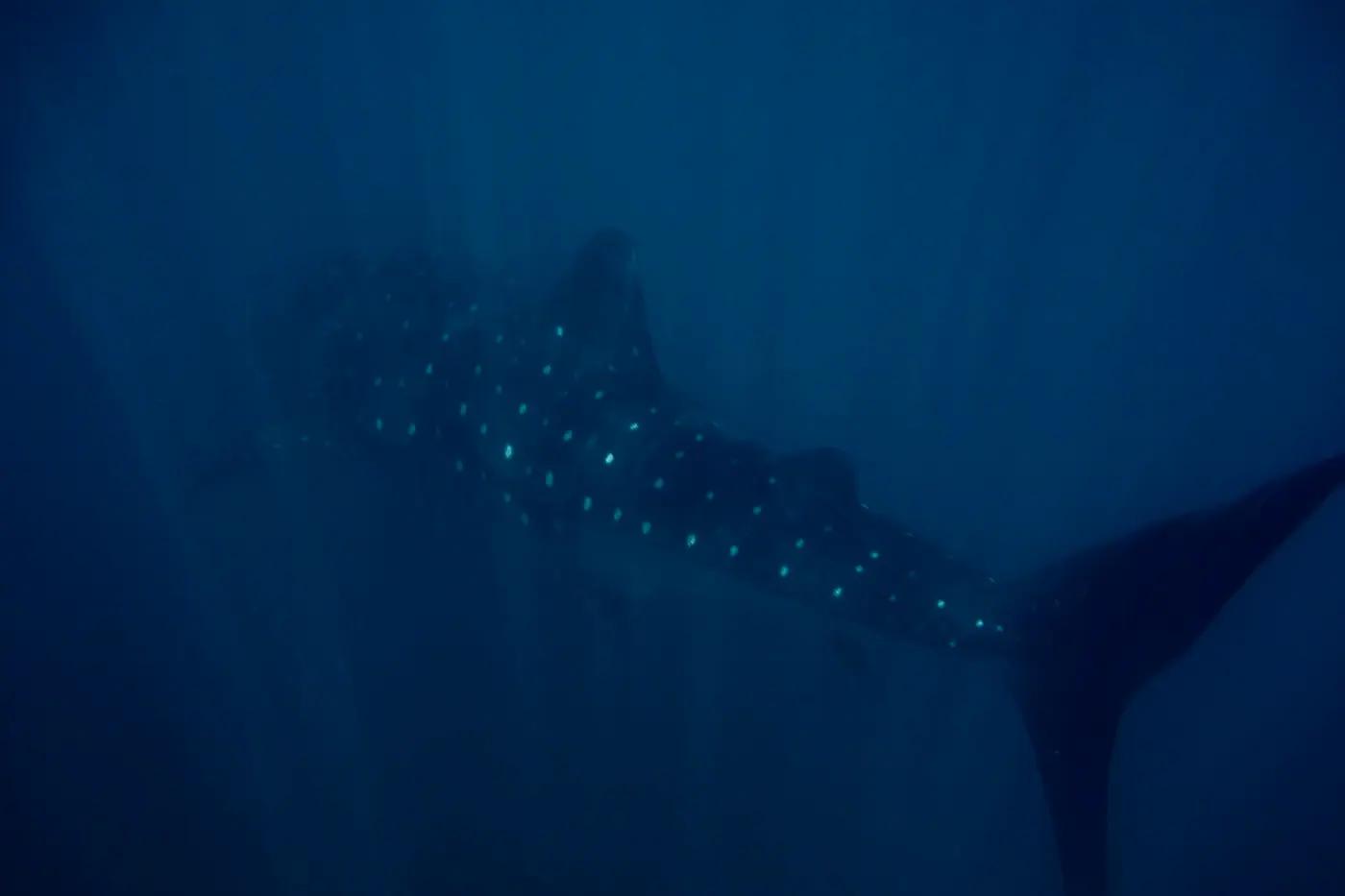
The skin is up to about 10 centimetres thick, and every individual carries a unique pattern of white spots and stripes. Researchers photograph the patch behind the left gill slits and match it with software adapted from an astronomy algorithm written to match star fields. Public photo libraries built on that method now hold tens of thousands of encounters with thousands of named individuals, and many of the photos come from snorkellers.
| Feature | Detail |
|---|---|
| Length | Commonly 8–12 m; largest reliably measured 18.8 m |
| Weight | About 15–20 tonnes in large adults |
| Mouth | Up to 1.5 m wide, terminal, with ~300 rows of vestigial teeth |
| Filter | 20 filter pads with ~1 mm mesh; cross-flow filtration |
| Cruising speed | About 5 km/h |
| Deepest recorded dive | Nearly 2,000 m |
| Reproduction | Live-bearing; one female carried about 300 embryos |
| Lifespan | Estimated 80–130 years; slow to mature |
| IUCN status | Endangered (2016); CITES Appendix II since 2003 |
How whale sharks survive
Whale shark survival depends on being in the right water at the right time. Plankton is thin across most of the ocean, so the sharks track seasonal pulses: coral spawning at Ningaloo Reef in March and April, the spawning of little tunny off Isla Mujeres in summer, and upwellings and krill blooms elsewhere. They range across whole ocean basins between these events, and satellite tags show dives to nearly 2,000 metres, probably to feed in deep plankton layers and to navigate.
Growth is slow and reproduction is rare. A female caught off Taiwan in 1995 carried about 300 embryos at different stages, which showed that whale sharks give birth to live young from eggs retained inside the body. Pups are 40 to 60 centimetres at birth and are almost never seen. The sharks may not mature until their late twenties or thirties and are thought to live 80 to 130 years.
That life history is the weakness. The IUCN listed the whale shark as Endangered in 2016 after population declines of more than 50 percent over three generations, driven by targeted fishing in parts of Asia, accidental capture in tuna nets, ship strikes along busy lanes and disturbance at tourism sites.
The whale shark does not need every part of the ocean to be good. It needs to find the parts where the flow becomes worth processing.
Where whale sharks gather
Around 20 coastal sites host predictable seasonal aggregations, almost all dominated by immature males 4 to 8 metres long; where the adult females go is still largely unknown. The best-studied sites are below.
Ningaloo Reef, Western Australia
March to July, after the mass coral spawning. Spotter planes guide boats, and the long-running photo-ID programme here was one of the first.
Isla Mujeres and Holbox, Mexico
May to September, feeding on fish eggs. A 2009 aerial survey counted 420 sharks in one patch, the largest aggregation ever recorded.
Donsol, Philippines
November to June in plankton-rich coastal water. Community-run tourism replaced hunting here in the late 1990s.
Mafia Island, Tanzania and Gulf of Tadjoura, Djibouti
October to February. Small juveniles feed close to shore, often within a few hundred metres of the beach.
The ecosystem role of a whale shark
Whale sharks move energy from the base of the food web to the top in one step, turning plankton and fish eggs into tonnes of long-lived biomass, and they carry nutrients between distant seas as they migrate. Where they gather, they mark water that is unusually productive, which is why their arrival is a reliable sign of a spawning event or bloom.
They also host travellers: remoras, pilot fish and schools of juvenile trevally shelter around them. Economically, their aggregations support tourism worth millions of dollars a year at sites such as Ningaloo and Isla Mujeres, which has given coastal communities a reason to protect rather than hunt them.
manta raywhy jellyfish thrive in changing oceans
How to see and photograph whale sharks
Swimming with a whale shark is a snorkel, not a dive, and the sharks set the pace. The tips below keep the encounter safe for both sides and produce a photo scientists can use.
Pick the season, not the site
Each aggregation has a window of a few months. Book for the middle of the season and allow two or three days, since sightings depend on plankton and weather.
Keep 3 metres from the body and 4 from the tail
Most sites use these rules. Never touch, chase or block the shark; a shark that dives or changes course is telling you to back off.
Shoot the left side behind the gills
A clear photo of the spot patch behind the left gill slits, taken side-on, can be matched to a known individual. Submit it to a photo-ID library after your trip.
Avoid provisioned sharks
Sites that hand-feed sharks change their behaviour and migration. Choose operators that follow natural aggregations. A live in-app capture from the boat or the water counts the same either way; a gallery upload does not.
wildlife photography companion
What humans can learn from whale sharks
Whale sharks are a lesson in scale through process efficiency. They do not chase targets one at a time; they get very good at handling the concentrated flow when it arrives, and they travel between the places where that happens.
That is the strategic insight: throughput can be a better growth engine than force. The cost is fragility, because an animal that takes 30 years to mature cannot recover quickly from losses. Dolphins show the opposite strategy in the same water.
Systems Intelligence & Hidden Purpose
See these animals as engineered biological systems: what they are built to do, how they fit the wider environment, and what their design can teach us.
Specialized Hardware
An enormous mouth, fine filtering structures, and low-cost cruising mechanics allow the whale shark to process huge volumes of plankton-rich water without high-speed pursuit.
Systems Script
Whale sharks connect surface productivity to larger marine food webs by converting diffuse plankton pulses into mobile biomass. Their movement patterns also mark productive ocean zones where energy concentrates seasonally.
Strategic Insight
Scale does not always come from chasing more targets. Sometimes it comes from building a system that can process volume efficiently once the flow arrives.
Quick questions
Short answers to common questions readers ask on this topic.
- How big is a whale shark?
- Whale sharks commonly reach 8 to 12 metres and 15 to 20 tonnes, and the largest reliably measured individual was 18.8 metres long. They are the largest fish on Earth, although far smaller than blue whales, which are mammals. Pups are only 40 to 60 centimetres at birth, and the sharks grow slowly for decades.
- What do whale sharks eat?
- Whale sharks eat plankton, krill, fish eggs and larvae, crab larvae and small schooling fish such as anchovies and sardines. They strain these from the water through 20 filter pads behind the mouth, either by swimming forward with the mouth open or by hanging vertically and gulping. Their 3,000 tiny teeth play no part in feeding.
- Are whale sharks dangerous to humans?
- No. Whale sharks are filter feeders with no interest in large prey and are placid around swimmers. The only real hazard is the tail, which can knock a snorkeller who gets too close, so most sites require a gap of 3 metres from the body and 4 from the tail. The danger runs the other way, from boat propellers and harassment.
- Where can you swim with whale sharks?
- The most reliable sites are Ningaloo Reef in Western Australia from March to July, Isla Mujeres and Holbox in Mexico from May to September, Donsol in the Philippines from November to June, and Mafia Island in Tanzania and Djibouti from October to February. All are snorkelling encounters with natural aggregations of mostly juvenile males.
- How do scientists identify individual whale sharks?
- Each whale shark has a unique pattern of white spots, and researchers photograph the patch behind the left gill slits and match it with pattern-recognition software originally developed for star fields. Photos from tourists feed large public identification libraries, which have tracked individual sharks for years and revealed movements between distant aggregation sites.
Animals mentioned
Jump from this article into the species pages behind the examples, systems notes, and field-guide references.
Sources and further reading
Answer guides related to this topic
If you want direct comparisons and clear recommendations, continue with these answer-focused pages.
Best Animal Identification Apps
Compare the best animal identification apps by features like photo/video identification, species coverage, collection capabilities, offline use, and more.
What Is Animal Collecting
Learn what animal collecting means in modern apps and how AnimalDex turns real-world sightings into cards, sets, rarity, and species learning.
Pokemon-Like Animal App
Looking for a Pokemon-like app with real animals? AnimalDex is something else: take any idea to a real animal for a genuinely different take, and every animal you meet in the wild joins your collection.
Related guides
Jellyfish
Why Jellyfish Thrive in Changing Oceans
Why jellyfish bloom as oceans warm and lose oxygen: the polyp life cycle, nematocysts, a body with no brain, Turritopsis, and how to spot jellies safely.
10 min read
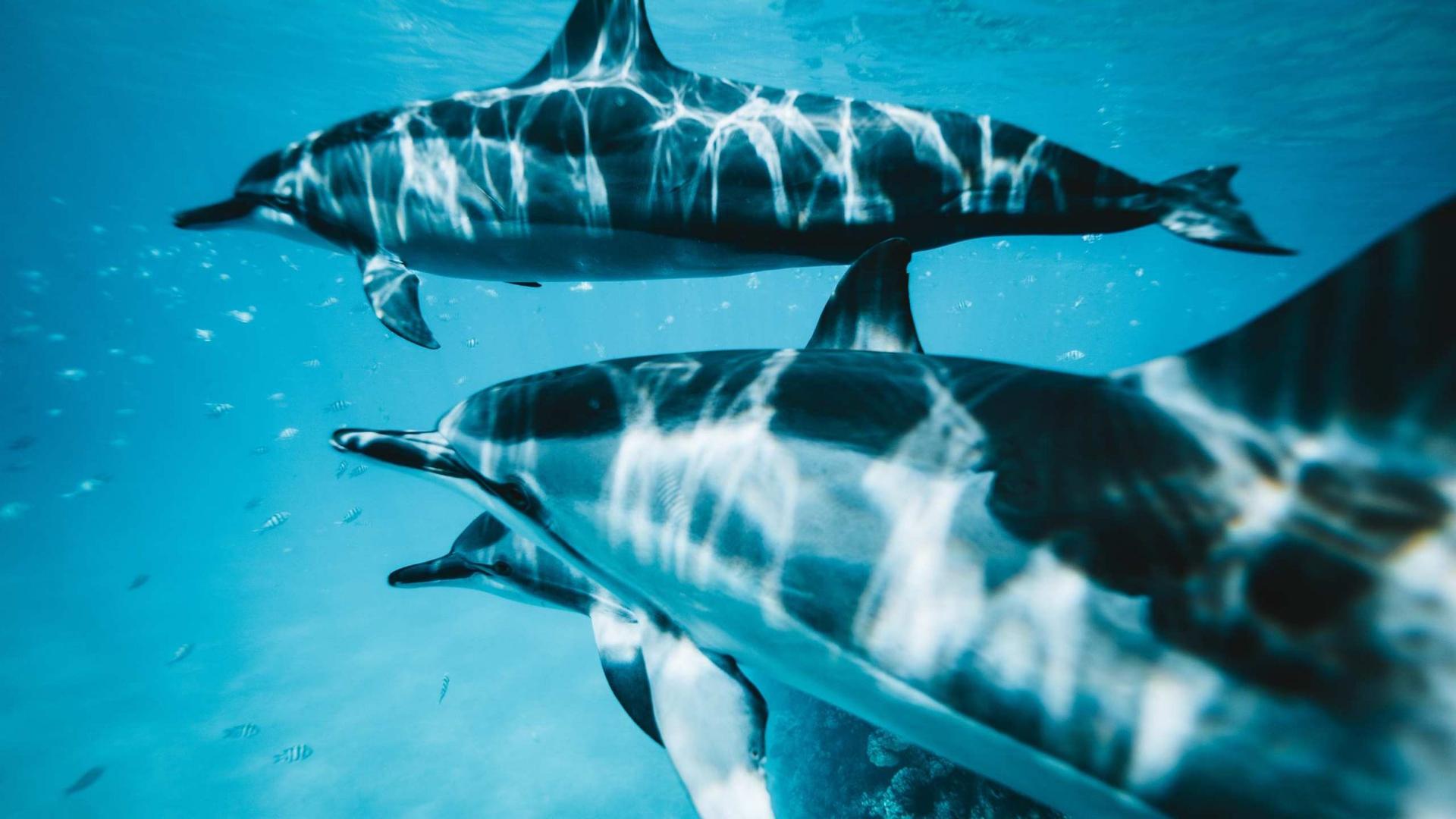
How Dolphin Intelligence Works in the Wild
How dolphin intelligence works: signature whistles, echolocation clicks, mirror self-recognition and cooperative hunts like mud-ring feeding.
7 min read
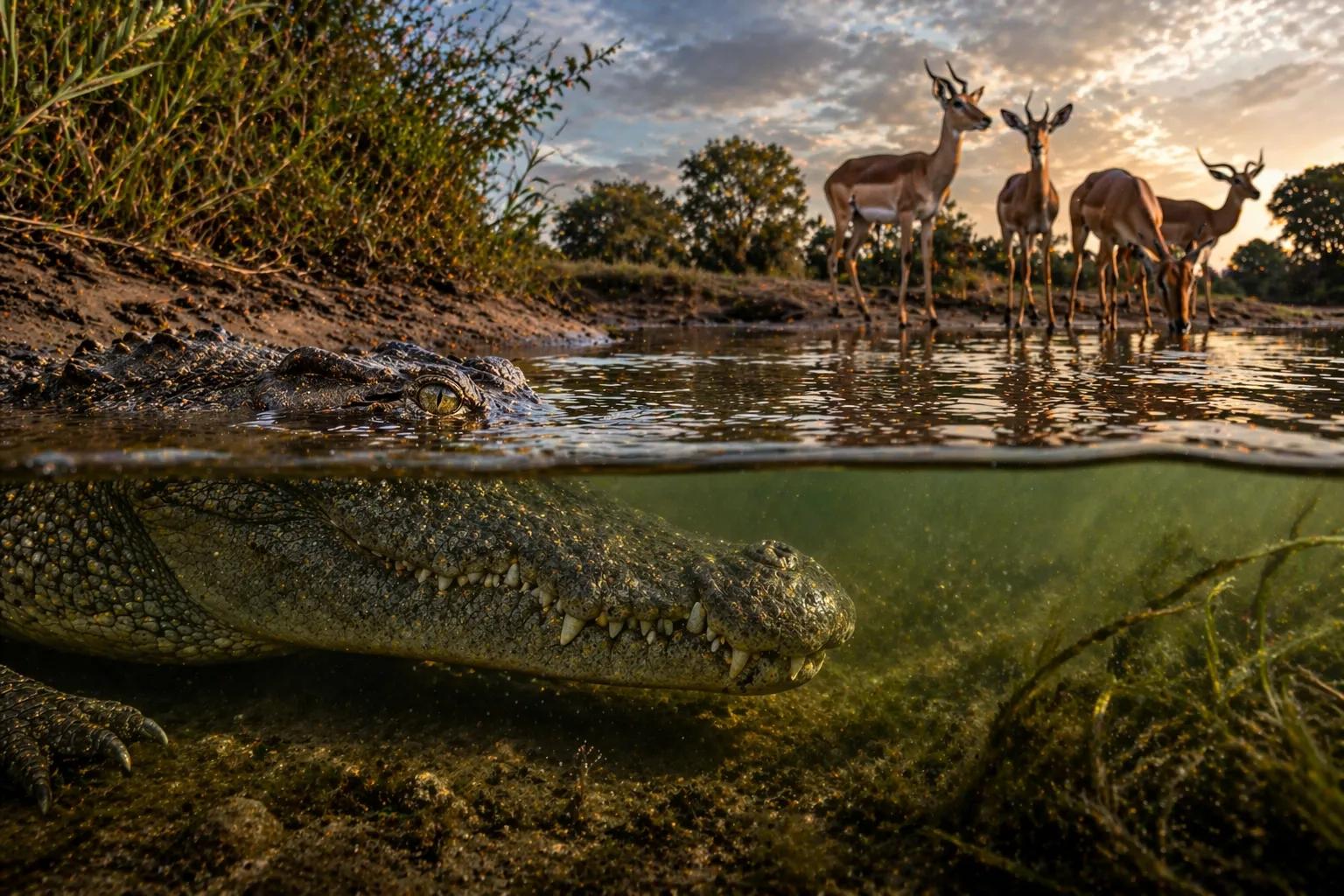
How Crocodiles Dominate the Water Edge
How crocodiles control the water edge: a 3,700 psi bite, ambush energetics, basking and gaping, nest guarding, and how to spot crocodiles safely.
10 min read