

Dolphin intelligenceMarine behaviorAnimal behavior
How Dolphin Intelligence Works in the Wild
How dolphin intelligence works: signature whistles, echolocation clicks, mirror self-recognition and cooperative hunts like mud-ring feeding.
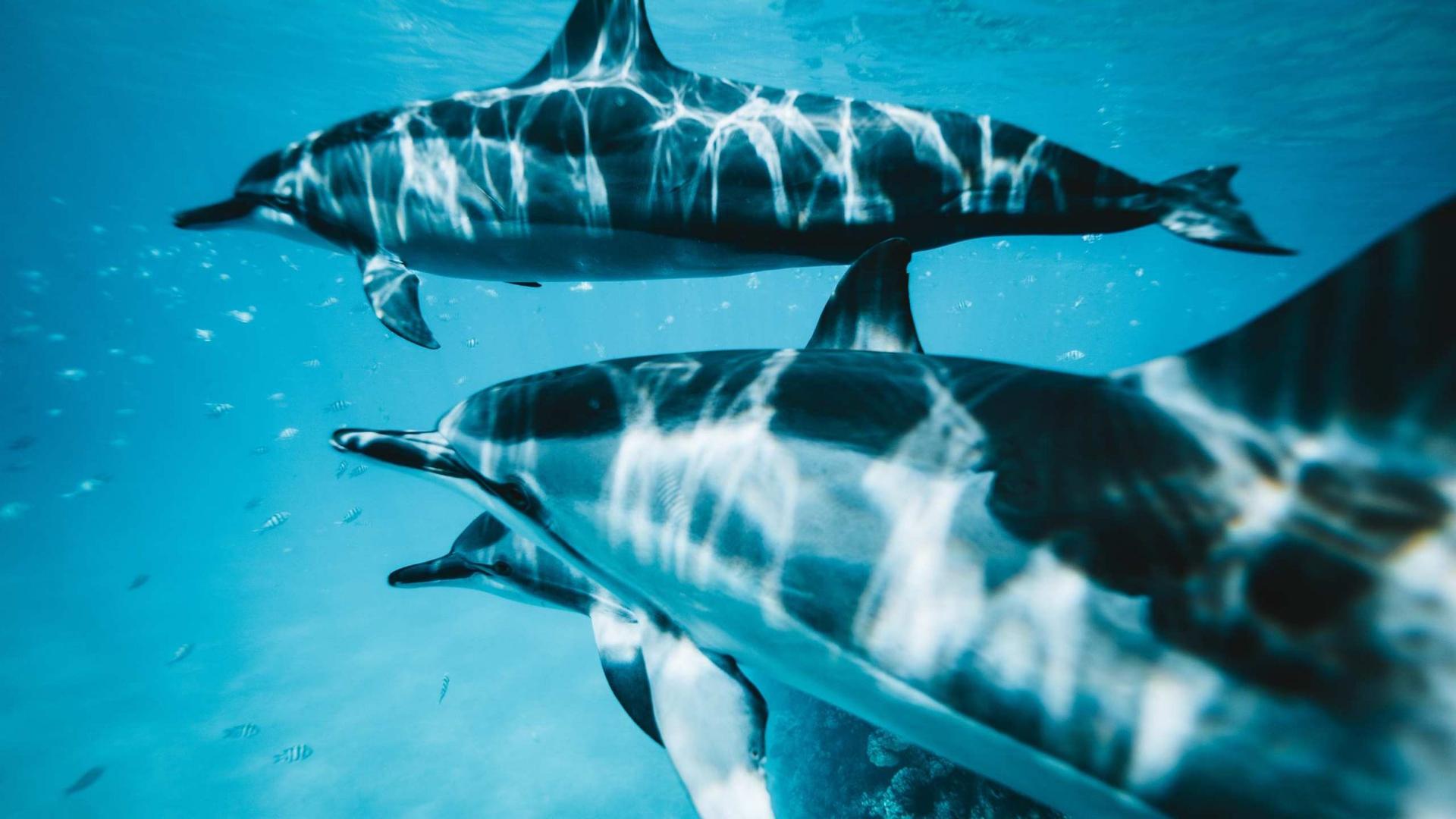
The short version · 0:45
THEY CALL EACH OTHER BY NAME
This article in under a minute. Watch it here, then read on for the detail and sources.
AI-narrated, with motion added to some photos. Photo credits are with each image in the article.
Why dolphins are more than just charismatic animals
The common bottlenose dolphin (Tursiops truncatus) is 2 to 4 metres long, weighs 150 to 650 kilograms, lives 40 to 60 years and carries a brain of roughly 1,500 grams. Relative to body size, that brain is second only to the human brain among mammals. The interesting part is not the size but what the animal does with it in an environment where sight often fails within a few metres.
Dolphins have to sense, coordinate and hunt in murky estuaries, at night and at depth. They do it with sound, with memory of individuals and with hunting techniques that are learned and passed between animals rather than fixed by instinct. That is what makes dolphin intelligence operational rather than decorative.
What makes a dolphin unique?
Echolocation is the headline. A dolphin produces broadband clicks in the phonic lips inside its nasal passages, focuses them through the fatty melon on its forehead and receives the returning echoes through fat channels in the lower jaw that lead to the inner ear. The clicks peak between roughly 40 and 130 kilohertz, far above human hearing. In open water a bottlenose can detect a 2.5-centimetre steel sphere from about 70 metres away.
Click timing is tied to distance. Searching dolphins space clicks so that each echo returns before the next click leaves. As they close on a fish, the interval shrinks until the clicks blur into a buzz of several hundred per second, giving a near-continuous picture in the last metres before capture.
The second system is social. Each dolphin develops a signature whistle in its first year that stays stable for life. Dolphins use these whistles to announce themselves, and they copy another animal's whistle to address that specific individual, which is the closest thing to a name found outside humans. In 2001 Diana Reiss and Lori Marino showed that two bottlenose dolphins marked with ink twisted to inspect the marks in a mirror, passing the mirror self-recognition test that only great apes, elephants and a handful of other species have passed. Later work found dolphins pass it from about seven months of age.
| Ability | What it does | Numbers to know |
|---|---|---|
| Echolocation clicks | Builds a sound image of prey, seabed and other animals | Peak 40–130 kHz; terminal buzz of several hundred clicks per second |
| Signature whistle | Identifies the individual; copied by others to address it | Learned in year one, stable for life |
| Mirror self-recognition | Inspects marks on its own body using a mirror | Demonstrated in 2001; passed from about 7 months old |
| Unihemispheric sleep | Rests one brain half while the other keeps surfacing to breathe | Each half sleeps in turn, around 4 hours at a time |
How dolphins survive and hunt
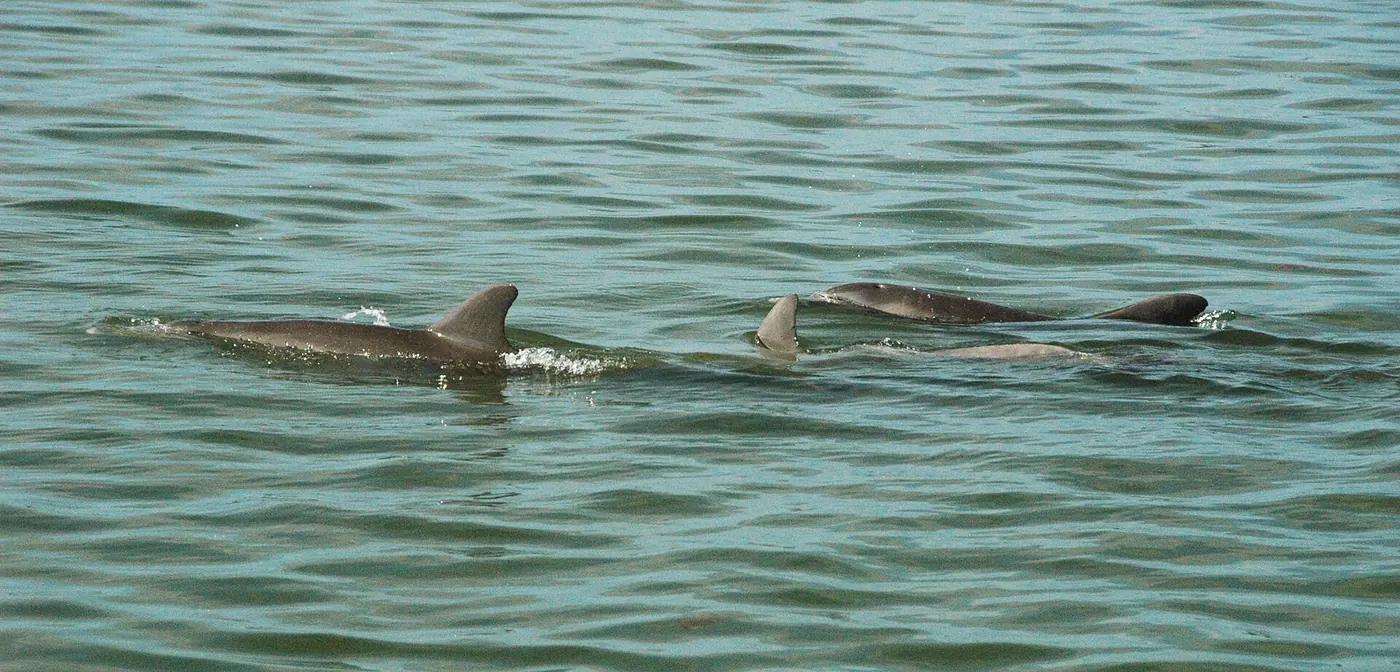
A bottlenose eats about 4 to 6 percent of its body weight in fish and squid each day, so hunting efficiency matters. Pods use tactics that fit the local water. In the shallows of Florida Bay one dolphin circles a school of mullet while beating its tail flukes to stir up a ring of silt. The fish panic at the rising wall of mud and leap over it, straight into the open mouths of the dolphins waiting on the outside. This mud-ring feeding is a learned, cooperative routine with a distinct role for the circling animal.
On the salt-marsh creeks of South Carolina and Georgia, dolphins drive fish onto exposed mudbanks and slide out of the water on their right sides to grab them, a technique called strand feeding. In Shark Bay, Western Australia, some females carry a marine sponge on the rostrum to protect it while probing the seabed for fish, and daughters learn the habit from their mothers. In Laguna, Brazil, dolphins herd mullet toward fishermen's nets and take the fish that scatter.
Social structure supports all of this. Bottlenose societies are fission–fusion: groups form, split and re-form over hours, while long-term bonds persist. Males in Shark Bay form alliances of two to three animals that nest inside larger second-order alliances of up to 14, a layered social system rarely seen outside primates.
Dolphins sense while moving and update while committing. They do not pause the world while they think.
The ecosystem role of dolphins
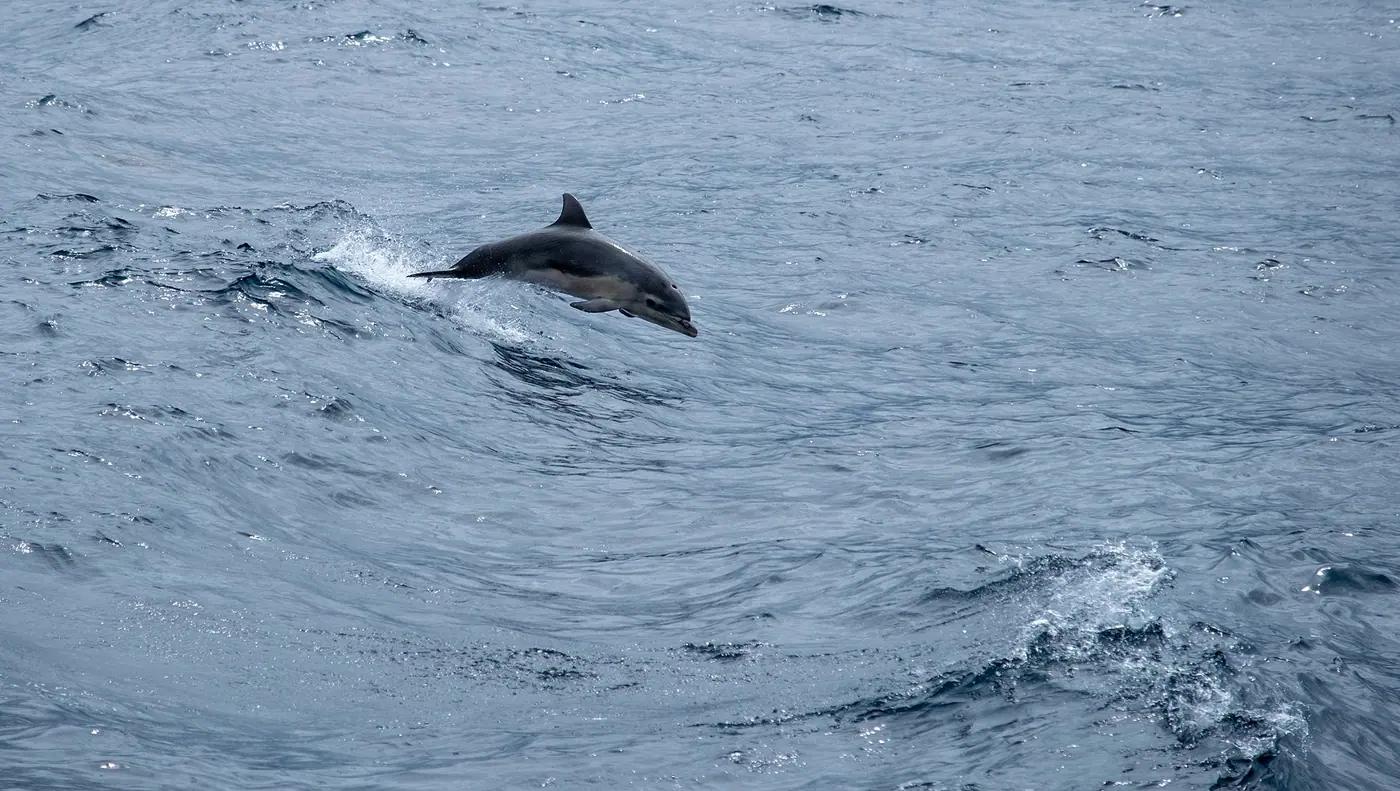
Dolphins are top predators of fish and squid in coastal and open water, and their pressure shapes how prey schools behave and where they gather. Because they sit high in the food web and live for decades in the same bays, they accumulate pollutants and reflect the health of their habitat; NOAA treats coastal bottlenose populations as sentinels of ocean health and runs long-term health assessments on resident groups such as those in Sarasota Bay, where individuals have been tracked since 1970.
Their own predators are few: large sharks such as tiger and bull sharks take calves, and in some regions orcas hunt adults. Threats from people are larger, including gillnet bycatch, boat strikes, noise that interferes with echolocation and prey depletion.
How to spot and photograph dolphins
Bottlenose dolphins live in every tropical and temperate sea, often within sight of shore. The clues below improve your odds of a clear sighting and a usable photo.
Watch the birds
Diving terns and gannets mark baitfish schools. Dolphins feeding underneath often surface in the same patch within minutes.
Flat water, early light
Calm mornings make dorsal fins and blows visible from far off. Look for a dark triangular fin that rolls forward rather than the fixed fin of a shark.
Bow waves and ferries
Dolphins ride the pressure wave at the bow of moving boats. Stand forward, keep a fast shutter ready and expect them to surface for less than a second.
Shoot the fin
Researchers identify individuals by notches on the dorsal fin's trailing edge. A sharp side-on fin photo is the one worth keeping, and it is what a live in-app capture records best.
wildlife photography companion
What humans can learn from dolphins
Dolphins are a lesson in live feedback. Waiting for perfect visibility is too slow in their world, so they built sensing into motion: the click rate rises as the target gets closer, and the plan updates with every echo.
The second lesson is that technique travels socially. Mud-ring feeding, sponging and strand feeding are not in the genome; they are kept alive by animals watching each other. Strong systems do not pause the world while they think, and they make it easy for the next generation to copy what works.
how octopus intelligence workswhat makes crows so intelligent
Systems Intelligence & Hidden Purpose
See these animals as engineered biological systems: what they are built to do, how they fit the wider environment, and what their design can teach us.
Specialized Hardware
Echolocation, dense auditory processing, hydrodynamic bodies, and strong social communication give dolphins active-sensing hardware for hunting where visibility is unreliable.
Systems Script
Dolphins shape fish movement, coordinate predation, and move information through pods faster than many prey systems can adapt. They show how intelligence and locomotion become more powerful when fused with live sensing.
Strategic Insight
When the environment is noisy or opaque, do not wait for perfect visibility. Build feedback loops that let you sense while moving.
Quick questions
Short answers to common questions readers ask on this topic.
- How intelligent are dolphins compared to other animals?
- Dolphins rank with great apes, elephants and corvids among the most cognitively capable non-human animals. Bottlenose dolphins pass the mirror self-recognition test, use individually distinct signature whistles that work like names, learn hunting techniques from each other and form layered male alliances. Their brain-to-body ratio is the second highest among mammals after humans.
- How does dolphin echolocation work?
- A dolphin makes rapid clicks in its nasal passages, focuses them through the melon on its forehead and listens for echoes through its lower jaw. The clicks peak at 40 to 130 kilohertz. Echo timing gives distance, and the dolphin speeds up its clicks as it closes in, ending in a buzz of several hundred clicks per second just before it seizes a fish.
- Do dolphins have names?
- In a practical sense, yes. Each bottlenose dolphin develops a unique signature whistle during its first year and uses it for life. Other dolphins copy that whistle to call the specific individual, and experiments show dolphins respond to playback of their own whistle even when voice features are removed. It is the clearest example of learned, name-like labels outside humans.
- How do dolphins hunt together?
- Dolphins use cooperative tactics matched to local conditions. In Florida Bay one dolphin stirs a ring of mud around a fish school so the fish leap into the mouths of waiting pod members. In the Carolinas they drive fish onto mudbanks and slide out to grab them. Pods also herd schools into tight balls and take turns passing through.
- Where is the best place to see wild dolphins?
- Bottlenose dolphins live in nearly all temperate and tropical coastal waters, so estuaries, bays and harbour mouths near you are the first place to look. Known resident populations include Sarasota Bay in Florida, Shark Bay in Western Australia, the Moray Firth in Scotland and the Azores. Calm mornings and feeding seabirds are the best cues.
Answer guides related to this topic
If you want direct comparisons and clear recommendations, continue with these answer-focused pages.
Best Animal Identification Apps
Compare the best animal identification apps by features like photo/video identification, species coverage, collection capabilities, offline use, and more.
What Is Animal Collecting
Learn what animal collecting means in modern apps and how AnimalDex turns real-world sightings into cards, sets, rarity, and species learning.
Pokemon-Like Animal App
Looking for a Pokemon-like animal app with real species? AnimalDex combines creature-collection energy with AI scanning and wildlife learning.
Related comparisons
Continue with structured animal-vs-animal comparison pages connected to the species in this guide.
Dolphin vs Octopus: Which Is Smarter?
Dolphin gets the edge in social intelligence, communication, and group learning. Octopus gets the edge in solitary problem solving, manipulation, and flexible immediate adaptation. The smartest answer still depends on the task.
Dolphin vs Orangutan: Which Is Smarter?
Dolphin gets the broader intelligence edge through communication, social learning, and fluid group coordination. Orangutan remains exceptional in deliberate problem solving, memory, and tool-oriented planning, especially in structured tasks.
Dolphin vs Shark: Which Is Smarter?
Dolphin is clearly smarter in flexible cognition, communication, and social coordination. Shark remains an elite sensory hunter, but intelligence and predatory efficiency are not the same thing.
Orca vs Blue Whale: Who Would Win in a Fight?
Healthy adult blue whale is too large for a simple one-on-one 'orca wins' claim. Orca gets the stronger practical predation answer through pod coordination, target selection, and pressure on calves or vulnerable whales.
Related guides
Octopus intelligence
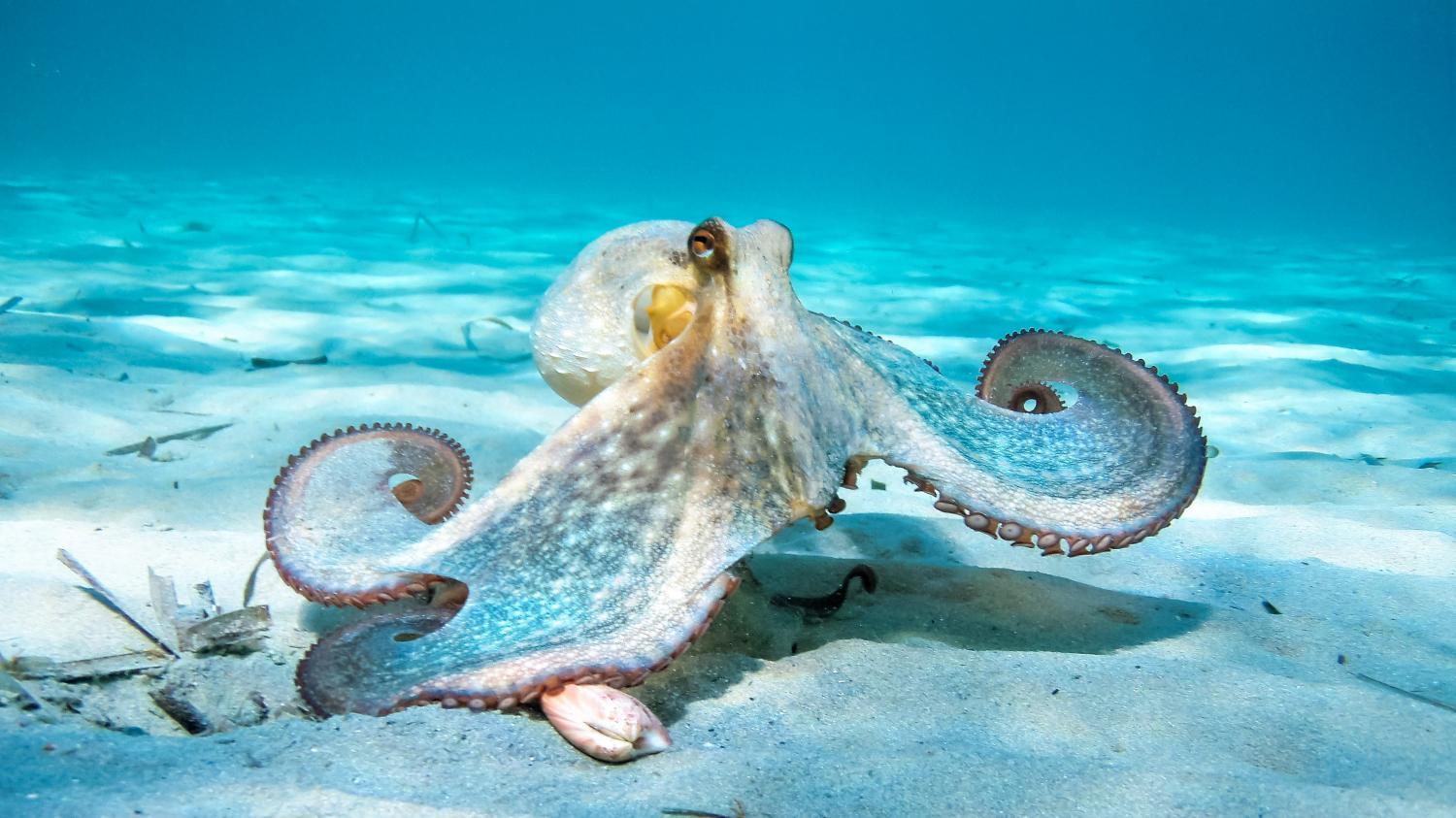
How Octopus Intelligence Works: Arms That Think
How octopus intelligence works: 500 million neurons, two thirds in the arms, suckers that taste, skin that changes in under a second, and fast learning.
8 min read
What Makes Crows So Intelligent? Tool Use, Memory, Society
What makes crows so intelligent: hooked tools, faces remembered for years, primate-level neuron density, and a society that spreads what one bird learns.
8 min read
How Whale Sharks Feed at Ocean Scale
How whale sharks feed: 12-metre filter feeders that sieve plankton through 20 gill pads, carry unique spot patterns and gather at Ningaloo and Mexico.
8 min read