

Animal rankingsResilienceExtremophiles
What Is the Most Resilient Animal? 10 Toughest Survivors
The tardigrade is the most resilient animal known, surviving space, radiation and near absolute zero. The 10 toughest animals, and resilience vs strength.
Quick answer: the most resilient animal
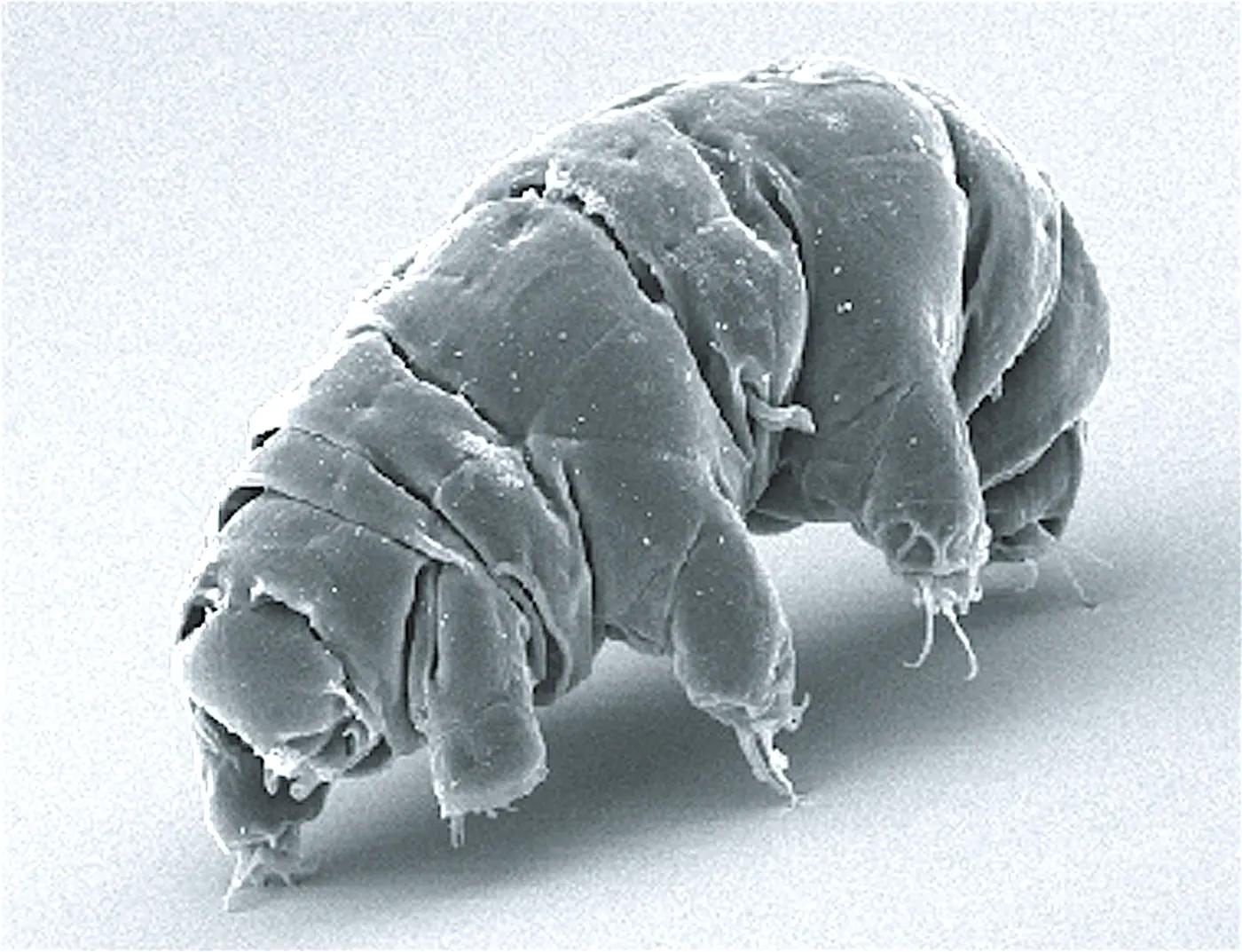
The tardigrade, or water bear, is the most resilient animal known. Dried out into a dormant state called a tun, tardigrades have survived temperatures close to absolute zero in the lab, pressures around six times those at the bottom of the deepest ocean trench, radiation doses hundreds of times higher than what would kill a person, and ten days exposed to open space in low Earth orbit.
The AnimalDex tier list answers a slightly different question: which animals in its catalog are toughest across a whole life in the wild, through cold, drought, hunger and injury. On that list the Crocodile ranks first, followed by the Polar Bear and Wolverine. The tardigrade is a microscopic invertebrate that sits outside that ranked catalog, so this article covers both answers.
Resilience means surviving hardship and coming back from it. It is not strength, which is about how much force an animal can produce. A tardigrade has almost no strength at all and survives conditions that would destroy an elephant.
Most resilient animals tier list (top 100)Strongest animal in the worldWhat is the most adaptable animal?Water bear (tardigrade) species page
Tardigrades: how the toughest animal survives
Tardigrades are eight-legged micro-animals, usually 0.3 to 0.5 mm long, with more than 1,000 described species. They live in moss, lichen, leaf litter, soil, fresh water and ocean sediment, and they need a film of water to be active.
Their trick is anhydrobiosis, life without water. As their surroundings dry out, they pull in their legs, curl into a barrel-shaped tun and lose almost all of their body water. Metabolism falls to levels that are hard to detect. Tardigrade-specific proteins help hold cell contents together as they dry, and in the species Ramazzottius varieornatus a protein called Dsup binds to DNA and protects it: in a 2016 Nature Communications study, human cells engineered to make Dsup suffered about 40 percent less X-ray damage. Add water and a tun can be walking again within minutes to hours.
In 2007 the European FOTON-M3 mission carried dried tardigrades into low Earth orbit and exposed them to space vacuum and cosmic radiation for ten days. Many survived and reproduced afterwards, though the unfiltered solar ultraviolet killed most of those exposed to it (Jönsson and colleagues, Current Biology, 2008).
There is an important limit. Tardigrades tolerate extremes; they do not thrive in them. A 2020 study in Scientific Reports found that a day at about 37 °C killed half of active Ramazzottius varieornatus. Their record-breaking survival happens only in the dormant tun state.
Tardigrades do not beat extreme conditions by being strong. They survive by switching life almost off and waiting.
The 10 most resilient animals, ranked
This is the same top ten as the AnimalDex most resilient animals tier list, in the same order. The Crocodile, Polar Bear and Wolverine lead. The list rewards two kinds of resilience: tolerance, which is enduring cold, heat, drought or hunger (crocodile, polar bear, wolverine, red kangaroo), and recovery, which is regrowing or repairing what is lost (sea cucumber, axolotl, octopus).
Resilience can also be social. Elephants and wolves get through hard seasons because the group holds knowledge and shares food, not only because each body is tough.
| Rank | Animal | Type of resilience | Why it ranks |
|---|---|---|---|
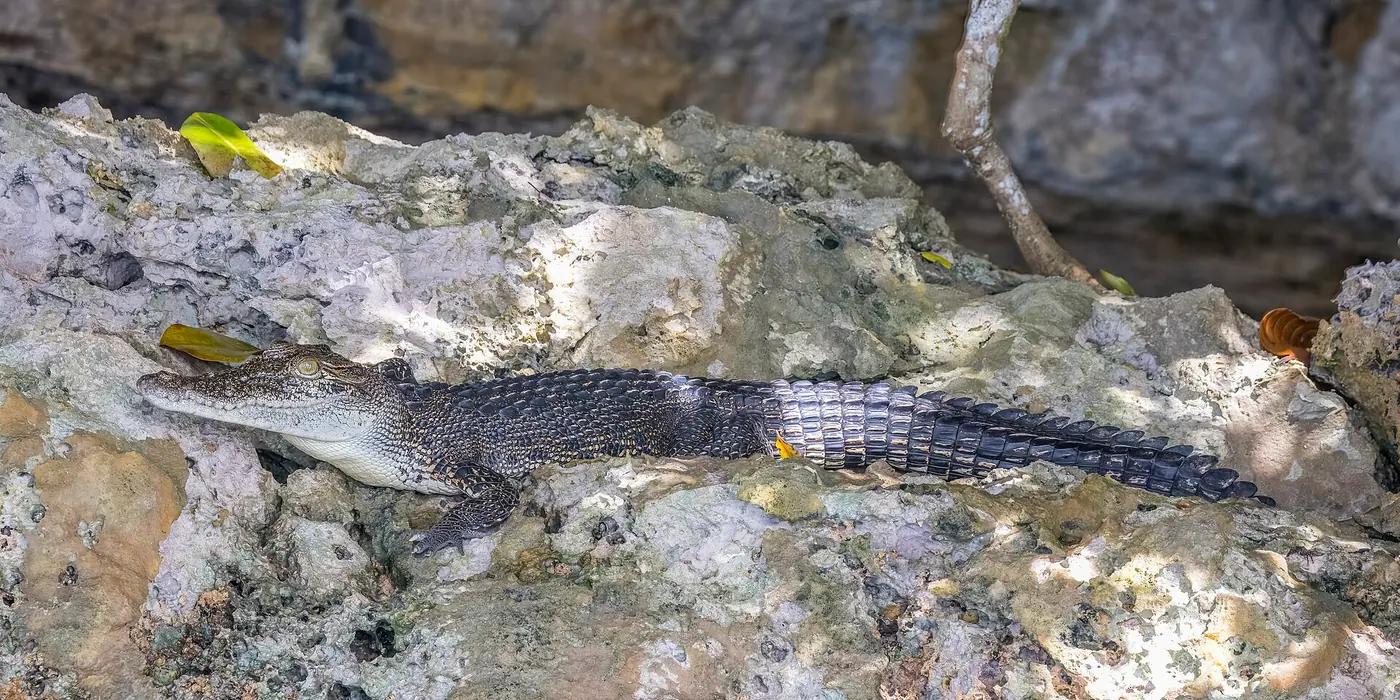
| #1 | Crocodile | Extreme survival toughness | Crocodile is one of the clearest resilience answers because it pairs brutal durability with long-term ecological staying power. |
| #2 | Polar Bear | Cold-environment stress tolerance | Polar bear belongs near the top because surviving Arctic conditions demands enormous physiological resilience. |
| #3 | Wolverine | Relentless cold-country toughness | Wolverine repeatedly earns a reputation for staying dangerous and functional in harsh conditions for good reason. |
| #4 | Elephant | Large-body environmental durability | Elephants stay resilient through scale, memory, movement efficiency, and the ability to manage hard landscapes over time. |
| #5 | Red Kangaroo | Arid-environment endurance | Red kangaroo belongs because desert life rewards water economy, movement efficiency, and heat tolerance. |
| #6 | Sea Cucumber | Regeneration and defensive recovery | Sea cucumber looks unassuming, but its recovery and defensive biology make it a real resilience answer. |
| #7 | Axolotl | Regenerative capacity | Axolotl earns a place because regeneration is one of the clearest forms of biological resilience. |
| #8 | Green Sea Turtle | Long-term marine endurance | Green sea turtle remains impressive for longevity, migration, and continued function under long-distance ecological pressure. |
| #9 | Wolf | Pack-linked ecological toughness | Wolf belongs because resilience is not only physical. Social structure also helps it persist through hard seasons. |
| #10 | Octopus | Rapid adaptive recovery | Octopus stays relevant because it adapts quickly to changing circumstances even when the environment becomes chaotic. |
See all 100 on the most resilient animals tier list
CrocodilePolar BearWolverineElephantRed KangarooSea CucumberAxolotlGreen Sea TurtleWolfOctopus
Why the top picks are so hard to kill
The leaders on the tier list each survive a different kind of pressure.
The axolotl can regrow a leg, yet it is critically endangered in the wild. Resilience in one animal does not make a species safe.
Crocodile: built to outlast
Crocodilians come from a lineage that survived the mass extinction 66 million years ago that ended the non-avian dinosaurs. Their slow, cold-blooded metabolism lets large adults go months without feeding, their bony armour absorbs bites from rivals, and they recover from serious wounds in muddy water that would infect most animals. The saltwater crocodile, the largest living reptile, moves between rivers, mangroves and the open sea, removing excess salt through glands on its tongue.
Polar bear and wolverine: cold-country endurance
Polar bears are insulated by dense fur and a fat layer that can be around 10 cm thick. In Hudson Bay they spend about four ice-free months onshore eating little or nothing, and pregnant females den and fast for up to eight months while giving birth and nursing. Wolverines weigh only about 10 to 18 kg but cover huge territories in deep snow, scavenge frozen carcasses, and cache food in snow to eat weeks later.
Elephant and red kangaroo: getting through drought
Elephants dig for water in dry riverbeds and travel to remembered water sources. In a severe drought in Tanzania's Tarangire National Park in 1993, families led by older matriarchs lost fewer calves, a result published in Biology Letters in 2008. Red kangaroos rest in shade through the heat of the day, lick their forearms to cool down, and get much of their water from plants. Females can pause the development of an embryo, so breeding slows in drought and restarts when rain returns.
Sea cucumber and axolotl: coming back from damage
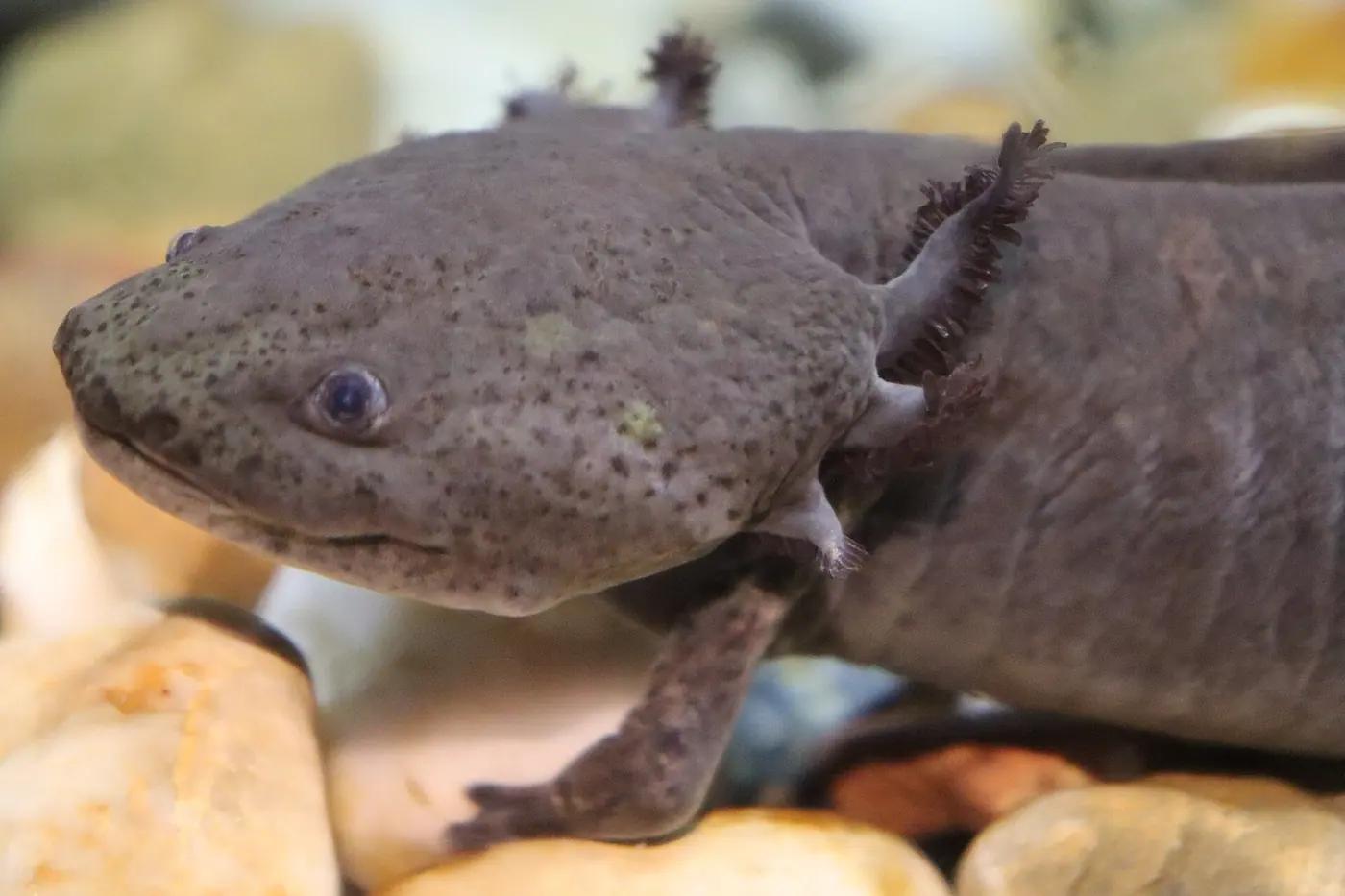
Many sea cucumbers expel part of their internal organs when attacked, leaving a predator with a mouthful while they crawl away and regrow the lost organs over the following weeks. Axolotls regrow lost limbs, the tail, parts of the spinal cord and heart, and tissue in the eye and brain, usually without scarring.
Other extreme survivors
Several animals outside the top ten hold specific survival records. Most are small, and most survive by slowing their bodies down rather than fighting the conditions.
Bdelloid rotifers
Microscopic animals revived from Siberian permafrost about 24,000 years old, which then fed and reproduced (Shmakova and colleagues, Current Biology, 2021).
Wood frog
Freezes solid in winter. Its heart and breathing stop, ice forms in its body cavity, and glucose protects its cells until it thaws in spring.
Arctic ground squirrel
Lets its body temperature fall below 0 °C during hibernation, the lowest recorded for a mammal, and rewarms every few weeks.
Naked mole-rat
Survived 18 minutes with no oxygen in lab tests (Park and colleagues, Science, 2017), very rarely develops cancer, and lives more than 30 years.
Cockroaches
Tolerate radiation several times better than humans and can survive weeks without food, but they are far less tolerant than tardigrades.
Wood FrogNaked Mole-ratCockroach
Resilience is not strength
The two words get mixed up because both describe something an animal can endure. They measure different things, and the best animals for each barely overlap.
| Quality | The question it answers | Best examples |
|---|---|---|
| Strength | How much force can it produce? | African elephant, gorilla, dung beetle (for its size) |
| Toughness | How much damage can its body absorb? | Crocodile, honey badger, armadillo |
| Tolerance | How extreme can conditions get before it dies? | Tardigrade, wood frog, Arctic ground squirrel |
| Recovery | How completely does it repair damage? | Axolotl, sea cucumber, octopus |
| Population resilience | How fast do numbers bounce back after a crash? | Brown rat, wolf after legal protection |
Strongest animals tier listHow crocodiles dominate the water's edge
How resilience is measured, and the common myths
In the lab, tolerance is measured as the dose or temperature at which half of the test animals die, and how long they survive at a given level. In the field, resilience shows up in survival through droughts and hard winters, in how long animals live, and in how quickly they recover from injury or a population crash. Regeneration is measured by what grows back and how closely the new tissue matches the old.
The tier list blends these with what is known about each animal's survival in the wild, which is why large, long-lived species with a record of getting through hard conditions rank above animals with one extreme trick.
Myth: cockroaches would survive a nuclear war
They tolerate more radiation than people, but not the blast or heat, and many insects, such as some fruit flies and parasitic wasps, tolerate more radiation than cockroaches do.
Myth: tardigrades are indestructible
Active tardigrades die from heat that people survive easily. Their records are set in the dormant tun state, and even then exposure time matters.
Myth: tardigrades live in space
They survived ten days of exposure in a dried, dormant state. Nothing lives and reproduces in open space.
Myth: the strongest animal is the toughest
Large, powerful animals often need the most food and water, which makes them vulnerable in a drought. Small animals that can shut down often outlast them.
Quick questions
Short answers to common questions readers ask on this topic.
- What is the most resilient animal in the world?
- The tardigrade is the most resilient animal known. In its dried, dormant tun state it has survived near absolute zero, crushing pressure, intense radiation and ten days exposed to space. Among larger animals, the AnimalDex tier list ranks the crocodile first, ahead of the polar bear and wolverine, for toughness across a whole life in the wild.
- Can tardigrades survive in space?
- Yes, in a dormant state. In 2007 dried tardigrades spent ten days exposed to vacuum and cosmic radiation on the FOTON-M3 mission, and many revived and reproduced on return. Most of those also exposed to unfiltered solar ultraviolet died. They survive space; they cannot live, feed or breed there.
- What animal can survive anything?
- No animal can survive anything, but the tardigrade comes closest. Dried into a tun it withstands extreme cold, pressure, radiation and vacuum. Active tardigrades are fragile, though: a day at around 37 °C kills about half of them in one studied species, so their toughness depends on drying out first.
- Is a cockroach the most resilient animal?
- No. Cockroaches are tough for insects, surviving weeks without food and tolerating several times the radiation dose that would kill a person, but tardigrades tolerate far higher doses and far harsher conditions. Some fruit flies and parasitic wasps also tolerate more radiation than cockroaches.
- What is the most resilient mammal?
- The polar bear is the highest-ranked mammal on the AnimalDex resilience tier list, fasting for months in the Arctic. For physiological records, the naked mole-rat survives 18 minutes without oxygen and rarely gets cancer, and the Arctic ground squirrel lets its body temperature drop below freezing during hibernation.
- What is the difference between resilience and strength in animals?
- Strength is how much force an animal can produce; resilience is how well it survives and recovers from hardship such as cold, drought, starvation or injury. An elephant is one of the strongest animals but needs large amounts of food and water every day, while a tardigrade has almost no strength and survives conditions that would kill an elephant.
Animals mentioned
Jump from this article into the species pages behind the examples, systems notes, and field-guide references.
CrocodilePolar BearWolverineElephantRed KangarooSea CucumberAxolotlGreen Sea TurtleWolfOctopusWood FrogNaked Mole-ratCockroach
Sources and further reading
- Jönsson et al., Tardigrades survive exposure to space in low Earth orbit, Current Biology (2008)
- Hashimoto et al., Extremotolerant tardigrade genome and improved radiotolerance of human cultured cells by tardigrade-unique protein, Nature Communications (2016)
- Neves et al., Thermotolerance experiments on active and desiccated states of Ramazzottius varieornatus, Scientific Reports (2020)
- Shmakova et al., A living bdelloid rotifer from 24,000-year-old Arctic permafrost, Current Biology (2021)
- Foley, Pettorelli and Foley, Severe drought and calf survival in elephants, Biology Letters (2008)
- Park et al., Fructose-driven glycolysis supports anoxia resistance in the naked mole-rat, Science (2017)
Answer guides related to this topic
If you want direct comparisons and clear recommendations, continue with these answer-focused pages.
Best Animal Identification Apps
Compare the best animal identification apps by features like photo/video identification, species coverage, collection capabilities, offline use, and more.
What Is Animal Collecting
Learn what animal collecting means in modern apps and how AnimalDex turns real-world sightings into cards, sets, rarity, and species learning.
Pokemon-Like Animal App
Looking for a Pokemon-like animal app with real species? AnimalDex combines creature-collection energy with AI scanning and wildlife learning.
Related comparisons
Continue with structured animal-vs-animal comparison pages connected to the species in this guide.
Crocodile vs Polar Bear: Who Would Win in a Fight?
Polar bear gets the overall edge on land or partial land because it is larger, more mobile out of water, and better at sustained violent contact once the crocodile loses ambush shape. Crocodile becomes far more dangerous in water-linked ambush where the bite starts first and the bear does not control footing.
Elephant vs Polar Bear: Who Would Win in a Fight?
Elephant gets the overwhelming overall edge through enormous size, reach, and space control. Polar bear remains dangerous because it is an apex predator with serious bite and commitment, but it is still far too outscaled in a clean direct clash.
Wolverine vs Wolf: Who Would Win in a Fight?
Wolf gets the cleaner overall one-on-one answer through larger size and more complete predatory hardware. Wolverine stays dangerous because it is unusually hard to intimidate or finish cleanly.
Alligator Snapping Turtle vs Polar Bear: Who Would Win?
Polar bear gets the overwhelming overall edge through sheer mass, strength, and the ability to dominate most contact scenarios. Alligator snapping turtle stays dangerous only in a narrow front-facing water-side bite window where its jaws can punish a mistake.
Related guides
Animal rankings
What Is the Most Adaptable Animal? 10 Most Adaptable Animals
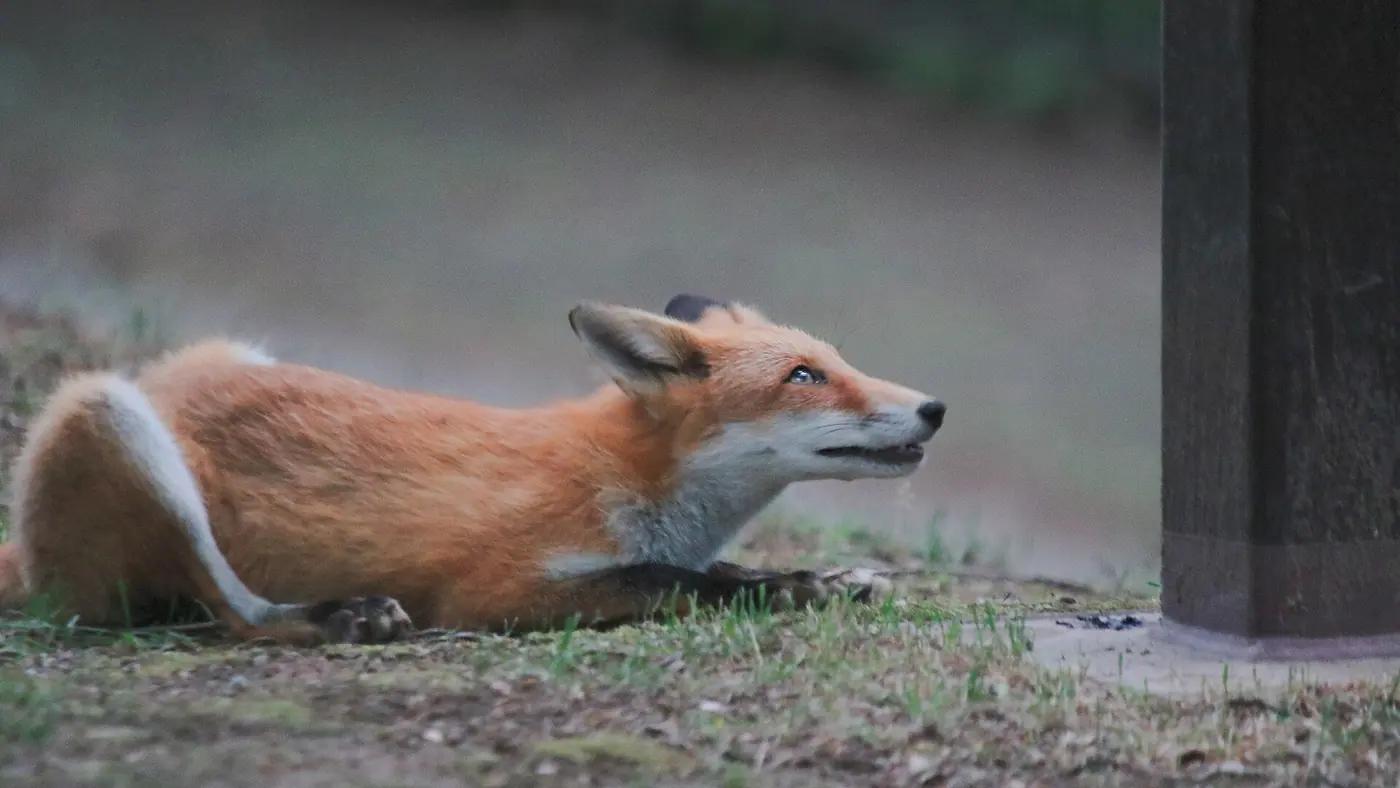
The red fox is the most adaptable wild animal, from Arctic tundra to city streets. The 10 most adaptable animals, why they thrive and how it's measured.
9 min read
What Is the Most Dangerous Animal? Deadliest Animals Ranked
The mosquito is the most dangerous animal, linked to over 600,000 malaria deaths a year. The deadliest animals by deaths and by encounter, explained.
10 min read
What Is the Smartest Animal? The 10 Smartest Animals
Chimpanzees and dolphins are the smartest animals after humans, with orcas, octopuses and crows close behind. The evidence, the rankings and the myths.
11 min read