

Animal rarityConservation learningSpecies discovery
What makes an animal rare? Range, population and endemism
What makes an animal rare: IUCN Red List categories, range size versus population, endemism, fragmentation, and why rare to see is not always rare.

In this guide
- Rarity is usually about constraints, not popularity
- The three axes of rarity
- How the IUCN Red List measures it
- Range size versus population: the kakapo and the pupfish
- Endemism: rare because of where, not how many
- Range fragmentation is a major factor
- Rare to see is not the same as rare
- How this helps in an app context
Rarity is usually about constraints, not popularity
In wildlife terms, rarity comes from ecological constraints: a narrow range, a small or thinly spread population, slow reproduction, a specialised habitat, or a combination of those. It has nothing to do with how famous a species is. Giant pandas are globally recognisable and number around 1,900 in the wild; the Devils Hole pupfish is unknown to most people and has at times numbered fewer than 40.
The useful question is not "is it rare" but "rare in which way". A species can be scarce everywhere, common in one tiny place, or widespread but never numerous. Each pattern has different causes and different risks.
The three axes of rarity
Ecologist Deborah Rabinowitz set out the standard framework in 1981: rarity is a mix of three independent measures, geographic range (wide or narrow), habitat specificity (broad or narrow) and local population size (large or small). Seven of the eight combinations count as some form of rarity. Only a species that is widespread, lives in many habitats and is locally abundant is truly common, which describes the red fox, the house sparrow and not much else.
| Range | Habitat needs | Local numbers | Example | Kind of rarity |
|---|---|---|---|---|
| Wide | Broad | Large | Red fox, carrion crow | Not rare |
| Wide | Broad | Small | Peregrine falcon | Thin on the ground everywhere |
| Wide | Narrow | Large | Dipper (fast clean rivers) | Common where its habitat exists |
| Wide | Narrow | Small | Snow leopard | Sparse specialist |
| Narrow | Broad | Large | Island birds such as the Galápagos finches | Locally abundant endemic |
| Narrow | Broad | Small | Kakapo | Few individuals, few places |
| Narrow | Narrow | Large | Devils Hole pupfish | One habitat patch, whole species |
| Narrow | Narrow | Small | Vaquita, Javan rhinoceros | Rarest of all |
Red FoxPeregrine FalconSnow Leopard
How the IUCN Red List measures it
The IUCN Red List is the global standard for extinction risk, which overlaps with rarity but is not the same thing. Its categories run from Least Concern through Near Threatened, Vulnerable, Endangered and Critically Endangered to Extinct in the Wild and Extinct, with Data Deficient for species nobody has counted. A species is placed in a threatened category by meeting any one of five criteria: a rapid population decline, a small and shrinking range, a small and declining population, a very small population, or a quantitative extinction model.
The thresholds make the abstract concrete. Critically Endangered can mean a range under 100 square kilometres, fewer than 250 mature individuals with ongoing decline, or fewer than 50 mature individuals at all. Endangered uses 5,000 square kilometres, 2,500 and 250; Vulnerable uses 20,000 square kilometres, 10,000 and 1,000. A species with a healthy population can still be listed if it is confined to one site that could be destroyed in a single event.
Least Concern
Widespread and abundant. Most garden birds, deer and the long-tailed macaque until its 2022 reassessment.
Vulnerable
High risk in the medium term. Snow leopard, giant panda since 2016, most sharks.
Endangered
Very high risk. African wild dog, Komodo dragon since 2021, long-tailed macaque since 2022.
Critically Endangered
Extremely high risk. Bali myna, kakapo, white-headed vulture, vaquita.
African Wild DogKomodo DragonWhite-headed Vulture
Range size versus population: the kakapo and the pupfish
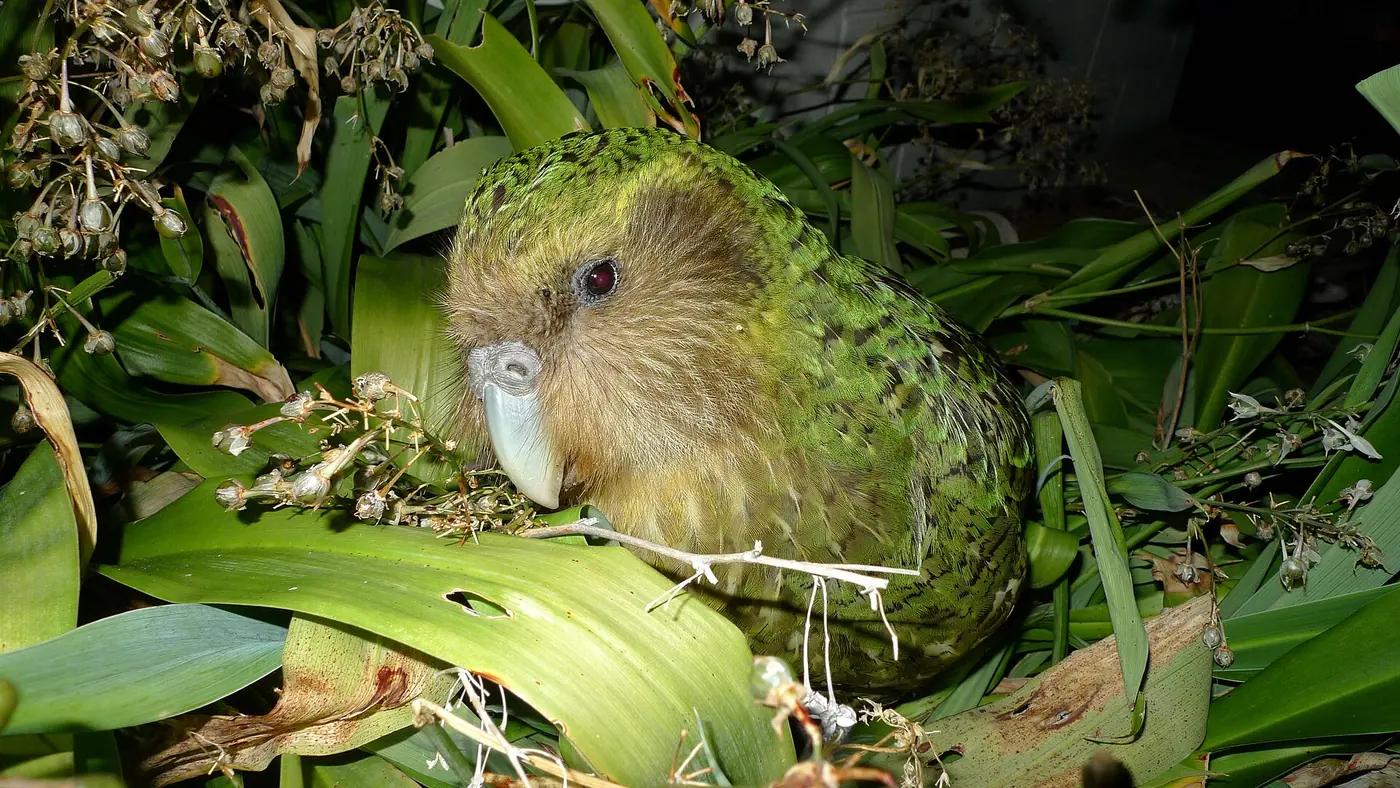
Two animals show how the axes separate. The kakapo, a flightless, nocturnal parrot from New Zealand, once lived across both main islands. Introduced cats, stoats and rats removed it from the mainland entirely, and the entire species, around 250 birds, now lives on a few predator-free offshore islands where every individual is named, tagged and weighed. Its range is tiny because people made it tiny, and it breeds only in years when the rimu tree fruits heavily, roughly every two to four years, so recovery is slow even with no predators.
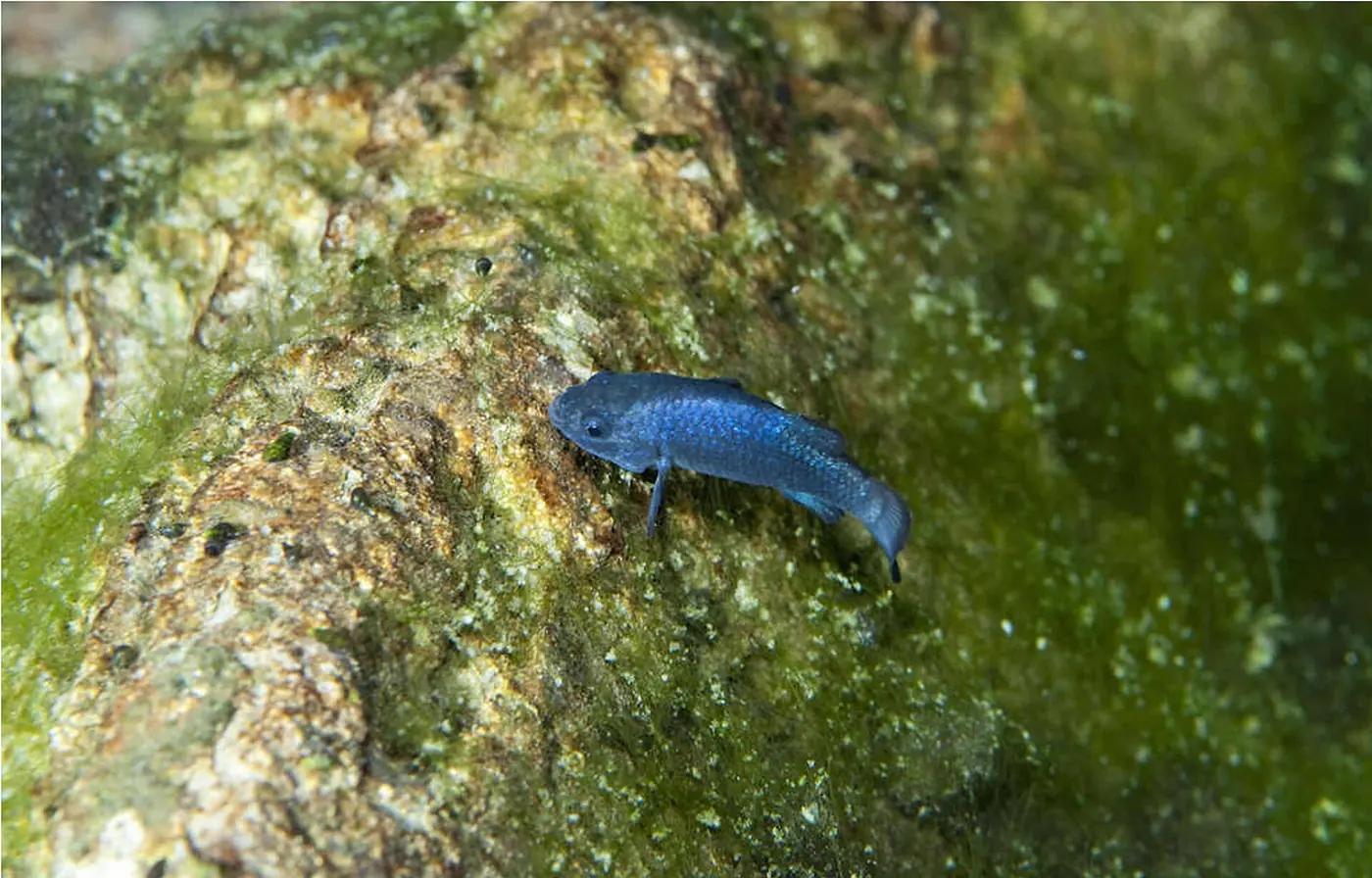
The Devils Hole pupfish is rare the other way round. Its natural range is a single limestone pool in the Mojave Desert, where the fish feed and spawn on a shallow rock shelf about the size of a large living room. Counts have swung between a few dozen and a few hundred. Nothing about the pupfish's biology is fragile; the pool is simply the smallest known range of any vertebrate, so the whole species can be affected by one earthquake, one drought or one change in the water table.
Two kinds of narrow range
Endemism: rare because of where, not how many
An endemic species is one found naturally in a single defined area and nowhere else. Islands produce endemics because populations that arrive by chance evolve in isolation: the Bali myna on one Indonesian island, the Komodo dragon on five, lemurs across Madagascar, kiwi in New Zealand. Mountains, isolated lakes and cave systems do the same thing on land.
Endemism makes a species rare in the global sense even when it is locally common. The Komodo dragon numbers a few thousand and is easy to see on Rinca, yet it is Endangered because the entire species occupies a few islands where rising seas and habitat loss act on all of it at once. The Bali myna is the sharper case: a bird that looked secure in captivity, with thousands in aviaries, fell to a handful of wild individuals in its only natural home.
Range fragmentation is a major factor
A species spread across disconnected pockets is harder to keep than one with a continuous range, even at the same total population. Fragmentation cuts off dispersal, shrinks the gene pool in each pocket, and means a local disaster cannot be refilled from next door. African wild dogs are the textbook example: packs need hundreds of square kilometres each, so roads, fences and farms that slice a landscape into pieces remove whole packs even where no dog is shot.
Vultures show a different route to the same result. White-headed vultures were once spread across sub-Saharan Africa; poisoning at carcasses and the loss of large mammals have reduced them to scattered protected areas, each too small to hold a self-sustaining population on its own.
African Wild DogWhite-headed Vulture
Rare to see is not the same as rare
For a wildlife watcher, the rarity that matters day to day is detectability, and it is only loosely related to population. Badgers, barn owls, otters, most snakes and almost every moth are widespread and not threatened, yet most people have never seen one because they are nocturnal, shy or well camouflaged. A kingfisher lives on most clean rivers in Europe and still ranks as a prized sighting.
The reverse is also true. A Critically Endangered animal can be easy to see in the one place it survives, like a Bali myna at a release site or a kakapo on a monitored island. So when a collection app labels an animal rare, it is worth asking which rarity it means: hard to find, few in number, or confined to a small range. Those are three different facts, and a good field guide keeps them apart.
Three questions separate every kind of rarity: how many are there, how much of the world do they live in, and how hard are they to see.
How this helps in an app context
Rarity tiers make a collection more engaging, but they should also teach why rarity exists. In AnimalDex a species card's rarity reflects conservation status and how often the animal is actually captured, so a common but elusive animal can still be a satisfying find and a Critically Endangered one is never a casual pull. Linking that tier to habitat, range and behaviour gives players both the game value and the conservation context.
The practical payoff is in the field. Knowing that a species is range-restricted tells you to travel; knowing it is nocturnal tells you to go out at dusk; knowing it is fragmented tells you which protected area to visit. Rarity, understood properly, is a set of directions.
Why real-animal collecting feels so goodWildlife collection and animal card app
Systems Intelligence & Hidden Purpose
See these animals as engineered biological systems: what they are built to do, how they fit the wider environment, and what their design can teach us.
Specialized Hardware
Exceptional eyesight, soaring efficiency, and scavenger-grade feeding hardware allow the white-headed vulture to locate carcasses quickly and convert death into cleanup before disease risk spreads.
Systems Script
This species is part of the ecosystem sanitation layer. By clearing carrion, vultures reduce pathogen buildup, accelerate nutrient cycling, and keep the wider environmental operating system cleaner and more stable.
Strategic Insight
Not every valuable system creates by adding more. Some create advantage by removing waste faster than everyone else.
Specialized Hardware
Oversized ears, endurance-focused limbs, and a social communication stack built on posture, vocal cues, and pack coordination turn the African wild dog into elite pursuit hardware.
Systems Script
African wild dogs pressure prey populations through coordinated movement rather than isolated brute force. They help shape herbivore behavior, redistribute risk across landscapes, and reward connected ecosystems over fragmented ones.
Strategic Insight
High-performance teams do not need constant hierarchy chatter. Shared rules, clean signals, and role clarity create speed that solo talent cannot match.
Quick questions
Short answers to common questions readers ask on this topic.
- Does rare always mean endangered?
- No. Rarity describes how many animals there are, how small their range is or how hard they are to see; endangered is an IUCN Red List assessment of extinction risk based on decline, range and population thresholds. A naturally scarce species with a stable population can be rare without being threatened, and a once-common species in steep decline can be Endangered while still outnumbering it.
- What are the IUCN Red List categories?
- From lowest to highest risk: Least Concern, Near Threatened, Vulnerable, Endangered, Critically Endangered, Extinct in the Wild and Extinct, plus Data Deficient and Not Evaluated for species without an assessment. Vulnerable, Endangered and Critically Endangered are the three threatened categories, assigned when a species meets one of five criteria on decline, range size or population size.
- What is an endemic species?
- An endemic species occurs naturally in one defined area and nowhere else, such as the Bali myna on Bali, the kakapo in New Zealand or lemurs in Madagascar. Endemics are often rare in the global sense even when locally common, because the whole species is exposed to anything that happens in that one place.
- Can an animal be common globally but rare in my area?
- Yes. Local habitat, climate and geography can make a species scarce at the edge of its range while it is abundant elsewhere, and the opposite also happens. That is why range maps on eBird or iNaturalist matter for identification: a species with no records within hundreds of kilometres is more likely to be a common lookalike.
- Why are some common animals so hard to see?
- Because detectability depends on behaviour, not numbers. Nocturnal animals such as badgers and barn owls, shy ones such as otters and most snakes, and well-camouflaged ones such as moths and nightjars are widespread but rarely seen. Going out at the right time of day and sitting still at one spot does more than travelling to find them.
Animals mentioned
Jump from this article into the species pages behind the examples, systems notes, and field-guide references.
White-headed VultureAfrican Wild DogKomodo DragonKakapoBali MynaRed FoxGiant PandaPeregrine FalconSnow LeopardBarn OwlCommon Kingfisher
Answer guides related to this topic
If you want direct comparisons and clear recommendations, continue with these answer-focused pages.
Best Animal Identification Apps
Compare the best animal identification apps by features like photo/video identification, species coverage, collection capabilities, offline use, and more.
What Is Animal Collecting
Learn what animal collecting means in modern apps and how AnimalDex turns real-world sightings into cards, sets, rarity, and species learning.
Pokemon-Like Animal App
Looking for a Pokemon-like animal app with real species? AnimalDex combines creature-collection energy with AI scanning and wildlife learning.
Related comparisons
Continue with structured animal-vs-animal comparison pages connected to the species in this guide.
African Wild Dog vs Hyena: Who Would Win in a Fight?
Spotted hyena gets the edge in direct physical conflict because it is tougher and more built for brutal contact. African wild dog stays exceptional in pure pack-hunt coordination and endurance pursuit.
Bald Eagle vs Peregrine Falcon: Who Would Win in a Fight?
Peregrine falcon wins the speed question clearly. Bald eagle usually gets the overall edge in a direct clash because size, talon grip, and durability matter more once contact happens.
Crocodile Monitor vs Komodo Dragon: Who Would Win?
Komodo dragon gets the overall edge because it is heavier and more brutally grounded in close combat. Crocodile monitor stays impressive through climbing, length, and speed in vertical forest structure.
Eagle vs Falcon: Who Would Win in a Fight?
Eagle usually has the power edge in a direct clash. Falcon owns the speed edge and often the cleaner aerial intercept, but size and grip strength still favor the eagle when contact happens.
Related guides
Animal card app
Why real-animal collecting feels so good to card collectors
Why card collectors and creature-game fans find real-animal collecting so satisfying: natural rarity, lifers, place memory and set completion.
6 min read

Best animals to spot in Bali (2026)
The best animals to spot in Bali and where: Bali myna in West Bali National Park, macaques at Ubud and Uluwatu, mantas at Nusa Penida, reef fish and more.
8 min read

Zoo vs wild animals: what’s the difference?
Zoo vs wild animals: how behaviour, activity, diet and lifespan differ, what enrichment is for, and how to watch animals well in either setting.
7 min read