

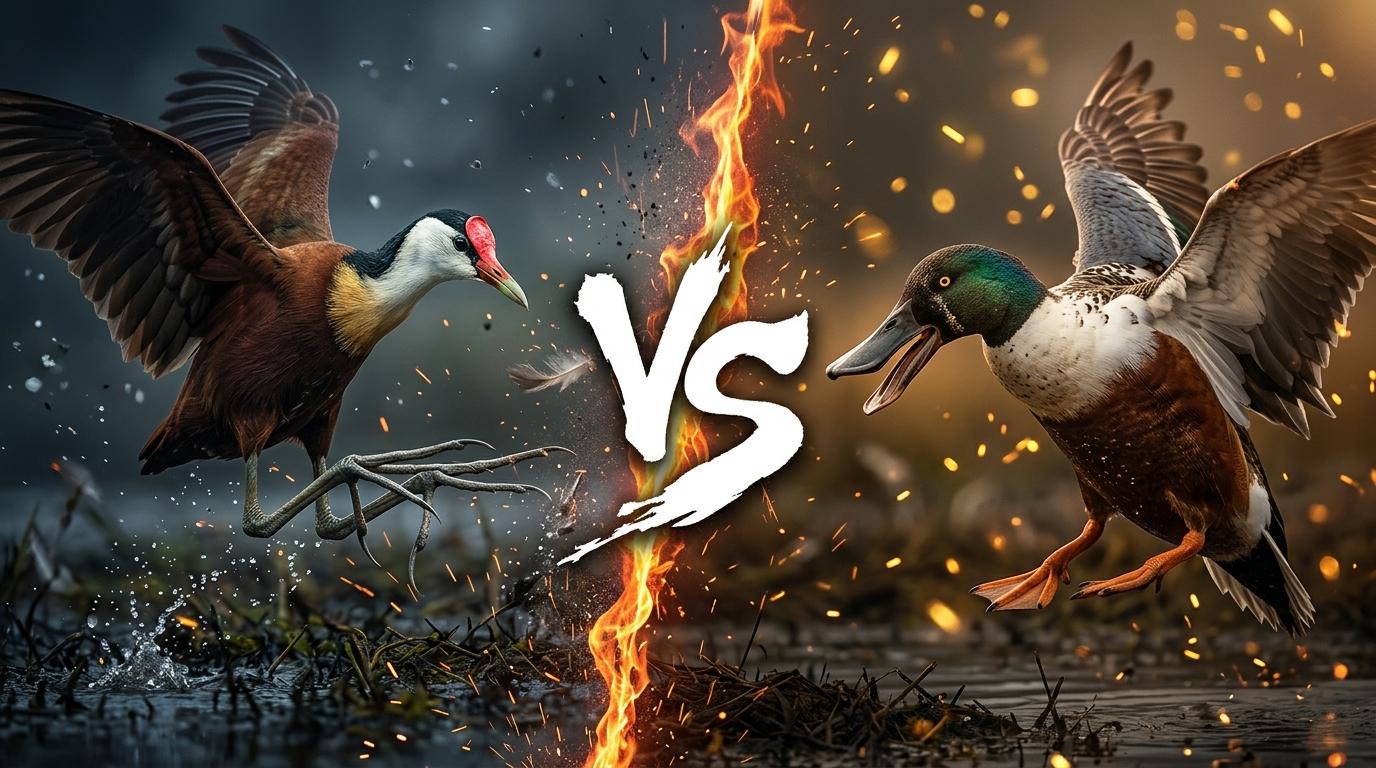
African Jacana vs Northern Shoveler: Who Actually Wins?
African Jacana vs Northern Shoveler: a biology-first breakdown of size, weapons, territoriality and habitat to decide who would win a wetland showdown.
African Jacana vs Northern Shoveler
Matchup winner
Northern Shoveler
Quick verdict
Start with the direct answer, then use the structured comparison below to see what changes the outcome.
The Northern Shoveler wins overall. At roughly 470–800 g it carries about two to four times the mass of an African Jacana (about 140–290 g), with a broad, heavily built bill, a dense waterproof body and strong flight muscles built for long migrations. The jacana is the more aggressive territorial bird. It has wing spurs and needle-like toes, and on floating lily pads it is in its element. But in any frame where bodies actually collide, especially on open water, the shoveler's mass and buoyant stability decide things. The jacana can win skirmishes on its own vegetation mat, yet the duck controls more of the realistic contexts.
Read the full explanation
Northern Shoveler wins most matchups because of its size and mass advantage, roughly 2–4x heavier.
The African Jacana is the more combative territory holder and carries carpal wing spurs.
On floating vegetation the jacana's toe-spread footing gives it a real home-turf edge.
On open water or in the air, the shoveler's bulk and powerful flight dominate.
Reader vote
Who do you think wins?
Pick a side — no account needed. Results update live.
No votes yet — be the first to call it.
Editorial note
Why people disagree
Jacanas look fierce. Females in particular aggressively defend territories and harems of males, so people assume attitude beats mass.
Body mass & momentum
In bird contests, mass decides shoving, pinning and who gets displaced first.
Built-in weaponry
Jacana spurs are actual combat hardware evolved for territorial clashes.
Territorial drive
Willingness to escalate lets smaller birds evict bigger visitors.
Read the full explanation +
The shoveler's giant bill looks like a weapon, but it is a filter-feeding sieve with fine lamellae, not a striking tool.
Habitat framing swings everything. On lily pads the jacana is a specialist, while on deep open water it cannot even swim well.
Comparison FAQ
Short, direct answers to the next questions readers usually ask after the headline verdict.
Would an African Jacana beat a Northern Shoveler?+
Usually not. The shoveler wins most encounters through its size and water mastery. The jacana's best chance is defending dense floating vegetation.
Which bird is stronger?+
The Northern Shoveler. It is roughly two to four times heavier, with stronger flight muscles and a sturdier body.
Why is the jacana still dangerous?+
Its sharp carpal wing spurs and high territorial aggression let it land painful strikes and drive off larger birds on its own turf.
Is the shoveler's big bill a weapon?+
Not really. It is a specialized filter for straining plankton and seeds, so its value in a fight is mostly bulk rather than cutting power.
Do these species meet in the wild?+
Their ranges overlap in parts of sub-Saharan Africa, where shovelers can winter in small numbers, though such encounters are uncommon.
Head-to-head species stats
These are the same core AnimalDex stat dimensions used on the dedicated animal pages, pulled side by side so the matchup is faster to scan.
African Jacana
Tier CNorthern Shoveler
Tier DTrait-by-trait comparison
Only the categories that matter to this matchup are included. The goal is not filler stats, but the real design differences that change the result.
Light, long-legged, ~140–290 g
Body mass & momentum
Northern Shoveler
Compact, heavy-chested, ~470–800 g
Body mass & momentum
Northern Shoveler
Carpal wing spurs, sharp bill
Built-in weaponry
African Jacana
Broad spatulate bill, wing buffets
Built-in weaponry
African Jacana
Fiercely defended pad territories
Territorial drive
African Jacana
Moderate; males guard mates
Territorial drive
African Jacana
Elongated toes spread weight across floating plants
Platform control
African Jacana
Webbed paddling feet, poor on vegetation
Platform control
African Jacana
Weak swimmer, avoids deep water
Open-water command
Northern Shoveler
Buoyant, stable, fully aquatic
Open-water command
Northern Shoveler
Short, dangling-leg flights
Flight engine
Northern Shoveler
Fast, strong, migratory flier
Flight engine
Northern Shoveler
How the verdict forms
Verdict timeline
01 · Body mass & momentum
Northern Shoveler
02 · Built-in weaponry
African Jacana
03 · Territorial drive
African Jacana
04 · Platform control
African Jacana
05 · Open-water command
Northern Shoveler
06 · Flight engine
Northern Shoveler
Change the conditions
Scenario breakdown
This is where shallow battle content usually fails. Terrain, spacing, timing, and engagement style can change the answer.
Scenario lean
African Jacana
Verdict confidence
82%
The jacana holds its floating fortress.
On dense floating vegetation the jacana's spread toes give it stable footing, while the shoveler struggles to stand or paddle. Wing-spur strikes and relentless territorial charges can push the heavier duck back into open water.
AnimalDex field profiles
Explore these animals
African Jacana
Actophilornis africanus
marsh, floating wetland, and shallow pond edge
Northern Shoveler
Spatula clypeata
marsh, pond, and shallow wetland
Systems Intelligence & Hidden Purpose
See the animals behind this comparison as engineered biological systems: what each one is built to do, where it gains leverage, and why the matchup changes by scenario.
Specialized Hardware
extremely long spreading toes, chestnut and black wetland body, and lily-pad walking balance give the African Jacana a body plan tuned for its niche.
Systems Script
African Jacanas operate through marsh, floating wetland, and shallow pond edge. Their design links movement, feeding, shelter, and timing into one workable survival system.
Strategic Insight
Where water controls movement, position and timing often matter more than speed.
Specialized Hardware
broad spoon-shaped bill, surface-filter feeding behavior, and marsh-dabbling body give the Northern Shoveler a body plan tuned for its niche.
Systems Script
Northern Shovelers operate through marsh, pond, and shallow wetland. Their design links movement, feeding, shelter, and timing into one workable survival system.
Strategic Insight
Where water controls movement, position and timing often matter more than speed.
Final take
The Northern Shoveler is the overall winner. Physics favors the heavier, more powerfully built bird across open water, shared shallows and the air.
Read the full explanation
The African Jacana is no pushover. It is a purpose-built territorial fighter with wing spurs, and on its lily-pad stronghold it can eject far larger trespassers. Context gives it one clear win.
Still, most of a wetland is not lily pads. Size plus aquatic mastery hands the shoveler the majority of realistic encounters.
Collect both animals in AnimalDex
Track the species behind this matchup, compare their real traits, and build the rivalry into your AnimalDex collection.
Related comparisons
Continue with nearby matchups to compare more real-world animal traits without dropping into junky who-wins filler.
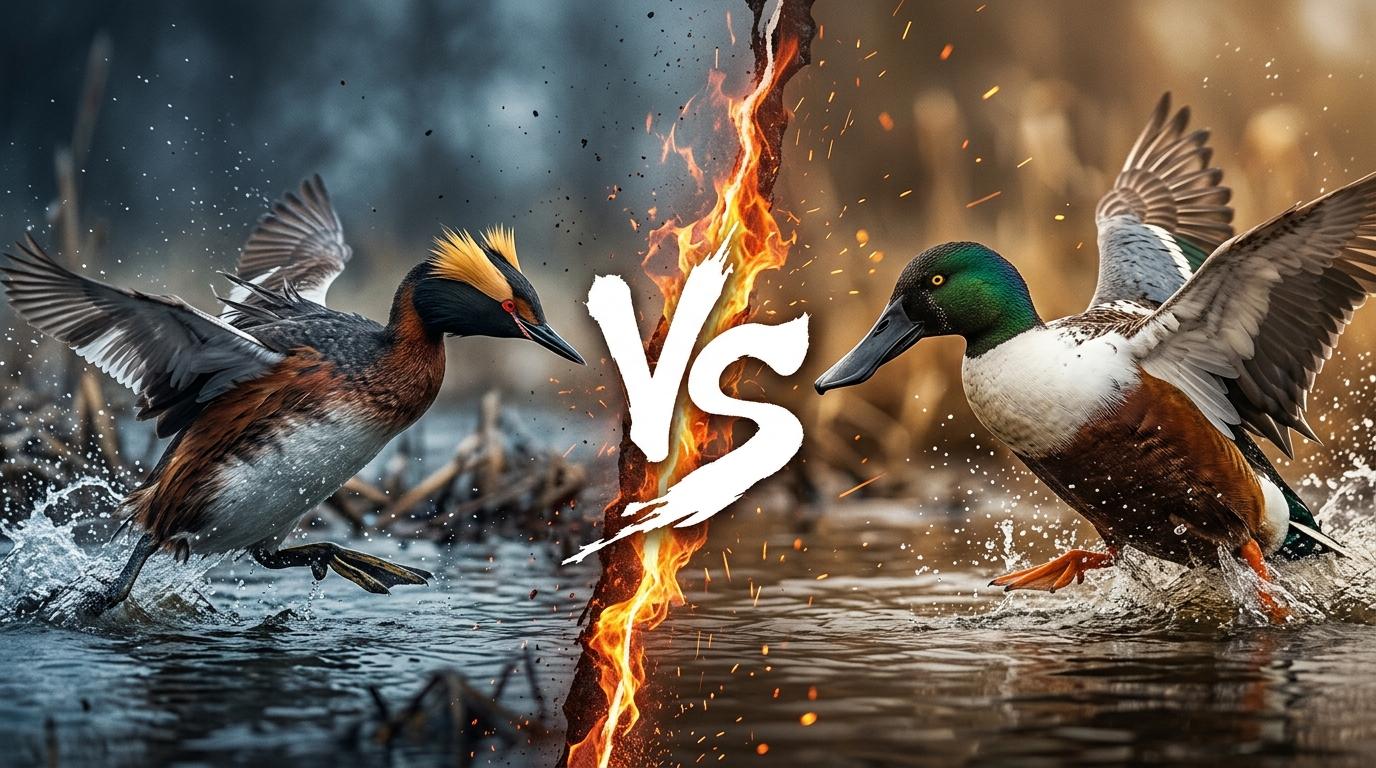
Horned Grebe vs Northern Shoveler: Who Actually Wins?
The Northern Shoveler wins this matchup. At roughly 400–800 g against the Horned Grebe's 300–570 g, the shoveler brings more mass, a broad, firm bill built for shoving, and the routine pair-territory aggression of a breeding drake. That is enough to push a grebe off a contested patch of water. The grebe is no pushover. It is a sharper-billed, lobe-toed diving specialist that can vanish underwater and jab with precision. But it wins by leaving, not by holding ground. In any surface standoff over space or food, the heavier dabbler with chest-bump and bill-pressing tactics controls the encounter, and the grebe's best move is to dive away.
Read comparison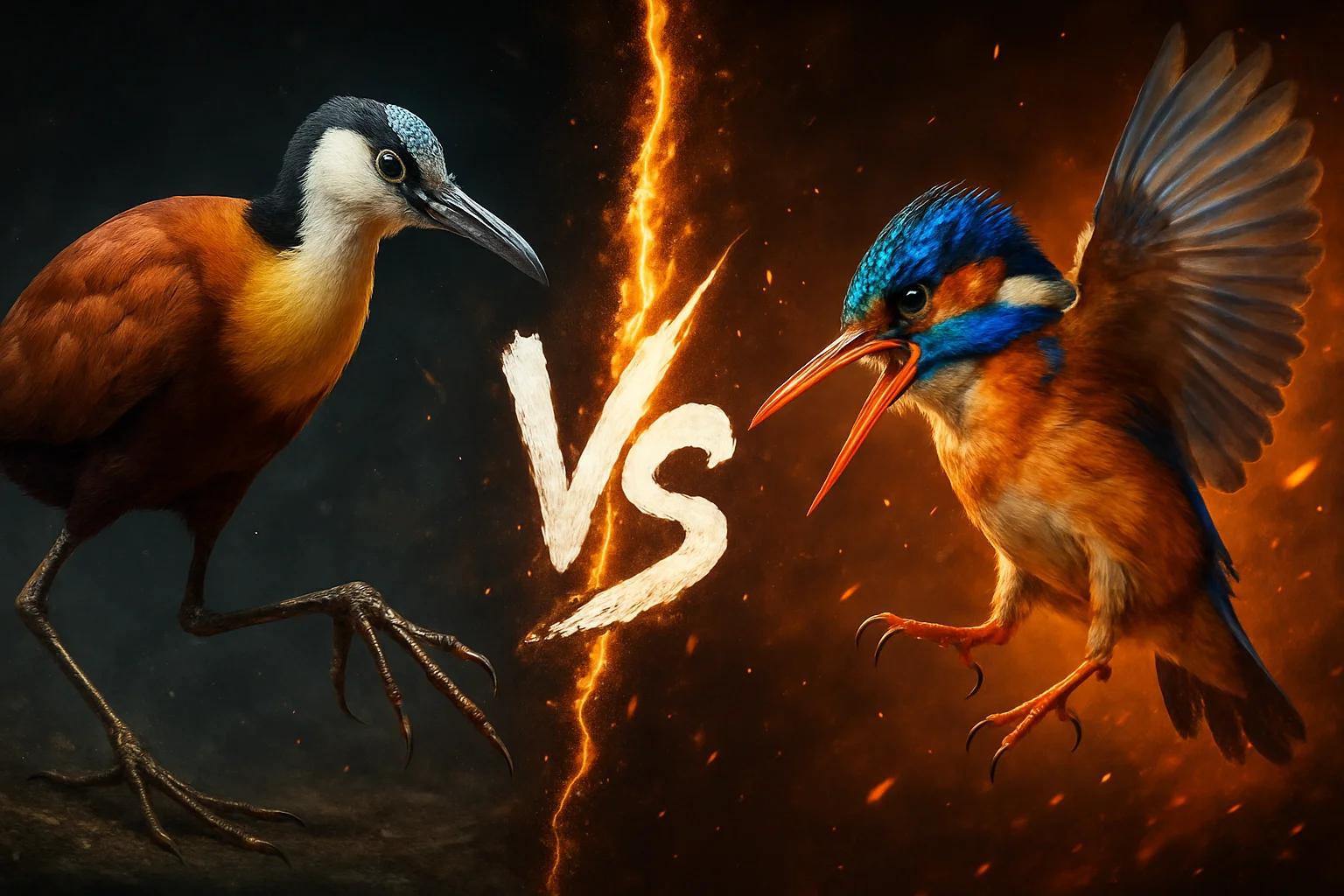
African Jacana vs Malachite Kingfisher: Who Actually Wins?
The African Jacana wins, and it is not especially close once you look past the near-identical headline stats. A jacana typically weighs about 140–290 g, with females the larger sex, while a Malachite Kingfisher is a jewel-sized 15–18 g dart. That is roughly ten times the body mass. The jacana pairs that bulk with long, strong legs, a stout bill, bony wrist knobs on the wings and a famously belligerent territorial temperament. The kingfisher's dagger bill and blistering perch-to-water strikes are built to spear small fish and tadpoles, not to hurt a bird its own length and many times its weight. In any sustained contact the kingfisher's best move is to leave, and it usually does.
Read comparison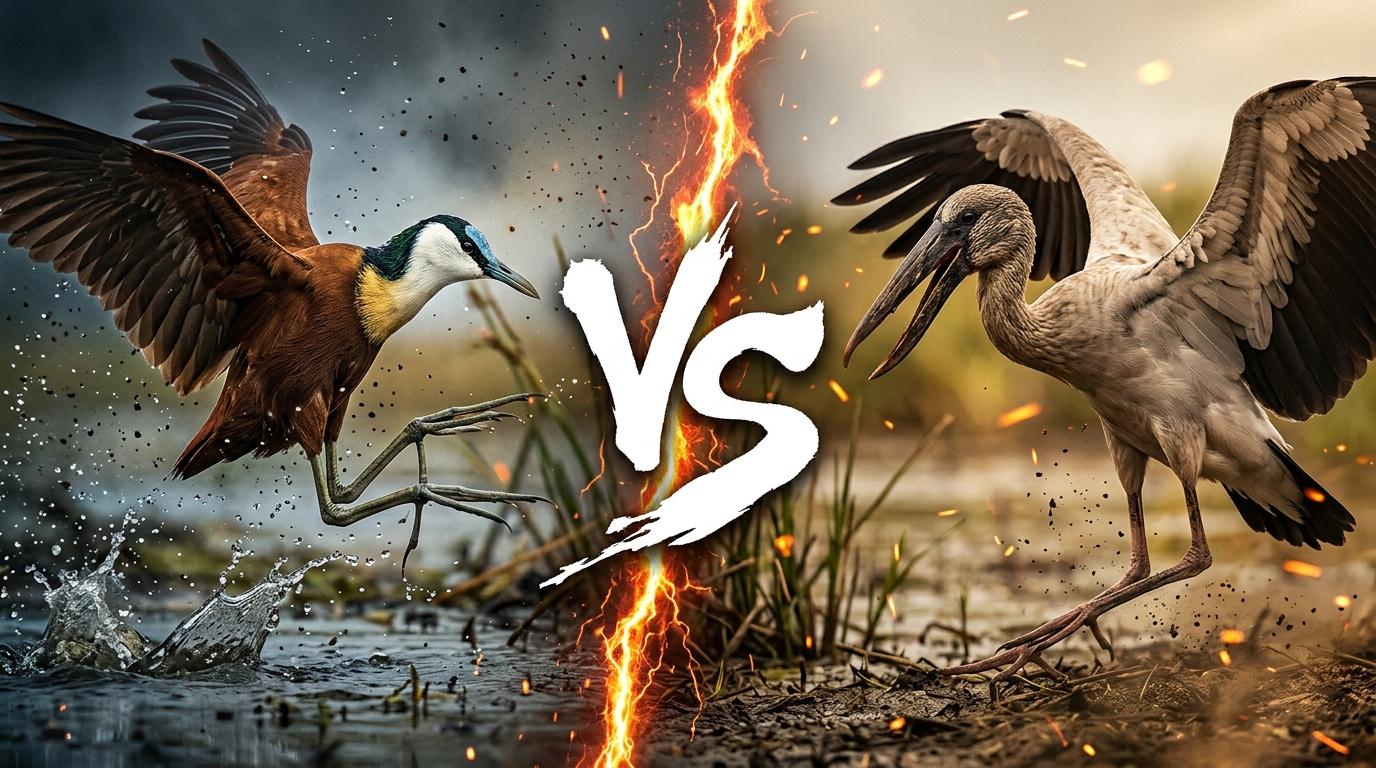
African Jacana vs African Openbill: Who Actually Wins?
The African Openbill wins this matchup clearly. It is a true stork, standing roughly 80–94 cm tall and weighing around 1 kg, against a jacana of about 25–30 cm that weighs between 140 and 260 g. That makes the openbill several times heavier, with a long, stout bill and real reach. Jacanas are famously feisty, and females especially defend territories hard. They also carry small carpal spurs on the wings and have lily-pad-walking toes that make them uncannily agile on floating vegetation. None of that offsets a stork that can look down on the jacana from roughly three times its height. In almost any direct contest over space or food, the openbill's mass and reach push the jacana aside. The jacana's best result is not losing badly: it dances across floating plants where a heavy stork cannot follow.
Read comparison
Discussion
What do you think?
Share your reasoning with other readers. Be civil and stick to the animals.
Sign in to join the discussion.
Sign inNo comments yet. Start the conversation.