

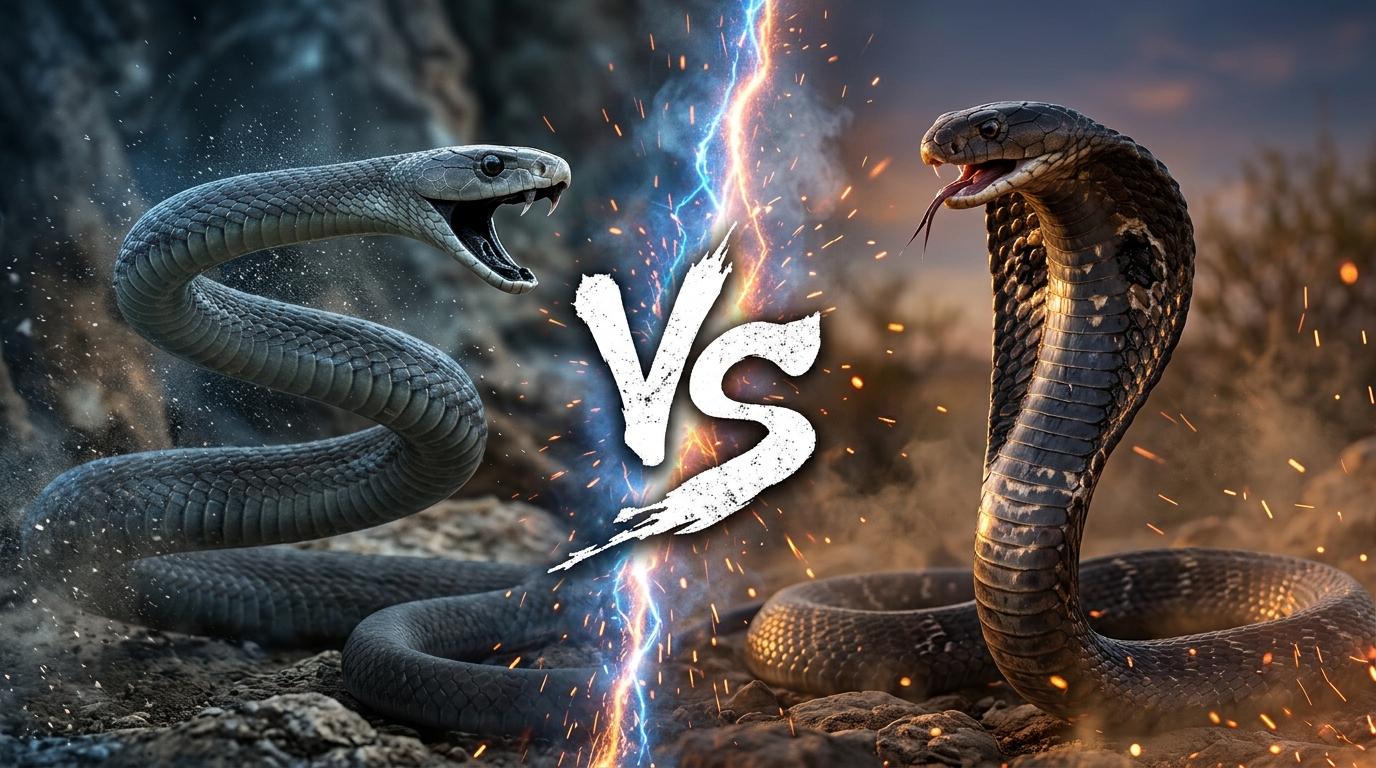
Black Mamba vs Egyptian Cobra: Who Actually Wins?
Black mamba vs Egyptian cobra: a biology-first breakdown of speed, venom, size, and strike tactics, with a clear verdict on which African elapid comes out on top.
Black Mamba vs Egyptian Cobra
Matchup winner
Black Mamba
Quick verdict
Start with the direct answer, then use the structured comparison below to see what changes the outcome.
The black mamba wins this matchup more often than not. Both are large African elapids whose venoms are dominated by fast-acting neurotoxins, so neither has a decisive chemical edge. The difference is delivery. The mamba is longer, typically 2.5–3 m against roughly 1.5–2 m for a big Egyptian cobra. It also has a higher, faster striking reach and the mobility to strike and withdraw several times before an opponent can reset. The Egyptian cobra is a sturdier, more deliberate snake whose hood display and short, hard strikes work well against predators that hesitate. The mamba's speed and reach mean it is more likely to land the first meaningful bite and avoid the return one. Neither snake is immune to the other's venom, so this is a contest of who envenomates first, and that favors the mamba.
Read the full explanation
Black mamba wins most encounters, mainly through reach, speed, and repeated strikes.
Both carry potent neurotoxic venom, so the first good bite matters more than venom strength.
The Egyptian cobra is heavier-bodied and steady, and it can win in tight cover or with a lucky early bite.
In the wild, the two would almost always avoid each other rather than fight.
Reader vote
Who do you think wins?
Pick a side — no account needed. Results update live.
No votes yet — be the first to call it.
Editorial note
Why people disagree
Venom rankings get overrated. Both venoms can kill an adult human, so the real question is who bites first.
Strike reach
Reach decides who connects first, and first contact is everything in a venom duel.
Burst mobility
Speed lets the mamba strike, withdraw, and strike again without trading bites.
Venom payload
The two are close. The mamba's rapid onset gives it a slight edge in a short exchange.
Read the full explanation +
Cobras look more intimidating because of the hood, but the display is a warning signal, not a combat advantage.
Some point to cobra-family snakes that eat other snakes. Unlike the snake-eating king cobra, Naja haje is not a snake specialist, so that reputation doesn't transfer.
Comparison FAQ
Short, direct answers to the next questions readers usually ask after the headline verdict.
Would a black mamba beat an Egyptian cobra?+
Usually, yes. The mamba's reach and speed help it bite first and avoid being bitten back, which decides most venomous snake encounters.
Which is stronger, a black mamba or an Egyptian cobra?+
The cobra is heavier-bodied for its length and sturdier at close range. The mamba is longer and much faster. In a fight, speed and reach matter more than raw strength.
Which venom is more dangerous?+
Both are medically serious and potentially fatal to humans. Black mamba venom is known for its very fast onset. Egyptian cobra venom is also strongly neurotoxic. Either bite needs emergency antivenom treatment.
Why is the Egyptian cobra still dangerous even if it loses?+
Its neurotoxic bite can kill a mamba or a person. Its sturdy build and short, hard strikes also make it hard to beat in tight spaces.
Do black mambas and Egyptian cobras fight in the wild?+
Rarely. They overlap in parts of Africa, but each prefers to retreat or warn rather than risk a bite.
Head-to-head species stats
These are the same core AnimalDex stat dimensions used on the dedicated animal pages, pulled side by side so the matchup is faster to scan.
Black Mamba
Tier BEgyptian Cobra
Tier CTrait-by-trait comparison
Only the categories that matter to this matchup are included. The goal is not filler stats, but the real design differences that change the result.
Long body that can lift a large share of its length off the ground
Strike reach
Black Mamba
Shorter, lower strike from a hooded stance
Strike reach
Black Mamba
Among Africa's fastest snakes, with short bursts reported around 15–20 km/h
Burst mobility
Black Mamba
Agile but more grounded and deliberate
Burst mobility
Black Mamba
Fast-acting neurotoxins that disrupt nerve signaling
Venom payload
Black Mamba
Potent neurotoxins delivered in sizeable doses
Venom payload
Black Mamba
Slender, whip-like build
Close-range durability
Egyptian Cobra
Thicker, sturdier body
Close-range durability
Egyptian Cobra
Gaping black mouth and flattened neck
Threat display control
Egyptian Cobra
Broad hood and loud, sustained hiss
Threat display control
Egyptian Cobra
How the verdict forms
Verdict timeline
01 · Strike reach
Black Mamba
02 · Burst mobility
Black Mamba
03 · Venom payload
Black Mamba
04 · Close-range durability
Egyptian Cobra
05 · Threat display control
Egyptian Cobra
Change the conditions
Scenario breakdown
This is where shallow battle content usually fails. Terrain, spacing, timing, and engagement style can change the answer.
Scenario lean
Black Mamba
Verdict confidence
82%
Mamba advantage
With room to move, the mamba can use its height and speed to strike from outside the cobra's range and then withdraw. The cobra's hooded stance stays mostly in one spot, so the mamba controls distance and timing.
AnimalDex field profiles
Explore these animals
Black Mamba
Dendroaspis polylepis
Savannah, rocky outcrop, woodland edge, and dry river corridor with shelter sites.
Egyptian Cobra
Naja haje
desert fringe, rocky scrub, farmland edge, and river valley
Systems Intelligence & Hidden Purpose
See the animals behind this comparison as engineered biological systems: what each one is built to do, where it gains leverage, and why the matchup changes by scenario.
Specialized Hardware
Long muscular body, elevated head carriage, and fast-acting venom delivery make black mambas strike hardware optimized for speed, reach, and decisiveness.
Systems Script
Black mambas regulate small mammal and bird populations across dry African landscapes while showing how mobility changes predator geometry. They do not own one hiding place; they own the gap between them.
Strategic Insight
Velocity matters most when it is paired with accuracy and a clear exit route.
Specialized Hardware
hood-raising display, venomous strike system, and desert-and-river-edge adaptability give the Egyptian Cobra a body plan tuned for its niche.
Systems Script
Egyptian Cobras operate through desert fringe, rocky scrub, farmland edge, and river valley Their design links movement, shelter, and feeding into one workable survival system.
Strategic Insight
A clear warning can shift the fight before contact begins.
Final take
The black mamba is the overall winner. Both snakes carry deadly neurotoxins, so this fight comes down to delivery, and the mamba's length, reach, and speed give it the better odds of landing the first serious bite.
Read the full explanation
The Egyptian cobra is far from outclassed. In cramped cover, or if it lands an early bite, it can win. Its venom could just as easily drop a mamba. Both species are formidable, and in nature they would almost always choose to avoid each other.
Collect both animals in AnimalDex
Track the species behind this matchup, compare their real traits, and build the rivalry into your AnimalDex collection.
Related comparisons
Continue with nearby matchups to compare more real-world animal traits without dropping into junky who-wins filler.
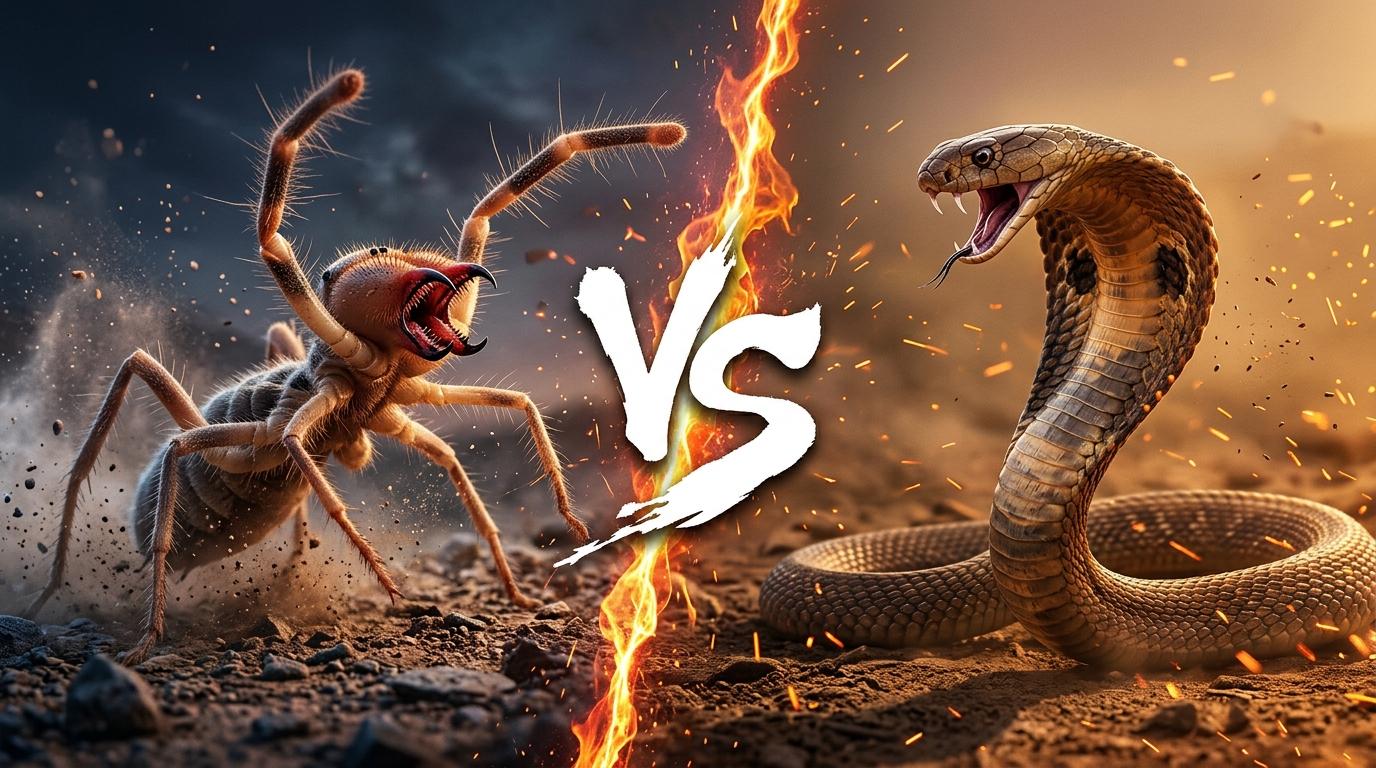
Camel Spider vs Egyptian Cobra: Who Actually Wins?
The Egyptian cobra wins this one clearly. An adult Naja haje commonly reaches 1.5 to 2 meters and carries a potent neurotoxic venom. A camel spider (Galeodes arabs) is a fast, aggressive solifugid, but it typically spans only about 10 to 15 cm, legs included, and has no venom at all. Its weapons are oversized chelicerae, the pincer-like jaws it uses to shred insects, small lizards, and the occasional tiny rodent. Those jaws can hurt a small animal, but they struggle to do decisive damage to a heavy, scaled cobra many times their mass. The cobra only needs one controlled strike or bite to pin, envenomate, and finish a target it simply outclasses. The camel spider's real advantages are speed in bursts and fearless aggression, and those buy it escapes rather than victories. In almost any realistic encounter, the cobra either eats it or ignores it.
Read comparison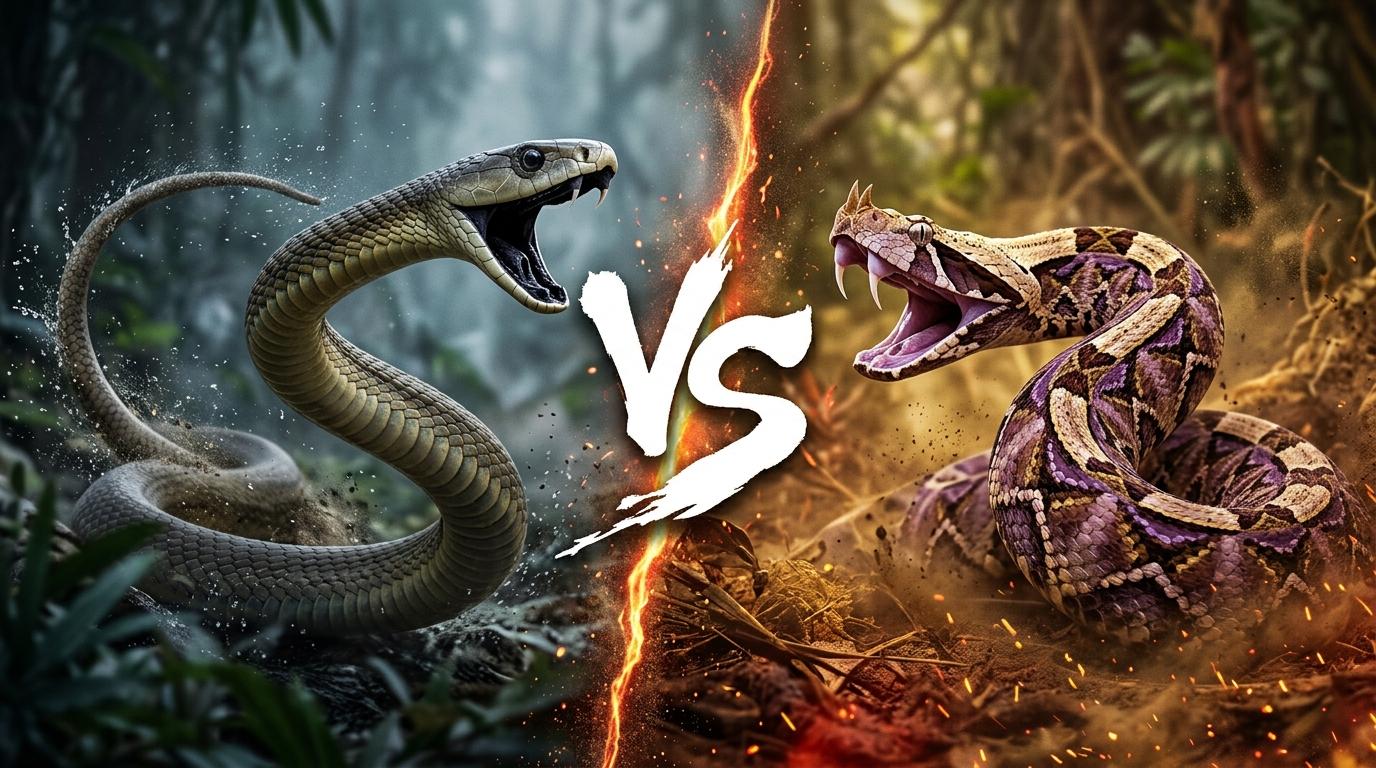
Black Mamba vs Gaboon Viper: Who Actually Wins?
The black mamba wins this matchup most of the time. The Gaboon viper carries the longest fangs of any snake, up to about 5 cm, and one of the largest venom yields ever measured. A single deep bite would be catastrophic for almost any animal. But that power is built for ambush. It sits motionless on the forest floor, strikes passing prey and then waits. The mamba is a different machine. It is long, alert and lightning-quick, and it can strike repeatedly from a raised posture. Its fast-acting neurotoxic venom shuts down breathing rather than slowly destroying tissue. In a confrontation, the mamba's reach, mobility and ability to disengage let it control range. The viper needs the opponent to come into its strike zone. Mambas do not have to oblige. The viper wins only if it lands first and deep, which is a real but narrower path to victory.
Read comparison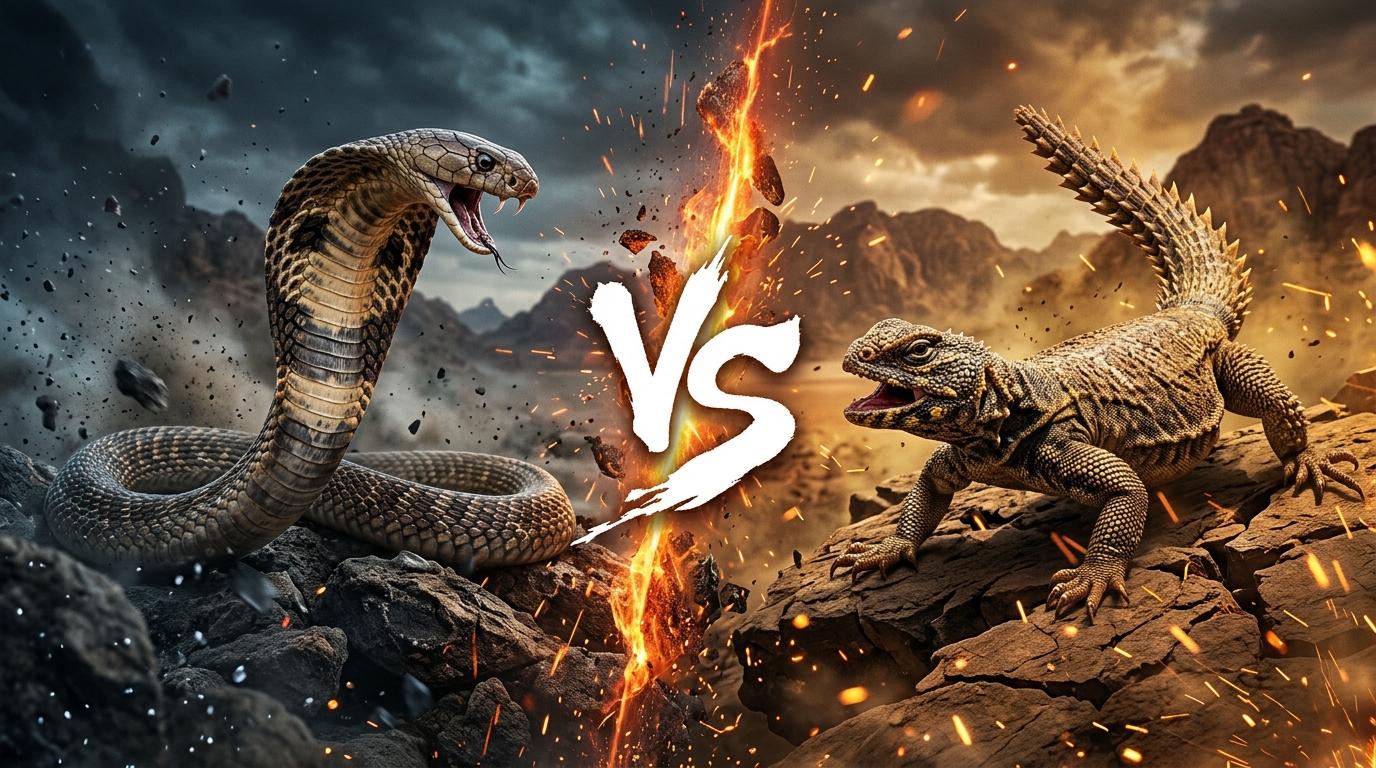
Egyptian Cobra vs Spiny-tailed Lizard: Who Actually Wins?
The Egyptian Cobra wins. Naja haje is a venomous predator built to deliver potent neurotoxic venom through fixed front fangs. It is also a reach-and-retreat striker that can stay back from a lizard's jaws and tail. The Egyptian Spiny-tailed Lizard (Uromastyx aegyptia) is one of the largest uromastyx species. It is heavier per body length and protected by a club-like tail ringed with spiky scales, and its strong herbivore jaws can bite hard. But it has no venom, no reliable way to land a decisive blow, and its main defense is to shut itself inside a burrow and block the entrance with its tail. In the open, one effective bite from the cobra starts a clock the lizard cannot stop. Cobras in North Africa do take lizards and rodents. The uromastyx is a herbivore that fights to deter attackers, not to kill them. The lizard's best result is a stalemate at its burrow mouth. That is a reason it survives, not a way to win.
Read comparison
Black Mamba vs Mole Viper: Who Actually Wins?
The black mamba wins this matchup clearly. It is Africa's longest venomous snake, often 2.5 m or more, against a burrowing mole viper that usually stays under 60 cm. The mamba strikes fast and repeatedly with a potent neurotoxic venom, and it holds its head high. That reach and tempo let it control the engagement before the smaller snake can close. The mole viper is no pushover. Its fangs swing out sideways from a closed mouth, so it can stab backward and sideways in tight spaces where normal snakes can't bite. That makes it awkward to pin and gives it a real edge underground. Out in the open, though, size and speed decide the fight, and the mamba has more of both. Large ophiophagous elapids also carry some natural margin against smaller venomous prey. The black mamba takes it more often than not, with roughly 80% confidence.
Read comparison
Discussion
What do you think?
Share your reasoning with other readers. Be civil and stick to the animals.
Sign in to join the discussion.
Sign inNo comments yet. Start the conversation.