

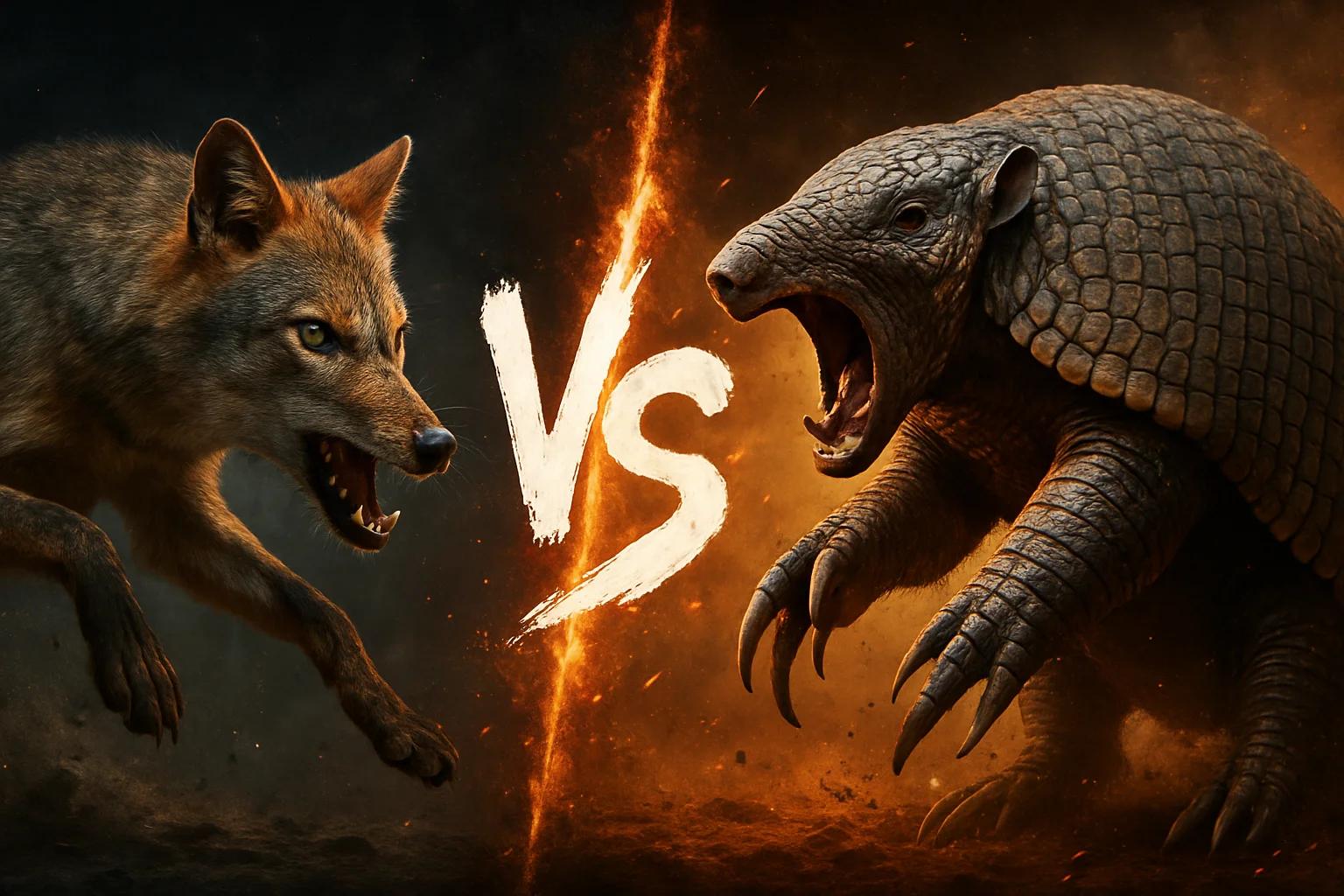
Crab-eating Fox vs Giant Armadillo: Who Actually Wins?
Crab-eating fox vs giant armadillo: speed and cunning meet armor and digging claws. See the biology-based verdict, scenarios, and why the armadillo comes out on top.
Crab-eating Fox vs Giant Armadillo
Matchup winner
Giant Armadillo
Quick verdict
Start with the direct answer, then use the structured comparison below to see what changes the outcome.
The giant armadillo wins this matchup. At roughly 18–33 kg it outweighs a 5–8 kg crab-eating fox several times over, and its banded carapace turns the fox's main weapon, a small canid bite, into a near-useless tool. The armadillo also carries the largest claws in the mammal world relative to its size, with the third-fore-claw reaching about 20 cm, and those claws are built to rip apart termite mounds hard as concrete. The fox is faster, more agile, and smarter about its options, but none of that gives it a way through the armor. Realistically the fox cannot hurt the armadillo in any meaningful way. The armadillo can either ignore the fox, dig itself into the ground within minutes, or deliver a defensive swipe that a small fox cannot afford to absorb. Because the fox has no path to victory, the armadillo is the clear winner, even though the fox will almost always walk away unharmed if it chooses to disengage.
Read the full explanation
Giant armadillo wins: about 3–5x heavier, armored, and armed with huge digging claws.
The crab-eating fox's bite can't meaningfully penetrate the armadillo's carapace.
The fox's real edge is speed and judgment, so it avoids the fight rather than winning it.
In the wild, these two almost never have a reason to fight.
Reader vote
Who do you think wins?
Pick a side — no account needed. Results update live.
No votes yet — be the first to call it.
Editorial note
Why people disagree
Speed and intelligence look decisive on paper, but they only help if the faster animal has a way to cause damage, and the fox doesn't.
Body mass & frame
The fox gives up several times the armadillo's weight. It can't pin, flip, or out-push an animal this heavy and this low to the ground.
Close-range durability
Armor erases the fox's only offensive tool, which decides the matchup before speed ever matters.
Weapon hardware
The claws are built to break hardened termite mounds. A defensive swipe can do serious damage to a light-bodied fox.
Read the full explanation +
People picture armadillos as the small nine-banded kind. The giant armadillo is a different animal, heavy and built like a mining machine.
Some readers score 'escaping unhurt' as a fox win. A battle verdict asks who can impose their will, and only the armadillo can.
Comparison FAQ
Short, direct answers to the next questions readers usually ask after the headline verdict.
Would a crab-eating fox beat a giant armadillo?+
No. The fox can't penetrate the armadillo's armor and is heavily outweighed. The giant armadillo wins any real fight.
Which is stronger, a crab-eating fox or a giant armadillo?+
The giant armadillo, by a wide margin. Its forelimbs and claws are built to tear open hardened termite mounds and dig burrows, a level of power the fox can't approach.
Can the giant armadillo hurt the fox?+
Yes. Its foreclaws are among the largest of any mammal, and a defensive swipe could injure a 5–8 kg fox badly.
Why is the crab-eating fox still dangerous if it loses?+
It is quick, smart, and has a capable bite against unarmored targets. It is a real threat to small animals and to young or exposed prey. It just has no answer to an adult giant armadillo's armor.
Do crab-eating foxes and giant armadillos meet in the wild?+
Their ranges overlap in parts of South America, including the Cerrado, Pantanal, and forest edges. They rarely interact aggressively because neither is a natural food source for the other.
Is the giant armadillo endangered?+
It is listed as Vulnerable. Habitat loss and hunting threaten it, and it is rarely seen, which makes it far rarer than the widespread crab-eating fox.
Head-to-head species stats
These are the same core AnimalDex stat dimensions used on the dedicated animal pages, pulled side by side so the matchup is faster to scan.
Crab-eating Fox
Tier CGiant Armadillo
Tier ATrait-by-trait comparison
Only the categories that matter to this matchup are included. The goal is not filler stats, but the real design differences that change the result.
5–8 kg lean canid
Body mass & frame
Giant Armadillo
18–33 kg low, dense tank
Body mass & frame
Giant Armadillo
Fur and skin only
Close-range durability
Giant Armadillo
Bony banded carapace and head shield
Close-range durability
Giant Armadillo
Small canid bite tuned for crabs, rodents, fruit
Weapon hardware
Giant Armadillo
Massive foreclaws, the third reaching about 20 cm
Weapon hardware
Giant Armadillo
Quick, nimble, fast to change direction
Speed & evasion
Crab-eating Fox
Slow, deliberate gait
Speed & evasion
Crab-eating Fox
Runs into scrub and forest edge
Escape options
Giant Armadillo
Digs in or retreats to its burrow
Escape options
Giant Armadillo
Opportunistic, adaptable, reads situations
Tactical flexibility
Crab-eating Fox
Narrow but highly reliable defense
Tactical flexibility
Crab-eating Fox
How the verdict forms
Verdict timeline
01 · Body mass & frame
Giant Armadillo
02 · Close-range durability
Giant Armadillo
03 · Weapon hardware
Giant Armadillo
04 · Speed & evasion
Crab-eating Fox
05 · Escape options
Giant Armadillo
06 · Tactical flexibility
Crab-eating Fox
Change the conditions
Scenario breakdown
This is where shallow battle content usually fails. Terrain, spacing, timing, and engagement style can change the answer.
Scenario lean
Giant Armadillo
Verdict confidence
82%
Armadillo digs in and the fox gets nothing.
In dense vegetation, the fox's speed matters less and the armadillo's habit of hunkering down matters more. Soft soil and leaf litter let the armadillo start digging almost at once. Any probing bite from the fox meets bone plates.
AnimalDex field profiles
Explore these animals
Crab-eating Fox
Cerdocyon thous
savannah, marsh edge, and seasonally flooded grassland
Giant Armadillo
Priodontes maximus
savannah woodland, tropical forest, and seasonally flooded plain
Systems Intelligence & Hidden Purpose
See the animals behind this comparison as engineered biological systems: what each one is built to do, where it gains leverage, and why the matchup changes by scenario.
Specialized Hardware
gray-and-russet fox body, wetland-edge scavenging, and night-active open-country movement give the Crab-eating Fox a body plan tuned for its niche.
Systems Script
Crab-eating Foxs operate through savannah, marsh edge, and seasonally flooded grassland. Their design links movement, feeding, shelter, and timing into one workable survival system.
Strategic Insight
Where water controls movement, position and timing often matter more than speed.
Specialized Hardware
massive armored digging body, huge front claws, and night-active burrow engineering give the Giant Armadillo a body plan tuned for its niche.
Systems Script
Giant Armadillos operate through savannah woodland, tropical forest, and seasonally flooded plain. Their design links movement, feeding, shelter, and timing into one workable survival system.
Strategic Insight
Dense environments reward precision, patience, and the ability to read layered cover.
Final take
The giant armadillo wins because it has the only workable plan in this matchup. Its armor shuts down the fox's offense, and its claws and size make close contact costly. The crab-eating fox is a superb generalist, but generalist tools aren't designed for cracking a living fortress.
Read the full explanation
The fox stays respectable because it is rarely caught. It will judge the situation and slip away long before the armadillo's claws come into play. In a forced battle, though, the verdict is not close: armor and mass beat agility when agility has nothing to hit.
Collect both animals in AnimalDex
Track the species behind this matchup, compare their real traits, and build the rivalry into your AnimalDex collection.
Related comparisons
Continue with nearby matchups to compare more real-world animal traits without dropping into junky who-wins filler.
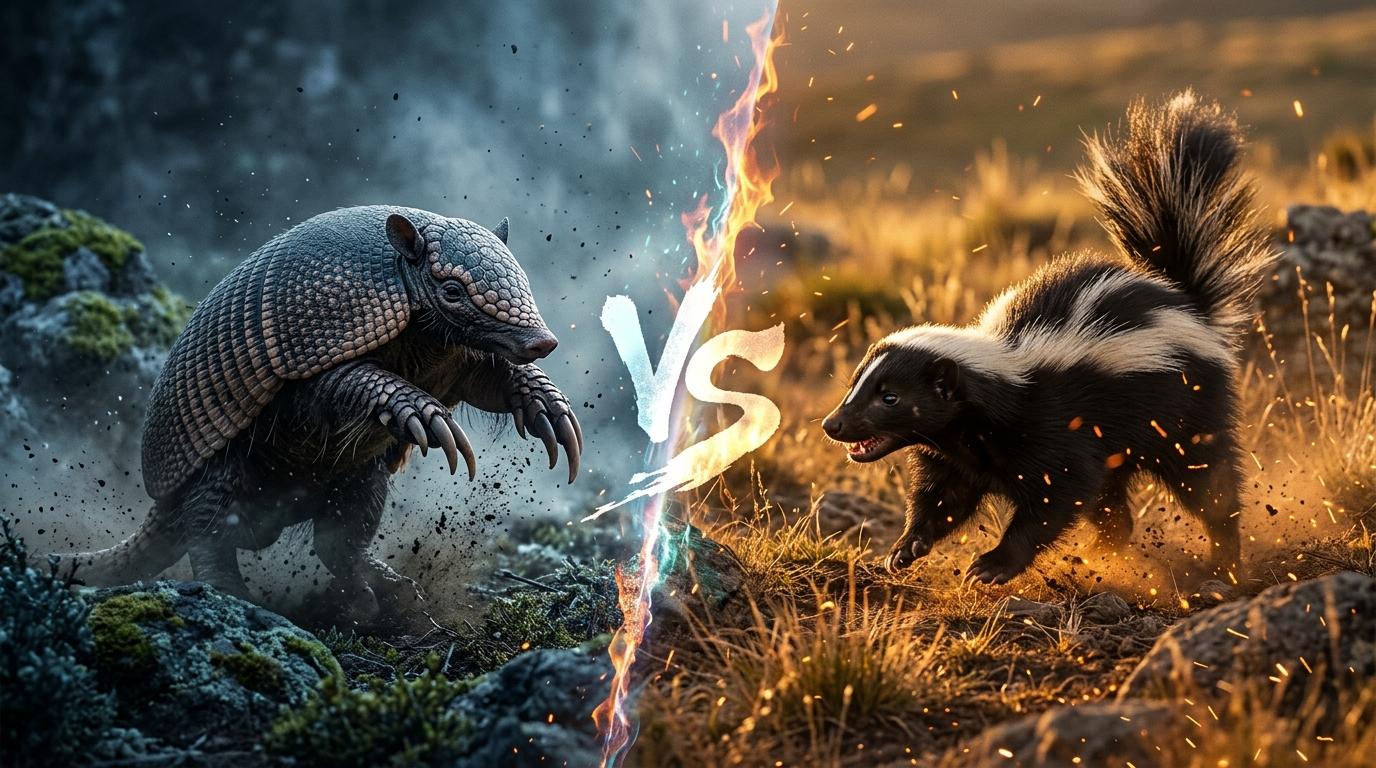
Giant Armadillo vs Patagonian Hog-nosed Skunk: Who Actually Wins?
The giant armadillo wins, and it is not especially close. At roughly 30–50 kg, it outweighs the 1–4.5 kg Patagonian hog-nosed skunk by about ten to twenty times. Its body is wrapped in overlapping bony armor, and its forefeet carry the largest claws of any living mammal, a sickle-like third claw up to about 20 cm long that is built to rip open rock-hard termite mounds. The skunk's real weapon is its spray. That sulfur-based thiol mist could make the armadillo, which relies heavily on smell, back off or abandon an encounter. It cannot damage the armadillo's armor or stop a body that heavy. The skunk can make the meeting deeply unpleasant, but it has no way to win a physical contest, so the armadillo takes almost every realistic frame on size, armor and digging-limb power.
Read comparison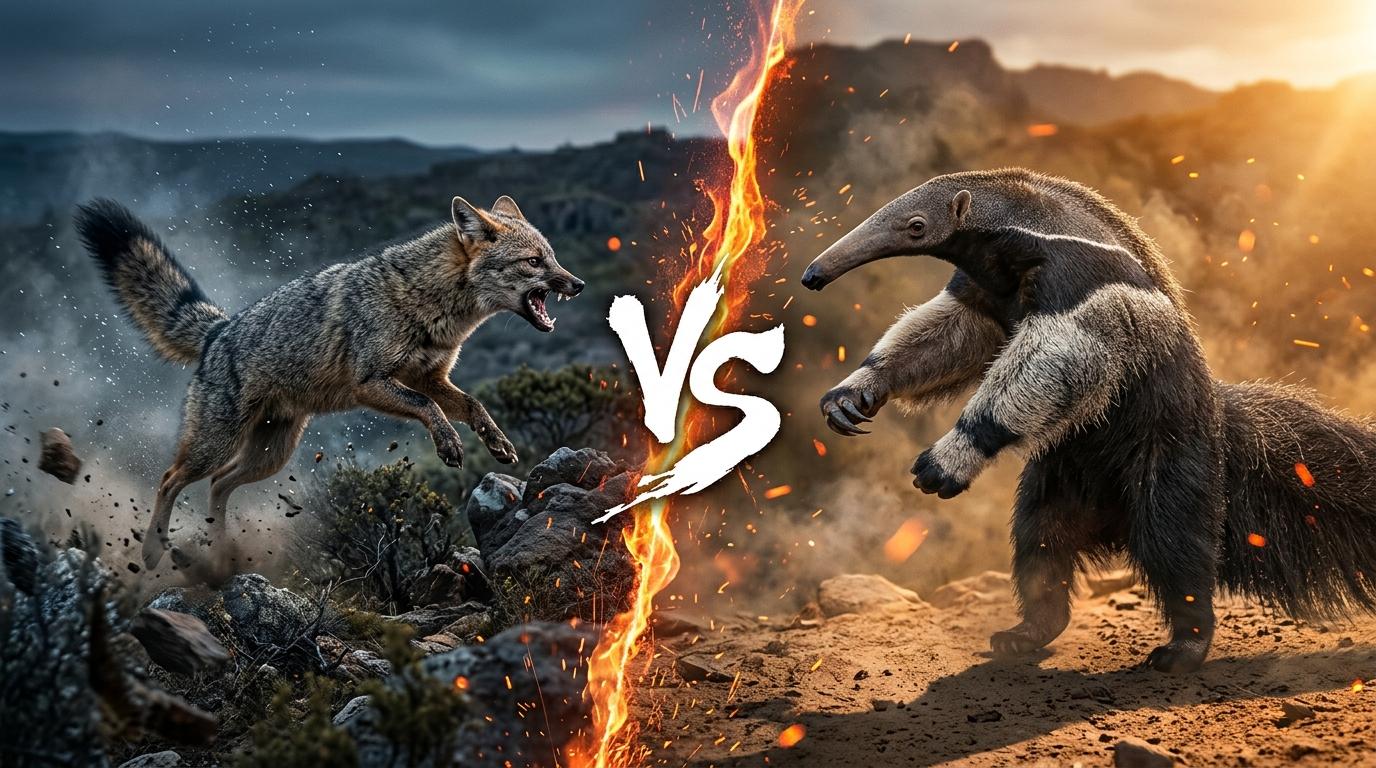
Crab-eating Fox vs Giant Anteater: Who Actually Wins?
The giant anteater wins, and it isn't especially close. A crab-eating fox weighs roughly 5–8 kg. A giant anteater runs about 25–40 kg and carries forelimb claws up to 10 cm long, built to rip open termite mounds as hard as sun-baked clay. The anteater has no teeth, but it doesn't need them. When threatened, it rears onto its hind legs, braces on its tail, and swipes or hugs with those claws. The same defense has killed dogs, wounded jaguars and injured people. The fox's real assets are agility, quick reflexes and smart opportunism. Those help it avoid danger, not win against a heavily armed animal five times its mass. In nearly every realistic encounter the fox either retreats or loses.
Read comparison
Discussion
What do you think?
Share your reasoning with other readers. Be civil and stick to the animals.
Sign in to join the discussion.
Sign inNo comments yet. Start the conversation.