

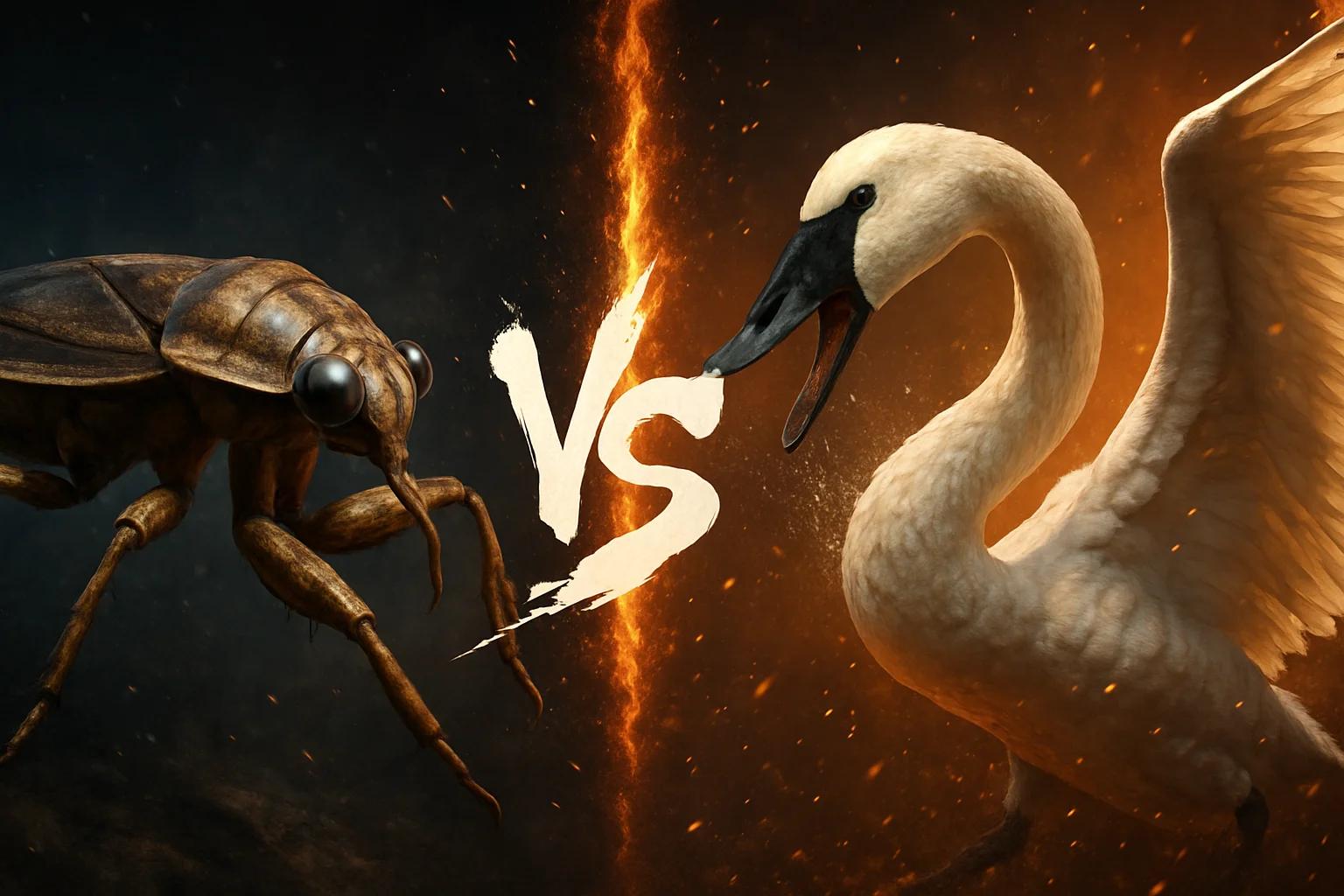
Giant Water Bug vs Trumpeter Swan: Who Actually Wins?
Giant water bug vs trumpeter swan: a biology-first look at venomous ambush versus sheer size, and why the swan wins almost every real encounter.
Giant Water Bug vs Trumpeter Swan
Matchup winner
Trumpeter Swan
Quick verdict
Start with the direct answer, then use the structured comparison below to see what changes the outcome.
The Trumpeter Swan wins, and it isn't close. North America's heaviest native waterfowl weighs around 7–13 kg with a wingspan near 2.4 m, while Lethocerus americanus is a 4–6 cm insect weighing a few grams. The giant water bug is a superb ambush predator. Its raptorial forelegs and piercing beak inject digestive saliva that can kill fish, frogs, and even small ducklings, but its whole toolkit is built for prey smaller than or near its own scale. An adult swan is thousands of times heavier, armored in dense plumage, and feeds by upending to strip submerged vegetation, where it may simply crush, swallow, or ignore the bug. The bug can deliver a famously painful bite, but it has no way to turn that into lethal damage against a bird this large.
Read the full explanation
Trumpeter Swan wins overall by a massive size margin.
The giant water bug's venom-like saliva liquefies small prey but can't scale up to a 10 kg bird.
The bug's real threat is to cygnets and ducklings, not adults.
A swan can neutralize the bug with one bill strike or simply ignore it.
Reader vote
Who do you think wins?
Pick a side — no account needed. Results update live.
No votes yet — be the first to call it.
Editorial note
Why people disagree
The bug's 'toe-biter' reputation and its kills of snakes and turtles make people overestimate its reach against large animals.
Raw size and mass
Mass dictates which weapons matter. The swan sits entirely outside the bug's prey envelope.
Ambush control
The bug wins the first strike, but a first strike only matters if it can finish the job.
Strike payload
Per gram, the bug's chemistry is far deadlier, but the dose is tiny relative to a swan's body.
Read the full explanation +
Viral photos of water bugs eating ducklings blur the line between hatchlings and adult waterfowl.
Painful does not mean lethal. A bite that makes a human yelp barely registers through swan plumage and skin.
Comparison FAQ
Short, direct answers to the next questions readers usually ask after the headline verdict.
Would a giant water bug beat a trumpeter swan?+
No. An adult swan outweighs the bug thousands of times over and can crush or shake it off. The bug cannot deliver a lethal dose to a bird that size.
Which is stronger, a giant water bug or a trumpeter swan?+
The swan is vastly stronger in absolute terms. The bug is impressively strong for its size, able to pin fish and frogs larger than itself.
Can a giant water bug kill a bird?+
Yes, small ones. It has been recorded killing ducklings, and newborn cygnets are theoretically vulnerable, but adult swans are not.
Why is the giant water bug still dangerous?+
Its piercing beak injects digestive enzymes that cause intense pain in humans and liquefy small prey, and its ambush grip is extremely hard to escape for animals near its size.
Are trumpeter swans aggressive?+
Very territorial during nesting. They chase and strike intruders with bills and wings, a much bigger deterrent than anything the bug carries.
Head-to-head species stats
These are the same core AnimalDex stat dimensions used on the dedicated animal pages, pulled side by side so the matchup is faster to scan.
Giant Water Bug
Tier BTrumpeter Swan
Tier CTrait-by-trait comparison
Only the categories that matter to this matchup are included. The goal is not filler stats, but the real design differences that change the result.
4–6 cm, a few grams
Raw size and mass
Trumpeter Swan
Up to ~13 kg, 2.4 m wingspan
Raw size and mass
Trumpeter Swan
Elite sit-and-wait grappler on vegetation
Ambush control
Giant Water Bug
No ambush behavior; open-water forager
Ambush control
Giant Water Bug
Piercing rostrum with digestive enzymes
Strike payload
Giant Water Bug
Powerful bill and wing blows
Strike payload
Giant Water Bug
Hard but crushable exoskeleton
Close-range durability
Trumpeter Swan
Thick down, dense feathers, large body reserves
Close-range durability
Trumpeter Swan
Strong swimmer, capable flier at night
Water and air mobility
Trumpeter Swan
Powerful swimmer, long-distance flier
Water and air mobility
Trumpeter Swan
Defensive, bites when handled
Territorial aggression
Trumpeter Swan
Fierce nest defender that charges intruders
Territorial aggression
Trumpeter Swan
How the verdict forms
Verdict timeline
01 · Raw size and mass
Trumpeter Swan
02 · Ambush control
Giant Water Bug
03 · Strike payload
Giant Water Bug
04 · Close-range durability
Trumpeter Swan
05 · Water and air mobility
Trumpeter Swan
06 · Territorial aggression
Trumpeter Swan
Change the conditions
Scenario breakdown
This is where shallow battle content usually fails. Terrain, spacing, timing, and engagement style can change the answer.
Scenario lean
Trumpeter Swan
Verdict confidence
82%
The bug gets its bite, then gets crushed.
Concealed vegetation is the bug's best case. It can lunge and grip the swan's leg or bill base. But the enzymes injected work slowly and locally, while the swan's reflexive bill strike or shake dislodges and breaks the attacker. Ambush only pays when prey can be subdued.
AnimalDex field profiles
Explore these animals
Giant Water Bug
Lethocerus americanus
Ponds, marshes, slow streams, and still freshwater habitat.
Trumpeter Swan
Cygnus buccinator
Lakes, ponds, marshes, and slow river systems with aquatic plants.
Systems Intelligence & Hidden Purpose
See the animals behind this comparison as engineered biological systems: what each one is built to do, where it gains leverage, and why the matchup changes by scenario.
Specialized Hardware
Flattened brown aquatic body, powerful grasping front legs, and strong rear legs for swimming give the Giant Water Bug a body plan tuned for its niche.
Systems Script
Giant Water Bugs operate in ponds, marshes, slow streams, and still freshwater habitat. Their design helps them match food access, shelter, and timing inside that environment.
Strategic Insight
Control of the first contact can decide the whole contest.
Specialized Hardware
Huge white body and long neck, all-black bill, and powerful wingbeats during takeoff give the Trumpeter Swan a body plan tuned for its niche.
Systems Script
Trumpeter Swans operate in lakes, ponds, marshes, and slow river systems with aquatic plants. Their design helps them match food access, shelter, and timing inside that environment.
Strategic Insight
A clear signal carries farther when the environment is quiet enough to hear it.
Final take
The Trumpeter Swan wins because physics beats chemistry at this size gap. The giant water bug is one of the most effective freshwater predators in its weight class, but its strategy assumes prey it can hold, pierce, and digest from the inside. An adult swan breaks every one of those assumptions.
Read the full explanation
Still, respect the bug. Its venom-like saliva, explosive grab, and patience make it a top-tier invertebrate hunter, dangerous to fish, amphibians, and newborn birds. The matchup simply shows that a perfect ambush still needs the right-sized target.
Collect both animals in AnimalDex
Track the species behind this matchup, compare their real traits, and build the rivalry into your AnimalDex collection.
Related comparisons
Continue with nearby matchups to compare more real-world animal traits without dropping into junky who-wins filler.
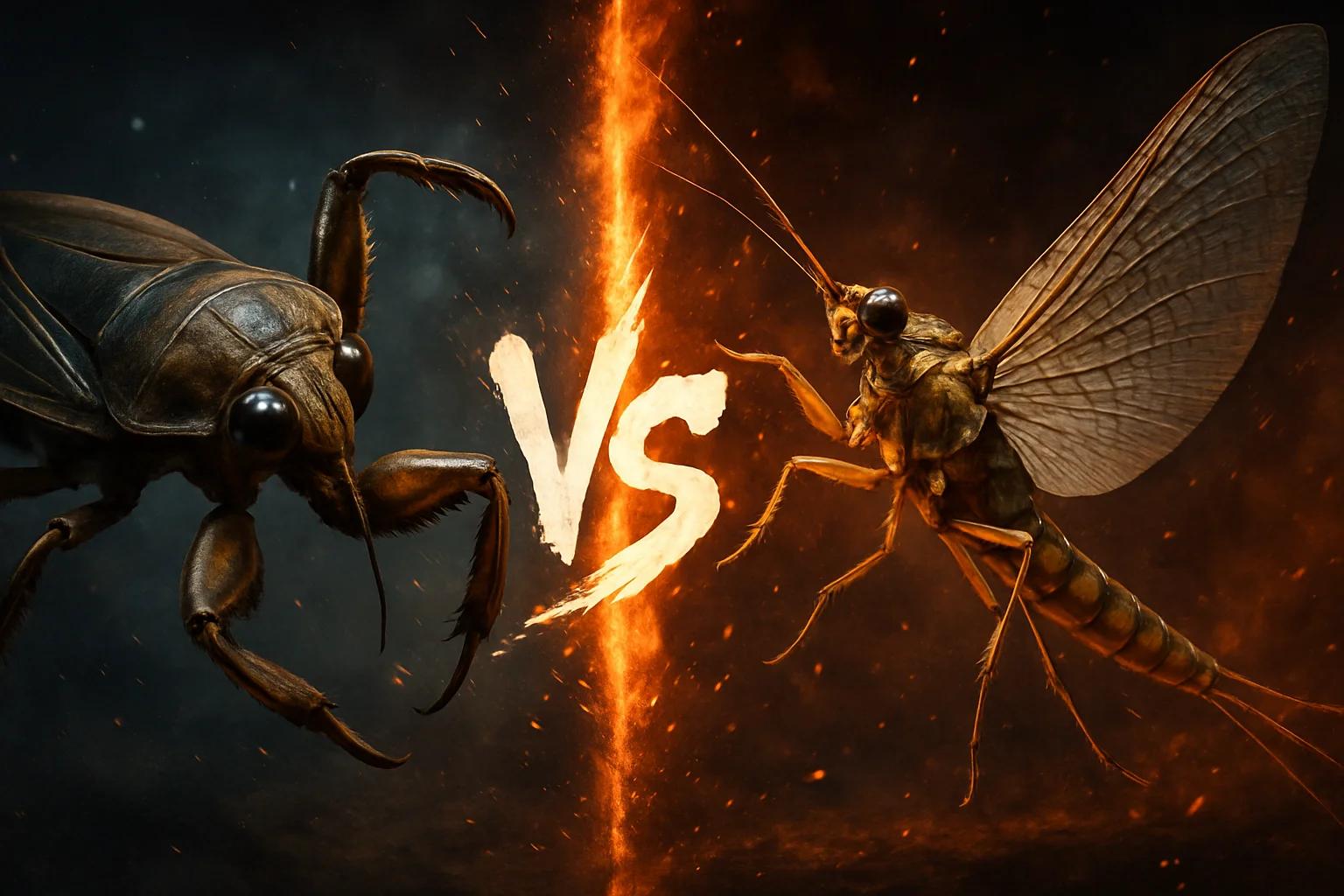
Giant Water Bug vs Giant Burrowing Mayfly: Who Actually Wins?
The giant water bug wins, and it isn't close. Lethocerus americanus is a sit-and-wait aquatic predator up to about 6 cm long. It has raptorial forelegs built to clamp prey and a piercing beak that injects digestive saliva, and it routinely kills tadpoles, small fish, and frogs much larger than itself. Hexagenia limbata is a filter- and deposit-feeding nymph that spends a year or more in U-shaped burrows in lake mud. Its adults live only a day or two and cannot eat at all. The mayfly nymph has no weapons, no venom, and no meaningful bite. Its only real defenses are staying buried and relying on sheer numbers. In nearly every realistic water-column meeting, the bug grabs, pierces, and liquefies the nymph within minutes. The mayfly's only 'wins' come from never being found.
Read comparison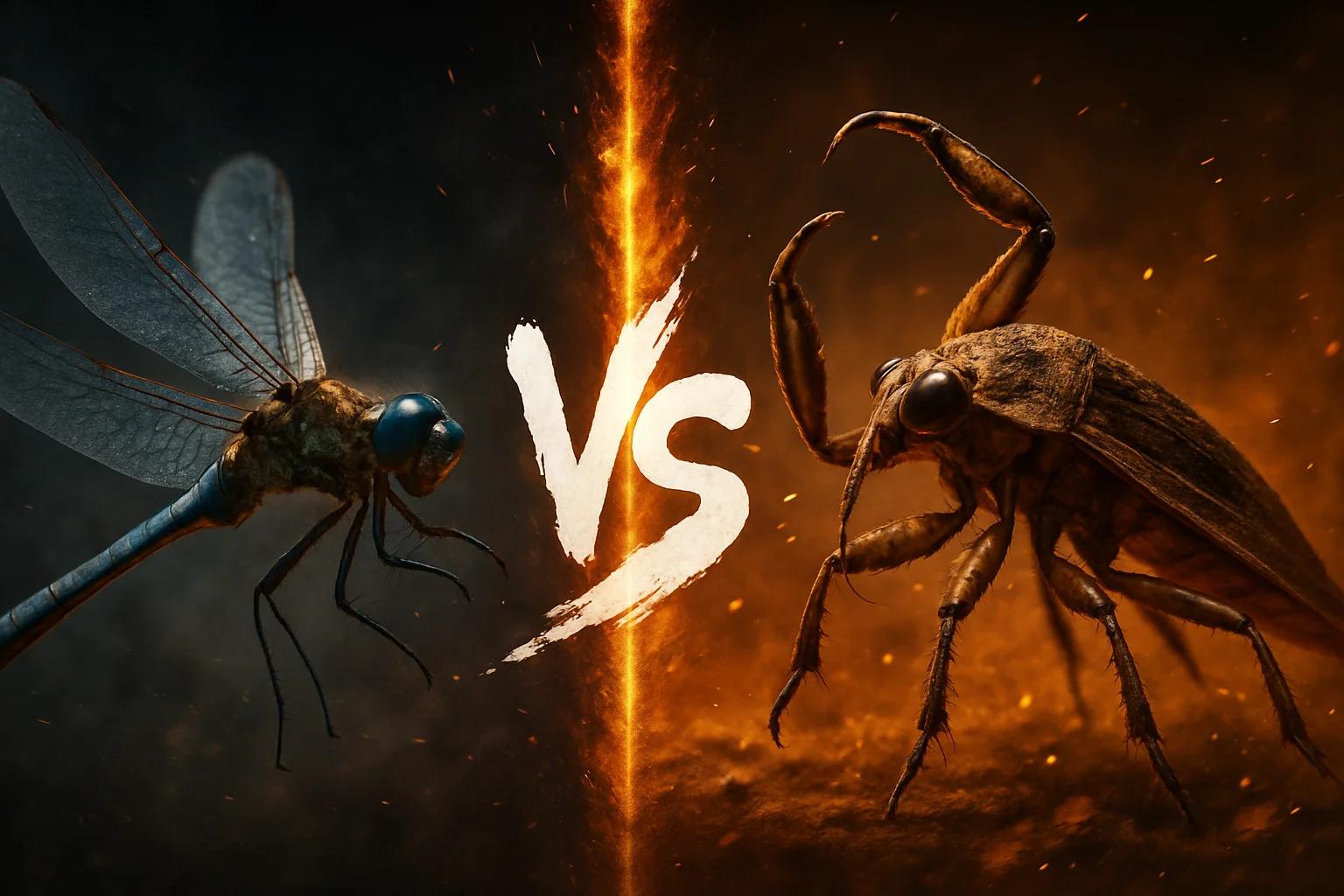
Dragonfly vs Giant Water Bug: Who Actually Wins?
The giant water bug wins a real fight. Lethocerus americanus is a heavier-bodied ambush predator built for one job: grab with thick raptorial forelegs, pierce with a beak-like rostrum, and inject saliva that paralyzes and liquefies prey from the inside. It routinely subdues fish, frogs, and tadpoles larger than a dragonfly. The dragonfly is one of the most precise aerial hunters on Earth, but its weapons (spiny legs and chewing jaws) are tuned for midair captures of gnats and flies, not for wrestling an armored, venom-assisted grappler. The dragonfly's real advantage is that it never has to accept the fight. Once contact happens near water, the bug's grip-and-inject system ends the matchup fast.
Read comparison
Discussion
What do you think?
Share your reasoning with other readers. Be civil and stick to the animals.
Sign in to join the discussion.
Sign inNo comments yet. Start the conversation.