

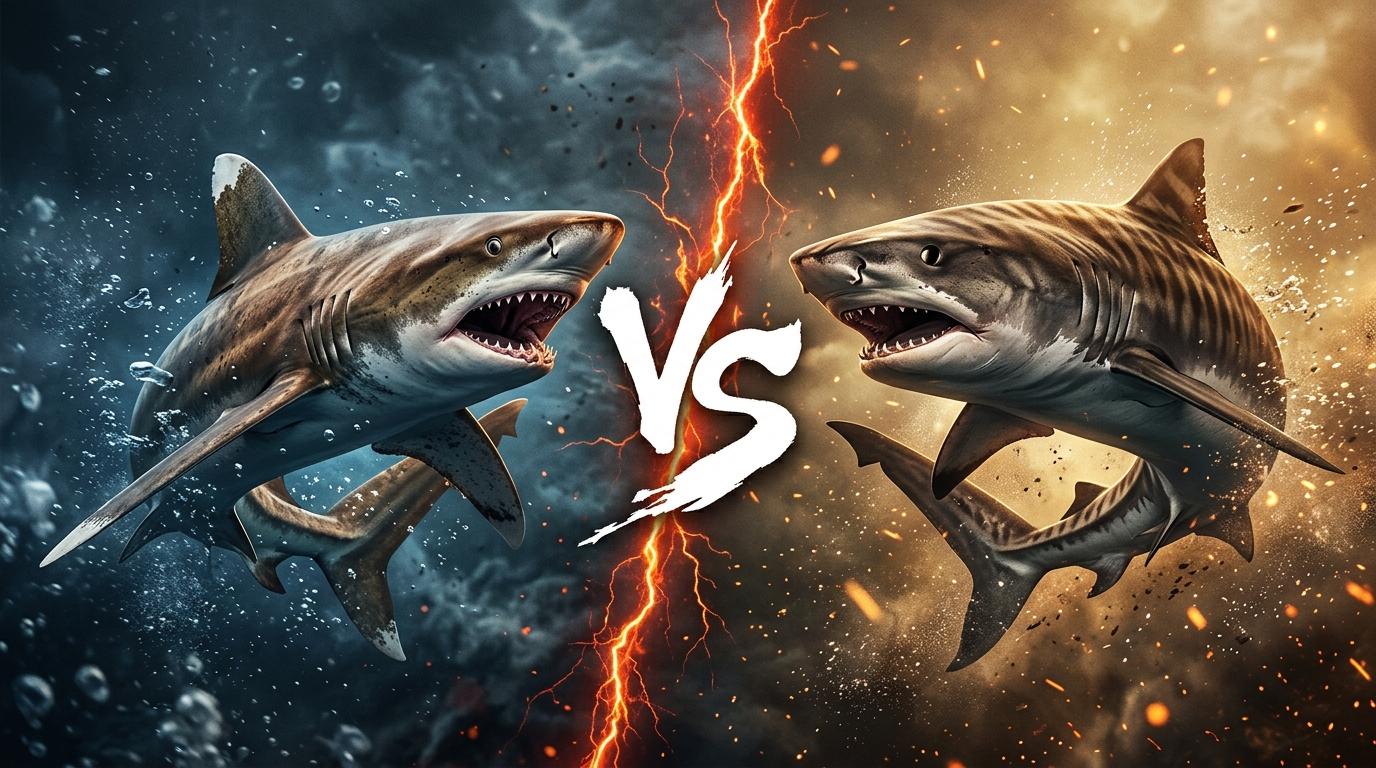
Oceanic Whitetip vs Tiger Shark: Who Actually Wins?
Oceanic whitetip shark vs tiger shark: a biology-first breakdown of size, bite, durability and behavior to settle who would win, and why the whitetip stays dangerous.
Oceanic Whitetip Shark vs Tiger Shark
Matchup winner
Tiger Shark
Quick verdict
Start with the direct answer, then use the structured comparison below to see what changes the outcome.
The tiger shark wins this matchup clearly. A large adult tiger shark commonly reaches 3.5–4.5 m and well over 400 kg. A big oceanic whitetip tops out around 3–3.5 m and far less mass. That size gap is backed by some of the most specialized teeth in the shark world. Tiger shark teeth are serrated and cockscomb-shaped, built to saw through sea turtle shells, and the jaws behind them are broad and powerful. The whitetip is a persistent, bold open-ocean opportunist with long paddle-like pectoral fins built for efficient cruising. But its hardware is tuned for scavenging and grinding down patient contests over scattered food, not for overpowering a heavier, thicker-bodied generalist predator. In almost any realistic confrontation, mass, bite design and durability favor Galeocerdo cuvier.
Read the full explanation
Winner: Tiger shark, thanks to its larger size, heavier build and shell-cutting serrated teeth.
Size gap: adult tiger sharks often outweigh oceanic whitetips by two to three times.
Whitetip edge: relentless persistence and efficient open-ocean endurance, not raw power.
The whitetip remains dangerous, especially around carcasses and to anything weakened or smaller.
Reader vote
Who do you think wins?
Pick a side — no account needed. Results update live.
No votes yet — be the first to call it.
Editorial note
Why people disagree
The oceanic whitetip's fearsome reputation from shipwreck stories makes it seem like the more aggressive, and therefore stronger, shark. Boldness is not the same as fighting power.
Size and mass
In shark confrontations, mass dictates who can push, roll and absorb impacts. The tiger shark's bulk is a decisive advantage.
Bite hardware
Tiger shark teeth are among the most specialized cutting tools in the ocean, built for hard, armored prey.
Close-range durability
A heavier body tolerates bites better and keeps fighting after taking damage.
Read the full explanation +
Both sharks are called 'garbage can' feeders and opportunists, so people assume they are equals. In reality the tiger shark is the far heavier, more armed version of that strategy.
The two rarely meet head-on: the whitetip patrols deep blue water while tiger sharks favor coastal shelves and reefs, so there is little direct footage to settle arguments.
Comparison FAQ
Short, direct answers to the next questions readers usually ask after the headline verdict.
Would an oceanic whitetip beat a tiger shark?+
Usually no. In a committed fight, the tiger shark's greater size, durability and shell-cutting bite give it a clear advantage. The whitetip's best outcome is avoiding or outlasting the encounter in open water.
Which shark is stronger, the tiger shark or the oceanic whitetip?+
The tiger shark is substantially stronger. It is larger and much heavier, and it routinely eats sea turtles and other sharks.
Is the oceanic whitetip still dangerous?+
Yes. It is bold and persistent, and it has historically been linked to attacks on shipwreck survivors in open ocean. It can dominate smaller pelagic competitors and should be treated with great respect.
Do tiger sharks and oceanic whitetips meet in the wild?+
Occasionally, mainly at large food sources or where deep water meets shelf edges. Their preferred habitats differ: whitetips are pelagic, while tiger sharks favor coastal waters and reefs.
Which shark is more aggressive?+
The whitetip is often described as more persistent and investigative. The tiger shark combines boldness with far more power, which makes it the more formidable opponent.
Head-to-head species stats
These are the same core AnimalDex stat dimensions used on the dedicated animal pages, pulled side by side so the matchup is faster to scan.
Oceanic Whitetip Shark
Tier BTiger Shark
Tier CTrait-by-trait comparison
Only the categories that matter to this matchup are included. The goal is not filler stats, but the real design differences that change the result.
Up to ~3.5 m, typically 100–170 kg
Size and mass
Tiger Shark
Often 3.5–4.5 m, 400–600+ kg in big adults
Size and mass
Tiger Shark
Triangular serrated upper teeth, solid for tearing
Bite hardware
Tiger Shark
Cockscomb serrated teeth that saw through turtle shells
Bite hardware
Tiger Shark
Lean, cruising build
Close-range durability
Tiger Shark
Thick-bodied, heavily built torso
Close-range durability
Tiger Shark
Long winglike pectorals for efficient pelagic cruising
Open-ocean endurance
Oceanic Whitetip Shark
Capable traveler, but more coast- and reef-tied
Open-ocean endurance
Oceanic Whitetip Shark
Famously relentless, investigates everything
Persistence and boldness
Oceanic Whitetip Shark
Curious and bold, but less dogged
Persistence and boldness
Oceanic Whitetip Shark
Fish, squid, carrion, opportunistic scraps
Dietary firepower
Tiger Shark
Turtles, seabirds, rays, sharks, marine mammals, carrion
Dietary firepower
Tiger Shark
How the verdict forms
Verdict timeline
01 · Size and mass
Tiger Shark
02 · Bite hardware
Tiger Shark
03 · Close-range durability
Tiger Shark
04 · Open-ocean endurance
Oceanic Whitetip Shark
05 · Persistence and boldness
Oceanic Whitetip Shark
06 · Dietary firepower
Tiger Shark
Change the conditions
Scenario breakdown
This is where shallow battle content usually fails. Terrain, spacing, timing, and engagement style can change the answer.
Scenario lean
Tiger Shark
Verdict confidence
82%
Tiger shark takes priority feeding position.
At a large carcass both species gather, but size hierarchies usually decide who feeds where. The tiger shark's mass and shell-cutting bite let it claim prime sections, while the whitetip circles and darts in at the edges.
AnimalDex field profiles
Explore these animals
Oceanic Whitetip Shark
Carcharhinus longimanus
warm open ocean and blue-water pelagic zone
Tiger Shark
Galeocerdo cuvier
coastal sea, reef edge, and open warm ocean
Systems Intelligence & Hidden Purpose
See the animals behind this comparison as engineered biological systems: what each one is built to do, where it gains leverage, and why the matchup changes by scenario.
Specialized Hardware
long rounded white-tipped fins, open-ocean cruising, and patrolling pelagic hunting give the Oceanic Whitetip Shark a body plan tuned for its niche.
Systems Script
Oceanic Whitetip Sharks operate through warm open ocean and blue-water pelagic zone Their design links movement, shelter, feeding, and survival into one workable system.
Strategic Insight
In sparse environments, persistence can matter more than bursts.
Specialized Hardware
dark body stripes, broad powerful head, and highly opportunistic feeding give the Tiger Shark a body plan tuned for its niche.
Systems Script
Tiger Sharks operate through coastal sea, reef edge, and open warm ocean Their design links movement, shelter, feeding, and survival into one workable system.
Strategic Insight
A flexible hunter can keep working when one option disappears.
Final take
The tiger shark wins this battle. It is bigger, heavier and better armed, and its body is built for prey that bites back or wears armor. When two opportunists collide, the one scaled up for hard targets holds the decisive cards.
Read the full explanation
The oceanic whitetip is no pushover. Its persistence, boldness and open-ocean efficiency make it a dominant presence where food is scarce and patience pays. But persistence is a strategy for getting fed, not for beating a heavier rival in a committed fight.
Collect both animals in AnimalDex
Track the species behind this matchup, compare their real traits, and build the rivalry into your AnimalDex collection.
Related comparisons
Continue with nearby matchups to compare more real-world animal traits without dropping into junky who-wins filler.
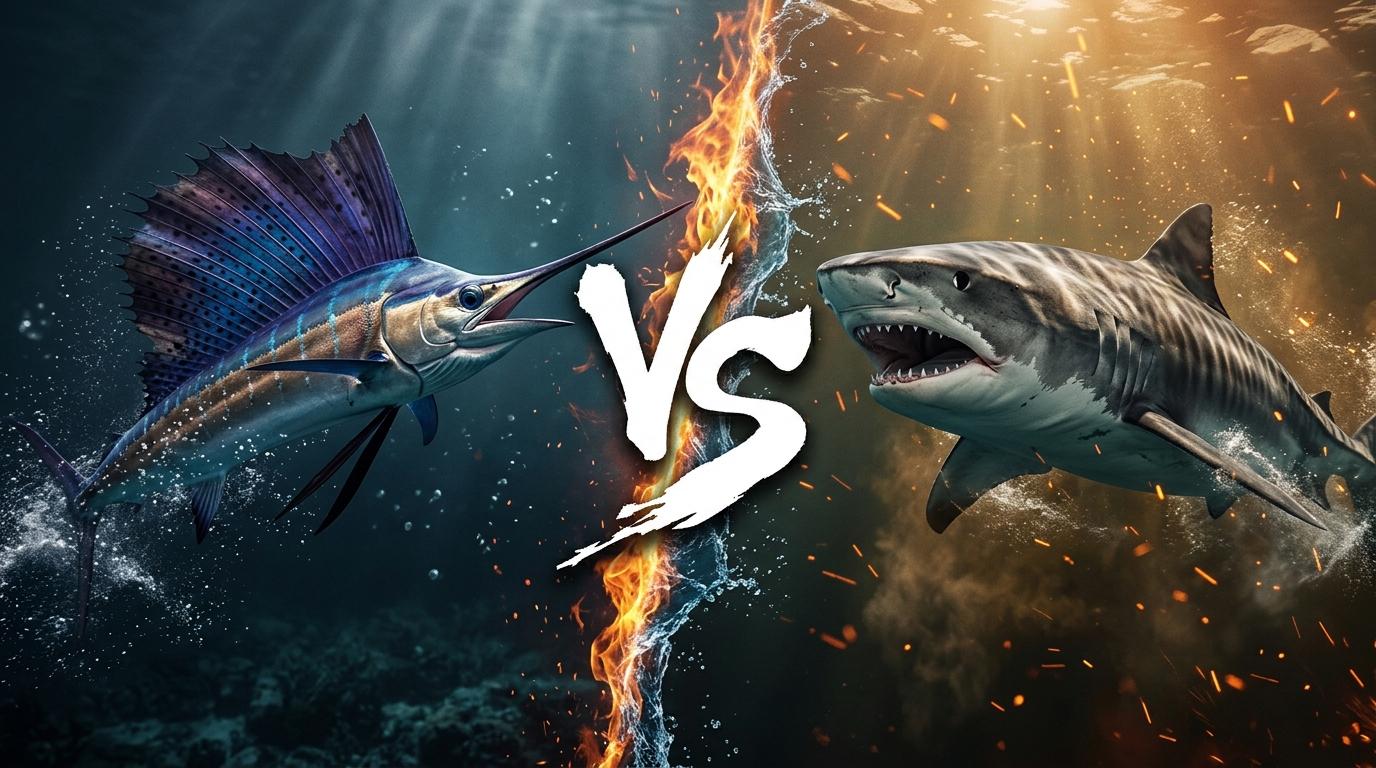
Sailfish vs Tiger Shark: Who Actually Wins?
The tiger shark wins, and it isn't especially close. A big adult tiger shark is commonly 3.5–4.5 m long and several hundred kilograms, often five or more times the mass of a large sailfish. It carries a broad, serrated bite built to saw through sea turtle shells. The sailfish is a sprint-and-slash specialist: a slender, lightly built hunter whose bill is designed to stun small schooling fish, not to injure an armored, thick-skinned predator. The sailfish's real edge is acceleration and maneuverability, which means it is far better at escaping a tiger shark than at beating one. In any frame where they actually make contact, mass, bite mechanics and durability decide it for the shark.
Read comparison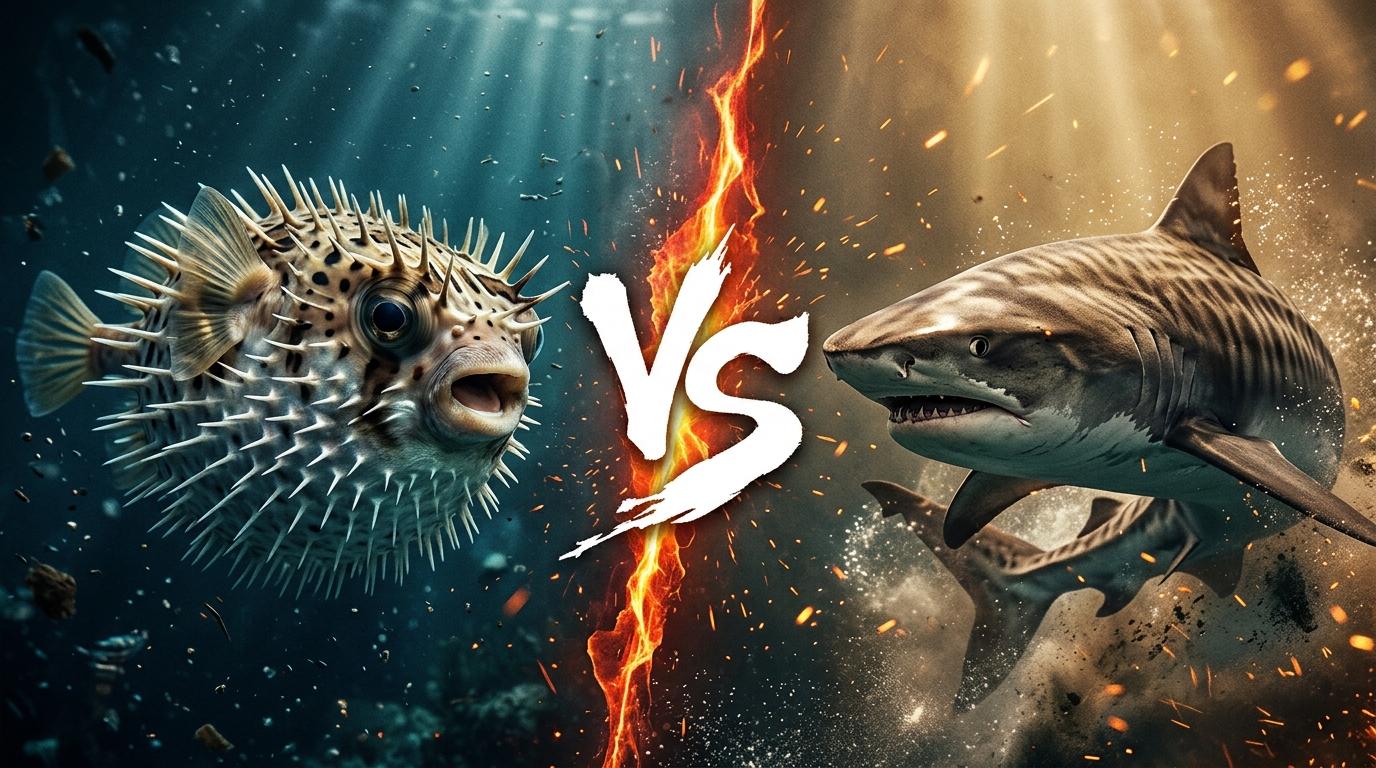
Spot-fin Porcupinefish vs Tiger Shark: Who Actually Wins?
The tiger shark wins clearly. A mature Galeocerdo cuvier can exceed 4 meters and several hundred kilograms. Its serrated, can-opener teeth evolved to saw through sea turtle shells. Few sharks are more willing to eat difficult, armored, or awkward prey. The spot-fin porcupinefish runs on a passive defense system: it gulps water to swell into a spiked ball and carries tetrodotoxin in its tissues. That combination deters most mid-sized predators and can kill a careless one. Against a tiger shark, though, inflation mostly turns the fish into a bigger, slower target, and the shark's jaws are built for exactly that kind of problem. The porcupinefish's real weapon is the toxin it delivers after being eaten. That is a cost to the predator, not a victory for the prey.
Read comparison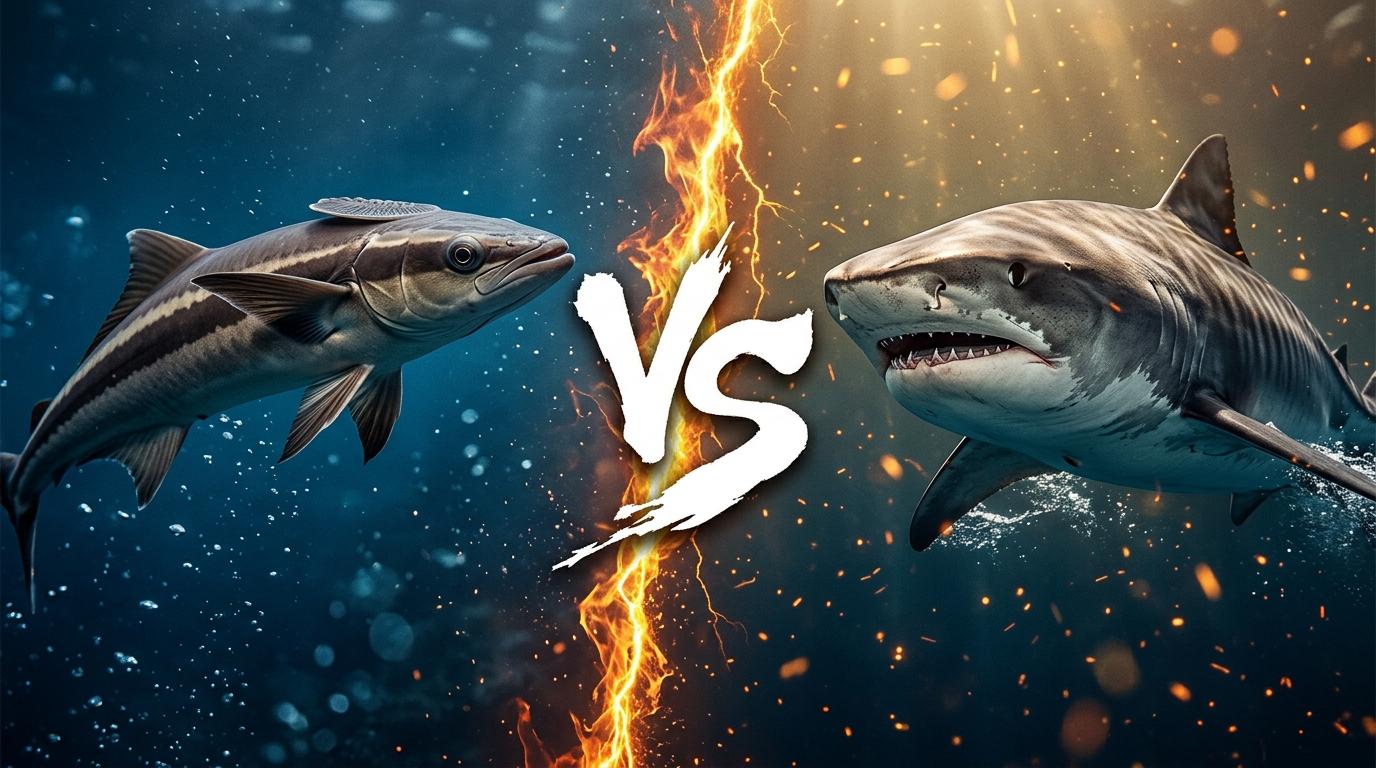
Live Sharksucker vs Tiger Shark: Who Actually Wins?
The tiger shark wins decisively. A big Galeocerdo cuvier can exceed 4–5 m and several hundred kilograms. It carries serrated, cockscomb-shaped teeth built to saw through sea turtle shells, and its generalist appetite treats almost anything as potential food. The live sharksucker (Echeneis naucrates) tops out around 1 m. It is slender and has no meaningful weapon. Its signature hardware is a suction disc evolved from the dorsal fin, which lets it ride larger animals rather than fight them. In any real confrontation the sharksucker's best outcome is not losing: staying close, staying small, and staying out of the bite arc. Biology built one of these animals to dominate and the other to hitchhike, so the matchup is a mismatch on paper and in the water.
Read comparison
Discussion
What do you think?
Share your reasoning with other readers. Be civil and stick to the animals.
Sign in to join the discussion.
Sign inNo comments yet. Start the conversation.