

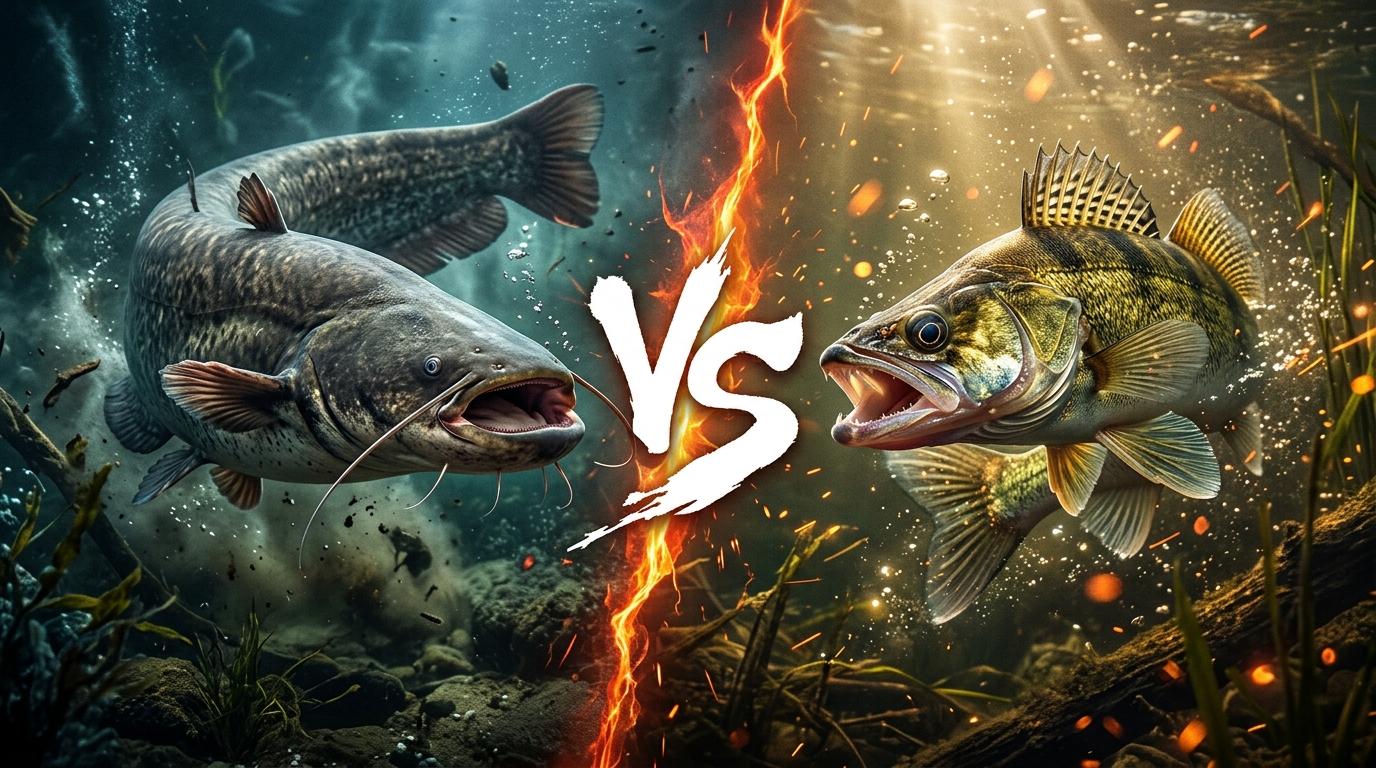
Wels Catfish vs Zander: Who Actually Wins?
Wels catfish vs zander: Europe's giant bottom ambusher against its sharp-eyed twilight hunter. See who wins, why, and where the zander still has the edge.
Wels Catfish vs Zander
Matchup winner
Wels Catfish
Quick verdict
Start with the direct answer, then use the structured comparison below to see what changes the outcome.
The wels catfish wins, and it isn't close in a direct confrontation. Europe's largest freshwater fish can exceed 2 meters and well over 100 kg, while a big zander tops out around 1 meter and 10–15 kg. The wels has a cavernous mouth lined with rasp-like velvet teeth built to engulf, a lateral line and whisker-like barbels that track prey in total darkness, and a body mass that turns any grapple into a swallow attempt. The zander is faster, more streamlined, and armed with genuine fangs. Its reflective, light-gathering eyes make it a superb low-light striker of small fish. But its weapons are scaled for 10–20 cm prey, not for a fish many times its weight. In fact, adult wels catfish routinely eat zander-sized fish. The zander's best outcome is avoidance, not victory.
Read the full explanation
Wels catfish wins decisively at adult sizes because of its massive weight and engulfing gape.
The zander is quicker and has real canine teeth, but they are built for small prey.
Wels hunt by vibration and taste, so darkness and murky water favor them too.
A zander's best move is to detect the catfish early and leave.
Reader vote
Who do you think wins?
Pick a side — no account needed. Results update live.
No votes yet — be the first to call it.
Editorial note
Why people disagree
Zander have visible fangs and a predatory look, while wels look sluggish. Appearance badly undersells the catfish's strike.
Body mass advantage
An order-of-magnitude weight gap means the wels can physically swallow or crush what the zander can only nip.
Engulfing gape
The wels doesn't need to wound. It inhales and holds, which ends encounters instantly.
Burst acceleration
Speed is the zander's lifeline. It can outpace a wels in open water if it reacts first.
Read the full explanation +
Juvenile wels are absolutely zander prey, so anglers who see small catfish get eaten draw the wrong conclusion about adults.
Zander excel in turbid twilight water, which people assume beats a 'slow' fish. But wels sense better in darkness through barbels and the lateral line.
Comparison FAQ
Short, direct answers to the next questions readers usually ask after the headline verdict.
Would a wels catfish beat a zander?+
Yes. An adult wels would overpower and likely swallow a zander, thanks to a huge weight advantage and engulfing mouth.
Which is stronger, wels catfish or zander?+
The wels catfish by a large margin. It can weigh roughly ten times more, with a far more powerful body.
Do wels catfish eat zander?+
Large wels are opportunistic predators that do take fish of zander size, including zander, where they share habitat.
Why is the zander still dangerous?+
It is a fast, sharp-toothed predator with excellent low-light vision. It eats young wels and other fish efficiently, and its bite can injure small rivals.
Can a zander outswim a wels catfish?+
Usually, yes. In open water the zander's streamlined body gives it better speed and agility, which is its main survival tool.
Head-to-head species stats
These are the same core AnimalDex stat dimensions used on the dedicated animal pages, pulled side by side so the matchup is faster to scan.
Wels Catfish
Tier BZander
Tier CTrait-by-trait comparison
Only the categories that matter to this matchup are included. The goal is not filler stats, but the real design differences that change the result.
Up to 2.5 m and 100+ kg
Body mass advantage
Wels Catfish
Typically 40–80 cm, rarely 15 kg
Body mass advantage
Wels Catfish
Huge mouth, rasping tooth pads, suction strike
Engulfing gape
Wels Catfish
Narrower mouth with sharp canines
Engulfing gape
Wels Catfish
Short violent lunge, poor sustained pace
Burst acceleration
Zander
Streamlined, quick and maneuverable
Burst acceleration
Zander
Barbels, taste buds across the body, acute lateral line
Darkness detection
Wels Catfish
Tapetum-backed eyes for dim light
Darkness detection
Wels Catfish
Patient lie-in-wait near snags and holes
Ambush control
Wels Catfish
Active roaming twilight striker
Ambush control
Wels Catfish
Thick slimy scaleless skin over big muscle
Close-range durability
Wels Catfish
Scaled but slender, light frame
Close-range durability
Wels Catfish
How the verdict forms
Verdict timeline
01 · Body mass advantage
Wels Catfish
02 · Engulfing gape
Wels Catfish
03 · Burst acceleration
Zander
04 · Darkness detection
Wels Catfish
05 · Ambush control
Wels Catfish
06 · Close-range durability
Wels Catfish
Change the conditions
Scenario breakdown
This is where shallow battle content usually fails. Terrain, spacing, timing, and engagement style can change the answer.
Scenario lean
Wels Catfish
Verdict confidence
82%
Wels dominates.
In tight structure the zander loses room to accelerate, while the wels is already sitting in its preferred ambush geometry. One suction lunge at close range resolves it.
AnimalDex field profiles
Explore these animals
Wels Catfish
Silurus glanis
river, lake, and deep freshwater channel
Zander
Sander lucioperca
river, reservoir, and deep freshwater lake habitat
Systems Intelligence & Hidden Purpose
See the animals behind this comparison as engineered biological systems: what each one is built to do, where it gains leverage, and why the matchup changes by scenario.
Specialized Hardware
huge whiskered freshwater body, broad suction-feeding mouth, and slow river-bottom patrolling give the Wels Catfish a body plan tuned for its niche.
Systems Script
Wels Catfishs operate through river, lake, and deep freshwater channel. Their design links movement, feeding, shelter, and timing into one workable survival system.
Strategic Insight
Where water controls movement, position and timing often matter more than speed.
Specialized Hardware
elongated predatory body, spiny dorsal fins, and dim-water ambush hunting give the Zander a body plan tuned for its niche.
Systems Script
Zanders operate through river, reservoir, and deep freshwater lake habitat. Their design links movement, feeding, shelter, and timing into one workable survival system.
Strategic Insight
Where water controls movement, position and timing often matter more than speed.
Final take
The wels catfish is the clear winner. Scale, gape, and a sensory system tuned for darkness turn this from a duel into a predator–prey relationship. In many European waters, adult wels already eat fish the size of zander.
Read the full explanation
The zander remains impressive. It is a fast, fanged, low-light hunter that thrives where visibility is poor and prey is small. Its survival strategy, though, is distance and vigilance. Against a wels, the smartest zander is the one that never gets close.
Collect both animals in AnimalDex
Track the species behind this matchup, compare their real traits, and build the rivalry into your AnimalDex collection.
Related comparisons
Continue with nearby matchups to compare more real-world animal traits without dropping into junky who-wins filler.
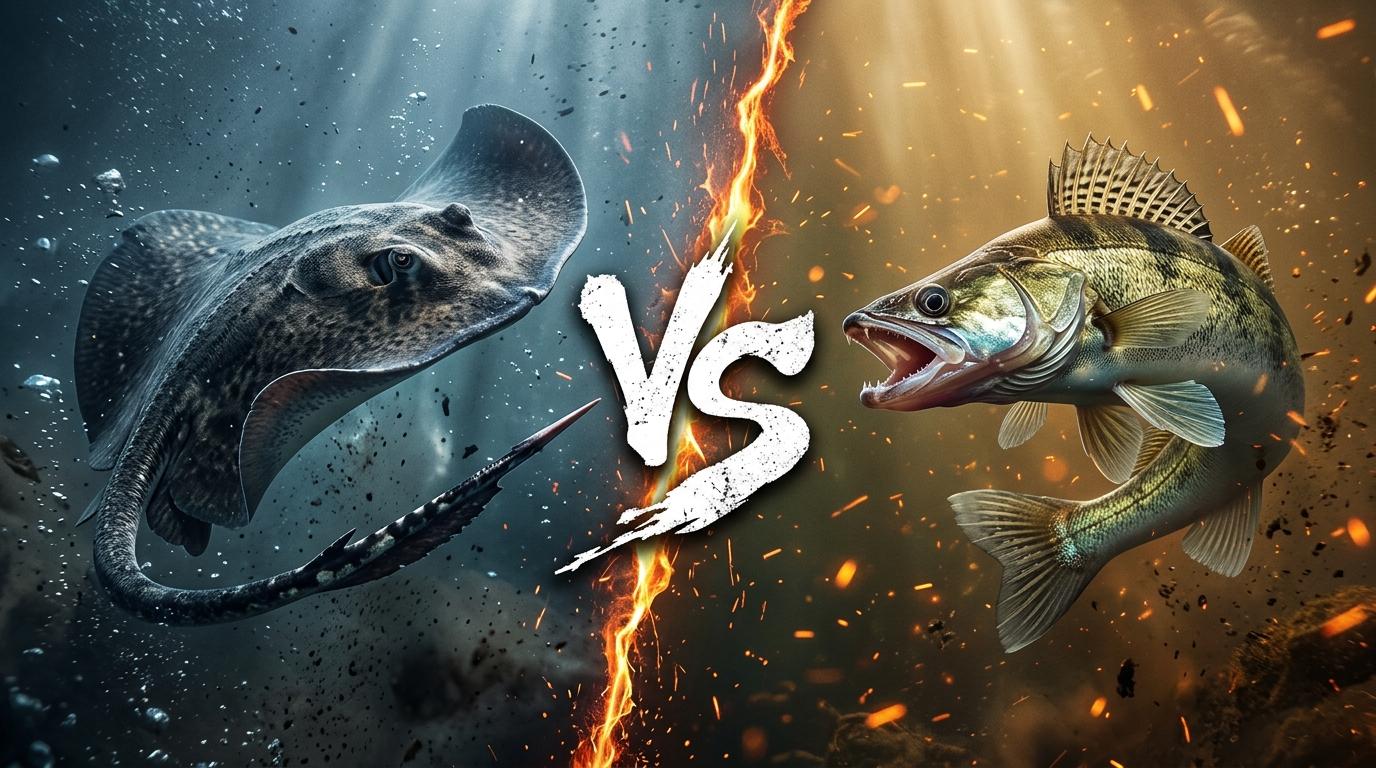
Giant Freshwater Stingray vs Zander: Who Actually Wins?
The giant freshwater stingray wins, and it isn't close. Urogymnus polylepis is one of the largest freshwater fishes on Earth. Adults can span over 2 meters across the disc and weigh several hundred kilograms. A big zander tops out around 10–20 kg. The stingray has a broad, heavy body, a tough denticle-studded back, and a long serrated, venomous tail spine. All of that turns a zander's best weapon, a fast lunge with fang-like teeth meant for slim prey fish, into a bad gamble. The zander is the sharper hunter: it sees better in low light, coordinates better in murky water, and moves faster in short bursts. But it has no way to grip, swallow, or disable an animal many times its mass. The likely outcome is that the zander breaks off or gets pinned and punished, not a drawn-out fight.
Read comparison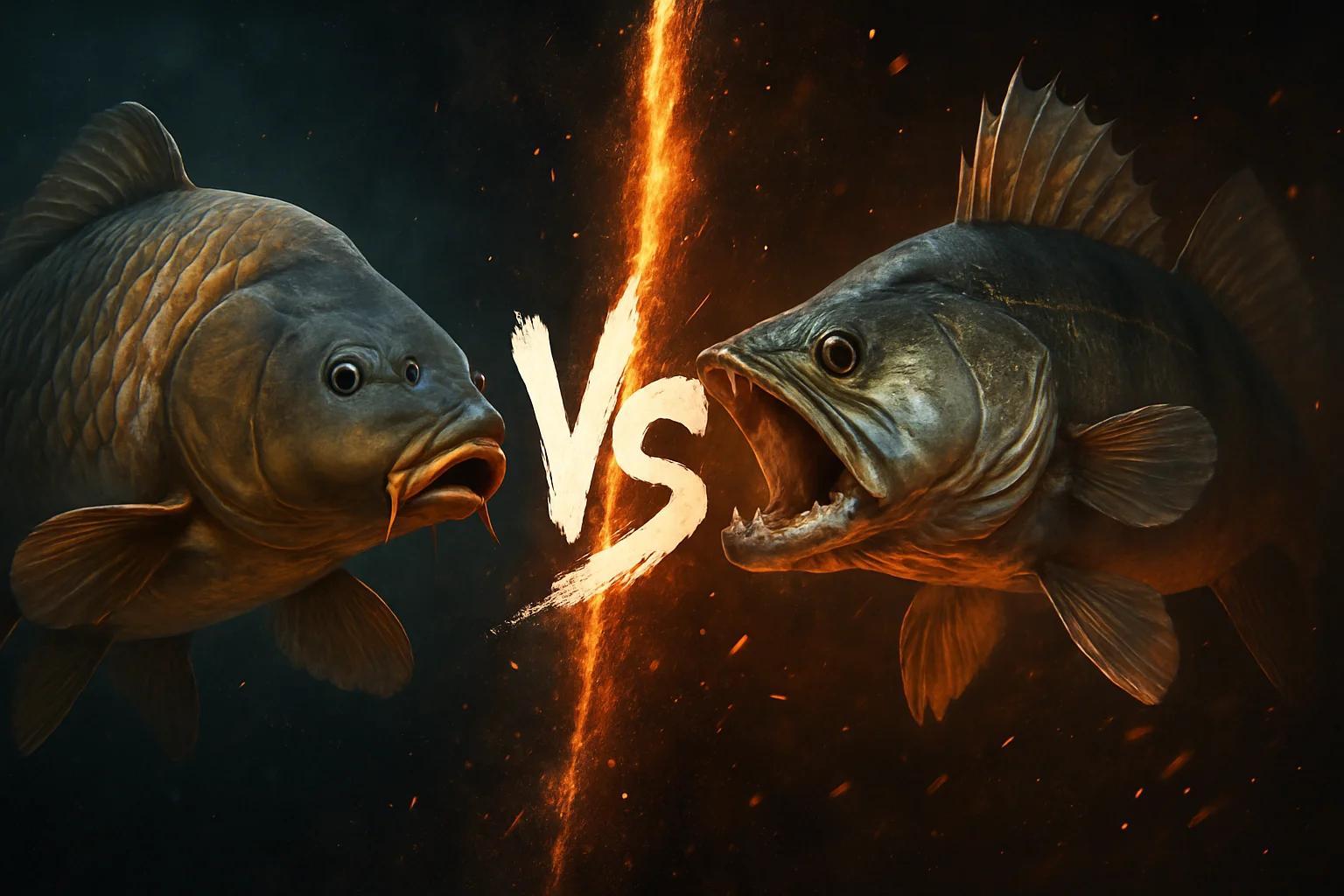
Common Carp vs Zander: Who Actually Wins?
The zander wins this matchup overall. It is a true piscivore. Its long canine fangs are built to seize fish, its tapetum-backed eyes let it hunt in murky and low-light water, and a fast-start pikeperch body lets it strike before prey reacts. The common carp is a bottom-sifting omnivore with no weapons beyond mass, tough scales, and stamina. That makes it extremely hard to finish, and a fully grown carp often outweighs any zander nearby. In a size-matched encounter, though, initiative belongs to the predator: the zander chooses when and how contact happens, and the carp can only absorb and flee. The carp's real edge is that big adults outgrow the zander's menu entirely.
Read comparison
Discussion
What do you think?
Share your reasoning with other readers. Be civil and stick to the animals.
Sign in to join the discussion.
Sign inNo comments yet. Start the conversation.