

bear attacksblack bearsdrought
Bear Attacks 2026: 64 Counted. The Hunter Isn't a Grizzly
An unofficial tally counts 64 bear attacks in 2026. Drought wrecked berries, hungry black bears hit towns, and the hunter usually isn't a grizzly.
In this guide
- Which bear is behind most predatory attacks in 2026?
- Are black bears more dangerous than grizzlies?
- How many bear attacks have there been in 2026?
- Why are there so many bear attacks this year?
- What is hyperphagia, and how much do bears eat in autumn?
- Colorado bear attacks 2026: what happened in a record year?
- Is it the drought, more bears, or our rubbish?
- Should you play dead if a black bear attacks?
- When do bears go into hibernation, and is it safe after that?
The short answer
Quick answer
An independent, unofficial tally by Texas outdoor writer Mike Dickerson counts 64 bear attacks causing injury or death across North America in 2026, as of 23 October. In parts of the West, drought and late frosts wrecked berry crops, pushing hungry bears into towns during their autumn feeding binge. Risk falls as most bears den between late October and December.
The twist
Which bear is behind most predatory attacks in 2026?
At about 2 a.m. on 13 September, a bear tore the screen off a condo window in Durango, Colorado, climbed inside and swiped at a 17-year-old hiding under her blankets. She was left with three scratches, and Colorado was on its way to a record year.
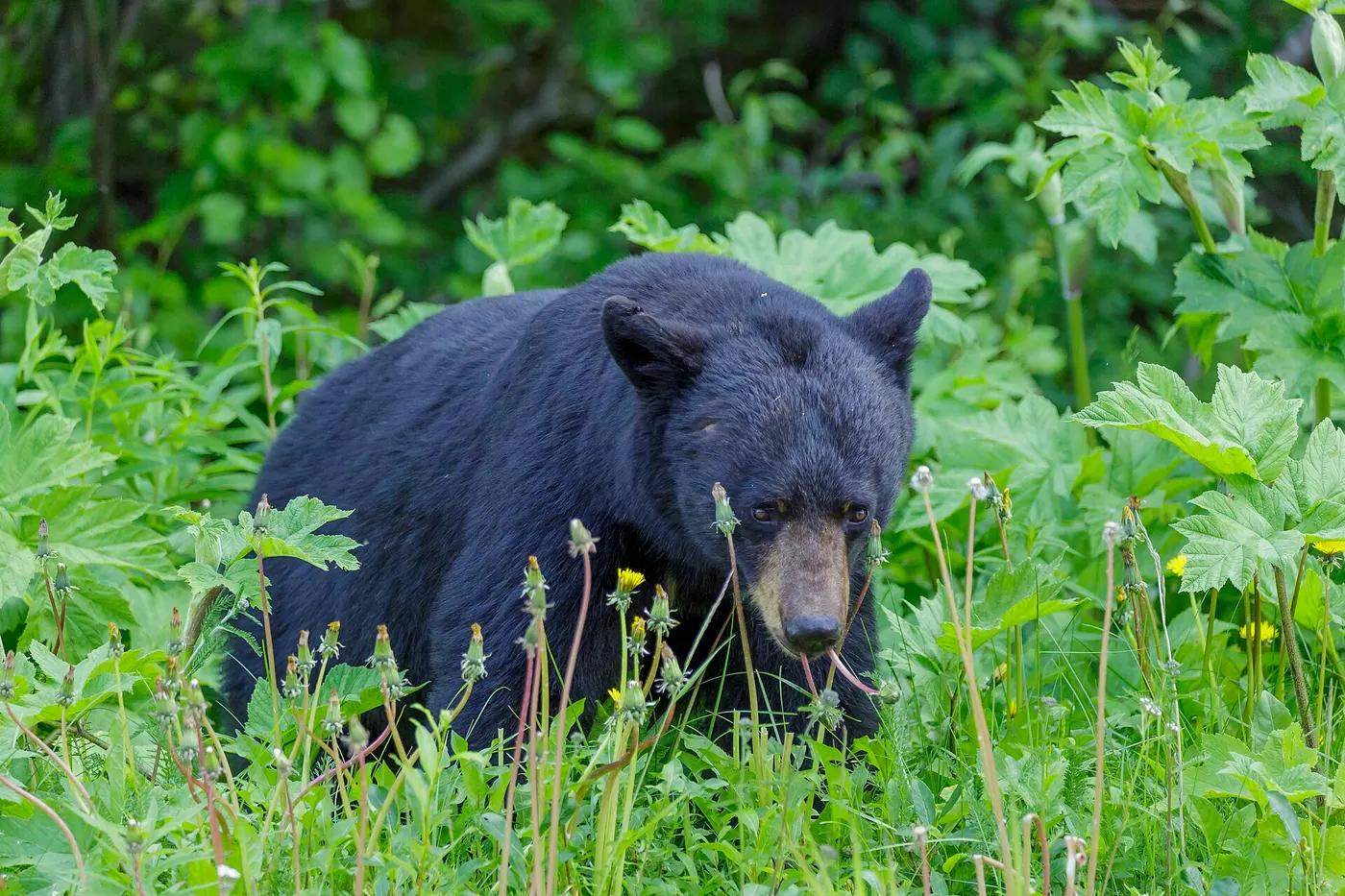
Now picture that bear. Most people imagine a grizzly. But in one analysis of 2026's attacks, by grizzly researcher Chris Servheen for Outside magazine, 94% of predatory attacks involved black bears, though reports disagree on exactly which dataset he worked from. Predatory means the bear seemed to treat a person as food, and Servheen judged 43% of this year's attacks to fit.
So the bear doing most of the hunting is the smaller American black bear, the one better known for raiding bins in mountain towns.
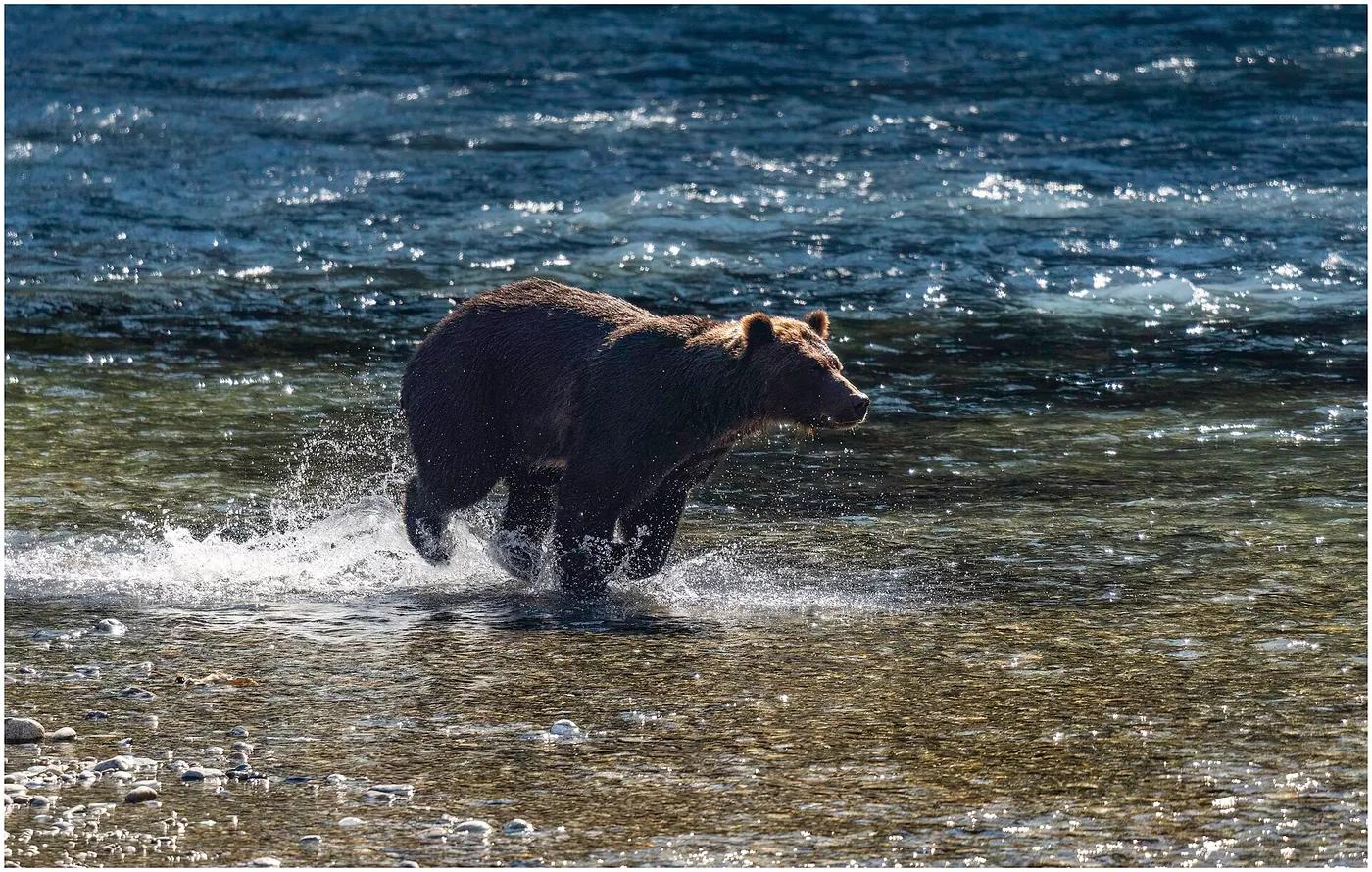
Grizzlies still hurt people. Cowboy State Daily reported that in May, two brothers were severely injured by a grizzly bear in Yellowstone. But Texas outdoor writer Mike Dickerson, who has tracked attacks all year, says most grizzly attacks are "territorially defensive": a bear protecting its young or a carcass, not one looking for a meal.
This year, across parts of the American West, black bears had good reason to be looking. Drought and late frosts wrecked the berries they rely on, just as their bodies flipped into autumn's eat-almost-nonstop mode.
94% of predatory attacks in one analysis of 2026 involved black bears, not grizzlies.
The study
Are black bears more dangerous than grizzlies?
The black bear most likely to kill you isn't a mother with cubs. It's usually a lone male treating you as food. That comes from a 2011 study in the Journal of Wildlife Management by Stephen Herrero, a professor emeritus at the University of Calgary, and colleagues.
The team reviewed 63 people killed by wild black bears in 59 incidents between 1900 and 2009. In 88% of the fatal incidents they could classify (49 of 56), the bear acted as a predator. Adult or subadult males were behind 92% (33 of 36) of the fatal predatory attacks.
Then comes the paradox. Canada and Alaska had 3.5 times as many fatal attacks as the lower 48 states, despite only 1.75 times as many black bears and far less human contact. Victims were usually alone or in pairs: 91% were in parties of one or two people.
Dickerson puts the predatory share of fatal black bear attacks at roughly 80%. The peer-reviewed figure is higher, at 88%.
None of this puts black bears near the top of the most dangerous animals on raw numbers. "Fatal attacks by black bears are a rare occurrence," Herrero said, in comments reported by the Rocky Mountain Outlook when the study came out in 2011. The difference is motive: a grizzly that attacks is usually defending something, while a black bear that kills is usually hunting.
Canada and Alaska had 3.5 times as many fatal attacks despite only 1.75 times as many bears.
The count
How many bear attacks have there been in 2026?
At least 64 that caused injury or death across North America, according to a tally Cowboy State Daily reported on 23 October. It belongs to Mike Dickerson, 71, a Texas outdoor writer with contacts in US and Canadian wildlife agencies, who has logged more than 70 bear encounters this year and calls 2026 "unprecedented".
It is not an official count. Dickerson builds it from news alerts, agency reports and social media, and he thinks it runs low: "I'm personally convinced that there are more attacks than what I've been capturing," he says, pointing to remote Canada and Alaska. Brigham Young University biologist Tom Smith's team keeps a fuller database, but Dickerson says it isn't public.
Is 64 a record? Nobody can say, because no one counted earlier years the same way, and reports even disagree on whether Servheen's figures came from Dickerson's list or a separate Outside dataset. The record that is confirmed is Colorado's: 10 attacks by mid-September, the most in state records.
"I'm personally convinced that there are more attacks than what I've been capturing."
Chain reaction
Why are there so many bear attacks this year?
In Montana, the trouble started before most bears were even awake. Spring green-up arrived in January and February, months before bears leave their dens in late April or early May, so the first fresh food came and went without them.
Then the water ran short. On 1 April, eight Western states (Arizona, Colorado, Idaho, Nevada, New Mexico, Oregon, Utah and Wyoming) hit record-low snowpack water content, according to the National Integrated Drought Information System. In late May, frosts struck Montana's chokecherries, serviceberries and huckleberries, the fruit bears count on to fatten up.
By July, Jamie Jonkel of Montana Fish, Wildlife & Parks was calling 2026 "one of the worst natural food failure years on record". FWP staff around Missoula had handled more than 250 black bear incidents in two months, many of them at chicken coops.
Dickerson puts it bluntly: droughts and fires "forced bears into lower elevations and into towns… Colorado has been a classic case." Outside counted at least 168 black bear incidents in Utah and 187 in New Mexico this year.
Hold the cause and effect loosely, though. As Nature World News noted in September, no published analysis has yet measured how much of 2026's rise in conflict is down to drought. The 64 attacks span the whole continent, and the drought hit only parts of the West.
Spring green-up arrived in January, months before bears left their dens.
The binge
What is hyperphagia, and how much do bears eat in autumn?
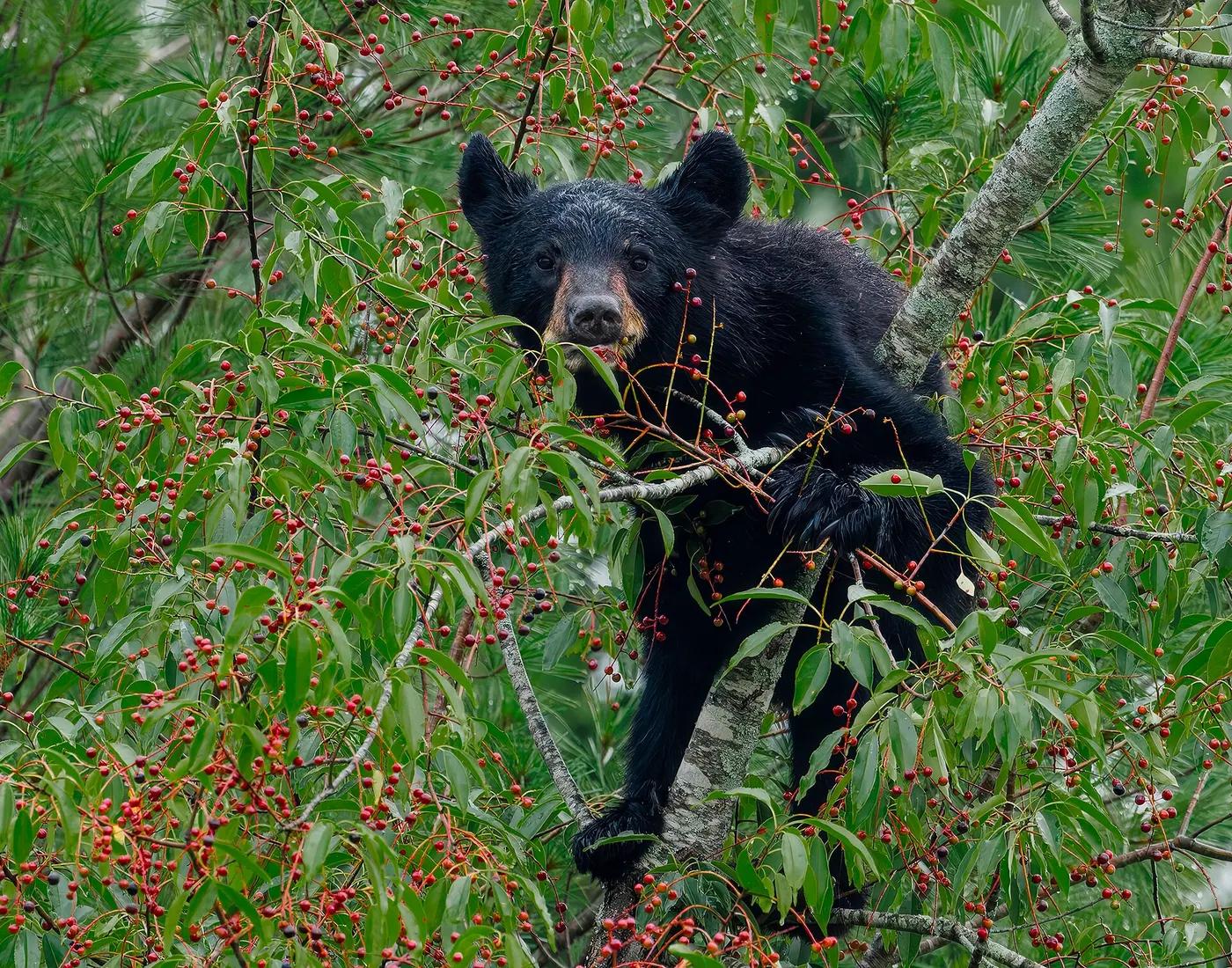
In autumn a black bear can eat 15,000 to 20,000 calories a day. In spring and summer it gets by on 2,000 to 3,500. This late-season binge is called hyperphagia, and it means a bear eats roughly four to ten times its usual intake.
Wildlife officials in North Carolina say bears in hyperphagia forage for up to 20 hours a day and can gain as much as 3 lb (about 1.4 kg) a day. Colorado Parks and Wildlife puts the eating at up to 22 hours a day. The aim is fat, enough to carry the bear through winter.
For scale, here is our rough estimate. If a person needs about 2,000 to 2,500 calories a day, a bear in hyperphagia is eating something like six to ten days of a teenager's food, every single day.
Now take the berries away. A bear wired to feed for 20 hours a day does not switch off because the huckleberries froze. It goes looking, and in a dry Western year the nearest calories are often in bins, bird feeders and chicken coops.
In autumn a black bear can eat up to 20,000 calories a day: roughly a week or more of a teenager's food, every day.
Colorado
Colorado bear attacks 2026: what happened in a record year?
The Durango bedroom break-in was one of a record 10 attacks Colorado Parks and Wildlife confirmed by mid-September, counting any incident where a bear injures or kills a person. A woman in her 80s was attacked in her Estes Park home. An angler was attacked in Jefferson County, an unhoused man was bitten while sleeping in Aspen, and a man was attacked outside a laundry room in Eagle-Vail.
In Steamboat Springs on 3 September, a bear went for a person napping in a patio chair until a neighbour drove it off with bear spray.
Not every case was about food. On 11 September at Park Creek Campground near South Fork, a bear bit Kathleen Baran's arm through her tent. She had no food inside and punched the bear to free herself, and CPW called the bite likely "an act of surprise".
The bears paid too. Through 31 August, Colorado logged 8,672 bear sighting and incident reports, against 3,680 by the same point in 2025. Officers relocated 98 bears and euthanised 294, up from 83 a year earlier and 2.7 times the 2020–2025 average. Many euthanised bears had been hit by cars: Garfield County had 39 such cases, against one at the same point last year, CPW's John Livingston told The Colorado Sun. The figures are preliminary, with final numbers due in 2027.
| Colorado (CPW, preliminary) | 2025 | 2026 |
|---|---|---|
| Bear sighting/incident reports (to 31 Aug) | 3,680 | 8,672 |
| Bears relocated (to 31 Aug) | 33 | 98 |
| Bears euthanised (to 31 Aug) | 83 | 294 |
| Confirmed attacks (2026 to 18 Sept) | n/a | 10 (state record) |
Kathleen Baran had no food in her tent. She punched the bear to free herself.
The argument
Is it the drought, more bears, or our rubbish?
Ask who is to blame and you get two answers. Dickerson points to the bears' success: populations "have grown tremendously" in many areas over the past 50 to 60 years, he says, and grizzlies are reclaiming prairie in central and eastern Montana. Montana logged 203 grizzly conflicts by September, close to the 224 recorded in all of 2025.
Wildlife managers keep returning to something else: unsecured human food. In Colorado it is against state law to leave trash or bird feeders where bears can reach them. On 11 September, Grand Teton staff euthanised a black bear near Delta Lake after visitors had repeatedly let it get human food.
The long view supports both camps. In Herrero's century of data, fatal attacks per decade rose almost in lockstep with human population growth, and 86% happened between 1960 and 2009. People's food or garbage probably drew the bear to the spot in 38% of the cases the team could assess (15 of 40).
Kim Titchener, a Canadian specialist in preventing human-bear conflict, backs Dickerson's list but adds a caution: she hopes it doesn't skew how people see bears, because countless encounters end with nobody hurt.
Grand Teton staff euthanised a black bear after visitors repeatedly let it get human food.
Survival
Should you play dead if a black bear attacks?
No. The US National Park Service says that if a black bear attacks, you should not play dead. Get into a car or building if you can. If you can't, fight back, aiming at the face and muzzle. The same applies to any bear, of any species, that stalks you or attacks you in a tent.
Colorado Parks and Wildlife gives the same advice if a black bear makes contact, and notes that guidance differs in grizzly country, so learn the local rules before you go. A bear that huffs, pops its jaw or stomps is telling you it feels threatened.
Carry bear spray and know what it is for. The NPS says it stops a charging bear and is "not a repellent": never spray it on your gear or skin.
The best plan is to never get close at all. Don't approach or feed a bear, ever, and secure anything that attracts one: rubbish bins, bird seed and chicken coops.
Don't play dead with a black bear. Get into a car or building, or fight back at the face and muzzle.
What now
When do bears go into hibernation, and is it safe after that?
Relief is coming, mostly. Most black bears den between late October and December, depending on food and weather, and in North Carolina most are tucked away by mid-December. Once a bear is denned, the binge is over and the risk drops.
Until then, if you live in or visit bear country, watch black bears only from inside a car or building, and never walk towards one. If a bear ambles past while you're safely inside, you can capture it live with your phone camera in AnimalDex and add it to your collection, then see where bears rank among the strongest animals.
In poor food years, though, some bears stay active longer near human food. North Carolina's BearWise coordinator goes further: bears with steady access to trash and bird seed may keep foraging all winter instead of denning.
So the end of next year's bear season may not be decided by the berries at all. A town that feeds its bears can keep them awake.
A town that feeds its bears can keep them awake.
North Carolinastrongest animals
Quick questions
Short answers to common questions readers ask on this topic.
- How many bear attacks have there been in 2026?
- An independent tally by Texas outdoor writer Mike Dickerson counted 64 bear attacks causing injury or death across North America, as reported on 23 October 2026. It is not an official agency count, and Dickerson believes attacks in remote Canada and Alaska are undercounted.
- Why are there so many bear attacks this year?
- In parts of the American West, record-low snowpack, drought and late-May frosts wrecked berry crops, pushing hungry bears into towns during their autumn feeding binge. Growing bear numbers and unsecured human food also play a part, though no published analysis has yet measured how much of the increase is due to drought.
- Are black bears more dangerous than grizzlies?
- Not in sheer numbers, since fatal black bear attacks are rare. But in one analysis of 2026 attacks, 94% of predatory ones involved black bears, and a 2011 study found the bear acted as a predator in 88% of fatal black bear incidents. Most grizzly attacks are defensive.
- Should you play dead if a black bear attacks?
- No. The National Park Service advises getting into a car or building, or fighting back aimed at the face and muzzle. The same applies to any bear that stalks you or attacks you in a tent.
- When do bears go into hibernation, and is it safe after that?
- Most black bears den between late October and December, and in North Carolina most are denned by mid-December, so the risk drops. Bears with steady access to trash or bird seed may keep foraging all winter instead of denning.
- What attracts bears to houses?
- Food they can reach, especially rubbish bins, bird seed and chicken coops. In Colorado, leaving trash or bird feeders where bears can get them is against state law, and food or garbage probably drew the bear in 38% of the fatal attacks Herrero's team could assess.
Animals mentioned
Jump from this article into the species pages behind the examples, systems notes, and field-guide references.
Sources and further reading
- Cowboy State Daily: Creator Of New Public Bear Attack Database Says 2026 Has Been 'Unprecedented'
- Nature World News: Black Bears Drive Most Predatory Attacks as an Independent Tally Counts 64 Injuries or Deaths in 2026
- Nature World News: Colorado Confirms a Record 10 Bear Attacks in 2026 as Drought Leaves Western Bears Hungry
- WECT: Hungry bears are on the move in North Carolina
- Journal of Wildlife Management: Fatal attacks by American black bear on people: 1900–2009
- Rocky Mountain Outlook: Research highlights predatory black bear behaviour
Answer guides related to this topic
If you want direct comparisons and clear recommendations, continue with these answer-focused pages.
Best Animal Identification Apps
Compare the best animal identification apps by features like photo/video identification, species coverage, collection capabilities, offline use, and more.
What Is Animal Collecting
Learn what animal collecting means in modern apps and how AnimalDex turns real-world sightings into cards, sets, rarity, and species learning.
Pokemon-Like Animal App
Looking for a Pokemon-like animal app with real species? AnimalDex combines creature-collection energy with AI scanning and wildlife learning.