

Animals in Colorado: What You Can Spot, Learn, and Collect
Colorado wildlife guide: elk and bighorn sheep in Rocky Mountain National Park, moose at Grand Lake, prairie dog towns on the Front Range, and the Denver Zoo cluster.
Quick answer
Start with the direct answer, then use the sections below to see why the location matters and which animals are actually realistic to spot there.
Colorado's headline animals are elk, bighorn sheep, moose and mule deer, all realistic in Rocky Mountain National Park and the Grand Lake side of Trail Ridge Road. Prairie dog towns ring Denver and Boulder, pikas squeak from alpine boulder fields, and black bears work the foothill towns in autumn.
Colorado stacks four life zones on top of each other, from shortgrass prairie at 1,000 metres to tundra above 3,600, and each zone has its own animals. A day that starts with prairie dogs beside Denver International Airport can end with elk bugling in Moraine Park.
Most sightings here come to people who drive slowly at the right hour. Trail Ridge Road, the Kawuneeche Valley and Mount Blue Sky (the old Mount Evans road) are the three stretches where the big mammals cross tarmac in daylight.
Start with these animals
Why this location matters
Good location pages explain why the place is worth your time, not just which names belong on a destination checklist.
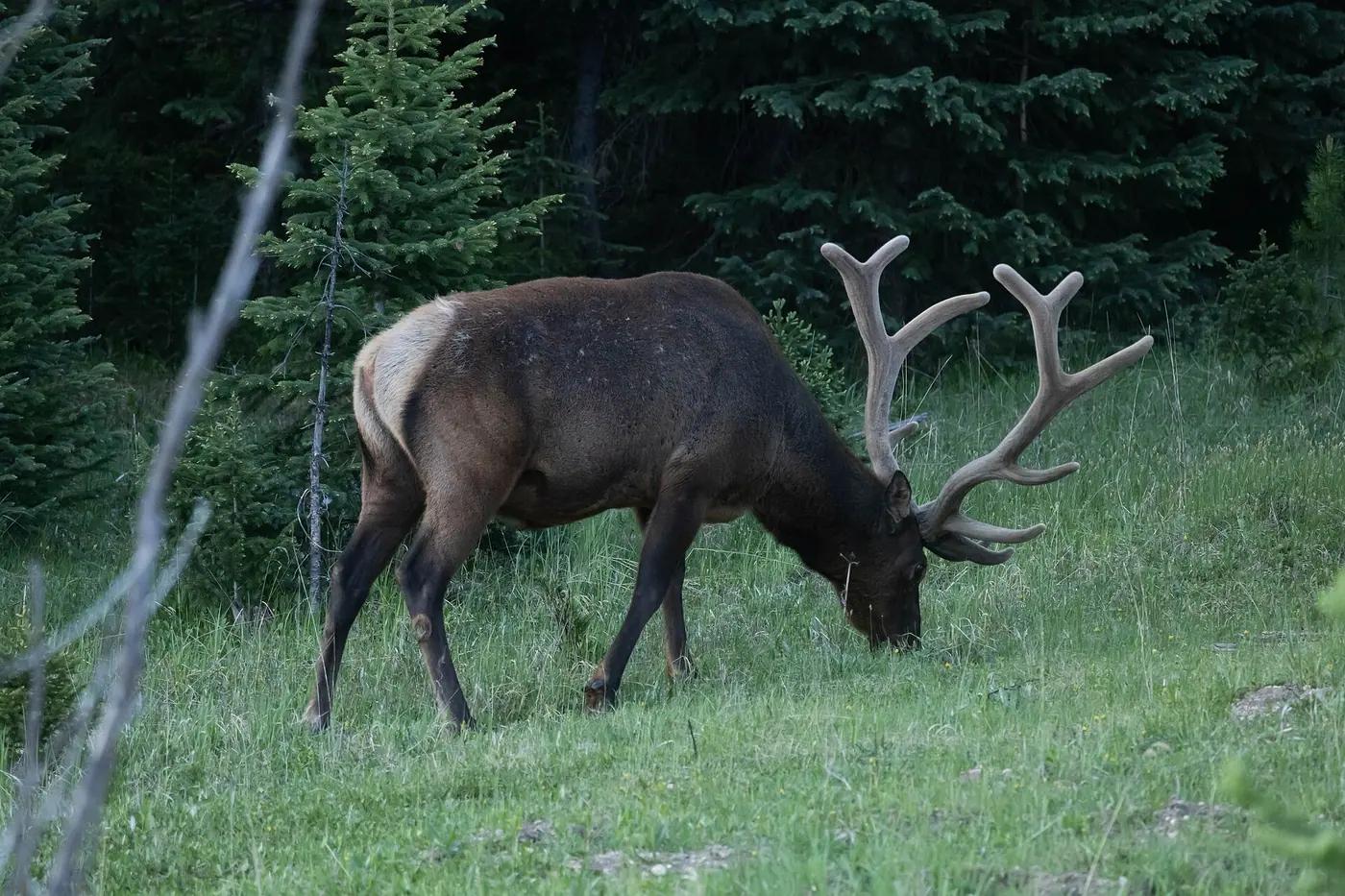
The elk rut in late September is one of the most reliable large-mammal spectacles in the United States, and it happens a 90-minute drive from a major airport. Estes Park fills with bulls herding harems across golf courses and car parks.
Colorado is also where AnimalDex users most often log a zoo day in the mountains: Denver Zoo's recent captures run from Asian elephants and gorillas to Andean condors and bighorn sheep, so a rainy day still fills the collection.
Where to look
Wildlife map of Colorado
This guide covers the region shown below. Zoom in to get your bearings before planning a trip.
Positions are geocoded from OpenStreetMap. Habitat access and opening times change — check locally before travelling. Smaller pins are public AnimalDex captures, placed to the nearest kilometre.
Field proof
Found in Colorado by AnimalDex users
Real captures logged in the AnimalDex app inside this area and shared publicly by their collectors, with the animal confirmed by the app's identification. Places are shown to the nearest region, never the exact spot.
- 38
- public captures
- 38
- species recorded
- 2
- collectors
- 3
- wild sightings
Recent captures from the field
Species people have actually logged here
Every name links to its species guide. The count is how many public captures of that animal sit inside this area.
- American Alligator1 capture
- Andean Condor1 capture
- Asian Elephant1 capture
- Bighorn Sheep1 capture
- Blue Crane1 capture
- Bornean Orangutan1 capture
- Cape Buffalo1 capture
- Cape Teal1 capture
- Collared Peccary1 capture
- Desert Cottontail1 capture
- Flathead Catfish1 capture
- Great Curassow1 capture
- Great Hornbill1 capture
- Grey Crowned Crane1 capture
- Hottentot Teal1 capture
- Indian Rhinoceros1 capture
- Jumping Spider1 capture
- Lar Gibbon1 capture
- Laughing Kookaburra1 capture
- Leopard Tortoise1 capture
- Mandrill1 capture
- Mule Deer1 capture
- Nyala1 capture
- Palm Cockatoo1 capture
- Prevost's Squirrel1 capture
- Rainbow Lorikeet1 capture
- Red Ant1 capture
- Red Panda1 capture
- Red River Hog1 capture
- Red-bellied Piranha1 capture
- Ring-billed Gull1 capture
- Southern Screamer1 capture
- Squirrel Monkey1 capture
- Victoria Crowned Pigeon1 capture
- Warty Frogfish1 capture
- Western Crowned Pigeon1 capture
- Western Diamondback Rattlesnake1 capture
- Western Lowland Gorilla1 capture
Collectors choose to share these captures on Discover and can withdraw them at any time. Coordinates are rounded to about a kilometre and refreshed with each site build.
Animals to spot
These are intentionally practical species picks, balancing accessibility, excitement, and what travelers can realistically notice in the location.
ElkB
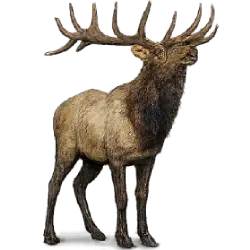
Rocky Mountain National Park holds roughly 600 to 800 elk in summer, and in late September the bulls bugle across Moraine Park and Horseshoe Park at dawn and dusk.
Spotting note: Near-guaranteed in the park September to October; common in Estes Park itself.
Read species guide
Bighorn SheepC
The state animal comes down to lick minerals at Sheep Lakes in Horseshoe Park in early summer, and rams loaf on the roadside cliffs of Big Thompson Canyon and Georgetown.
Spotting note: Reliable at Sheep Lakes late May to mid-August, late morning; Georgetown viewing area in winter.
Read species guide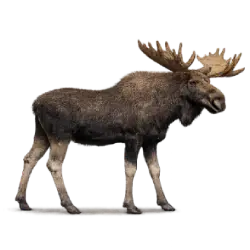
MooseA
Reintroduced in 1978 and now thriving in the willow flats of the Kawuneeche Valley on the Grand Lake side of the park.
Spotting note: Likely at dawn or dusk along the Colorado River Trail and Highway 34 near Grand Lake.
Read species guide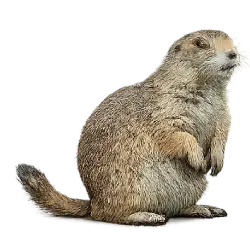
Prairie DogD
Black-tailed prairie dog towns survive on open ground around Denver, Boulder and Fort Collins, and whole colonies stand up to bark at a passing dog.
Spotting note: Common on the Front Range; Rocky Mountain Arsenal National Wildlife Refuge has the easiest colonies.
Read species guide American PikaD
A palm-sized rabbit relative that hoards hay in talus above treeline and gives itself away with a sharp whistle from Trail Ridge Road pullouts.
Spotting note: Common above 3,300 metres in summer; Rock Cut and the Alpine Visitor Center are the easy spots.
Read species guide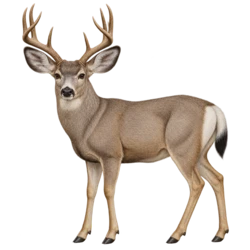
Mule DeerC
Big-eared deer that browse suburban Boulder gardens and the sagebrush around Estes Park with equal confidence.
Spotting note: Very common statewide, especially at dusk in foothill towns.
Read species guide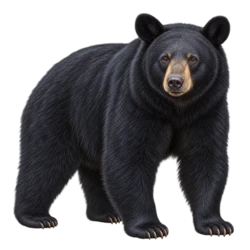
American Black BearB
Colorado has an estimated 17,000 to 20,000 black bears, many of them cinnamon-coloured, and autumn brings them into Aspen, Durango and Boulder for fruit trees and bins.
Spotting note: Possible in the foothills August to October; sightings in Rocky Mountain National Park are uncommon.
Read species guide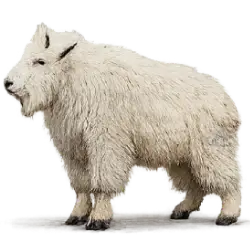
Mountain GoatC
Introduced in the 1940s and now part of the summit scenery on Mount Blue Sky and Quandary Peak, where they stand on the road and pose for cameras.
Spotting note: Reliable on the Mount Blue Sky road in summer when it is open.
Read species guide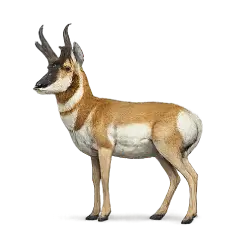
PronghornB
North America's fastest land animal grazes the eastern plains and the high parks around Walden and South Park in open view of the highway.
Spotting note: Common on the plains east of Denver and along US 285 through South Park.
Read species guide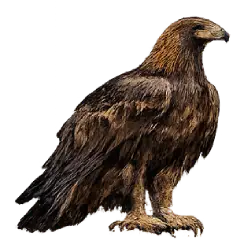
Golden EagleA
Hunts the prairie-dog towns and cliff country of the Front Range and nests on sandstone ledges in the Pawnee National Grassland.
Spotting note: Regular but never numerous; scan fence posts and thermals on the plains.
Read species guide
Clark's NutcrackerC
The grey, black and white corvid that works picnic tables at treeline and caches limber pine seeds across the high country.
Spotting note: Common at Trail Ridge Road pullouts and high passes in summer.
Read species guide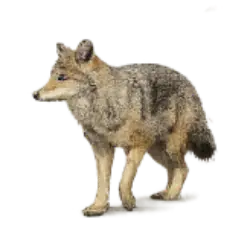
CoyoteC
Patrols Denver's greenways and the open prairie alike, often trotting through suburbs in full daylight.
Spotting note: Common statewide; dawn in the Boulder open space is near-certain.
Read species guide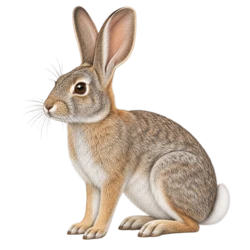
Desert CottontailD
The default rabbit of the lower Front Range and the western canyons, frozen under a sagebrush until you get too close.
Spotting note: Abundant on the plains and in the Grand Junction area.
Read species guide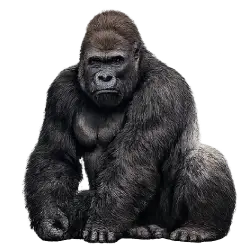
Western Lowland GorillaA
A Denver Zoo resident: the Great Apes house is one of the Colorado captures AnimalDex users log most, alongside orangutans and mandrills.
Spotting note: Guaranteed at Denver Zoo on any open day.
Read species guideBest for
Use this section to decide whether the location fits your travel style, skill level, and AnimalDex goals.
- The late-September elk rut in Rocky Mountain National Park
- Alpine specialists like pika, marmot and mountain goat without a long hike
- Prairie dog towns and raptors within an hour of Denver
- Mixing a Denver Zoo day with real mountain wildlife
Spotting tips
These tips are meant to make the page useful in the field, not just readable on the page.
- 01Drive Trail Ridge Road at opening time and stop at every pullout above treeline; pikas and nutcrackers are at the Rock Cut, bighorn at Sheep Lakes on the way down.
- 02For moose, go to the west side of the park: the Kawuneeche Valley along Highway 34 north of Grand Lake is far better than the Estes Park side.
- 03Elk in rut are dangerous. Stay in or beside your car in Moraine Park at dusk and use a telephoto; rangers close the meadows for a reason.
- 04Carry layers and watch the sky. Afternoon lightning above treeline is a real hazard from June to August, so do the alpine stops before noon.
Virtual Wildlife Guides
Wildlife guides to Colorado
AnimalDex builds virtual guides from explorers' own wild sightings: which animals they found, how rare they are, and when. A guide is advice from someone who has been there, not a tour. Buying one unlocks the author's notes for every animal, a chat with the author, and introductions to local people they met. Wildlife is never guaranteed.
Checking for virtual guides to Colorado...
How to choose a local wildlife guide in Colorado
- Ask what they usually find in the season you are visiting. A good guide gives an honest answer, not a promised sighting.
- Check how they treat animals: no baiting, calling in, handling, or close flash photography for a better shot.
- Confirm the meeting area, duration, group size, total price, and how you pay before the day, plus any permits or park fees the place requires.
Track the animals you find in Colorado
Build your collection while you travel through Colorado, from easy wins to the species worth planning around.
Related tier lists
These tier lists add broader context around the species that make this location interesting.
100 Fastest Animals in the World
Ranked list of the fastest animals in the world, with land, flying, and marine speed kept separate so a diving falcon is not treated as the same kind of fast as a cheetah.
Read tier listRelated locations
Keep exploring with nearby or similar destinations that support the same kind of AnimalDex discovery.
Animals in the United States: What You Can Spot, Learn, and Collect
A practical United States wildlife guide built around habitat variety, from wetlands and coastlines to migration corridors and iconic American species.
Read location guideAnimals in North Dakota: What You Can Spot, Learn, and Collect
North Dakota wildlife guide: Theodore Roosevelt National Park bison, prairie dogs and wild horses, Chase Lake's pelican colony, sandhill cranes and snow geese on migration, and meadowlarks in Morton County.
Read location guideAnimals in Texas: What You Can Spot, Learn, and Collect
Texas wildlife guide: whooping cranes at Aransas, Kemp's ridley turtles on Padre Island, Big Bend bears and javelinas, Katy Prairie geese and the anoles and mockingbirds of Houston backyards.
Read location guideLocation FAQ
Short direct answers to the questions travelers usually ask before choosing a wildlife destination or zoo day.
What wildlife is there in Colorado?
Elk, moose, mule deer, bighorn sheep, mountain goats, black bears, pronghorn, prairie dogs, pikas and marmots, plus golden eagles and Clark's nutcrackers in the high country. Mountain lions and bobcats are present but rarely seen.
What animals can be found in Colorado's Rocky Mountain National Park?
Elk and mule deer are near-certain, bighorn sheep are reliable at Sheep Lakes in early summer, moose live on the Grand Lake side, and pikas, marmots and ptarmigan are above treeline along Trail Ridge Road. Black bears are present but seldom seen.
When is the best time to see animals in Colorado?
Mid-September to mid-October for the elk rut and bear activity, June to August for alpine species while Trail Ridge Road is open, and winter for bighorn sheep at the Georgetown viewing area.
Have AnimalDex users found animals in Colorado?
Yes. AnimalDex users have publicly logged 38 captures of 38 different species in Colorado, including american alligator, andean condor, asian elephant, bighorn sheep. Each one was photographed in the app at the moment of the sighting.
How do I find a wildlife guide to Colorado?
Check the Wildlife Guides section on this page or browse Wildlife Guides on AnimalDex. Each one is a virtual guide built from an explorer's own wild sightings around Colorado: the animals they found, how rare they are, and when. It is advice from someone who has been there, not a tour. If you want someone with you on the day, compare local guides on wildlife knowledge, how they treat animals, and clear pricing before you go.