

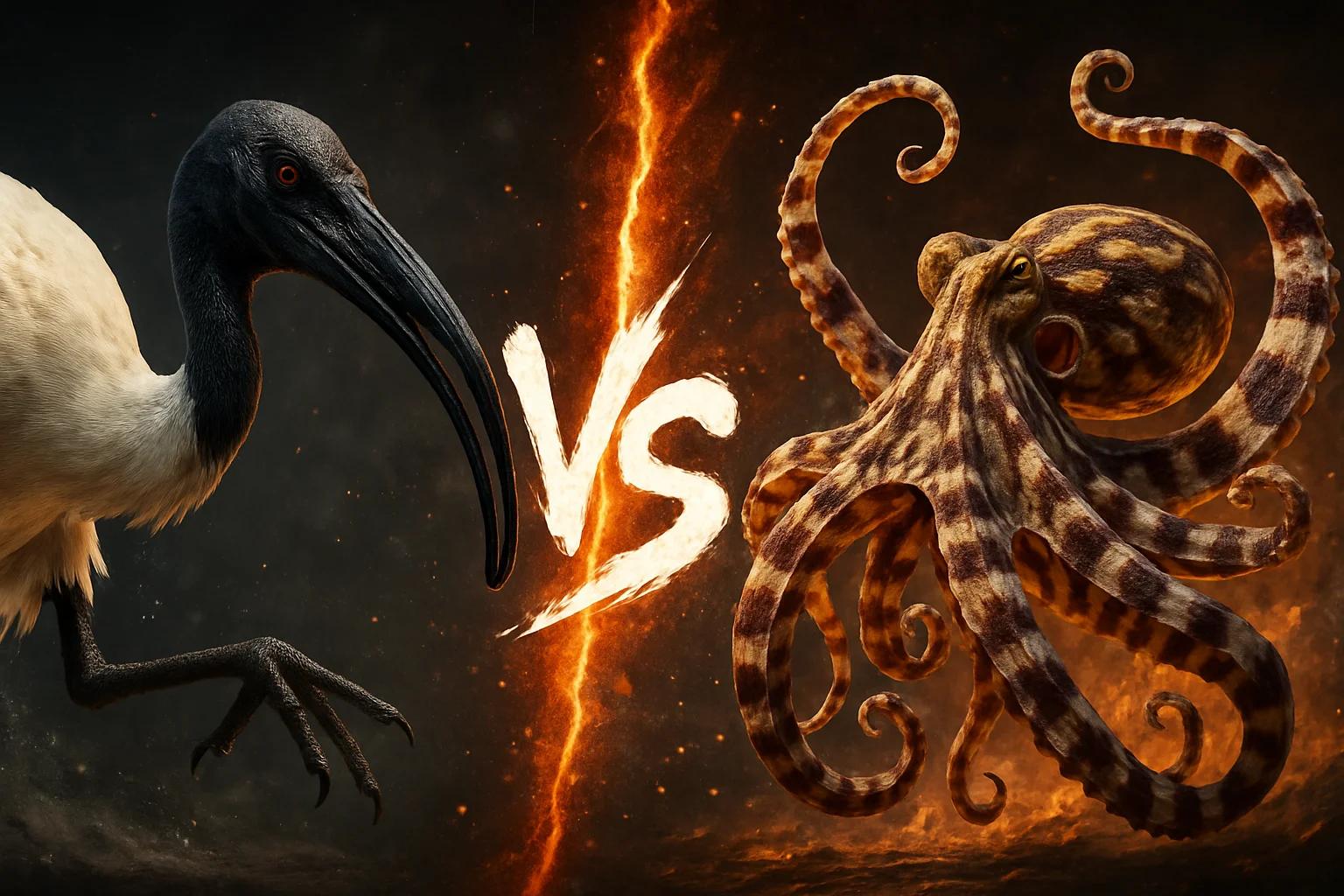
Black-headed Ibis vs Mimic Octopus: Who Actually Wins?
Black-headed Ibis vs Mimic Octopus: a biology-first breakdown of size, reach, intelligence and habitat to decide who would win this wading-bird vs cephalopod clash.
Black-headed Ibis vs Mimic Octopus
Matchup winner
Black-headed Ibis
Quick verdict
Start with the direct answer, then use the structured comparison below to see what changes the outcome.
The Black-headed Ibis wins this matchup. It is a 65–75 cm wading bird weighing roughly 1.5–2 kg, and it is built to probe, seize and kill small invertebrates in the shallows. The Mimic Octopus usually weighs well under half a kilogram, has arms roughly 40–60 cm long, and has a soft, unarmored body. Its brilliance lies in deception. It impersonates lionfish, flatfish and sea snakes to avoid being attacked, but it has no reliable way to outfight a determined predator. The octopus does have venomous saliva and an exceptional brain, but its bite is a tool for small crustaceans, not a weapon against a feathered bird with a long reach. In the shallow tidal flats where these animals could actually meet, the ibis holds the advantage in mass, reach, vision from above and the ability to simply walk away. The octopus's best outcome is escape, not victory.
Read the full explanation
Black-headed Ibis wins overall, with about 4x the body mass and a long probing bill built for grabbing soft prey.
The octopus's mimicry is defensive theater, and an ibis doesn't fear the fish or snakes it imitates the way reef predators do.
The octopus only gets its way in deeper water or inside sand burrows, where the ibis can't follow.
Venom and grip make the octopus annoying to swallow, but not able to win the fight.
Reader vote
Who do you think wins?
Pick a side — no account needed. Results update live.
No votes yet — be the first to call it.
Editorial note
Why people disagree
Intelligence feels decisive. The octopus scores 78 vs 39, but a smarter animal at a quarter of the size usually uses those smarts to escape rather than to win a fight.
Body mass & frame
At these sizes the heavier animal sets the terms. The octopus can't pin, drown or overpower a bird several times its weight.
Reach & strike tool
The ibis can strike from above without exposing its body, while the octopus needs contact to do anything.
Deception & bluffing
Mimicry is the octopus's best card, but it works by triggering fear in animals that have learned to avoid lionfish and sea snakes.
Read the full explanation +
Mimicry sounds like a weapon. In reality, impersonating a sea snake buys hesitation. It cannot hurt anything, and a wading bird may not read the bluff at all.
Habitat decides everything. The octopus lives in sandy shallows of Indo-Pacific estuaries, and in water deeper than an ibis's legs the bird has no way to engage, so 'the octopus wins' arguments usually assume deep water.
Comparison FAQ
Short, direct answers to the next questions readers usually ask after the headline verdict.
Would a Black-headed Ibis beat a Mimic Octopus in a fight?+
Yes. In shallow water or on exposed mud, the ibis wins thanks to roughly four times the body mass, a long seizing bill and protection from its feathers.
Which is stronger, the ibis or the mimic octopus?+
The ibis is stronger in overall force and leverage. The octopus has impressive grip strength for its size, but it is a small, soft-bodied animal facing a much larger bird.
Is the Mimic Octopus smarter than the ibis?+
Much smarter by most measures of problem-solving. That intelligence goes into disguise and escape rather than combat, so it doesn't decide the fight.
Why is the Mimic Octopus still dangerous even if it loses?+
It has venomous saliva, a sharp beak, an ink cloud and a grip that can make it hard to swallow or hold. It can injure or frustrate the ibis enough to escape.
Can the octopus's mimicry scare off an ibis?+
It might cause brief hesitation, but its impersonations target fish predators' fear of lionfish and sea snakes. An ibis is not reliably fooled.
Where would they actually meet?+
Possibly in the sandy, shallow estuaries and coastal flats of South and Southeast Asia, where the two species' ranges overlap.
Head-to-head species stats
These are the same core AnimalDex stat dimensions used on the dedicated animal pages, pulled side by side so the matchup is faster to scan.
Black-headed Ibis
Tier CMimic Octopus
Tier DTrait-by-trait comparison
Only the categories that matter to this matchup are included. The goal is not filler stats, but the real design differences that change the result.
~1.5–2 kg, 65–75 cm tall
Body mass & frame
Black-headed Ibis
Usually under 0.5 kg, soft-bodied
Body mass & frame
Black-headed Ibis
Long decurved bill for probing and seizing
Reach & strike tool
Black-headed Ibis
Eight sucker arms, beak bite
Reach & strike tool
Black-headed Ibis
None to speak of
Deception & bluffing
Mimic Octopus
World-class impersonation of toxic animals
Deception & bluffing
Mimic Octopus
Competent forager, colonial instincts
Problem-solving brain
Mimic Octopus
Elite cephalopod cognition
Problem-solving brain
Mimic Octopus
Feathers, hollow-boned but rigid frame
Close-range durability
Black-headed Ibis
No shell, no skeleton
Close-range durability
Black-headed Ibis
None
Chemical threat
Mimic Octopus
Venomous saliva, ink cloud
Chemical threat
Mimic Octopus
How the verdict forms
Verdict timeline
01 · Body mass & frame
Black-headed Ibis
02 · Reach & strike tool
Black-headed Ibis
03 · Deception & bluffing
Mimic Octopus
04 · Problem-solving brain
Mimic Octopus
05 · Close-range durability
Black-headed Ibis
06 · Chemical threat
Mimic Octopus
Change the conditions
Scenario breakdown
This is where shallow battle content usually fails. Terrain, spacing, timing, and engagement style can change the answer.
Scenario lean
Black-headed Ibis
Verdict confidence
82%
Clear Ibis win.
On mud or ankle-deep water, the octopus loses buoyancy and most of its speed. The ibis sees it from above and closes with long strides. It can then pin or toss the octopus with its bill. Its mimicry poses lose impact out of water, and the bird's size advantage becomes overwhelming.
AnimalDex field profiles
Explore these animals
Black-headed Ibis
Threskiornis melanocephalus
marsh, rice plain, and shallow wetland
Mimic Octopus
Thaumoctopus mimicus
shallow soft-bottom sea floor and muddy reef edge
Systems Intelligence & Hidden Purpose
See the animals behind this comparison as engineered biological systems: what each one is built to do, where it gains leverage, and why the matchup changes by scenario.
Specialized Hardware
bare black head, clean white body, and wetland probing feeding give the Black-headed Ibis a body plan tuned for its niche.
Systems Script
Black-headed Ibiss operate through marsh, rice plain, and shallow wetland. Their design links movement, feeding, shelter, and timing into one workable survival system.
Strategic Insight
Where water controls movement, position and timing often matter more than speed.
Specialized Hardware
shape-shifting arm displays, sand-flat camouflage, and copying multiple dangerous animals give the Mimic Octopus a body plan tuned for its niche.
Systems Script
Mimic Octopuss operate through shallow soft-bottom sea floor and muddy reef edge. Their design links movement, feeding, shelter, and timing into one workable survival system.
Strategic Insight
In moving water, the best systems use flow, visibility, and depth instead of fighting every current.
Final take
The Black-headed Ibis is the overall winner. This is a size-and-reach matchup, and the ibis has both. In the narrow habitat overlap where the two species could meet, the bird is effectively a predator meeting potential prey.
Read the full explanation
The Mimic Octopus is the more extraordinary animal, with one of the most inventive defense systems in the ocean. That system is designed to avoid fights, though, and it is tuned to the fears of fish predators rather than birds. Its venom, ink and slippery grip make it a costly catch, but they don't turn the contest around.
Final verdict: Ibis in most realistic encounters, and the octopus only by retreating into water the bird can't enter.
Collect both animals in AnimalDex
Track the species behind this matchup, compare their real traits, and build the rivalry into your AnimalDex collection.
Related comparisons
Continue with nearby matchups to compare more real-world animal traits without dropping into junky who-wins filler.
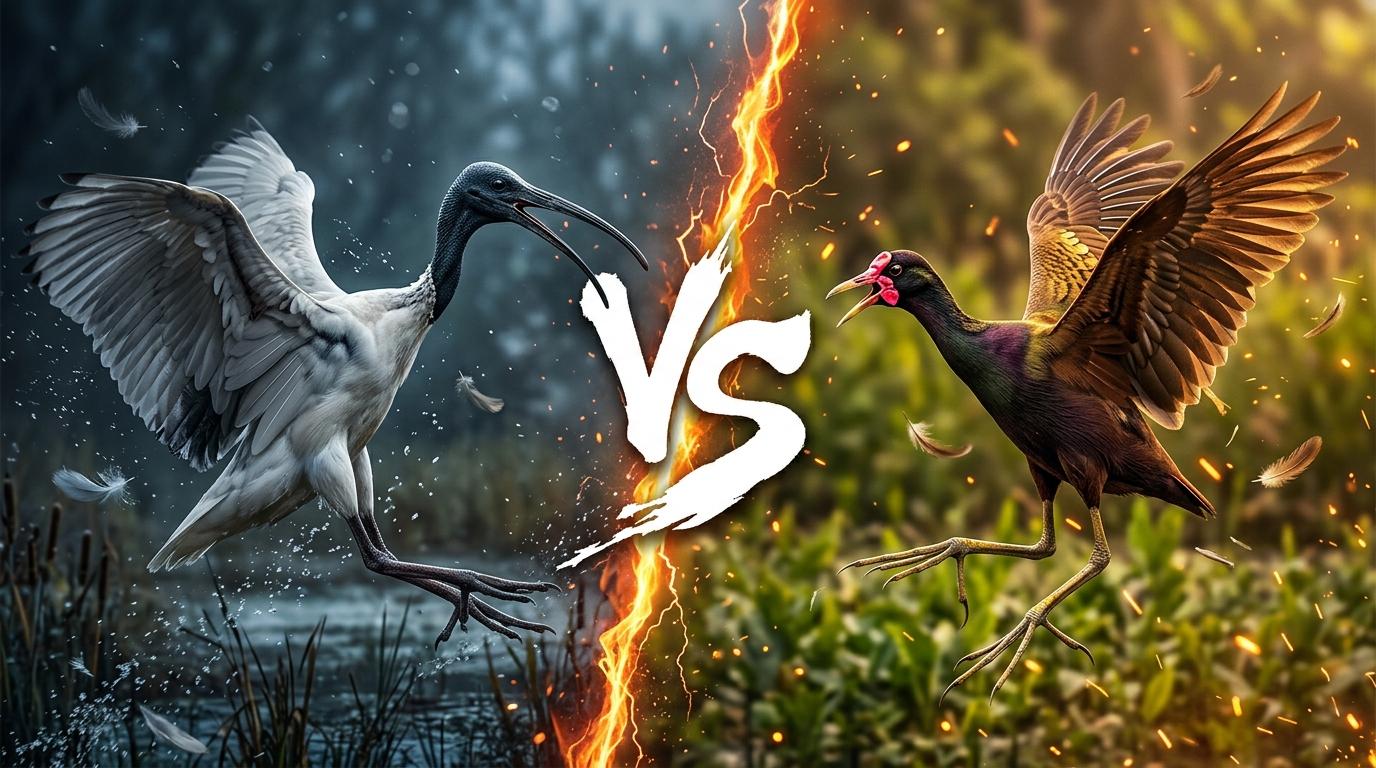
Black-headed Ibis vs Bronze-winged Jacana: Who Actually Wins?
The Black-headed Ibis wins this wetland matchup. It is a stork-sized wader, roughly 65–76 cm long and around 1.2–1.5 kg, with a long, heavy, down-curved bill built for probing mud. The Bronze-winged Jacana is a lily-trotter of about 28–31 cm. Females, the larger sex, weigh only around 230–350 g. That makes the ibis several times heavier, with far more reach and a bill that can strike and pin. The jacana has excellent footing on floating vegetation, sharp carpal wing spurs and a famously aggressive territorial temper, especially in females. Those tools make it bold and hard to pin down, but they cannot close a size gap this large. In most realistic confrontations the ibis simply displaces the jacana, and the jacana's best result is a nimble retreat across the lily pads.
Read comparison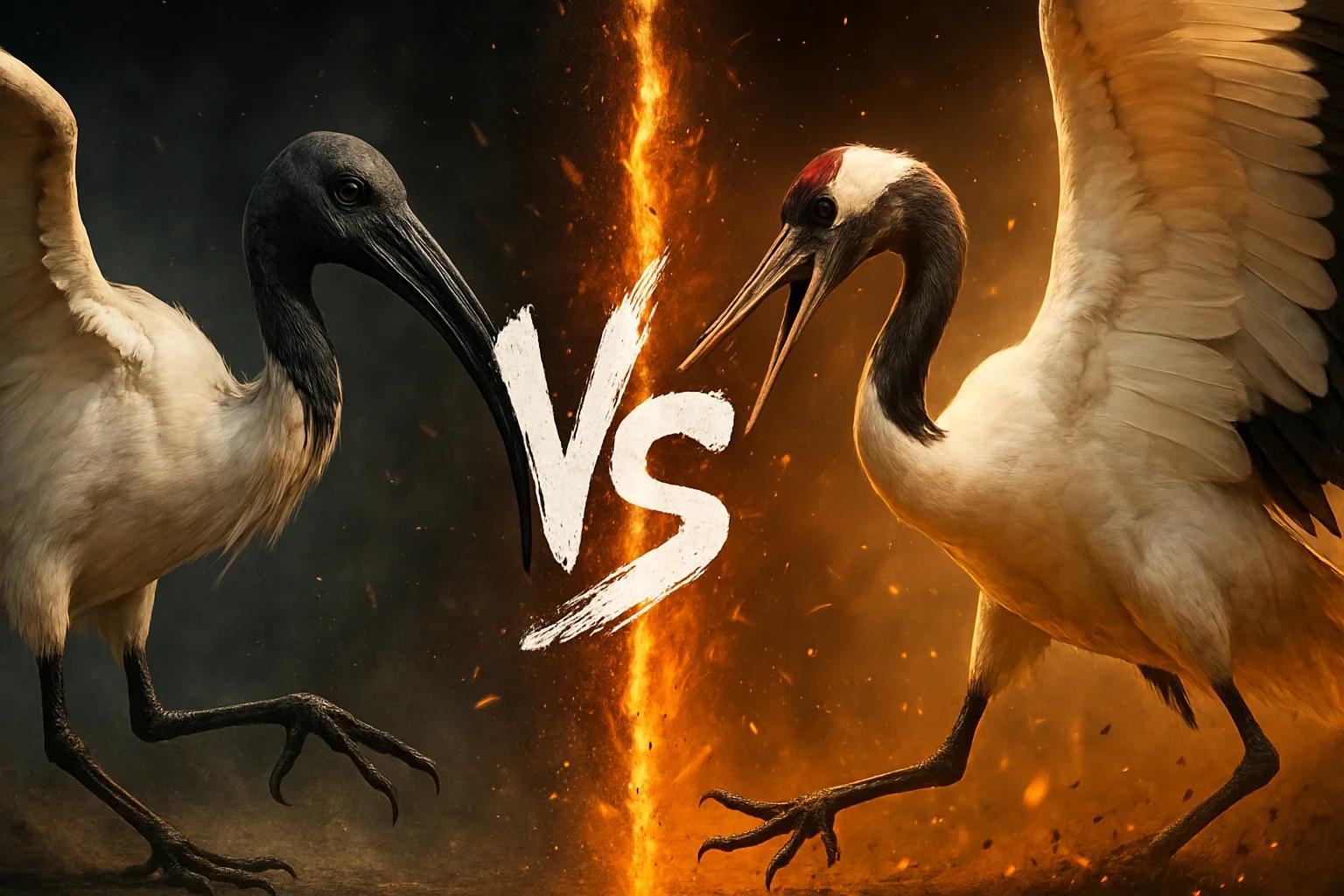
Black-headed Ibis vs Red-crowned Crane: Who Actually Wins?
The Red-crowned Crane wins this clearly. At roughly 150 cm tall, with a wingspan near 2.4 m and a body mass of 7–10 kg, it outweighs the Black-headed Ibis (about 65–75 cm long and roughly 1.5–2 kg) by around four to six times. It also carries a straight, dagger-like bill built for jabbing, long legs that can deliver kicks, and a breeding-season temperament forged by defending territories against foxes, raccoon dogs and rival cranes. The ibis is agile, social and armed with a long decurved bill, but that bill is a soft-mud probe, not a weapon. In almost any realistic wetland standoff, the crane's height, reach and willingness to escalate force the ibis to give way.
Read comparison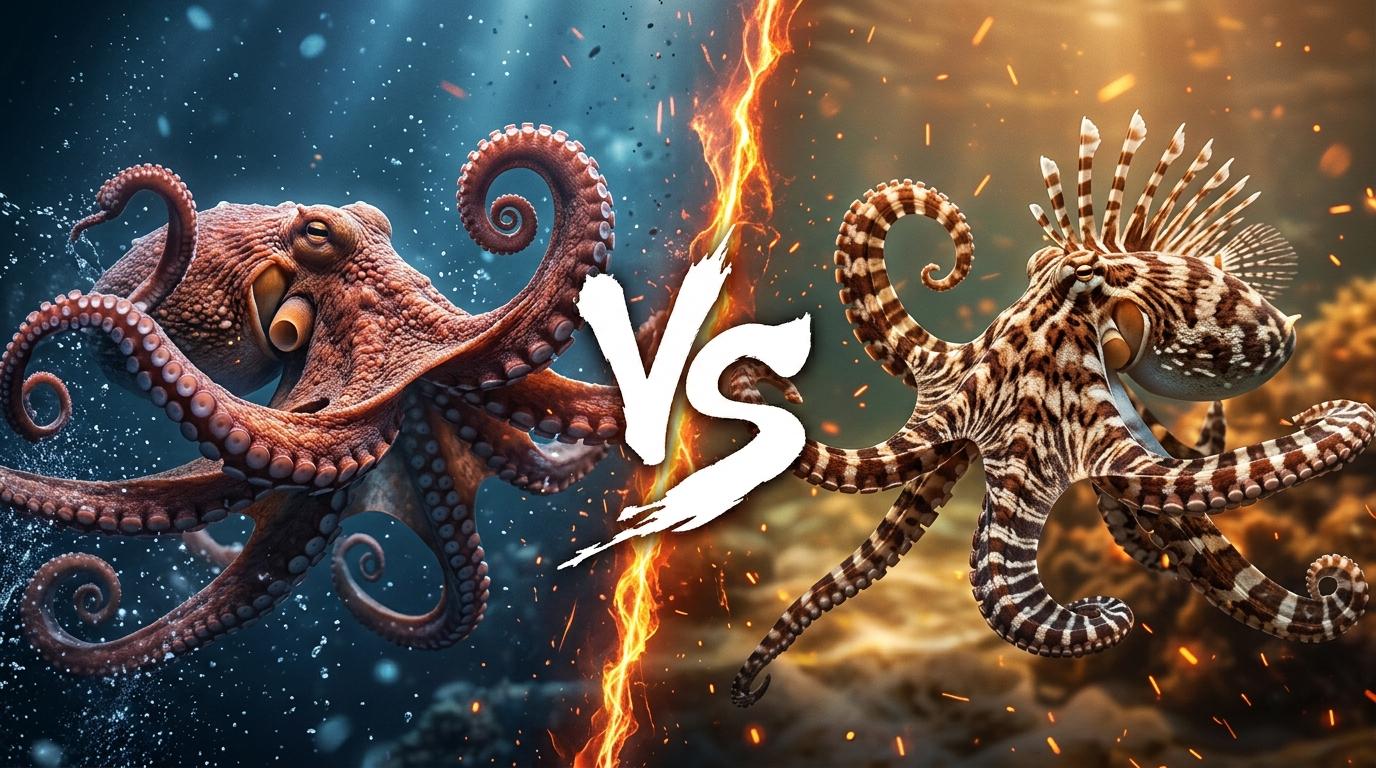
Giant Pacific Octopus vs Mimic Octopus: Who Actually Wins?
The Giant Pacific Octopus wins, and it isn't close in a physical contest. Adults commonly weigh 15–50 kg with arm spans past 4 m, while the Mimic Octopus usually weighs well under half a kilogram with an arm span around 60 cm. That makes the giant roughly a hundred times heavier, with thousands of powerful suckers able to pin and dismantle crabs, sharks and other octopuses. It also has a hard beak and venomous saliva built for cracking armored prey. The Mimic Octopus is a brilliant deception specialist that impersonates lionfish, sea snakes and flatfish. But its tricks evolved to fool fish predators in Indo-Pacific sand flats, not to stop a cold-water cephalopod that recognizes octopus-sized prey by touch. In any engagement where the two are close enough to touch, mass and grip settle it. The Mimic's only real wins come from never being caught.
Read comparison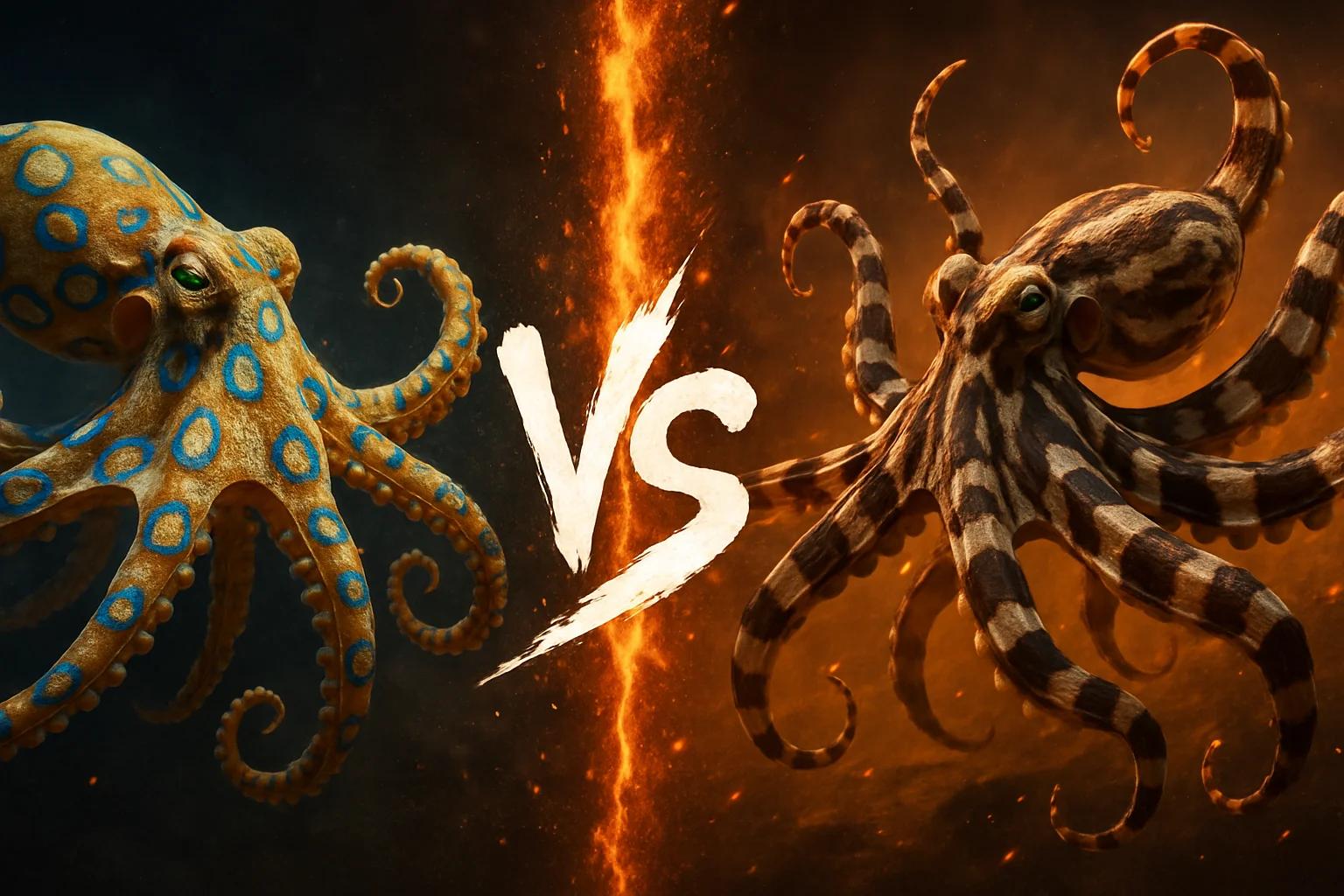
Blue-ringed Octopus vs Mimic Octopus: Who Actually Wins?
The blue-ringed octopus wins. The mimic octopus has every physical edge: a longer body, faster movement and one of the most sophisticated disguise repertoires in the ocean. Those edges matter for avoiding a fight, not for finishing one. Octopus-on-octopus combat is an arm-tangle that ends at the beak, and the blue-ringed octopus's bite delivers tetrodotoxin. That neurotoxin, produced by symbiotic bacteria in its salivary glands, blocks sodium channels and can paralyse animals far larger than a mimic. The mimic's tricks, such as impersonating lionfish, sea snakes and flatfish, are tuned to fool visual fish predators. They do little against a tiny, venom-armed cephalopod already in grappling range. If the mimic engages, a single bite likely decides it. The mimic's real win condition is refusing the fight on open sand.
Read comparison
Discussion
What do you think?
Share your reasoning with other readers. Be civil and stick to the animals.
Sign in to join the discussion.
Sign inNo comments yet. Start the conversation.