

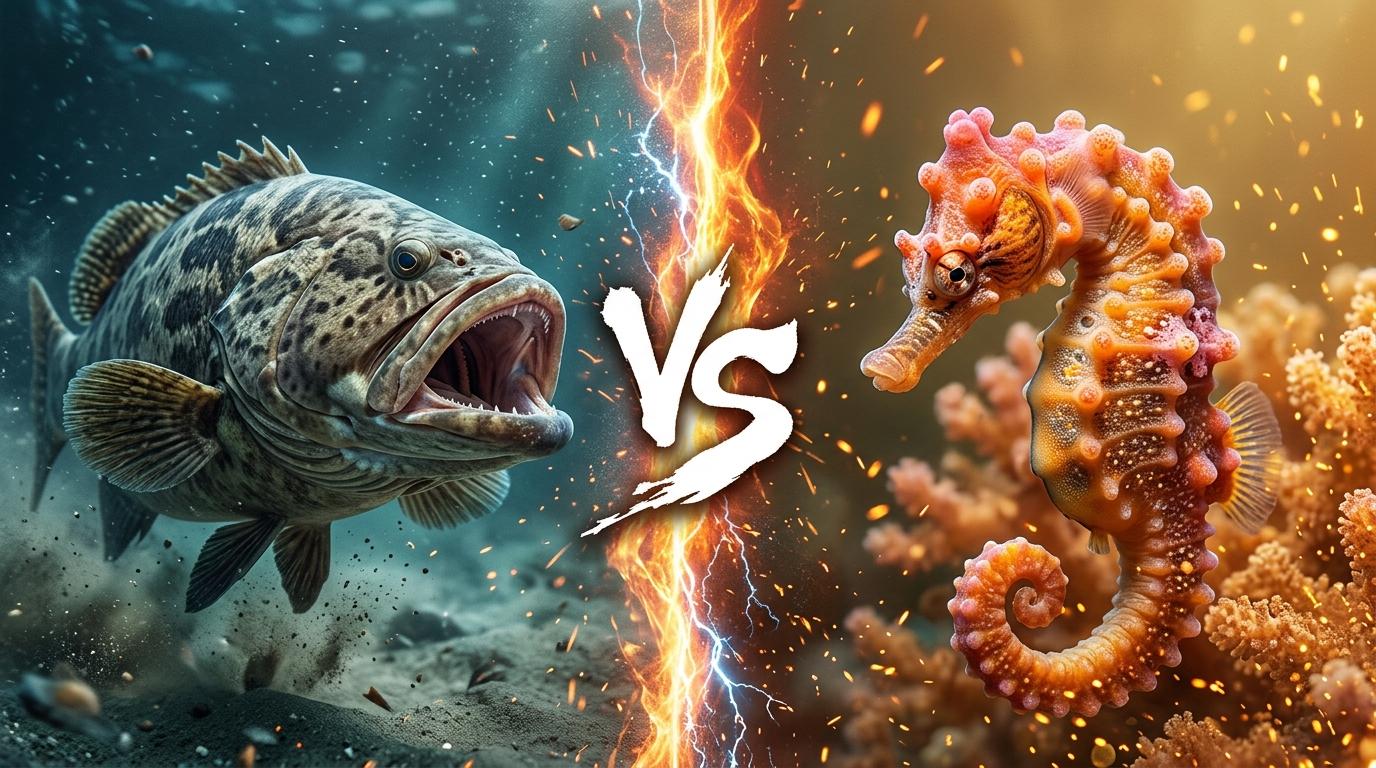
Giant Grouper vs Pygmy Seahorse: Who Actually Wins?
Giant Grouper vs Pygmy Seahorse compared: size, suction-feeding power, camouflage, and reef survival. See who wins and why the 2 cm seahorse is so hard to catch.
Giant Grouper vs Pygmy Seahorse
Matchup winner
Giant Grouper
Quick verdict
Start with the direct answer, then use the structured comparison below to see what changes the outcome.
The Giant Grouper wins, and the gap is enormous. Epinephelus lanceolatus is the largest bony fish on coral reefs. It can reach about 2.7 m and several hundred kilograms, and it feeds by opening a cavernous mouth that creates suction strong enough to swallow lobsters, fish, and even small sharks in a single gulp. Hippocampus bargibanti is usually under 2.5 cm long. It has no bite, no armor that matters at this scale, and almost no swimming speed. In any encounter where the grouper commits, the contest ends in a fraction of a second. The pygmy seahorse's real strength is not fighting at all. It is near-perfect camouflage on gorgonian sea fans, which means it is rarely noticed in the first place. That is a survival win, not a battle win, so the overall verdict goes clearly to the grouper.
Read the full explanation
Giant Grouper wins decisively. It is tens of thousands of times heavier and uses suction feeding that a 2 cm fish cannot resist.
The Pygmy Seahorse cannot injure, outswim, or outlast a grouper.
The seahorse's only edge is camouflage. On its sea fan, it often simply isn't found.
Realistically, a grouper would rarely bother with prey this tiny. Being too small to be worth hunting is part of how the seahorse survives.
Reader vote
Who do you think wins?
Pick a side — no account needed. Results update live.
No votes yet — be the first to call it.
Editorial note
Why people disagree
Some readers count 'never gets found' as winning. In a battle frame, though, avoiding the fight is not the same as winning it.
Explosive power
Suction feeding pulls prey in before it can react. At 2 cm, the seahorse has no counter.
Size and mass
The scale gap removes any possibility of physical resistance.
Ambush control
The grouper controls the encounter whenever it chooses to engage.
Read the full explanation +
The pygmy seahorse's camouflage is so famous that people overrate how hard it would be to catch once it has actually been spotted.
Size mismatches this extreme make the matchup feel like a joke. That is exactly why it is a useful lesson in how small reef animals survive.
Comparison FAQ
Short, direct answers to the next questions readers usually ask after the headline verdict.
Would a Giant Grouper beat a Pygmy Seahorse?+
Yes, easily. The grouper could swallow it in a single suction strike, and the seahorse has no way to resist.
Which is stronger, a Giant Grouper or a Pygmy Seahorse?+
The Giant Grouper, by an enormous margin. It is one of the largest reef fish in the world, while the pygmy seahorse is under about 2.5 cm long.
Why is the Pygmy Seahorse hard to beat if it's so weak?+
Its camouflage on gorgonian sea fans is so precise that predators often never detect it. It isn't dangerous to a grouper, but it is very hard to find.
Do Giant Groupers eat seahorses?+
Groupers mostly eat crustaceans and fish. A pygmy seahorse is too small and too well hidden to be a meaningful target.
Head-to-head species stats
These are the same core AnimalDex stat dimensions used on the dedicated animal pages, pulled side by side so the matchup is faster to scan.
Giant Grouper
Tier APygmy Seahorse
Tier CTrait-by-trait comparison
Only the categories that matter to this matchup are included. The goal is not filler stats, but the real design differences that change the result.
Massive suction strike from a huge mouth
Explosive power
Giant Grouper
Negligible; slow fin-flutter movement
Explosive power
Giant Grouper
Up to ~2.7 m, hundreds of kg
Size and mass
Giant Grouper
Under ~2.5 cm, a fraction of a gram
Size and mass
Giant Grouper
Patient lurker near caves and wrecks
Ambush control
Giant Grouper
Doesn't hunt big prey; picks tiny plankton
Ambush control
Giant Grouper
Mottled coloring; relies on bulk more than hiding
Camouflage and concealment
Pygmy Seahorse
Body tubercles and color match its host sea fan almost exactly
Camouflage and concealment
Pygmy Seahorse
Thick body, tough skin, few natural threats as an adult
Close-range durability
Giant Grouper
Bony plates, but fragile at this scale
Close-range durability
Giant Grouper
Slow cruiser with short bursts
Mobility
Giant Grouper
Among the slowest fish; grips its host with its tail
Mobility
Giant Grouper
How the verdict forms
Verdict timeline
01 · Explosive power
Giant Grouper
02 · Size and mass
Giant Grouper
03 · Ambush control
Giant Grouper
04 · Camouflage and concealment
Pygmy Seahorse
05 · Close-range durability
Giant Grouper
06 · Mobility
Giant Grouper
Change the conditions
Scenario breakdown
This is where shallow battle content usually fails. Terrain, spacing, timing, and engagement style can change the answer.
Scenario lean
Pygmy Seahorse
Verdict confidence
82%
The seahorse survives by never being spotted.
On its host gorgonian, the pygmy seahorse's knobby tubercles and matched coloring make it almost impossible to see, even for experienced divers. A grouper hunting at reef scale is looking for crabs and fish, not a 2 cm bump on a fan. In this frame the seahorse 'wins' only because no fight ever begins.
AnimalDex field profiles
Explore these animals
Giant Grouper
Epinephelus lanceolatus
coral reef, wreck, and tropical rocky seafloor
Pygmy Seahorse
Hippocampus bargibanti
gorgonian coral reef and tropical seafan habitat
Systems Intelligence & Hidden Purpose
See the animals behind this comparison as engineered biological systems: what each one is built to do, where it gains leverage, and why the matchup changes by scenario.
Specialized Hardware
massive heavy reef body, huge suction-feeding mouth, and slow ambush cave patrol give the Giant Grouper a body plan tuned for its niche.
Systems Script
Giant Groupers operate through coral reef, wreck, and tropical rocky seafloor. Their design links movement, feeding, shelter, and timing into one workable survival system.
Strategic Insight
In moving water, the best systems use flow, visibility, and depth instead of fighting every current.
Specialized Hardware
coral-matching body bumps, upright drifting posture, and tiny grasping tail give the Pygmy Seahorse a body plan tuned for its niche.
Systems Script
Pygmy Seahorses operate through gorgonian coral reef and tropical seafan habitat. Their design links movement, feeding, shelter, and timing into one workable survival system.
Strategic Insight
In moving water, the best systems use flow, visibility, and depth instead of fighting every current.
Final take
The Giant Grouper is the clear winner. Its size, suction-feeding mechanics, and reef dominance put it in a different category from a fish smaller than a fingernail. In every scenario where the two actually interact, the grouper ends it immediately.
Read the full explanation
The Pygmy Seahorse is still a masterpiece of reef evolution. It survives by being invisible and too small to be worth hunting, which shows that winning the ecosystem doesn't require winning fights.
Collect both animals in AnimalDex
Track the species behind this matchup, compare their real traits, and build the rivalry into your AnimalDex collection.
Related comparisons
Continue with nearby matchups to compare more real-world animal traits without dropping into junky who-wins filler.
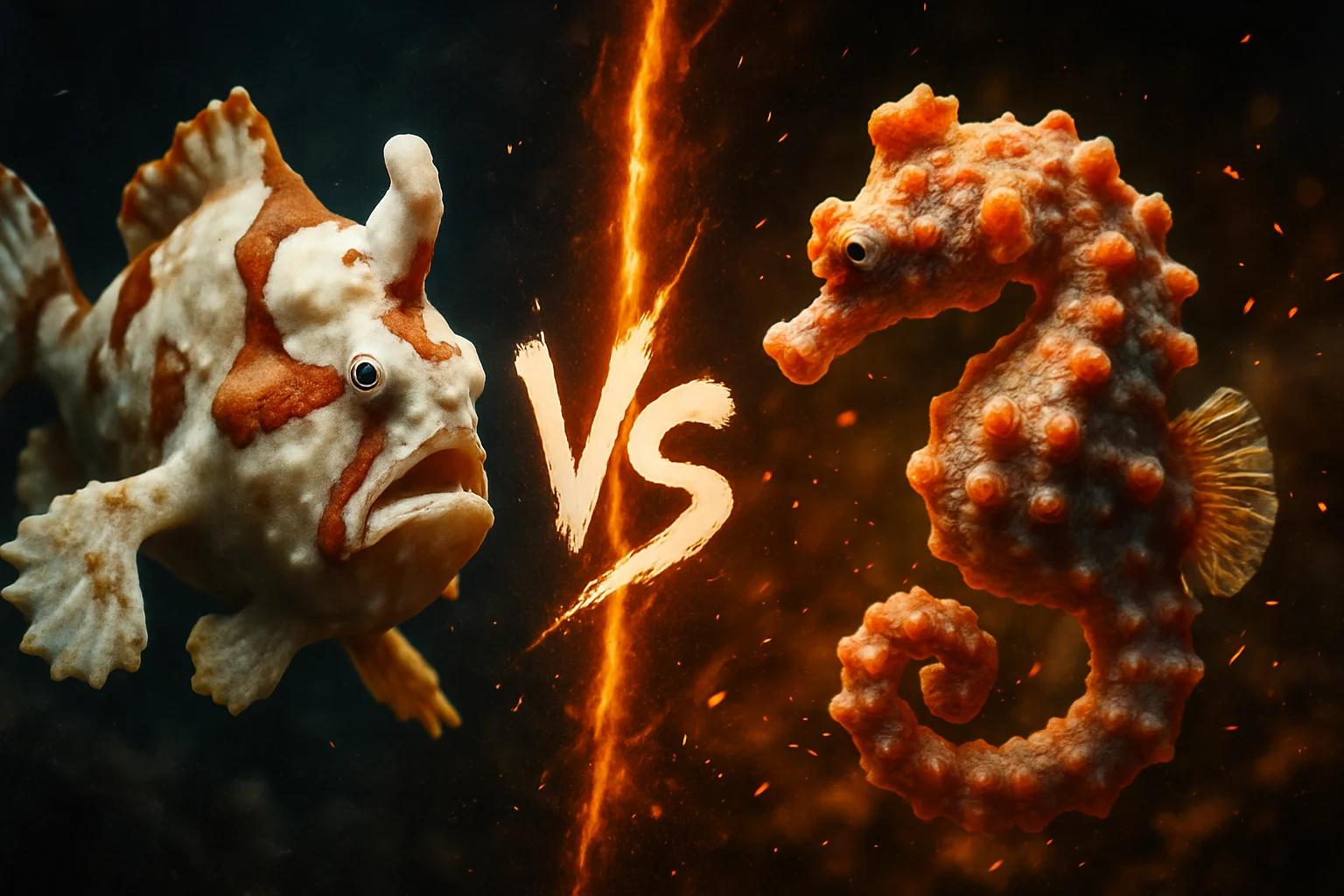
Warty Frogfish vs Pygmy Seahorse: Who Actually Wins?
The warty frogfish wins clearly. At roughly 10–12 cm against a pygmy seahorse barely 2 cm long, the frogfish has about a 5–6x length advantage. It also has one of the fastest feeding strikes recorded in any vertebrate: a mouth-expanding gulp that can engulf prey in a few milliseconds and handle prey nearly its own size. The pygmy seahorse has no bite, no venom, no spines and no meaningful escape speed. Its real weapon is never being noticed. It matches the knobby pink or yellow polyps of its gorgonian sea fan so precisely that the species was only discovered by accident on a collected fan. If the frogfish detects it, the encounter ends in one gulp. The seahorse's only winning line is invisibility, so it can survive, but it cannot beat the frogfish.
Read comparison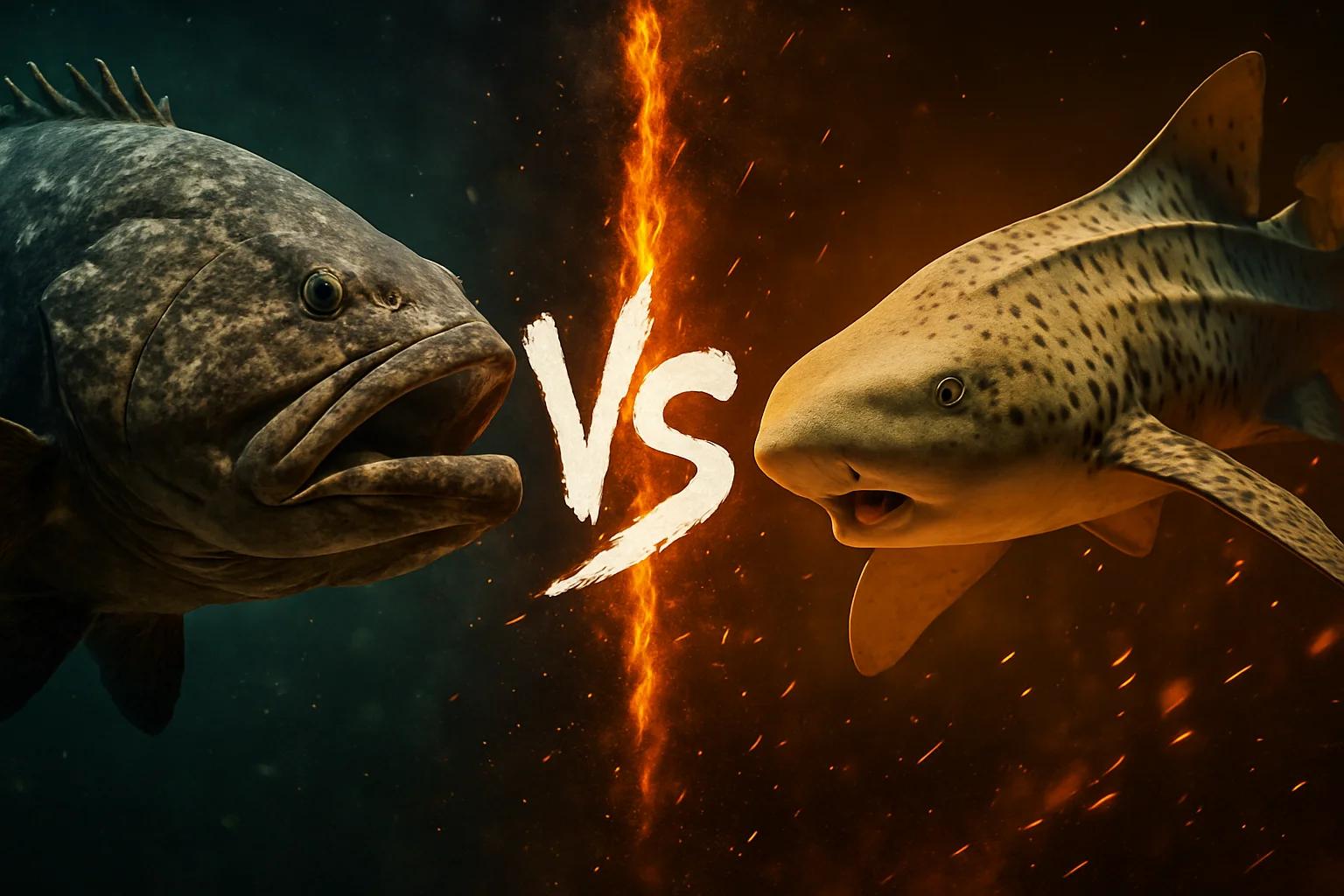
Giant Grouper vs Zebra Shark: Who Actually Wins?
The giant grouper wins, and it isn't especially close. Both animals can approach similar lengths of roughly 2.5 meters, but they are built for different jobs. The grouper is a heavy, deep-bodied reef heavyweight that can reportedly exceed 300 kg. Its cavernous mouth generates powerful suction, a feeding method that has let it swallow crustaceans, fish, and even small sharks and rays. The zebra shark is a slender, docile bottom-forager whose long tail makes up much of its length and whose small mouth is designed for crunching snails and crabs, not for fighting large animals. In any realistic reef confrontation, the grouper's mass, bite gape and ambush posture outmatch the zebra shark's flexibility and modest jaws. The shark's best outcome is escaping, not winning.
Read comparison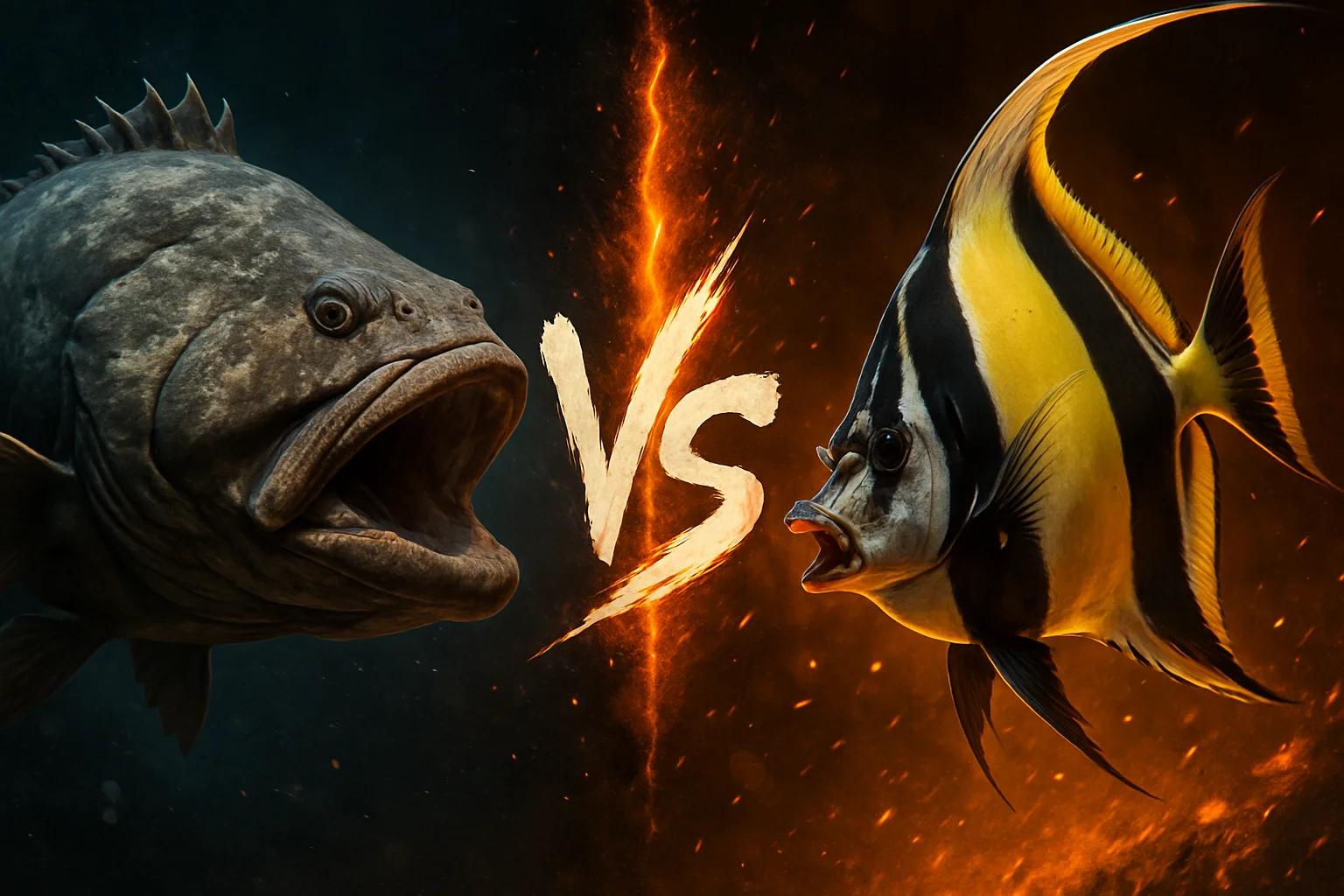
Giant Grouper vs Moorish Idol: Who Actually Wins?
The giant grouper wins, and it isn't close. Epinephelus lanceolatus is one of the largest bony reef fishes on Earth. It can top 2.5 m and 300+ kg, and it feeds by opening a cavernous mouth that pulls in water and prey in a fraction of a second. The Moorish idol is a slender, disc-shaped reef grazer around 20 cm long, built for picking sponges and slipping through coral, not for confrontation. Its only real edges are maneuverability, a tall dorsal profile that makes it awkward to swallow, and the habit of staying close to reef structure. Those traits help it avoid an encounter, but they can't overturn a mass difference of roughly a thousandfold once the grouper commits.
Read comparison
Discussion
What do you think?
Share your reasoning with other readers. Be civil and stick to the animals.
Sign in to join the discussion.
Sign inNo comments yet. Start the conversation.