

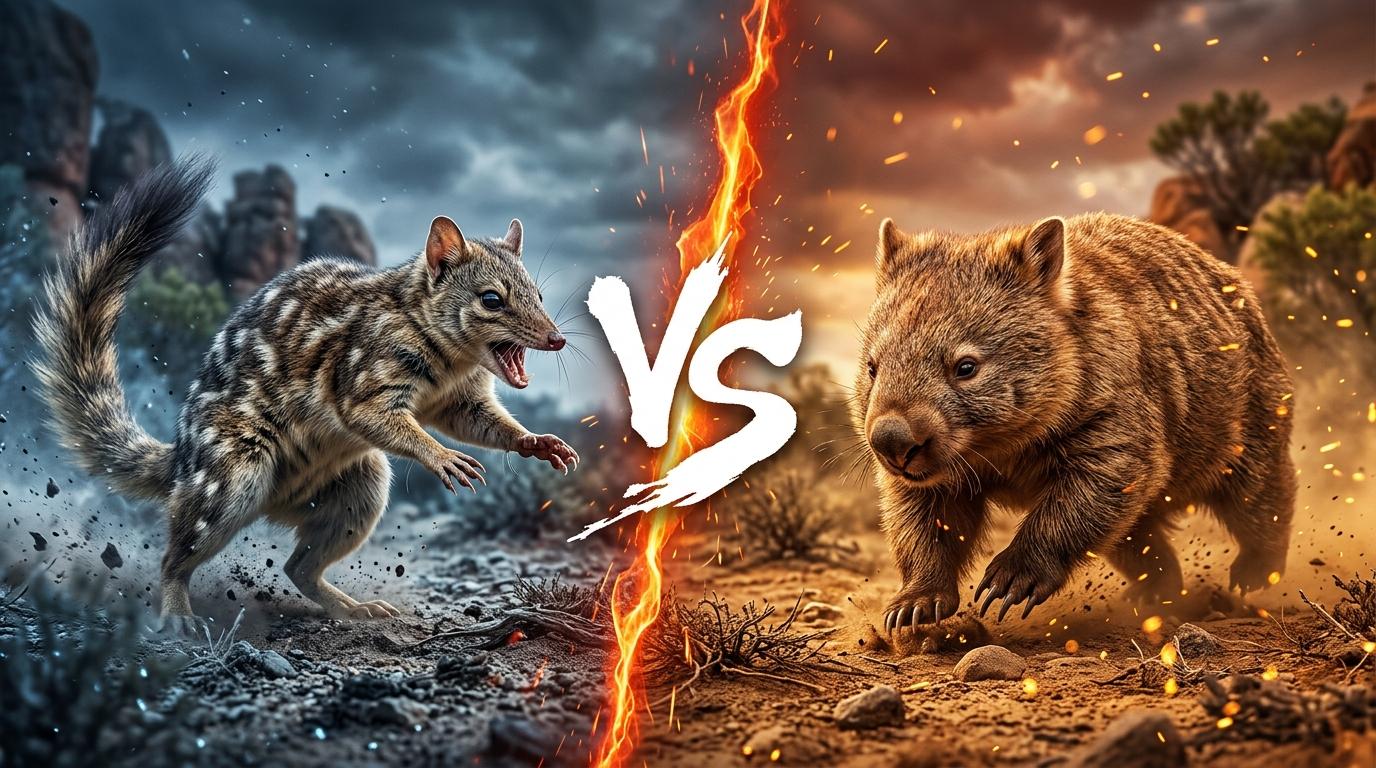
Kowari vs Southern Hairy-nosed Wombat: Who Actually Wins?
Kowari vs southern hairy-nosed wombat: a biology-first breakdown of size, armor, bite, and burrow tactics to settle who would win.
Kowari vs Southern Hairy-nosed Wombat
Matchup winner
Southern Hairy-nosed Wombat
Quick verdict
Start with the direct answer, then use the structured comparison below to see what changes the outcome.
The southern hairy-nosed wombat wins clearly. This is a matchup between a fierce 70–175 g carnivorous marsupial and a 19–32 kg burrowing herbivore built like a living doorstop. The kowari is fast, bold, and armed with sharp carnassial teeth that are excellent for killing insects, lizards, and small rodents. Against the wombat, those same teeth meet thick skin, dense fur, and a toughened rear end. The wombat outweighs it more than a hundredfold, can crush or shove with enormous body force, and defends tunnel entrances with a reinforced rump. The kowari's best outcome is a nip and a retreat. The wombat's ordinary outcome is to simply bulldoze the encounter to an end.
Read the full explanation
Winner: Southern hairy-nosed wombat, by an overwhelming size and armor margin.
The kowari is a sharp-toothed predator, but it is built for prey smaller than itself.
The wombat's mass, digging power, and armored rump neutralize anything the kowari can do.
The kowari wins only at not fighting. It is quicker to dodge and disengage.
Reader vote
Who do you think wins?
Pick a side — no account needed. Results update live.
No votes yet — be the first to call it.
Editorial note
Why people disagree
Predator vs herbivore bias: some readers assume the carnivore must win, but diet doesn't overcome a 100x weight gap.
Explosive power
Force scales with mass, and the wombat brings over 20 kg to a contest the kowari enters at about 100 g.
Close-range durability
The wombat can absorb bites that would never reach anything vital, while one hard push can injure the kowari.
Weaponry
The kowari's teeth are more specialized for killing, but the wombat's bite and claws carry far more force.
Read the full explanation +
Wombats look sleepy and round, which hides their bone-crushing rump defense and serious bite.
Kowari ferocity is real. They take prey their own size, so people overestimate how far that aggression scales.
Comparison FAQ
Short, direct answers to the next questions readers usually ask after the headline verdict.
Would a kowari beat a southern hairy-nosed wombat?+
No. The wombat is over 100 times heavier and armored where it matters. The kowari would lose any sustained fight.
Which animal is stronger?+
The wombat, by a huge margin. Its digging musculature and dense build generate force the tiny kowari can't match.
Why is the kowari still dangerous despite losing?+
Its sharp carnassial teeth and fast strikes make it a lethal predator of insects, lizards, and small mammals, and it can deliver painful bites before escaping.
Do kowaris and wombats meet in the wild?+
Their ranges in arid South Australia can come close. Direct conflict is unlikely, since the kowari hunts much smaller prey.
What is the wombat's best defense?+
Its cartilage-reinforced rump. The wombat blocks burrow entrances with it and can crush attackers against the tunnel roof.
Head-to-head species stats
These are the same core AnimalDex stat dimensions used on the dedicated animal pages, pulled side by side so the matchup is faster to scan.
Kowari
Tier BSouthern Hairy-nosed Wombat
Tier CTrait-by-trait comparison
Only the categories that matter to this matchup are included. The goal is not filler stats, but the real design differences that change the result.
Quick pounce, tiny mass
Explosive power
Southern Hairy-nosed Wombat
Heavy charge and shove
Explosive power
Southern Hairy-nosed Wombat
Fragile small frame
Close-range durability
Southern Hairy-nosed Wombat
Thick hide, cartilage-reinforced rump
Close-range durability
Southern Hairy-nosed Wombat
Sharp carnivore teeth
Weaponry
Southern Hairy-nosed Wombat
Ever-growing incisors, digging claws
Weaponry
Southern Hairy-nosed Wombat
Nimble, rapid darting
Agility and evasion
Kowari
Surprisingly quick sprints, poor turning
Agility and evasion
Kowari
Nocturnal hunter instincts
Ambush control
Kowari
Burrow-guarding defense
Ambush control
Kowari
Borrows burrows and cracks
Terrain command
Southern Hairy-nosed Wombat
Engineers warren systems
Terrain command
Southern Hairy-nosed Wombat
How the verdict forms
Verdict timeline
01 · Explosive power
Southern Hairy-nosed Wombat
02 · Close-range durability
Southern Hairy-nosed Wombat
03 · Weaponry
Southern Hairy-nosed Wombat
04 · Agility and evasion
Kowari
05 · Ambush control
Kowari
06 · Terrain command
Southern Hairy-nosed Wombat
Change the conditions
Scenario breakdown
This is where shallow battle content usually fails. Terrain, spacing, timing, and engagement style can change the answer.
Scenario lean
Southern Hairy-nosed Wombat
Verdict confidence
82%
Wombat dominates at close quarters.
In tight cover, the kowari loses room to dodge. The wombat can turn its armored rump toward the threat and press forward. Bites land on tough tissue while mass does the damage.
AnimalDex field profiles
Explore these animals
Kowari
Dasyuroides byrnei
stony desert, gibber plain, and arid grassland
Southern Hairy-nosed Wombat
Lasiorhinus latifrons
semi-arid scrub, grassland, and sandy plain
Systems Intelligence & Hidden Purpose
See the animals behind this comparison as engineered biological systems: what each one is built to do, where it gains leverage, and why the matchup changes by scenario.
Specialized Hardware
brush-tipped tail, big insect-hunting eyes, and sand-burrow desert sprint give the Kowari a body plan tuned for its niche.
Systems Script
Kowaris operate through stony desert, gibber plain, and arid grassland. Their design links movement, feeding, shelter, and timing into one workable survival system.
Strategic Insight
Harsh places reward efficiency, timing, and bodies that waste very little.
Specialized Hardware
powerful burrowing limbs, broad blunt muzzle, and cool-day underground sheltering give the Southern Hairy-nosed Wombat a body plan tuned for its niche.
Systems Script
Southern Hairy-nosed Wombats operate through semi-arid scrub, grassland, and sandy plain. Their design links movement, feeding, shelter, and timing into one workable survival system.
Strategic Insight
Harsh places reward efficiency, timing, and bodies that waste very little.
Final take
The southern hairy-nosed wombat wins this matchup decisively. It isn't more aggressive than the kowari. Its body is a defensive fortress, and the kowari's weapons were calibrated for crickets and mice.
Read the full explanation
The kowari still deserves respect. It is a rare, fierce desert dasyurid that kills prey its own size and survives on gibber plains by being fast, alert, and fearless. In nature, its intelligence shows up as avoidance: it knows a wombat is not a meal.
Collect both animals in AnimalDex
Track the species behind this matchup, compare their real traits, and build the rivalry into your AnimalDex collection.
Related comparisons
Continue with nearby matchups to compare more real-world animal traits without dropping into junky who-wins filler.
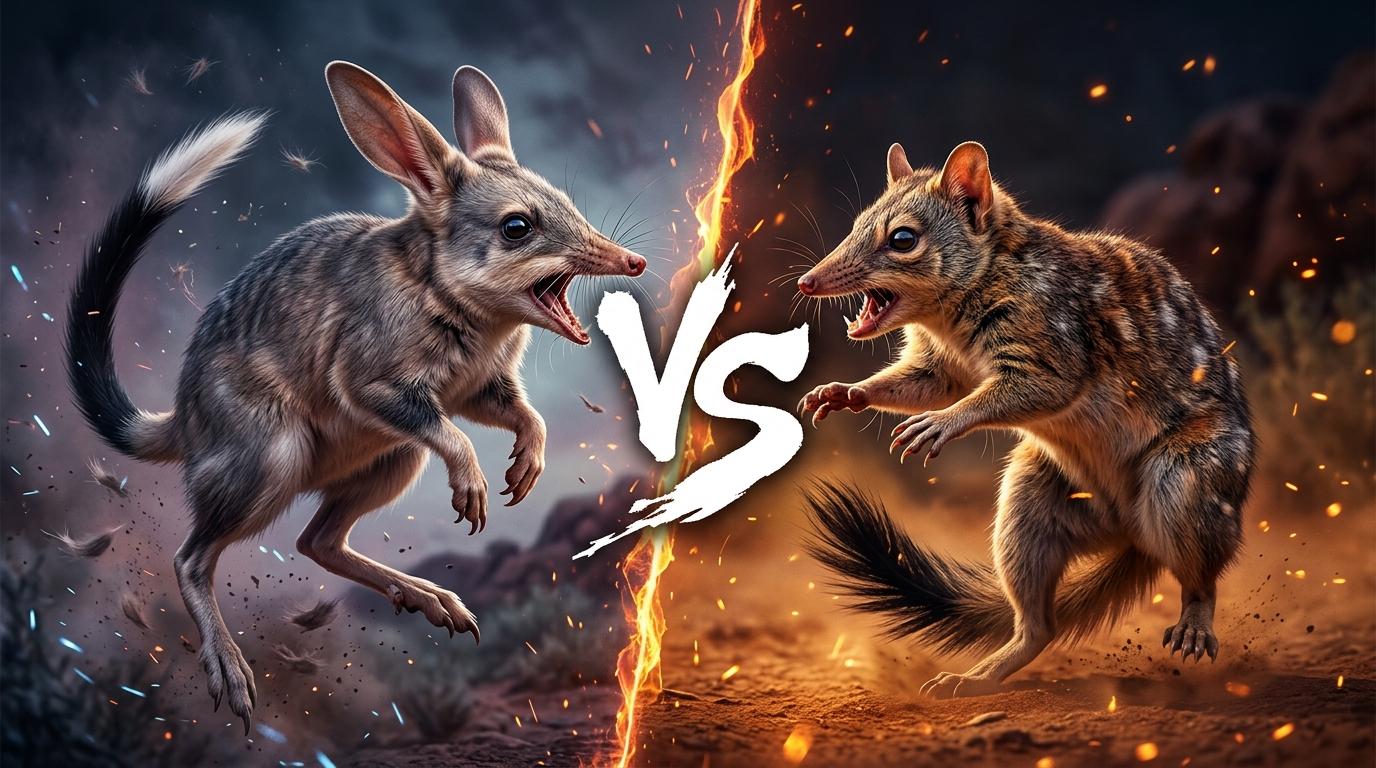
Greater Bilby vs Kowari: Who Actually Wins?
The greater bilby wins this matchup most of the time, and the main reason is size. An adult bilby weighs roughly 0.8–2.5 kg, while a kowari is usually 70–175 g. That makes the bilby around ten times heavier. It also has strong, heavily clawed forelimbs built to dig deep spiral burrows, plus a long-legged bounding gait that lets it disengage at will. The kowari is the more aggressive animal. It is a true dasyurid carnivore with sharp teeth, quick reflexes and a hunter's commitment to the bite. It kills insects, spiders, lizards and small rodents with ruthless efficiency, but a full-grown bilby is far outside its prey range. In most realistic encounters the bilby either shoves the smaller marsupial aside with its body and claws or simply leaves. The kowari's real edge exists only against juvenile bilbies or in cramped burrow entrances where speed and bite placement count more than mass.
Read comparison
Beira vs Kowari: Who Actually Wins?
The beira wins clearly. This small Horn of Africa antelope weighs roughly 9–11 kg, while the kowari, a crest-tailed carnivorous marsupial from Australia's gibber deserts, usually weighs about 70–140 g. That is a mass gap of nearly a hundredfold. The beira also brings hard hooves, a sure-footed rock-hopping frame, and, in males, short spike horns. The kowari is a genuine predator, fast-biting, aggressive for its size, and skilled at killing insects, lizards, and small rodents. But its toolkit is built for prey a fraction of its own weight, not a hoofed animal sixty centimeters at the shoulder. In almost any realistic encounter the beira either bolts out of range or delivers a kick or horn jab the kowari cannot absorb. The kowari's only real 'win' is refusing to be caught by retreating into a burrow.
Read comparison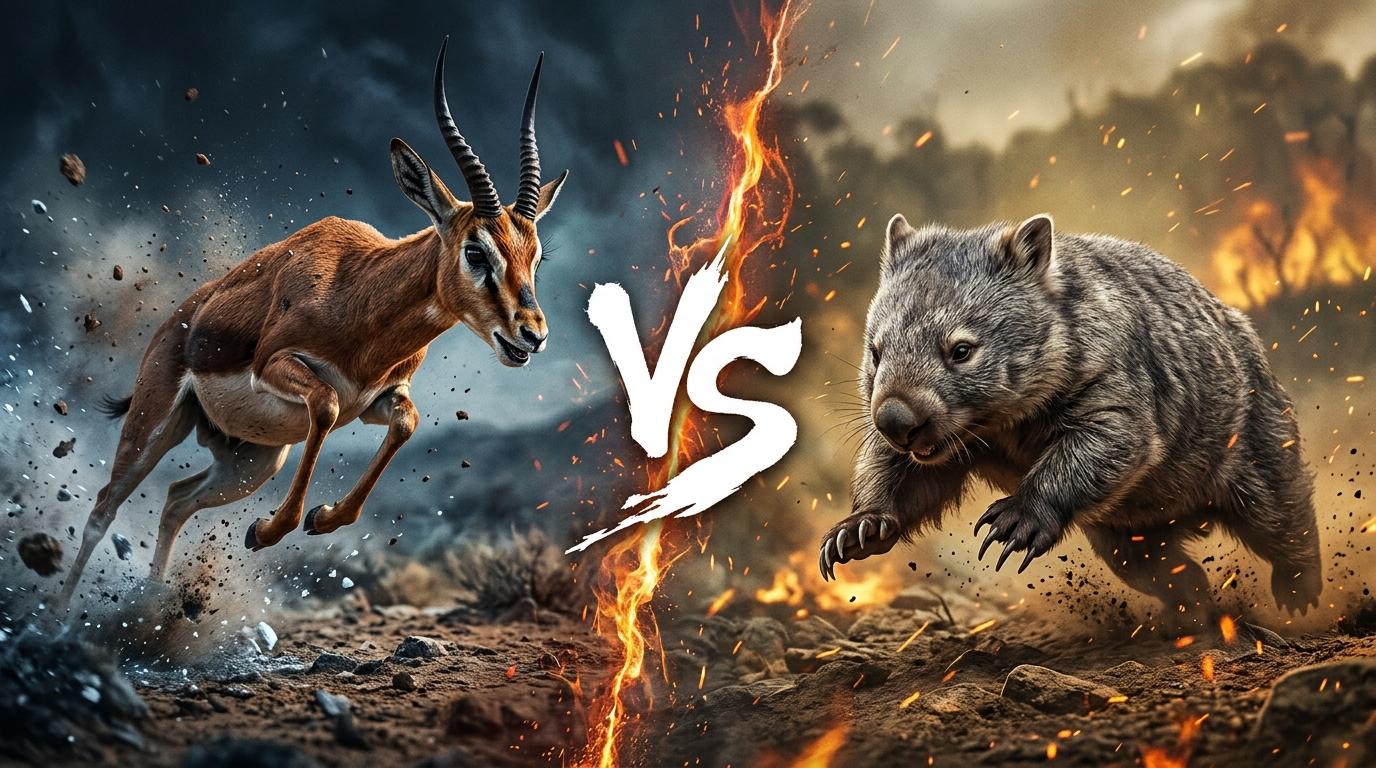
Dibatag vs Southern Hairy-nosed Wombat: Who Actually Wins?
The Southern Hairy-nosed Wombat wins a committed confrontation. The Dibatag, a slender, long-necked antelope from the Ogaden scrub of Ethiopia and Somalia, is built to read danger early and leave. Its best weapon is distance, and only males carry short horns. The wombat is about the same weight, often 19–32 kg, but that mass sits low in a barrel-shaped body with powerful digging forelimbs, ever-growing incisors, and a tough, cartilage-backed rump designed to plug a burrow and take punishment. If the antelope chooses to run, nothing happens. That is not a loss for it, but it is not a win either. In any frame where the two actually have to settle something, the wombat's density, low center of gravity, and stubborn close-range durability outclass a browser whose anatomy is optimized for vigilance and flight.
Read comparison
Kowari vs Red Kangaroo: Who Actually Wins?
The red kangaroo wins, and it isn't close. An adult male red kangaroo can stand around 1.5 m tall and weigh 55–85 kg. It is the largest living marsupial. The kowari is a crest-tailed carnivorous marsupial of about 70–175 g, roughly the weight of a large hamster. The kangaroo's hind-leg kicks, delivered while it balances on its muscular tail, are built to hurt rival males, and its claws can tear skin. The kowari is a fierce, fast-biting predator of insects, lizards and small rodents, but its jaws have nothing big enough to grip on a 400-times-heavier opponent. The kowari's best outcome is not a win. It is escaping into a burrow or a crack in the gibber plain before it gets stepped on or kicked.
Read comparison
Discussion
What do you think?
Share your reasoning with other readers. Be civil and stick to the animals.
Sign in to join the discussion.
Sign inNo comments yet. Start the conversation.