

Animals in Finland: What You Can Spot, Learn, and Collect
Finland's wildlife: bears and wolverines from the Kuhmo hides, the Saimaa ringed seal, wild forest reindeer, great grey owls, Lapland ptarmigan and whooper swans.
Quick answer
Start with the direct answer, then use the sections below to see why the location matters and which animals are actually realistic to spot there.
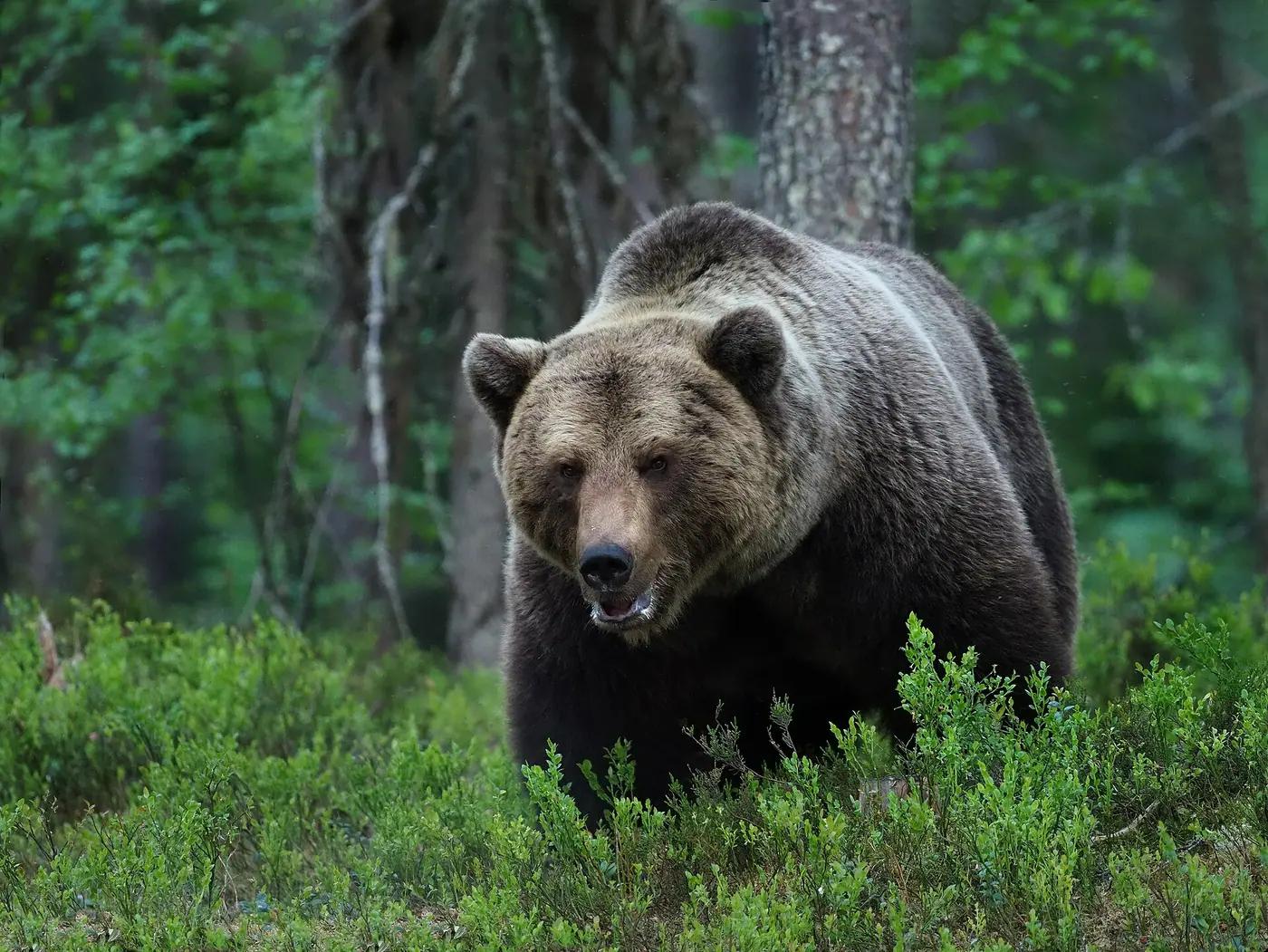
Finland is the best country in Europe to photograph brown bears and wolverines, from hides on the Russian border around Kuhmo and Lieksa where both species visit nightly in summer. It has around 2,500 lynx, 300 wolves, 100,000 moose and wild forest reindeer in Kainuu, plus the Saimaa ringed seal, a freshwater seal of about 500 animals found nowhere else. Whooper swans, great grey owls and hawk owls breed across the north, and Lapland adds ptarmigan, reindeer herds and the midnight sun.
Finland's eastern border forests are a wildlife corridor with Russian Karelia, and the bears, wolverines and wolves that move across it have made Kuhmo and Lieksa the bear-watching capitals of Europe. Hides sit at the edge of bogs and clearings, and from May to August a night in one almost always produces bears, often wolverines and sometimes a wolf pack. The same region holds Finland's wild forest reindeer, a rarer, longer-legged relative of the Lapland herds.
The lake district in the south-east has a seal that lives in fresh water. The Saimaa ringed seal, cut off from the Baltic when the land rose after the ice age, survives in Lake Saimaa and is watched from boats out of Oravi and Linnansaari in May and June when it hauls out on rocks. Lapland in the north brings semi-domesticated reindeer on every road, rock ptarmigan on the Saana fell at Kilpisjärvi, and more mosquitoes than anywhere else in Europe.
Why this location matters
Good location pages explain why the place is worth your time, not just which names belong on a destination checklist.
Finland is one of the few places where a visitor can reliably see a wolverine, an animal that is almost mythically hard to find elsewhere. The Kuhmo and Lieksa hides have made it routine, and the images from them are a large share of all wolverine photographs ever taken.
The Saimaa ringed seal is also a conservation story that worked: from under 200 animals in the 1980s to around 500 now, thanks to fishing-net bans, snow-bank nests built by volunteers in mild winters and a lake community that adopted the seal as its emblem.
Where to look
Wildlife map of Finland
This guide covers the region shown below. Zoom in to get your bearings before planning a trip.
Positions are geocoded from OpenStreetMap. Habitat access and opening times change — check locally before travelling.
Animals to spot
These are intentionally practical species picks, balancing accessibility, excitement, and what travelers can realistically notice in the location.
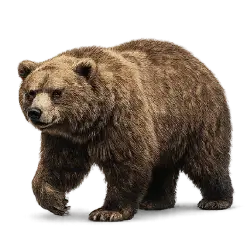
Brown BearA
Finland's 2,000 or so bears are densest along the eastern border, and the Kuhmo and Lieksa hides in Kainuu and North Karelia show them almost every night from May to August.
Spotting note: Near-certain from a booked hide in June and July; the females bring cubs from late June.
Read species guide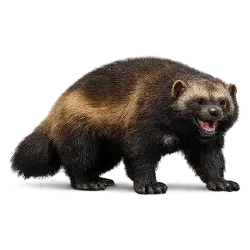
WolverineB
The same Kuhmo and Lieksa hides are the most reliable wolverine sites in the world, with animals coming to carcasses in the bog clearings at dusk and dawn.
Spotting note: Likely over a two-night hide stay in summer; otherwise very rare.
Read species guide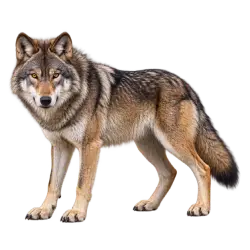
Eurasian WolfA
Around 300 wolves live mostly along the eastern border and in the south-west, and packs cross the Kuhmo hide clearings on some summer nights.
Spotting note: Uncommon even from hides; a pack visit is a bonus, not an expectation.
Read species guide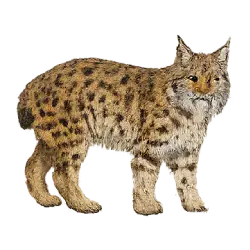
Eurasian LynxB
Finland has one of Europe's largest lynx populations at around 2,500, spread across the southern and central forests and increasingly seen on trail cameras near towns.
Spotting note: Rare to see; winter tracking in the south-west or Kainuu is the method.
Read species guide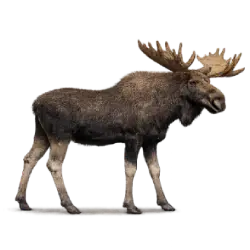
MooseA
About 100,000 moose browse Finland's forests, standing in clearcuts and bog edges at dusk from Lapland to the Helsinki hinterland.
Spotting note: Likely at dusk on forest roads anywhere; watch for them on the highway in autumn.
Read species guide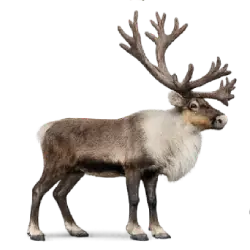
ReindeerC
Lapland's reindeer are herded by the Sami and Finnish herders and graze roadsides from Rovaniemi north, while a few thousand wild forest reindeer live in the Kainuu bogs around Kuhmo.
Spotting note: Guaranteed on Lapland roads; wild forest reindeer are uncommon and need the Kuhmo bogs in summer.
Read species guide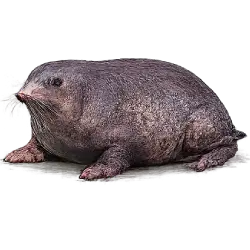
Saimaa Ringed SealB
The world's only freshwater ringed seal lives in Lake Saimaa, and boat trips from Oravi into Linnansaari National Park find them hauled out on sunny rocks in May and June.
Spotting note: Likely on a Linnansaari seal trip in late May and June when they moult on the rocks.
Read species guide
Grey SealB
Baltic grey seals haul out on the outer skerries of the Archipelago Sea and the Gulf of Finland, and boat trips from Hanko and Turku visit them in summer.
Spotting note: Regular on archipelago seal trips; sometimes seen from Helsinki ferries.
Read species guide
Whooper SwanC
Finland's national bird breeds on bog pools and forest lakes across the whole country, and its return in late March is the sign of spring from Turku to Inari.
Spotting note: Common from March to October on any lake; the bugling carries across the water.
Read species guide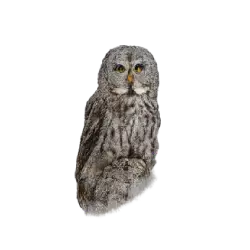
Great Gray OwlC
Great grey owls breed in the spruce forests of Ostrobothnia, Kainuu and Lapland in good vole years, hunting bog edges in broad daylight in summer.
Spotting note: Uncommon and irregular; Kuhmo and Oulu area clearings at dusk in a vole peak year.
Read species guide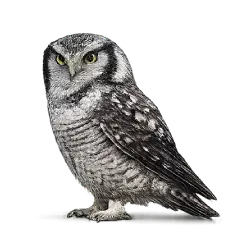
Northern Hawk OwlC
Hawk owls perch openly on spruce tops in Lapland and Kainuu, hunting by day and moving south in winters when voles crash.
Spotting note: Uncommon; roadside spruce tops in Lapland in autumn and winter are the place to look.
Read species guide
Rock PtarmiganD
Rock ptarmigan live on the stony fell tops of north-west Lapland, with the Saana fell above Kilpisjärvi the classic accessible site.
Spotting note: Regular on the Saana summit plateau in summer; white and hard to see in winter.
Read species guide
Arctic CharD
Arctic char swim the cold, clear lakes of Lapland such as Kilpisjärvi and Inari, and a landlocked population survives in Lake Saimaa alongside the seals.
Spotting note: Caught by anglers rather than seen; Kilpisjärvi in summer is the classic fishing site.
Read species guide
MosquitoE
Lapland's summer mosquitoes are famous for a reason, rising in clouds from the bogs in June and July and feeding on every visitor who stands still.
Spotting note: Guaranteed in Lapland from mid-June to August; bring a head net.
Read species guideBest for
Use this section to decide whether the location fits your travel style, skill level, and AnimalDex goals.
- Bear and wolverine hides around Kuhmo and Lieksa on the Russian border
- Saimaa ringed seal boat trips from Oravi and Linnansaari National Park
- Reindeer, ptarmigan and midnight-sun wildlife in Lapland
- Owls, swans and forest birds across the eastern and northern forests
Spotting tips
These tips are meant to make the page useful in the field, not just readable on the page.
- 01Book a Kuhmo or Lieksa hide for a two-night stay between late May and early August; arrive by late afternoon, stay silent and expect activity in the first and last hours of light.
- 02Saimaa seals haul out on sunny rocks in late May and June while moulting; take a small boat from Oravi with a local guide who knows the current haul-outs and keeps the legal distance.
- 03In Lapland drive slowly at dusk; reindeer stand on the road and moose cross it, and both are the main cause of accidents.
- 04The Saana fell at Kilpisjärvi has a marked trail to the summit plateau; ptarmigan, snow buntings and long-tailed skuas are on top in June and July.
Virtual Wildlife Guides
Wildlife guides to Finland
AnimalDex builds virtual guides from explorers' own wild sightings: which animals they found, how rare they are, and when. A guide is advice from someone who has been there, not a tour. Buying one unlocks the author's notes for every animal, a chat with the author, and introductions to local people they met. Wildlife is never guaranteed.
Checking for virtual guides to Finland...
How to choose a local wildlife guide in Finland
- Ask what they usually find in the season you are visiting. A good guide gives an honest answer, not a promised sighting.
- Check how they treat animals: no baiting, calling in, handling, or close flash photography for a better shot.
- Confirm the meeting area, duration, group size, total price, and how you pay before the day, plus any permits or park fees the place requires.
Track the animals you find in Finland
Build your collection while you travel through Finland, from easy wins to the species worth planning around.
Related tier lists
These tier lists add broader context around the species that make this location interesting.
100 Most Resilient Animals
Most resilient animals ranked by recovery, climate toughness, and staying functional under stress — not a copy of the strongest or most dangerous lists.
Read tier listRarest Animals in the World
A structured ranking of the rarest animals in the world, blending scarcity, vulnerability, and conservation pressure to answer the overlap between rarest and most endangered wildlife.
Read tier listRelated locations
Keep exploring with nearby or similar destinations that support the same kind of AnimalDex discovery.
Animals in Sweden: What You Can Spot, Learn, and Collect
Sweden's wildlife: 300,000 moose, bears and wolverines in the north, arctic foxes at Helags, Sami reindeer in Lapland, Baltic grey seals and Stora Karlsö's seabirds.
Read location guideAnimals in Estonia: What You Can Spot, Learn, and Collect
Estonia's wildlife from brown bears and lynx in Alutaguse to grey and ringed seals around Hiiumaa, the Matsalu goose migration and the flooded forests of Soomaa.
Read location guideAnimals in Norway: What You Can Spot, Learn, and Collect
A practical Norway wildlife guide built around cold coasts, northern atmosphere, and the species that make the country feel clean, open, and seasonally distinctive.
Read location guideLocation FAQ
Short direct answers to the questions travelers usually ask before choosing a wildlife destination or zoo day.
What wildlife is there in Finland?
Finland has brown bears, wolverines, wolves, lynx, moose, wild forest reindeer and beavers in its forests, Saimaa ringed seals in Lake Saimaa and grey seals on the Baltic coast, and great grey owls, hawk owls, whooper swans, cranes and ptarmigan among its birds. Lapland has semi-domesticated reindeer everywhere.
What animals can be found in Finland?
Bears and wolverines at the Kuhmo and Lieksa hides, ringed seals at Linnansaari on Lake Saimaa, moose on every forest road, reindeer across Lapland and ptarmigan on the Kilpisjärvi fells. Whooper swans are on every lake from March, and Helsinki's Korkeasaari Zoo keeps wolverines, Amur tigers and snow leopards.
Where can you see a wolverine in Finland?
The bear hides around Kuhmo and Lieksa on the Russian border are the most reliable wolverine sites anywhere. Book two nights between late May and August and the odds of at least one wolverine visit are good.
What is special about the Saimaa ringed seal?
It is one of the only freshwater seals in the world, trapped in Lake Saimaa when the land rose after the last ice age. Around 500 survive, protected by fishing restrictions, and boat trips from Oravi into Linnansaari National Park see them hauled out on rocks in late May and June.
How do I find a wildlife guide to Finland?
Check the Wildlife Guides section on this page or browse Wildlife Guides on AnimalDex. Each one is a virtual guide built from an explorer's own wild sightings around Finland: the animals they found, how rare they are, and when. It is advice from someone who has been there, not a tour. If you want someone with you on the day, compare local guides on wildlife knowledge, how they treat animals, and clear pricing before you go.