
Animal field guide
American White Pelican
Pelecanus erythrorhynchos
Among the heaviest flying birds in North America, it has wings spanning about 2.4 to 2.9 metres. Unlike the brown pelican it never dives from the air: it swims, dips its huge pouched bill into the water and scoops up fish from the surface.
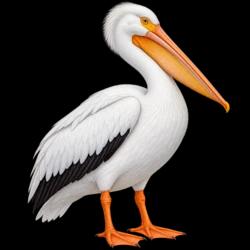
American White Pelican at a glance
Animal · North America · Breeds in colonies on flat islands · Relatively common
Known for: White plumage with black flight feathers visible, Massive orange-yellow bill with a stretchy throat, Short orange legs and large webbed feet, Neck folded back onto the shoulders in flight
Its Power
Driven Together
Some catches only exist if you make them together.
Working together can achieve what is impossible for individuals alone.
“Herd it, then dip.”
Capture a American White Pelican, and it's yours when you finish one step it gives you.
Biological basis
American White Pelicans do not plunge-dive. They swim in a coordinated line or horseshoe, beating the water with their wings to drive fish into the shallows, then dip their pouches in near-unison for a catch no single bird could make.
Put it into practice
Five neighbours pool their money to buy a tractor that none of them could afford alone.
What does the American white pelican symbolize?
The American white pelican symbolizes driven together: some catches only exist if you make them together. It represents teamwork, coordination and community. Its AnimalDex motto: "Herd it, then dip."
The American white pelican as a spirit animal
If the American white pelican is your spirit animal, the AnimalDex reading is Driven Together: working together can achieve what is impossible for individuals alone. It suggests a strength in teamwork and coordination, and a reminder to use it on purpose.
What can the American white pelican help you with in life?
The American white pelican is a guide for teamwork, coordination and community. Its lesson applies wherever teamwork matters: working together can achieve what is impossible for individuals alone.
- Teamwork
- Coordination
- Community
In practice: Five neighbours pool their money to buy a tractor that none of them could afford alone.
What can we learn from the American White Pelican?What does it mean to dream about or encounter a wild American white pelican?
Meeting a wild American white pelican, asleep or awake, is often a nudge toward teamwork, the quality the American white pelican is built around. In AnimalDex, the American white pelican's principle is Driven Together: some catches only exist if you make them together. Read the moment through its core lesson: Working together can achieve what is impossible for individuals alone.
It depends on how the American white pelican behaved. Calm or close by, it reads as coordination within reach; aggressive or fleeing, it points to teamwork you are resisting.
Spotting an American white pelican in the wild
A real encounter is the plainest version of the sign: notice what the American white pelican was doing. Some catches only exist if you make them together. That is the teamwork worth borrowing today.
An American white pelican that keeps appearing
Repeated sightings of an American white pelican usually mean the Driven Together lesson is still open: working together can achieve what is impossible for individuals alone.
Dreaming of being chased by an American white pelican
If the American white pelican pursues you, look at where coordination is being asked of you and you are stepping away instead of meeting it.
Dreaming that an American white pelican attacks you
When the American white pelican attacks, the dream may be about pressure: coordination or community applied too hard, by you or by someone close to you.
A calm or friendly American white pelican
A relaxed American white pelican near you, in a dream or in person, reads as readiness: Driven Together is available to you now, as its motto puts it, "Herd it, then dip.".
A dead or injured American white pelican
Seeing the American white pelican hurt may point to coordination that has been neglected. Ask what it would take to restore it.
These readings are reflective prompts drawn from how the American white pelican really lives, not predictions. If you meet one in the wild, watch from a distance and leave it undisturbed.
Capture your own American White Pelican
Photograph or film one in the wild, at a zoo or at home with the app. It becomes yours: it remembers you, gives you steps, and can debate your problems with your other animals.
Animal field guide
American White Pelican
Sign in to hear this read by a natural AI voice instead of your browser's.
Among the heaviest flying birds in North America, it has wings spanning about 2. Unlike the brown pelican it never dives from the air: it swims, dips its huge pouched bill into the water and scoops up fish from the surface.
Native range
Natural range, not this capture location
Breeds in colonies on flat islands in large inland lakes and marshes of the western prairies and Great Basin. Winters on coastal bays, estuaries and warm inland lakes along the Gulf coast, California and Mexico.
Search near meAnimalDex stats
Size scale
Understand the animal
Understand the American White Pelican
Factual biology first: what this animal is like, where it lives, how it survives, and why those traits exist.
01
Introduction to American White Pelican
Among the heaviest flying birds in North America, it has wings spanning about 2.4 to 2.9 metres. Unlike the brown pelican it never dives from the air: it swims, dips its huge pouched bill into the water and scoops up fish from the surface.
How to identify a American White Pelican
- White plumage with black flight feathers visible only in flight
- Massive orange-yellow bill with a stretchy throat pouch
- Short orange legs and large webbed feet
- Neck folded back onto the shoulders in flight
Why American White Pelican are interesting
- In the breeding season adults grow a flat, fibrous plate on top of the upper bill, which falls off after the eggs are laid.
- Fish are carried to the chicks in the gullet, not in the pouch, and regurgitated at the nest.
- Birds may fly tens of kilometres, sometimes more than 100, between an island colony and richer feeding lakes.
- Breeding numbers appear to have risen in recent decades after earlier declines.
02
Adaptations and biological abilities
03
Why does American White Pelican behave this way?
- White plumage with black flight feathers visible only in flight
- Massive orange-yellow bill with a stretchy throat pouch
- Short orange legs and large webbed feet
- Neck folded back onto the shoulders in flight
Active mainly by day, though flocks sometimes forage at night. They rest together on sandbars, islands and shorelines, often with the bill tucked along the back.
04
Why Breeds in colonies on flat islands in large inland lakes and marshes of the western prairies and Great Basin?
Habitat: Breeds in colonies on flat islands in large inland lakes and marshes of the western prairies and Great Basin. Winters on coastal bays, estuaries and warm inland lakes along the Gulf coast, California and Mexico.
Native range: North America
Native range
Natural range, not this specific capture location.
Breeds in colonies on flat islands in large inland lakes and marshes of the western prairies and Great Basin. Winters on coastal bays, estuaries and warm inland lakes along the Gulf coast, California and Mexico.
05
Why this diet?
06
Activity, rest, and lifespan
Active mainly by day, though flocks sometimes forage at night. They rest together on sandbars, islands and shorelines, often with the bill tucked along the back.
Banded wild birds have lived beyond 20 years, but typical lifespan is much shorter and not well measured.
07
American White Pelican reproduction
Usually two eggs are laid in a ground scrape; both parents incubate for about a month, warming the eggs under their webbed feet. Normally only one chick survives. Young gather in crèches at around three weeks and fly at about nine to ten weeks.
Males and females share the same plumage. Males are larger, with noticeably longer bills.
08
Predators, threats, and defense
Adults have few predators. Gulls, ravens, coyotes, foxes and great horned owls take eggs and chicks. Nesting on islands keeps most land predators away, and colonies may abandon nests after repeated human disturbance.
09
Conservation and rarity
Rarity: Relatively common · 40/100. AnimalDex canonical rarity score: 40/100, maintained by the live indexed species profile.
- Observe from a respectful distance and avoid changing the animal's behavior.
- Do not block feeding, shelter, nesting, or travel routes.
- Use a live camera capture without handling or staging wildlife.
Talk to it
Talk to the American White Pelican
It answers as itself: ask about how it lives, or bring it something of yours and hear what it would do, from its own Power.
Anonymous: 6/day. Signed-in: 10/day. Pro: 100/day.
Side by side
The American White Pelican, side by side
Nothing written side by side for the American White Pelican yet. Pick any animal to compare it with. Compare with any animal →
Where to find them
Where to find American White Pelican
To find American White Pelican in the wild, focus on the exact habitat patches that match its body design and daily behavior, not just the broad country where it exists. You usually do better by working one good piece of habitat inside north America than by covering too much ground.
- Quiet marsh edges, reedbeds, river bends, or shallow wetland margins
- Open grassland edges, lightly wooded plains, or raised ground where you can scan long distances
- Headlands, reef edges, island colonies, tidal channels, or productive coastal water
In the Ark
No American White Pelican is aboard yet.
None have come aboard or left since November 6.
The Ark is a live, shared animal world. Animals come aboard when people capture them, and live there by rules based on their field guides.
Scientific name
Pelecanus erythrorhynchos
Category
Animal
Habitat
Breeds in colonies on flat islands in large inland lakes and marshes of the western prairies and Great Basin. Winters on coastal bays, estuaries and warm inland lakes along the Gulf coast, California and Mexico.
Rarity
Relatively common · 40/100
Native range
North America
Take the encyclopedia outside
AnimalDex helps you scan real animals, identify species, collect cards, and learn from nature wherever you are.
Featured in tier lists
See where this species appears in AnimalDex tier-list pages built around structured comparison and methodology.
#4 · Character
Animals That Work Together
Groups swim in a line or circle to drive fish into shallow water, then scoop them up together.
Read tier list