

Animals in Illinois: What You Can Spot, Learn, and Collect
Illinois wildlife guide: Chicago lakefront migration at Montrose Point, urban coyotes and peregrines, Mississippi River eagles and pelicans, Shawnee's snake migration, and Brookfield Zoo.
Quick answer
Start with the direct answer, then use the sections below to see why the location matters and which animals are actually realistic to spot there.
Illinois wildlife is strongest at its edges: spring migration on the Chicago lakefront at Montrose Point, coyotes and peregrines living in the city itself, bald eagles and white pelicans on the Mississippi and Illinois rivers, and the snakes and box turtles of the Shawnee National Forest in the far south. White-tailed deer, cardinals, raccoons and monarchs fill the farm country in between.
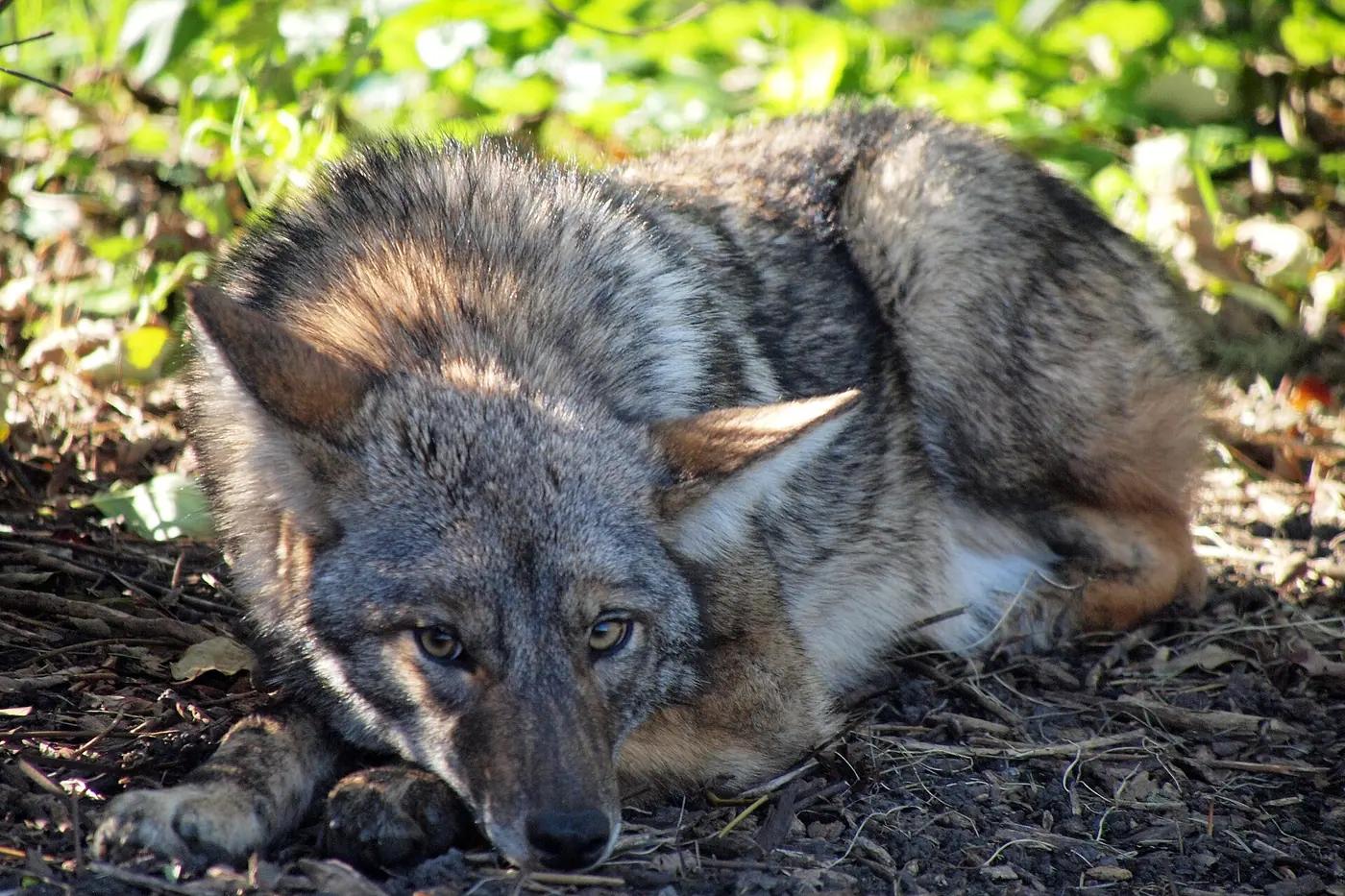
Chicago sits on the Lake Michigan shore where migrating birds pile up against the water, and the Magic Hedge at Montrose Point can hold 20 warbler species on a May morning within sight of the skyline. The city also hosts roughly 4,000 coyotes, tracked since 2000 by the Urban Coyote Research Project.
Downstate, the big rivers carry the wildlife. Starved Rock and the Illinois River pools fill with eagles in January and white pelicans in spring and autumn, and the Shawnee's LaRue-Pine Hills closes its Snake Road twice a year for one of the great reptile migrations in the country.
Why this location matters
Good location pages explain why the place is worth your time, not just which names belong on a destination checklist.
Less than 0.01 percent of the Prairie State's original prairie survives, so the wildlife that thrives in Illinois is the adaptable kind. Coyotes, deer, raccoons and Canada geese have made the suburbs their own, and DuPage County's Willowbrook Wildlife Center treats thousands of them a year.
Brookfield Zoo Chicago in the western suburbs has polar bears, gorillas and Mexican wolves, and its captures sit alongside the state's wild stink bugs and mealworm beetles in AnimalDex, which is an honest picture of how most people here meet animals.
Where to look
Wildlife map of Illinois
This guide covers the region shown below. Zoom in to get your bearings before planning a trip.
Positions are geocoded from OpenStreetMap. Habitat access and opening times change — check locally before travelling. Smaller pins are public AnimalDex captures, placed to the nearest kilometre.
Field proof
Found in Illinois by AnimalDex users
Real captures logged in the AnimalDex app inside this area and shared publicly by their collectors, with the animal confirmed by the app's identification. Places are shown to the nearest region, never the exact spot.
- 34
- public captures
- 31
- species recorded
- 4
- collectors
- 34
- wild sightings
Recent captures from the field
Species people have actually logged here
Every name links to its species guide. The count is how many public captures of that animal sit inside this area.
- German Yellowjacket2 captures
- House Fly2 captures
- Mealworm Beetle2 captures
- American Giant Millipede1 capture
- Black Ant1 capture
- Black Ground Beetle1 capture
- Chinese Mantis1 capture
- Cicada1 capture
- Common Earthworm1 capture
- Common Eastern Firefly1 capture
- Cuckoo Wasp1 capture
- Daddy Long-Legs Spider1 capture
- Drain Fly1 capture
- Eastern Yellowjacket1 capture
- Flat-backed Millipede1 capture
- Geometer Moth1 capture
- Giant Burrowing Mayfly1 capture
- Green Lacewing1 capture
- Harvestman1 capture
- Hieroglyphic Cicada1 capture
- Hoverfly1 capture
- Jumping Spider1 capture
- Little Wood-Satyr1 capture
- Mosquito1 capture
- Red Ant1 capture
- Red-spotted Purple1 capture
- Ruby Pyrausta Moth1 capture
- Shield & Stink Bug1 capture
- Striped Blister Beetle1 capture
- Triangulate Combfoot1 capture
- Water Strider1 capture
Collectors choose to share these captures on Discover and can withdraw them at any time. Coordinates are rounded to about a kilometre and refreshed with each site build.
Animals to spot
These are intentionally practical species picks, balancing accessibility, excitement, and what travelers can realistically notice in the location.

White-tailed DeerC
The state animal, abundant in the Cook County forest preserves and standing in cornfield edges across all 102 counties at dusk.
Spotting note: Guaranteed at dawn and dusk; the Morton Arboretum and Busse Woods are near-certain.
Read species guide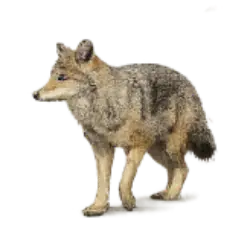
CoyoteC
Chicago's coyotes den in cemeteries, golf courses and rail corridors, and one famously walked into a downtown Quiznos; the Urban Coyote Research Project has collared over 1,000.
Spotting note: Common; dawn in any large forest preserve or cemetery gives a fair chance.
Read species guide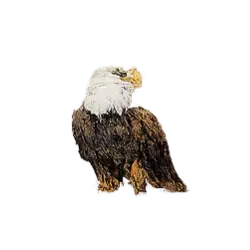
Bald EagleB
Hundreds winter below the Mississippi dams at Alton, Rock Island and Fulton and along the Illinois River at Starved Rock, where Bald Eagle Watch Weekend draws crowds in January.
Spotting note: Near-guaranteed in January at Starved Rock and the Mississippi locks.
Read species guide
American White PelicanC
Thousands stage on the Illinois River at Chautauqua and Emiquon refuges and on the Mississippi backwaters in spring and autumn.
Spotting note: Common in April and September to October at the river refuges.
Read species guide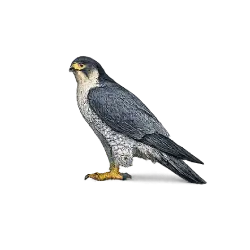
Peregrine FalconB
Nests on Chicago skyscrapers, the Wacker Drive ledges and Evanston's library, part of a Midwest recovery managed from the Field Museum.
Spotting note: Regular over downtown Chicago; look up from the Riverwalk.
Read species guide
Ring-billed GullD
Owns the Chicago lakefront, Navy Pier and every suburban parking lot, nesting in thousands on harbour breakwaters.
Spotting note: Abundant year-round.
Read species guide
Northern CardinalD
The state bird, singing from Lincoln Park hedges and farm windbreaks from February onward.
Spotting note: Guaranteed year-round.
Read species guide Eastern Gray SquirrelD
Chicago parks are full of them, alongside the fox squirrels that take over in the open suburbs and the black-phase grays of the North Shore.
Spotting note: Guaranteed in any city park.
Read species guide
North American RaccoonC
Chicago alleys and DuPage County backyards at night; Willowbrook Wildlife Center admits hundreds of orphaned raccoons every spring.
Spotting note: Common after dark; check alleys and forest preserve bins.
Read species guide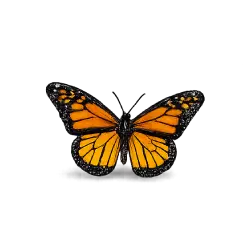
Monarch ButterflyE
The state insect breeds on roadside milkweed across the prairie counties and streams south along the lakefront in September.
Spotting note: Common June to September; the September lakefront flight at Montrose is the highlight.
Read species guide
Eastern Box TurtleD
Crosses the forest roads of the Shawnee National Forest and the sand prairies of Mason County after summer rain.
Spotting note: Uncommon; drive Shawnee back roads slowly after a warm rain in May or June.
Read species guide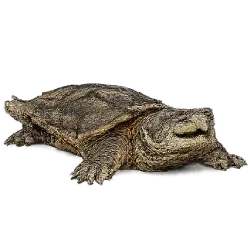
Common Snapping TurtleD
Lurks in every farm pond, forest-preserve slough and Chicago River backwater, and hauls out to lay eggs on gravel paths in June.
Spotting note: Common; most visible as nesting females in early June.
Read species guide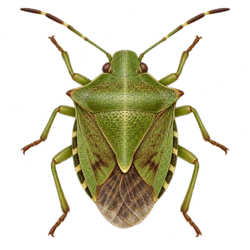
Shield & Stink BugE
The brown marmorated and native stink bugs that gather on Illinois screen doors each autumn, logged by users here and a fair sample of what the state's insect season looks like.
Spotting note: Guaranteed on warm September and October afternoons on sunny walls.
Read species guide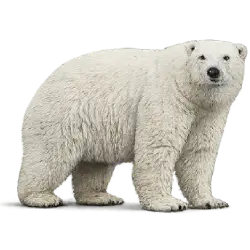
Polar BearA
Brookfield Zoo Chicago's Great Bear Wilderness houses polar bears, grizzlies and bison on a 7.5-acre site in the western suburbs.
Spotting note: Guaranteed at Brookfield Zoo on any open day.
Read species guideBest for
Use this section to decide whether the location fits your travel style, skill level, and AnimalDex goals.
- Spring warbler migration on the Chicago lakefront
- Winter bald eagles at Starved Rock and the Mississippi dams
- Urban coyotes, peregrines and raccoons in the city
- Shawnee National Forest reptiles and the Snake Road migration
Spotting tips
These tips are meant to make the page useful in the field, not just readable on the page.
- 01Be at Montrose Point's Magic Hedge by 7 am on a May morning after southerly winds; the Chicago Ornithological Society posts daily counts.
- 02Starved Rock's Bald Eagle Watch Weekend is the last weekend of January; the Illinois Waterway Visitor Center across the river has scopes and the eagles sit on the dam ice.
- 03Snake Road in the LaRue-Pine Hills closes to cars from mid-March to mid-May and September to October; walk it on a warm, humid afternoon for cottonmouths, rat snakes and box turtles.
- 04For coyotes, scan cemetery lawns and golf courses at first light in winter when the grass is short and the animals are bolder.
Virtual Wildlife Guides
Wildlife guides to Illinois
AnimalDex builds virtual guides from explorers' own wild sightings: which animals they found, how rare they are, and when. A guide is advice from someone who has been there, not a tour. Buying one unlocks the author's notes for every animal, a chat with the author, and introductions to local people they met. Wildlife is never guaranteed.
Checking for virtual guides to Illinois...
How to choose a local wildlife guide in Illinois
- Ask what they usually find in the season you are visiting. A good guide gives an honest answer, not a promised sighting.
- Check how they treat animals: no baiting, calling in, handling, or close flash photography for a better shot.
- Confirm the meeting area, duration, group size, total price, and how you pay before the day, plus any permits or park fees the place requires.
Track the animals you find in Illinois
Build your collection while you travel through Illinois, from easy wins to the species worth planning around.
Related tier lists
These tier lists add broader context around the species that make this location interesting.
100 Most Adaptable Animals
Most adaptable animals ranked by habitat flexibility, behavioral range, and success in changing conditions — including the current AnimalDex number one.
Read tier listRelated locations
Keep exploring with nearby or similar destinations that support the same kind of AnimalDex discovery.
Animals in the United States: What You Can Spot, Learn, and Collect
A practical United States wildlife guide built around habitat variety, from wetlands and coastlines to migration corridors and iconic American species.
Read location guideAnimals in Iowa: What You Can Spot, Learn, and Collect
Iowa wildlife guide: wintering bald eagles on the Mississippi, bison and elk at Neal Smith refuge, pelican migrations, and the fireflies, mantises and monarchs of Kalona farm country.
Read location guideAnimals in Michigan: What You Can Spot, Learn, and Collect
Michigan wildlife guide: Isle Royale moose and wolves, Baker Sanctuary's autumn sandhill cranes near Battle Creek, loons and piping plovers on the Great Lakes, and the Detroit Zoo aviary.
Read location guideLocation FAQ
Short direct answers to the questions travelers usually ask before choosing a wildlife destination or zoo day.
What wildlife is there in Illinois?
White-tailed deer, coyotes, raccoons, foxes, beavers and river otters; bald eagles, white pelicans, sandhill cranes and huge songbird migrations along the lakefront and rivers; and a strong reptile list in the Shawnee National Forest including box turtles, cottonmouths and rat snakes.
What animals can be found in Illinois around Chicago?
Coyotes, raccoons, deer, gray and fox squirrels, Canada geese and ring-billed gulls are everyday sights; peregrine falcons nest downtown; and the lakefront at Montrose Point hosts one of the best spring warbler migrations in the Midwest. Brookfield and Lincoln Park zoos cover the rest.
Where can you see bald eagles in Illinois?
Starved Rock State Park and the Illinois Waterway Visitor Center near Utica, the Mississippi locks at Alton, Rock Island and Fulton, and Pere Marquette State Park, all peaking in January and February.
Is the Snake Road in Shawnee National Forest worth visiting?
Yes if you like reptiles. Forest Road 345 at LaRue-Pine Hills closes to vehicles each spring and autumn so snakes can cross between the bluffs and the swamp, and a warm afternoon can produce a dozen species including cottonmouths, which you watch from a distance.
Have AnimalDex users found animals in Illinois?
Yes. AnimalDex users have publicly logged 34 captures of 31 different species in Illinois, including german yellowjacket, house fly, mealworm beetle, american giant millipede. Each one was photographed in the app at the moment of the sighting.
How do I find a wildlife guide to Illinois?
Check the Wildlife Guides section on this page or browse Wildlife Guides on AnimalDex. Each one is a virtual guide built from an explorer's own wild sightings around Illinois: the animals they found, how rare they are, and when. It is advice from someone who has been there, not a tour. If you want someone with you on the day, compare local guides on wildlife knowledge, how they treat animals, and clear pricing before you go.