

coral reefsIUCN Red Listclimate change
96% of Coral Reefs Critically Endangered: One Has Collapsed
The IUCN rated 96% of shallow coral reefs Critically Endangered, at extremely high risk of collapse by 2075. One already collapsed. Here's what that means.

In this guide
- Has a coral reef ecosystem already collapsed?
- Are coral reefs critically endangered?
- What does 'ecosystem collapse' mean for a coral reef?
- Will the Great Barrier Reef be gone by 2075?
- What happens to clownfish and sharks if coral reefs collapse?
- Is climate change the only threat to coral reefs?
- Is it too late to save coral reefs?
- How can you see coral reef animals before it's too late?
The short answer
Quick answer
Yes. On 22 October 2026, the IUCN's first global coral reef assessment under its Red List of Ecosystems rated 96% of shallow-water reef ecosystems Critically Endangered, facing an extremely high risk of collapse by 2075. Four ecoregions lacked data, and one, the Western Galápagos, has already collapsed. Every other assessed reef ecosystem is Critically Endangered.
Already gone
Has a coral reef ecosystem already collapsed?
One of the world's coral reef ecosystems is already officially Collapsed. It is not threatened or at risk. It is Collapsed, the end of the scale. It is the reef ecosystem of the Western Galápagos Islands, and it went over after the 1982–83 El Niño.
That status comes from the IUCN's first global coral reef assessment under its Red List of Ecosystems, published on 22 October 2026. The Galápagos turns out to be the warning label for almost everything else in the report.
A collapsed reef does not simply vanish. What goes is the hard coral that built it, the reef's living foundation. Algae, rubble and sponges move in to take its place, and the reef can no longer support the diversity of life it once did.
So when scientists talk about reefs collapsing by 2075, they are not describing a hypothetical. They are describing something that has already happened, on a known coastline, within living memory.
The verdict
Are coral reefs critically endangered?
Yes, almost all of them. The assessment covered every warm, shallow-water coral reef ecosystem on the planet: 127 tropical and subtropical ecoregions holding 188,362 km² of reef. Of those, 96% came out Critically Endangered, the highest threat level, with an extremely high risk of collapse by 2075.
The detail behind that 96% makes it worse, not better. Four ecoregions were Data Deficient, meaning there was not enough information to rate them. One, the Western Galápagos, is already Collapsed. Every one of the remaining 122 is Critically Endangered.
That list includes the reefs you have heard of: the Great Barrier Reef off Australia, the Coral Triangle across the western Pacific and Southeast Asia, the Mesoamerican Barrier Reef System and the reefs of the Red Sea. The biggest names got no special treatment.
This was not a quick desk exercise. More than 250 experts covering reefs in more than 80 countries and territories took part. The work was coordinated by IUCN, its Commission on Ecosystem Management, the University of Melbourne and CORDIO East Africa, with regional nodes of the Global Coral Reef Monitoring Network. The scientific lead was Dr Mishal Gudka, research director at CORDIO East Africa.
The only reefs that escaped 'Critically Endangered' either had too little data or had already collapsed.
Not one animal
What does 'ecosystem collapse' mean for a coral reef?
You are used to hearing that a tiger or a turtle is endangered. That is the IUCN Red List of Threatened Species, and it tracks whether a species might die out. The Red List of Ecosystems asks a different question: is this whole system about to stop working?
The two lists can tell very different stories. In the same month, a separate IUCN reassessment found that 44% of 892 reef-building coral species are threatened with extinction. That is alarming, but it is less than half. One measure tracks the loss of species, the other the loss of reefs as working ecosystems, and on the second the picture is close to total.
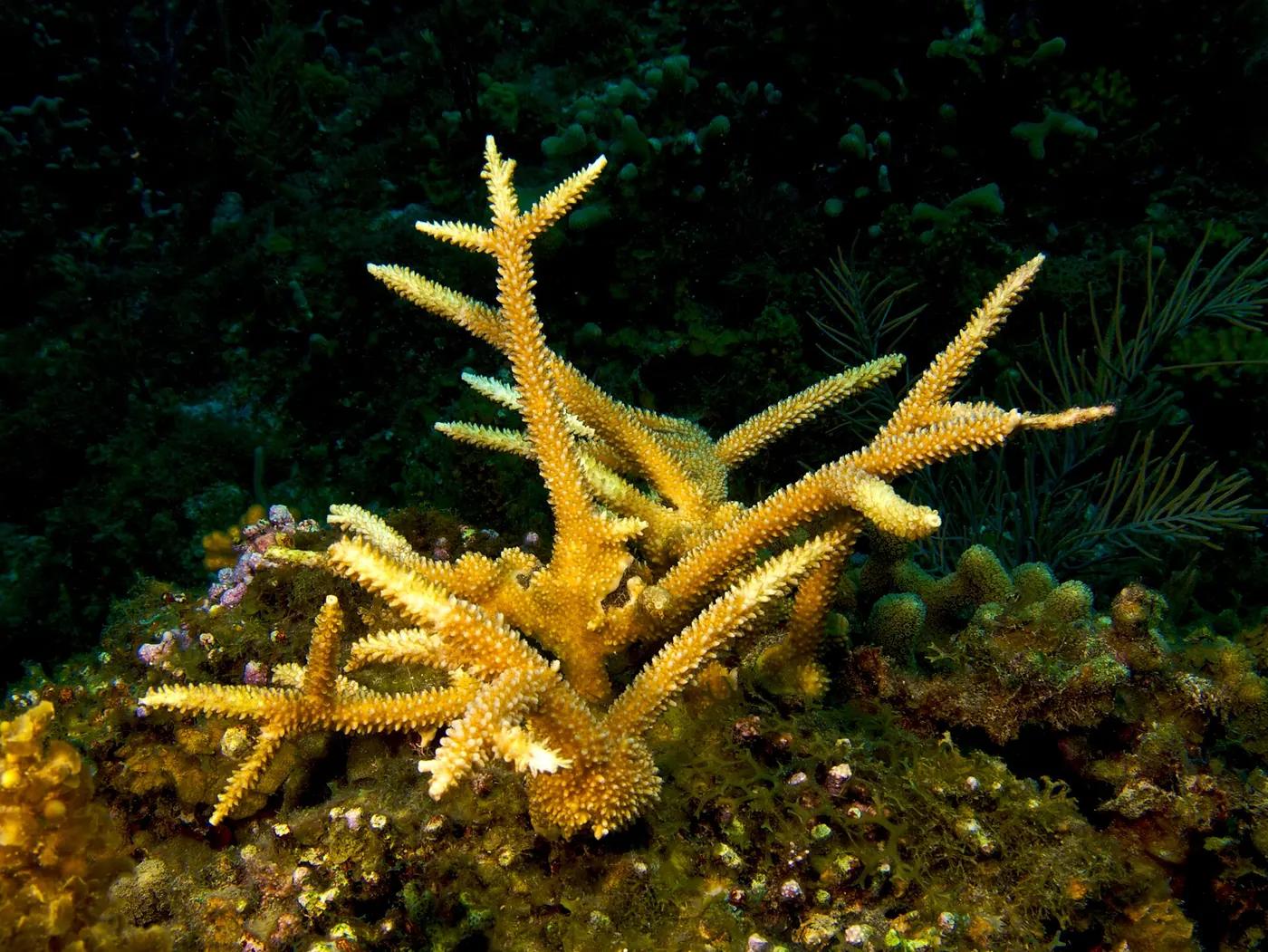
The IUCN's definition of collapse is blunt. Hard corals such as staghorn coral are the reef's living foundation, and in a collapse they almost disappear. Algae, rubble and sponges take over the space they leave.
Then the knock-on effects travel up the food web. The IUCN lists who gets hit: invertebrates, clams and sea cucumbers, reef fish, sea turtles, sharks and groupers. Picture a giant clam and a grouper on the same stretch of reef, losing the same address at the same time.
A collapsed reef doesn't disappear. It just stops being a reef.
Australia & Pacific
Will the Great Barrier Reef be gone by 2075?
Critically Endangered does not mean dead. It also does not mean the Great Barrier Reef will vanish on 1 January 2075. It means the IUCN judges its risk of collapse within the next 50 years to be extremely high. Australia's reef sits in that category alongside the Coral Triangle of the western Pacific and Southeast Asia.
To reach that verdict, the experts combined what reefs have done historically, how they are doing now and where ocean warming is projected to go. They drew on decades of monitoring data and satellite sea-surface temperature records. They modelled the future on the IPCC's 'middle-of-the-road' scenario, which projects 2.7°C of atmospheric warming by 2100.
The threat that shows up everywhere is heat. The IUCN calls heat stress from climate change 'the single most consistent threat' to reefs worldwide. Marine heatwaves are causing mass bleaching and widespread coral death more and more often.
The projections are what flip the picture. East Asia's reefs have historically held on to their coral cover unusually well. Judged only on what has actually been observed, 20% of its reef ecosystems would be Critically Endangered. Once the coming warming is added, all of them are.
Monitoring points the same way. The Global Coral Reef Monitoring Network's 'Status of Coral Reefs of the World: 2025', released on 31 August, found that reefs are losing hard coral cover. They are also losing the recovery time they need between increasingly frequent marine heatwaves. Mongabay called it the most comprehensive global reef assessment yet.
The residents
What happens to clownfish and sharks if coral reefs collapse?
Coral reefs hold a startling share of the sea. In the words of IUCN Director General Grethel Aguilar, they 'support a quarter of all marine species'. Strip out the coral, and that quarter of ocean life loses its scaffolding.
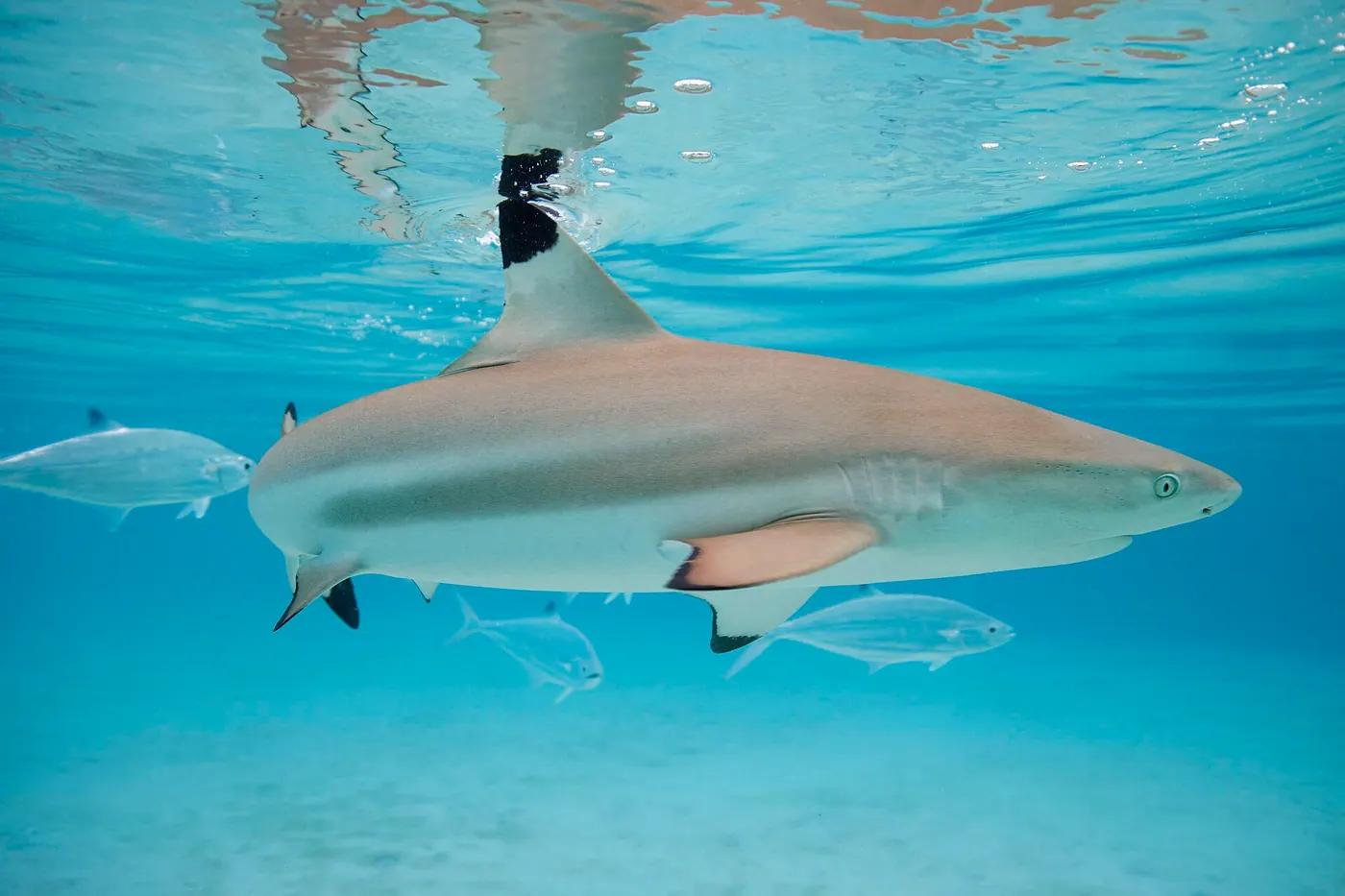
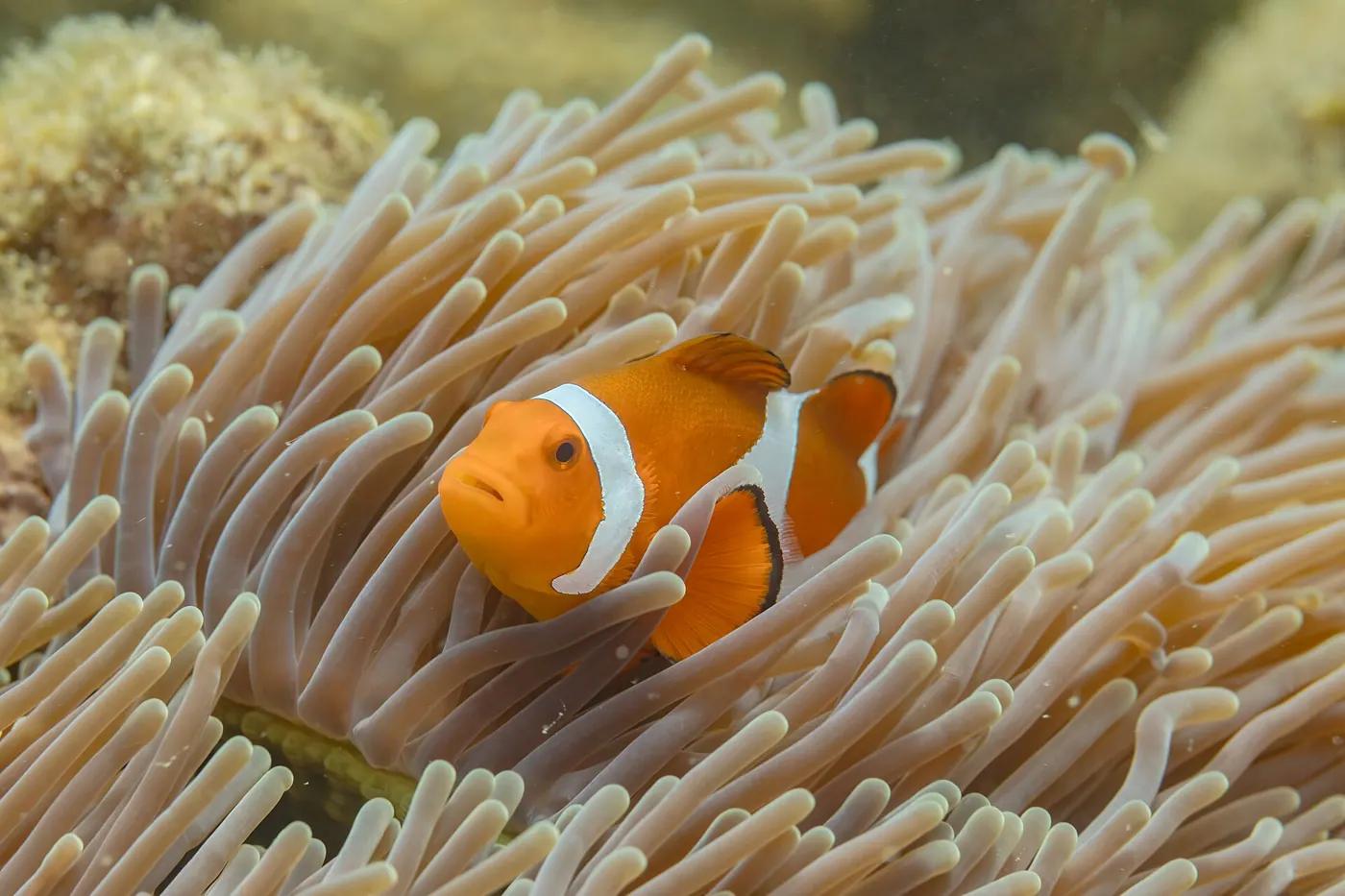
Look at who lives there. The clownfish is a reef fish, one of the groups the IUCN says is hit directly when hard corals vanish. The blacktip reef shark and the reef stonefish carry their habitat in their names, and so does the reef manta ray.
Turtles such as the hawksbill sea turtle fall into the IUCN's list too, alongside groupers, clams and sea cucumbers. Once the hard coral goes, the reef can no longer support that diversity of life.
Matchups like clownfish vs lionfish assume there is still a reef to fight on. On a collapsed one, the winner is the algae.
Hard corals
The reef's living foundation. In a collapsed reef, they almost disappear.
Clams and sea cucumbers
Named by the IUCN, with other invertebrates, among the life hit when the coral goes.
Reef fish
From clownfish to parrotfish, these fish depend on a reef that still works as a reef.
Turtles, sharks, groupers
The top of the reef food web feels the collapse too, according to the IUCN.
blacktip reef sharkreef stonefishreef manta rayclownfish vs lionfish
Myth check
Is climate change the only threat to coral reefs?
No. One of the report's surprises is a fishing problem: overfishing of parrotfish and grouper threatens 63% of reef ecosystems.
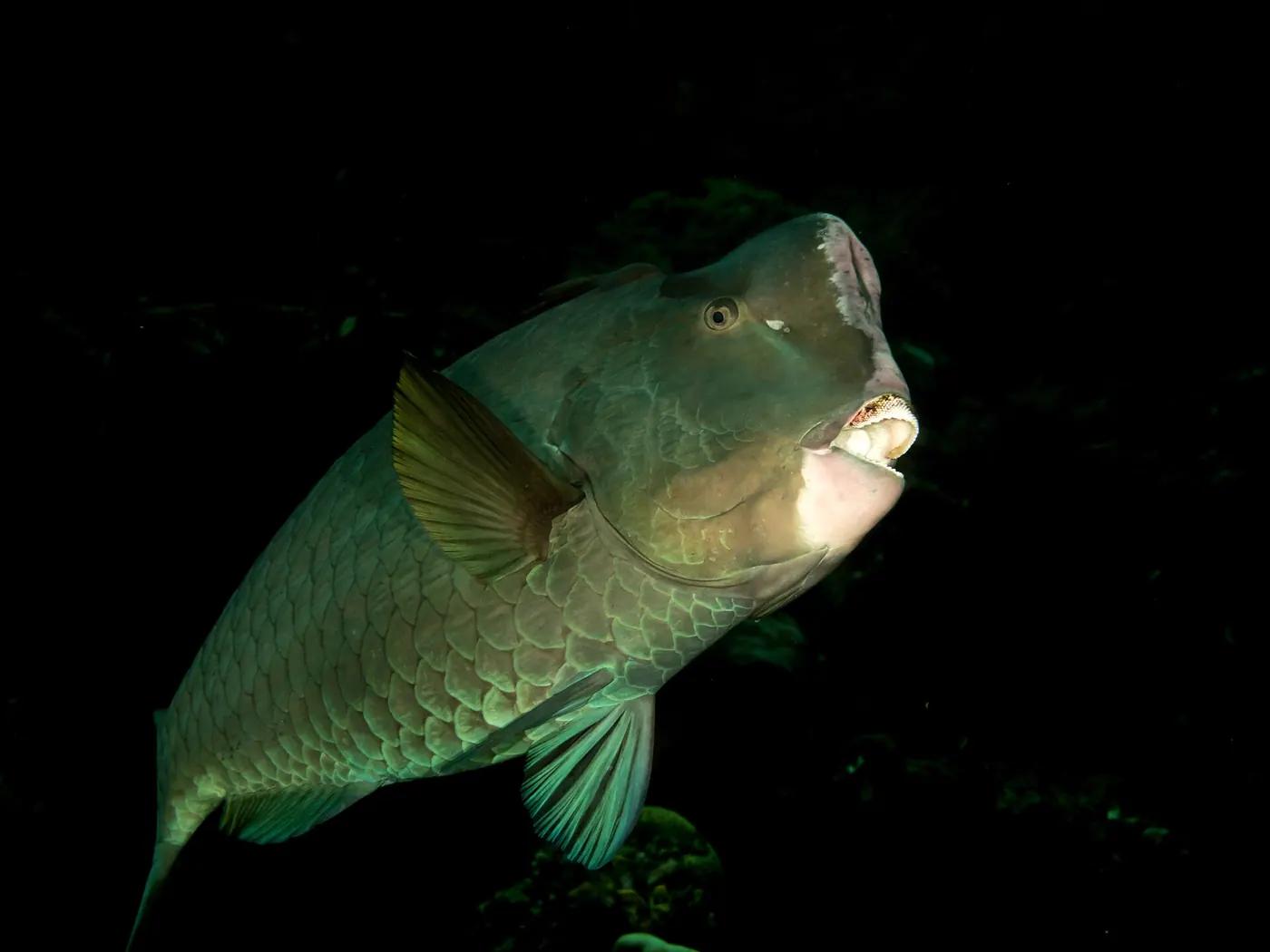
It is a major threat in East Asia, the Western Indian Ocean, the Caribbean and Brazil. When too many fish like the humphead parrotfish or the giant grouper are taken out, the reef's balance tips. That weakens the reef's ability to recover from heat stress. An emptied reef is a weaker one when the next heatwave arrives.
The rest of the charge sheet is long: coastal development, pollution, overtourism, industrial development, aquaculture, more frequent storms, freshwater flooding and outbreaks of the crown-of-thorns starfish.
That list is grim, but it is also useful. Ocean warming is a global problem, while fishing rules, coastal water quality and building along shorelines are decided locally. Those are levers a single country or island can pull now.
The gap
Is it too late to save coral reefs?
This is the number that stops the report from reading like an obituary. If the IUCN counted only what has been observed over the past 50 years, with no future warming, 24% of reef ecosystems would be Critically Endangered, not 96%.
The difference between those two figures comes from projected warming that has not happened yet. That is the part climate action can still change.
Some reefs are tougher than others. The Northern Red Sea has unusually strong heat tolerance, and on recent trends alone it would be rated only Vulnerable. Future warming still pushes it to Critically Endangered, but it shows that not all reefs are equally fragile.
'The risk of coral reef collapse is escalating, but this must be a wake-up call rather than a cause for despair,' says Gudka. 'Coral reefs have shown a remarkable ability to bounce back from devastating bleaching events.' Our story on whether bleached coral can recover, told through a coral clone, picks up from here.
The fixes are specific. Gudka points to keeping coastal waters clean and fishing sustainably. Emily Nicholson, who leads the IUCN's Red List of Ecosystems thematic group, adds 'easing local pressures, expanding marine protections and restoring key fish stocks'. Aguilar's summary is simple: 'It is not too late to give coral reefs a chance to recover, but it requires decisive action to tackle climate change and halt further ocean warming.'
| Reefs | Observed change only (past 50 years) | With projected future warming |
|---|---|---|
| Global | 24% Critically Endangered | 96% Critically Endangered |
| East Asia | 20% Critically Endangered | All Critically Endangered |
| Northern Red Sea | Vulnerable | Critically Endangered |
The gap between 24% and 96% is the part we can still change.
whether bleached coral can recover
Your move
How can you see coral reef animals before it's too late?
The IUCN's window runs to 2075, about 50 years. The MSC Foundation, which funded much of the assessment, calls it 'a critical 50-year window for conservation action'. For most people reading this, the reefs that exist today are the ones that will be decided within their lifetime.
If you live in or travel to Australia, the Pacific or Hawaii, start with the reef animals the IUCN says are on the line: reef fish, turtles, sharks and the corals themselves. Snorkel from the surface, keep your fins off the coral, and never touch or chase reef animals.
When you do spot a clownfish or a blacktip shark in the wild, you can capture the real animal with your phone camera in AnimalDex and add it to your collection. It becomes a record of a reef that was still alive when you saw it.
Back on land, the most useful actions are the ones the scientists named: cleaner coastal water, sustainable fishing, protected waters and serious cuts to the warming that turns 24% into 96%.
Quick questions
Short answers to common questions readers ask on this topic.
- Are coral reefs critically endangered?
- Yes. In October 2026, the IUCN's first global coral reef assessment under its Red List of Ecosystems rated 96% of shallow-water reef ecosystems Critically Endangered. The only exceptions were four ecoregions without enough data and the Western Galápagos, which has already collapsed.
- What is the difference between an endangered species and an endangered ecosystem?
- A species rating asks whether one kind of animal or plant might go extinct. An ecosystem rating asks whether a whole system, such as a reef, will stop working. For corals, 44% of 892 reef-building species are threatened, but 96% of reef ecosystems are Critically Endangered.
- Will the Great Barrier Reef be gone by 2075?
- Not necessarily. Critically Endangered means the IUCN judges the risk of collapse by 2075 to be extremely high, not that collapse is certain. Under the IPCC's middle-of-the-road warming scenario, the Great Barrier Reef shares that rating with the Coral Triangle, the Mesoamerican Barrier Reef and the Red Sea.
- Can coral reefs recover from bleaching?
- They can. Lead scientist Dr Mishal Gudka notes that reefs have shown a remarkable ability to bounce back from devastating bleaching events. The catch is that the 2025 global reef status report found reefs are losing recovery time between increasingly frequent heatwaves.
- What can be done to save coral reefs?
- The biggest lever is tackling climate change and halting further ocean warming. Locally, the IUCN's experts point to clean coastal waters, sustainable fishing, expanded marine protection and restoring fish stocks such as parrotfish and grouper.
- Which coral reefs are the most heat-resistant?
- The Northern Red Sea stands out for unusually strong heat tolerance. On recent trends alone, it would be rated only Vulnerable. Projected future warming still pushes it to Critically Endangered.
Animals mentioned
Jump from this article into the species pages behind the examples, systems notes, and field-guide references.
Giant ClamClownfishHawksbill Sea TurtleHumphead ParrotfishGiant Grouper
Answer guides related to this topic
If you want direct comparisons and clear recommendations, continue with these answer-focused pages.
Best Animal Identification Apps
Compare the best animal identification apps by features like photo/video identification, species coverage, collection capabilities, offline use, and more.
What Is Animal Collecting
Learn what animal collecting means in modern apps and how AnimalDex turns real-world sightings into cards, sets, rarity, and species learning.
Pokemon-Like Animal App
Looking for a Pokemon-like animal app with real species? AnimalDex combines creature-collection energy with AI scanning and wildlife learning.