

Animals in California: What You Can Spot, Learn, and Collect
California wildlife guide: sea otters in Monterey, elephant seals at Ano Nuevo, condors at Pinnacles, Yosemite black bears, grey whales offshore and the scrub-jays and quail of Riverside County.
Quick answer
Start with the direct answer, then use the sections below to see why the location matters and which animals are actually realistic to spot there.
California's coast delivers sea otters at Monterey and Moss Landing, elephant seals at Ano Nuevo and Piedras Blancas, sea lions on Pier 39 and grey whales migrating past Point Reyes. Inland, Yosemite's black bears and mule deer are reliable, condors soar at Pinnacles and Big Sur, and the scrub around Perris and Riverside County fills with quail, scrub-jays and ravens.
No other US state packs this many habitats into one road trip. A single week can cover kelp forest, redwoods, granite high country, Mojave desert and the sage scrub of inland Southern California, and the animals change with every climb and descent.
The marine mammals are the easy wins. Monterey Bay's submarine canyon brings humpbacks and otters within sight of the shore, and the pinniped beaches of the central coast run on a calendar you can plan around.
Start with these animals
Why this location matters
Good location pages explain why the place is worth your time, not just which names belong on a destination checklist.
The California condor went down to 22 birds in 1987. More than 300 now fly free, and the Pinnacles and Big Sur flocks are the most accessible wild condors anywhere. Seeing one is seeing a recovery in progress.
Southern sea otters, northern elephant seals and grey whales were all hunted to a few hundred animals and all recovered along this coast. California is where a wildlife collection comes with a conservation story on nearly every page.
Where to look
Wildlife map of California
This guide covers the region shown below. Zoom in to get your bearings before planning a trip.
Positions are geocoded from OpenStreetMap. Habitat access and opening times change — check locally before travelling. Smaller pins are public AnimalDex captures, placed to the nearest kilometre.
Field proof
Found in California by AnimalDex users
Real captures logged in the AnimalDex app inside this area and shared publicly by their collectors, with the animal confirmed by the app's identification. Places are shown to the nearest region, never the exact spot.
- 12
- public captures
- 11
- species recorded
- 3
- collectors
- 12
- wild sightings
Recent captures from the field
Species people have actually logged here
Every name links to its species guide. The count is how many public captures of that animal sit inside this area.
Collectors choose to share these captures on Discover and can withdraw them at any time. Coordinates are rounded to about a kilometre and refreshed with each site build.
Animals to spot
These are intentionally practical species picks, balancing accessibility, excitement, and what travelers can realistically notice in the location.
Sea OtterC
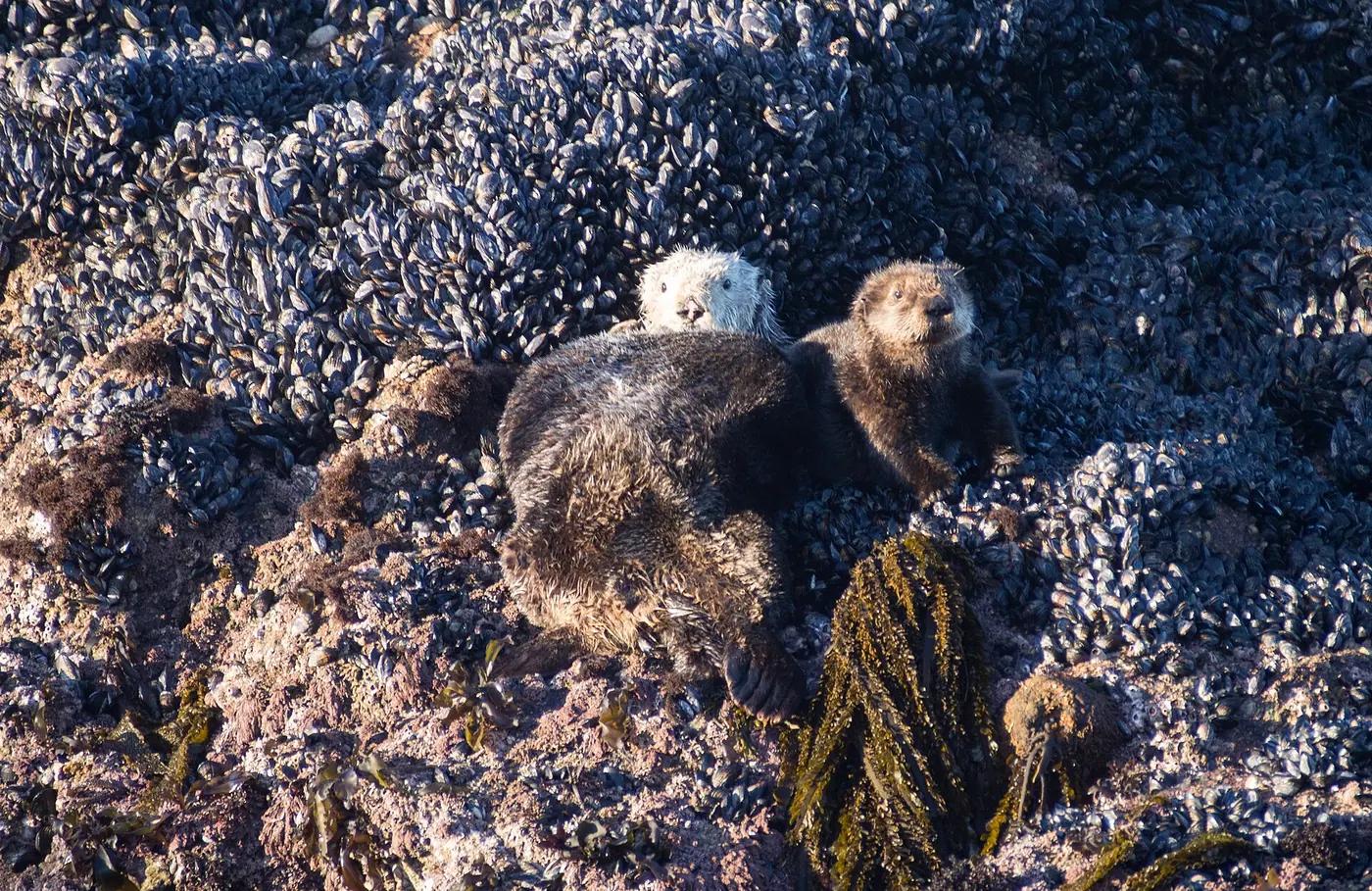
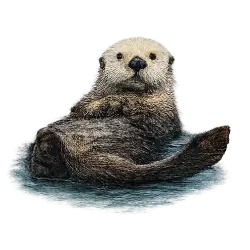
Rafts of southern sea otters float in Elkhorn Slough at Moss Landing and along Cannery Row in Monterey, cracking crabs on their chests within metres of kayaks.
Spotting note: Near-guaranteed at Moss Landing harbour and the Monterey breakwater.
Read species guide
Northern Elephant SealA
Ano Nuevo State Park runs guided walks to the breeding beach from December to March, and the Piedras Blancas boardwalk near San Simeon has seals on the sand year-round.
Spotting note: Guaranteed at Piedras Blancas; Ano Nuevo walks need advance booking in winter.
Read species guide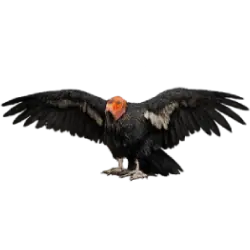
California CondorA
The High Peaks of Pinnacles National Park and the Big Sur coast near Julia Pfeiffer Burns are the two places wild condors soar overhead on a regular basis.
Spotting note: Realistic at Pinnacles on a warm, breezy afternoon; look for wing tags on a three-metre bird.
Read species guide
California Sea LionB
Pier 39 in San Francisco has held a barking colony since 1990, and La Jolla Cove in San Diego lets you watch them from the rocks.
Spotting note: Guaranteed at Pier 39 and La Jolla; the Pier 39 numbers peak in winter.
Read species guide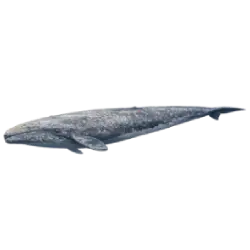
Gray WhaleA
The entire eastern Pacific population passes Point Reyes, Point Vicente and the Monterey headlands on its migration between Alaska and Baja.
Spotting note: Reliable from shore December to January southbound and March to April northbound, with calves.
Read species guide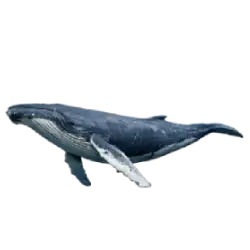
Humpback WhaleA
Feeds over the Monterey submarine canyon so close to shore that lunge-feeding whales are sometimes visible from Moss Landing beach.
Spotting note: Common on Monterey Bay boat trips May to November.
Read species guide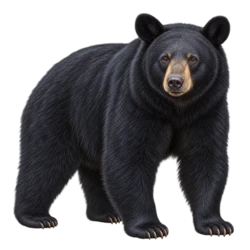
American Black BearB
Yosemite's bears are the most famous in the state, raiding unsecured cars in the Valley and feeding in the meadows of Tuolumne and Wawona.
Spotting note: Possible in Yosemite Valley at dusk; use the bear lockers so they stay wild.
Read species guide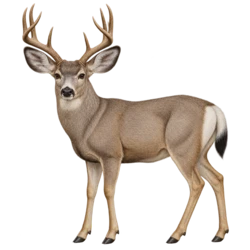
Mule DeerC
Graze the Yosemite Valley meadows under El Capitan and wander Cook's Meadow at sunset without concern for photographers.
Spotting note: Near-guaranteed in Yosemite Valley and along the Tioga Road.
Read species guide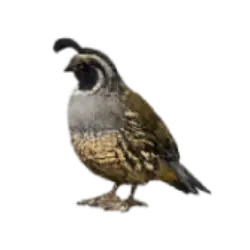
California QuailD
The state bird, running in coveys through the chaparral and sage scrub of Lake Perris State Recreation Area and the San Jacinto Wildlife Area.
Spotting note: Common in inland scrub, especially early morning on dirt roads.
Read species guide
California Scrub-JayD
A loud, bold blue jay of oak woodland and suburban Riverside County gardens that buries acorns in lawns and steals from picnic tables.
Spotting note: Abundant across lowland California.
Read species guide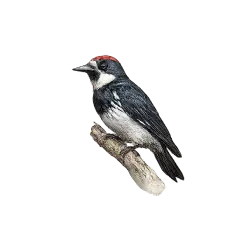
Acorn WoodpeckerD
Lives in clown-faced clans around granary oaks in the Sierra foothills and Coast Range, each tree drilled with thousands of acorn holes.
Spotting note: Common in oak country; listen for the laughing 'waka-waka' call.
Read species guide
Banana SlugE
A bright yellow slug the length of a hand that grazes the redwood forest floor at Muir Woods, Big Basin and Humboldt after rain.
Spotting note: Common in the coast redwoods on damp mornings, scarce in dry summers.
Read species guide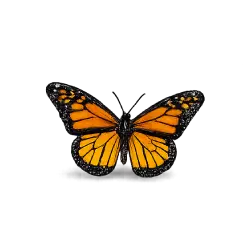
Monarch ButterflyE
Western monarchs overwinter in eucalyptus groves at Pacific Grove, Pismo Beach and Natural Bridges in Santa Cruz, hanging in clusters that look like dead leaves until the sun hits them.
Spotting note: Reliable at the overwintering groves from November to February; numbers vary year to year.
Read species guide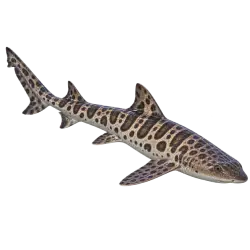
Leopard SharkC
Hundreds of harmless, spotted sharks gather in the warm shallows of La Jolla Shores every summer, swimming around waders in knee-deep water.
Spotting note: Near-guaranteed at La Jolla Shores from June to October.
Read species guideBest for
Use this section to decide whether the location fits your travel style, skill level, and AnimalDex goals.
- Marine mammals from shore: otters, elephant seals, sea lions and whales
- Condors and Yosemite's bears and deer in the mountains
- Overwintering monarch groves on the central coast
- Scrub birds and reptiles in Riverside County within an hour of Los Angeles
Spotting tips
These tips are meant to make the page useful in the field, not just readable on the page.
- 01Kayak Elkhorn Slough from Moss Landing on a calm morning for otters and harbour seals; stay well back from the rafts, which is the law and also keeps them hauled out.
- 02Book the Ano Nuevo guided walk months ahead for the December to March breeding season, or use the free Piedras Blancas boardwalk any day of the year.
- 03At Pinnacles, climb the High Peaks trail from Bear Gulch by early afternoon and wait at the top; condors ride the thermals once the ridges heat up.
- 04In Yosemite, never leave food or scented items in a car, even for ten minutes. Bears that learn to break into cars are eventually destroyed.
Virtual Wildlife Guides
Wildlife guides to California
AnimalDex builds virtual guides from explorers' own wild sightings: which animals they found, how rare they are, and when. A guide is advice from someone who has been there, not a tour. Buying one unlocks the author's notes for every animal, a chat with the author, and introductions to local people they met. Wildlife is never guaranteed.
Checking for virtual guides to California...
How to choose a local wildlife guide in California
- Ask what they usually find in the season you are visiting. A good guide gives an honest answer, not a promised sighting.
- Check how they treat animals: no baiting, calling in, handling, or close flash photography for a better shot.
- Confirm the meeting area, duration, group size, total price, and how you pay before the day, plus any permits or park fees the place requires.
Track the animals you find in California
Build your collection while you travel through California, from easy wins to the species worth planning around.
Related tier lists
These tier lists add broader context around the species that make this location interesting.
Rarest Animals in the World
A structured ranking of the rarest animals in the world, blending scarcity, vulnerability, and conservation pressure to answer the overlap between rarest and most endangered wildlife.
Read tier listBiggest Animals in the World
A structured ranking of the biggest animals in the world, using the AnimalDex size stat to compare body scale across sea, land, and air.
Read tier listRelated locations
Keep exploring with nearby or similar destinations that support the same kind of AnimalDex discovery.
Animals in the United States: What You Can Spot, Learn, and Collect
A practical United States wildlife guide built around habitat variety, from wetlands and coastlines to migration corridors and iconic American species.
Read location guideAnimals in Hawaii: What You Can Spot, Learn, and Collect
Hawaii wildlife guide: humpback whales off Maui, green sea turtles at Laniakea and Punaluʻu, Kona manta night dives, nene geese at Haleakalā, Kauai albatrosses, spinner dolphins and the islands' feral chickens, deer and chameleons.
Read location guideAnimals in Mexico: What You Can Spot, Learn, and Collect
A practical Mexico wildlife guide built around wetlands, coasts, colorful birds, and the species that make the country strong for flexible animal discovery.
Read location guideLocation FAQ
Short direct answers to the questions travelers usually ask before choosing a wildlife destination or zoo day.
What wildlife is there in California?
Sea otters, elephant seals, sea lions, grey and humpback whales along the coast; black bears, mule deer and mountain lions in the Sierra; California condors at Pinnacles and Big Sur; and quail, scrub-jays, coyotes and lizards in the chaparral of inland Southern California.
What animals can be found in California's Monterey Bay?
Southern sea otters, harbour seals and sea lions are near-guaranteed from shore, humpback whales feed in the bay from spring to autumn, grey whales pass in winter and spring, and boat trips regularly add dolphins, orcas and ocean sunfish.
Where can you see California condors?
Pinnacles National Park's High Peaks and the Big Sur coast around Julia Pfeiffer Burns State Park are the best free-flying sites; Bitter Creek and Hopper Mountain refuges in the south are closed to visitors but birds range over Highway 166.
Is the wildlife around Perris and Riverside County worth a stop?
Yes for scrub species. Lake Perris State Recreation Area and the San Jacinto Wildlife Area give California quail, scrub-jays, ravens, roadrunners, coyotes and side-blotched lizards, with wintering raptors and waterfowl at San Jacinto.
Have AnimalDex users found animals in California?
Yes. AnimalDex users have publicly logged 12 captures of 11 different species in California, including red ant, american crow, black ant, clothes & house moth. Each one was photographed in the app at the moment of the sighting.
How do I find a wildlife guide to California?
Check the Wildlife Guides section on this page or browse Wildlife Guides on AnimalDex. Each one is a virtual guide built from an explorer's own wild sightings around California: the animals they found, how rare they are, and when. It is advice from someone who has been there, not a tour. If you want someone with you on the day, compare local guides on wildlife knowledge, how they treat animals, and clear pricing before you go.