

Animals in Connecticut: What You Can Spot, Learn, and Collect
Connecticut wildlife guide: ospreys and harbour seals on Long Island Sound, black bears in Litchfield County, suburban deer and turkeys, plus Beardsley Zoo's red wolves and Mystic Aquarium's belugas.
Quick answer
Start with the direct answer, then use the sections below to see why the location matters and which animals are actually realistic to spot there.
Connecticut is suburban wildlife at its most generous: white-tailed deer, wild turkeys, gray squirrels, chipmunks, robins and Canada geese on nearly every lawn, black bears spreading through Litchfield and Hartford counties, and ospreys on platforms along the whole Long Island Sound shore. Winter brings harbour seals to the rocks off Stonington and Westport, and Beardsley Zoo and Mystic Aquarium cover the rainy days.
Connecticut is the third smallest state but one of the most wooded in the east, and the forest has come back so thoroughly that bears, bobcats and fishers now live within sight of Hartford's suburbs.
The coast is the other half of the story. Long Island Sound's salt marshes at Hammonasset, Milford Point and Barn Island hold ospreys, egrets, horseshoe crabs and piping plovers, and the state's robin, squirrel and goose captures in AnimalDex come from the towns in between.
Why this location matters
Good location pages explain why the place is worth your time, not just which names belong on a destination checklist.
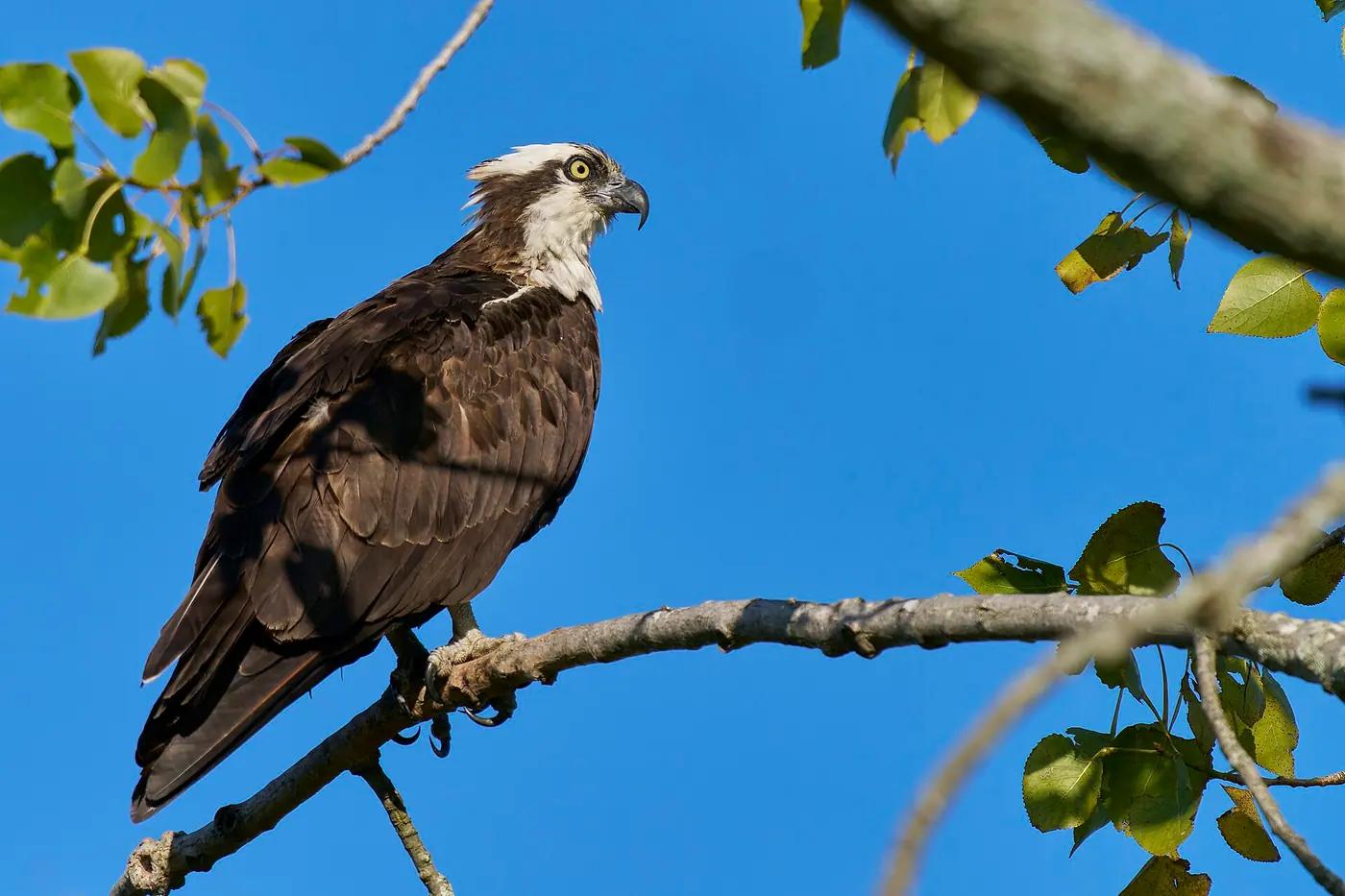
Connecticut's osprey population went from a handful of pairs in the DDT years to over 500 active nests, many on platforms residents can watch from the road. It is one of the clearest conservation wins a visitor can see in an afternoon.
The state also shows how fast large mammals return. Black bears were absent for a century; sightings are now reported in nearly every town, and a careful visitor in the northwest hills has a real chance.
Where to look
Wildlife map of Connecticut
This guide covers the region shown below. Zoom in to get your bearings before planning a trip.
Positions are geocoded from OpenStreetMap. Habitat access and opening times change — check locally before travelling. Smaller pins are public AnimalDex captures, placed to the nearest kilometre.
Field proof
Found in Connecticut by AnimalDex users
Real captures logged in the AnimalDex app inside this area and shared publicly by their collectors, with the animal confirmed by the app's identification. Places are shown to the nearest region, never the exact spot.
- 7
- public captures
- 6
- species recorded
- 2
- collectors
- 6
- wild sightings
Recent captures from the field
Species people have actually logged here
Every name links to its species guide. The count is how many public captures of that animal sit inside this area.
Collectors choose to share these captures on Discover and can withdraw them at any time. Coordinates are rounded to about a kilometre and refreshed with each site build.
Animals to spot
These are intentionally practical species picks, balancing accessibility, excitement, and what travelers can realistically notice in the location.
OspreyC
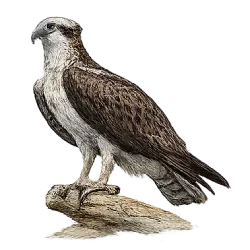
Nests on platforms at Hammonasset Beach State Park, Milford Point and along the Connecticut River estuary, carrying menhaden back to screaming chicks from April to September.
Spotting note: Near-guaranteed along the shore from April to September.
Read species guide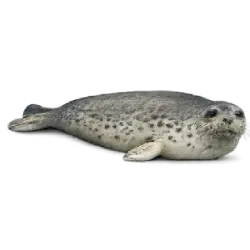
Harbor SealC
Hauls out on the rocks off Stonington, the Norwalk Islands and Westport's Sherwood Island from late autumn to spring, and Maritime Aquarium runs seal-spotting cruises from Norwalk.
Spotting note: Likely from December to April at low tide; a scope helps from shore.
Read species guide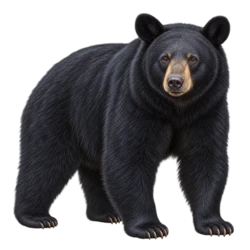
American Black BearB
Litchfield County and the towns north of Hartford host a growing population that raids bird feeders and crosses roads in daylight.
Spotting note: Possible in the northwest hills from April to November; most reports are in suburban yards.
Read species guide
White-tailed DeerC
Fairfield County has some of the densest suburban deer anywhere, browsing hostas and crossing the Merritt Parkway at dusk.
Spotting note: Guaranteed at dawn and dusk statewide.
Read species guide
Wild TurkeyD
Reintroduced in the 1970s and now strutting across lawns, golf courses and the UConn campus in flocks that stop traffic.
Spotting note: Common year-round; spring toms display in open fields.
Read species guide Eastern Gray SquirrelD
The most-logged Connecticut animal in AnimalDex, from New Haven's green to every backyard oak.
Spotting note: Guaranteed anywhere with trees.
Read species guide
Eastern ChipmunkE
Darts along stone walls and porch steps with cheeks full of acorns, and chips alarm calls from under every woodpile.
Spotting note: Common from March to October.
Read species guide
American RobinD
The state bird, logged repeatedly by Connecticut users hopping across lawns in every town from Greenwich to Putnam.
Spotting note: Guaranteed from March to November; flocks winter in fruiting trees.
Read species guide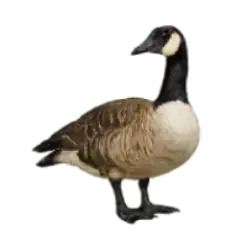
Canada GooseC
Resident flocks graze every school field and corporate lawn, and migrants stack up on the Connecticut River in autumn.
Spotting note: Guaranteed year-round.
Read species guide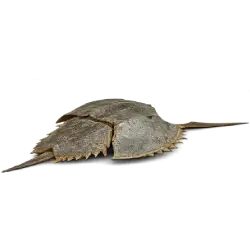
Horseshoe CrabE
Crawls up onto Milford Point and Hammonasset sand on May and June high tides to spawn, a 450-million-year-old ritual beside the picnic tables.
Spotting note: Reliable on new and full moon high tides in late May and June.
Read species guide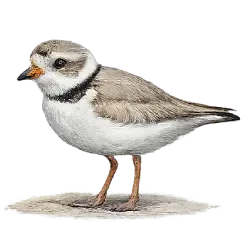
Piping PloverD
A few dozen pairs nest behind string fences at Milford Point, Sandy Point in West Haven and Griswold Point at the river mouth.
Spotting note: Reliable at the fenced beaches from May to July; stay outside the ropes.
Read species guide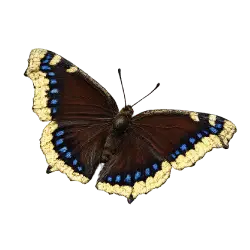
Mourning CloakE
A dark butterfly with cream wing edges that flies on the first warm days of March, often before the snow is gone, and a recent Connecticut capture.
Spotting note: Uncommon; look along sunny woodland edges in early spring and again in autumn.
Read species guide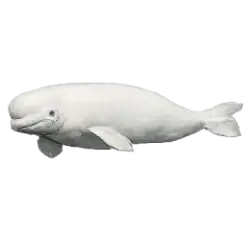
Beluga WhaleA
Mystic Aquarium keeps belugas in its outdoor Arctic Coast habitat, one of only a few places in the US to see the species above and below water.
Spotting note: Guaranteed at Mystic Aquarium on any open day.
Read species guide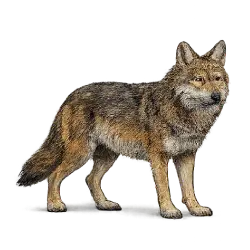
Red WolfA
Connecticut's Beardsley Zoo in Bridgeport breeds red wolves as part of the recovery programme that supplies North Carolina's wild population.
Spotting note: Guaranteed at Beardsley Zoo; the wolves are shy, so check the exhibit early.
Read species guideBest for
Use this section to decide whether the location fits your travel style, skill level, and AnimalDex goals.
- Osprey nests and salt marsh birds along Long Island Sound
- Winter harbour seal watching
- Dense suburban wildlife: deer, turkeys, squirrels and chipmunks
- Mystic Aquarium belugas and Beardsley Zoo's red wolves
Spotting tips
These tips are meant to make the page useful in the field, not just readable on the page.
- 01Walk the Hammonasset Beach State Park boardwalk and Meigs Point in summer for ospreys, egrets and terns; the nature centre has a nest camera.
- 02For seals, go at low tide between December and April to Stonington Point or take the Maritime Aquarium's seal cruise out of Norwalk.
- 03Check Milford Point at the Housatonic mouth on a late-May new or full moon high tide for spawning horseshoe crabs and nesting plovers.
- 04In the northwest hills, bears raid bird feeders at dawn; take feeders in from April to November and watch the yard edge instead.
Virtual Wildlife Guides
Wildlife guides to Connecticut
AnimalDex builds virtual guides from explorers' own wild sightings: which animals they found, how rare they are, and when. A guide is advice from someone who has been there, not a tour. Buying one unlocks the author's notes for every animal, a chat with the author, and introductions to local people they met. Wildlife is never guaranteed.
Checking for virtual guides to Connecticut...
How to choose a local wildlife guide in Connecticut
- Ask what they usually find in the season you are visiting. A good guide gives an honest answer, not a promised sighting.
- Check how they treat animals: no baiting, calling in, handling, or close flash photography for a better shot.
- Confirm the meeting area, duration, group size, total price, and how you pay before the day, plus any permits or park fees the place requires.
Track the animals you find in Connecticut
Build your collection while you travel through Connecticut, from easy wins to the species worth planning around.
Related locations
Keep exploring with nearby or similar destinations that support the same kind of AnimalDex discovery.
Animals in the United States: What You Can Spot, Learn, and Collect
A practical United States wildlife guide built around habitat variety, from wetlands and coastlines to migration corridors and iconic American species.
Read location guideAnimals in New York: What You Can Spot, Learn, and Collect
New York State wildlife guide: Adirondack moose, loons and bears, Central Park's red-tailed hawks, humpback whales off Long Island, Montauk seals, and the Bronx Zoo's gorillas.
Read location guideAnimals in Michigan: What You Can Spot, Learn, and Collect
Michigan wildlife guide: Isle Royale moose and wolves, Baker Sanctuary's autumn sandhill cranes near Battle Creek, loons and piping plovers on the Great Lakes, and the Detroit Zoo aviary.
Read location guideLocation FAQ
Short direct answers to the questions travelers usually ask before choosing a wildlife destination or zoo day.
What wildlife is there in Connecticut?
White-tailed deer, black bears, bobcats, coyotes, foxes, fishers, wild turkeys, squirrels and chipmunks inland, and ospreys, egrets, piping plovers, horseshoe crabs and winter harbour seals along Long Island Sound.
What animals can be found in Connecticut's Long Island Sound?
Ospreys, great and snowy egrets, terns, piping plovers and horseshoe crabs in summer, harbour seals and sea ducks in winter, and the occasional dolphin or whale in the deeper eastern Sound.
Are there bears in Connecticut?
Yes. Black bears returned in the 1980s and are now reported in almost every town, with the densest population in Litchfield and Hartford counties. They are most active from April to November.
Have AnimalDex users found animals in Connecticut?
Yes. AnimalDex users have publicly logged 7 captures of 6 different species in Connecticut, including american robin, canada goose, click beetle, domestic pigeon. Each one was photographed in the app at the moment of the sighting.
How do I find a wildlife guide to Connecticut?
Check the Wildlife Guides section on this page or browse Wildlife Guides on AnimalDex. Each one is a virtual guide built from an explorer's own wild sightings around Connecticut: the animals they found, how rare they are, and when. It is advice from someone who has been there, not a tour. If you want someone with you on the day, compare local guides on wildlife knowledge, how they treat animals, and clear pricing before you go.