

Animals in Guyana: What You Can Spot, Learn, and Collect
Wildlife in Guyana: harpy eagles and giant otters in the Rupununi, giant anteaters, arapaima, black caimans, cock-of-the-rock at Kaieteur and the hoatzin.
Quick answer
Start with the direct answer, then use the sections below to see why the location matters and which animals are actually realistic to spot there.
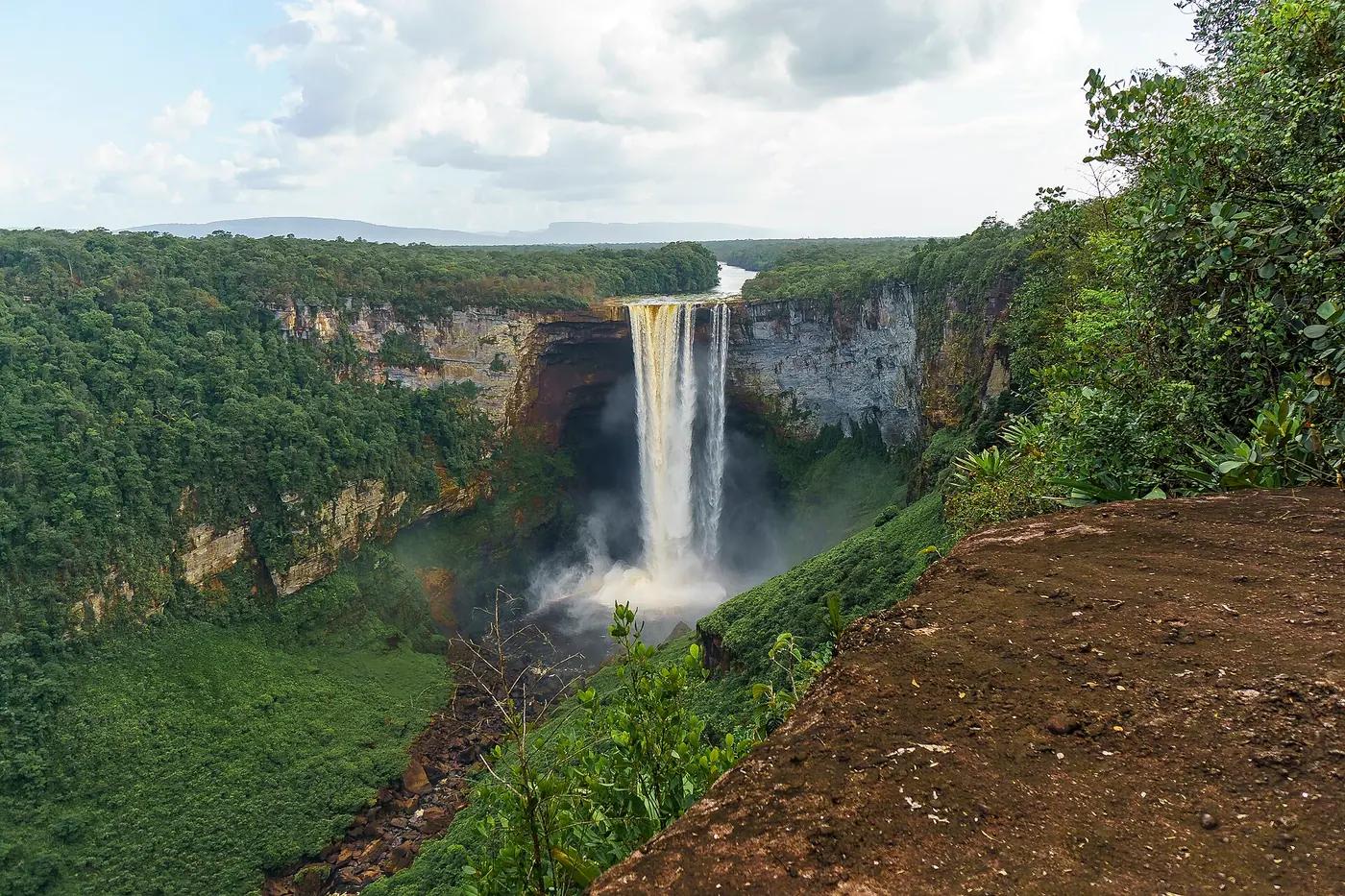
Guyana is the giants' country. The Rupununi savannas and rivers hold giant otters, giant anteaters, arapaima, black caimans and harpy eagles, with jaguars on the Iwokrama road; Kaieteur falls has golden rocket frogs living in giant bromeliads, cock-of-the-rock leks and swifts that roost behind the water; and the hoatzin, the national bird, lives in the coastal creeks an hour from Georgetown.
English-speaking, barely visited and 80 percent forested, Guyana is the easiest Guiana Shield country for an independent traveller. The classic circuit runs from Georgetown by small plane to Kaieteur falls, then to the Iwokrama forest and down into the Rupununi savanna lodges at Karanambu, Caiman House and Surama.
The Rupununi is the heart of it: open savanna with giant anteaters, flooded rivers with giant otters and arapaima, and Amerindian villages that run the lodges and the research. It is the kind of place where the guide stops the boat because a harpy eagle is sitting over the river.
Why this location matters
Good location pages explain why the place is worth your time, not just which names belong on a destination checklist.
The Rupununi's community-run lodges prove that wildlife tourism can replace hunting and mining as an income in the Guiana Shield. Karanambu's giant otter rehabilitation and the Caiman House black caiman research are both funded by visitors.
Guyana also holds species at densities lost elsewhere: giant anteaters cross the Rupununi savanna in daylight, arapaima still roll in the ponds, and the Iwokrama road has one of the highest rates of jaguar sightings in the Americas.
Where to look
Wildlife map of Guyana
This guide covers the region shown below. Zoom in to get your bearings before planning a trip.
Positions are geocoded from OpenStreetMap. Habitat access and opening times change — check locally before travelling. Smaller pins are public AnimalDex captures, placed to the nearest kilometre.
Field proof
Found in Guyana by AnimalDex users
Real captures logged in the AnimalDex app inside this area and shared publicly by their collectors, with the animal confirmed by the app's identification. Places are shown to the nearest region, never the exact spot.
- 1
- public captures
- 1
- species recorded
- 1
- collectors
- 1
- wild sightings
Recent captures from the field
Species people have actually logged here
Every name links to its species guide. The count is how many public captures of that animal sit inside this area.
Collectors choose to share these captures on Discover and can withdraw them at any time. Coordinates are rounded to about a kilometre and refreshed with each site build.
Animals to spot
These are intentionally practical species picks, balancing accessibility, excitement, and what travelers can realistically notice in the location.
Giant OtterB
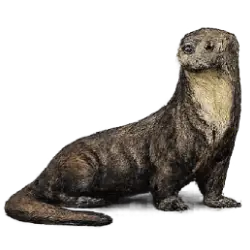
Giant otters fish the Rupununi and Rewa rivers in family groups and were famously hand-reared at Karanambu Lodge.
Spotting note: Likely on Rupununi river trips in the dry season.
Read species guide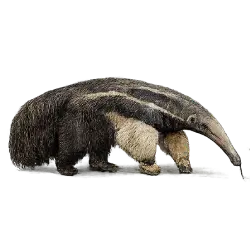
Giant AnteaterC
Anteaters forage the Rupununi savanna around Karanambu and Wichabai in the early morning, visible from a vehicle or horse.
Spotting note: Likely on a dawn savanna drive.
Read species guide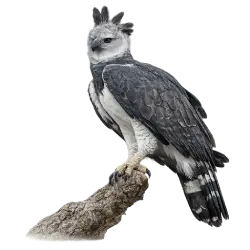
Harpy EagleA
Harpy nests are known at Surama, Iwokrama and Rewa, and the lodges take visitors to active ones in season.
Spotting note: Likely when a lodge has an active nest; ask before booking.
Read species guide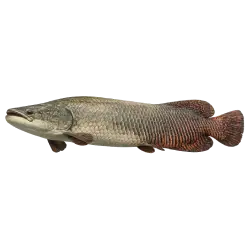
ArapaimaB
The giant air-breathing fish rolls at the surface of the Rupununi and Rewa ponds, protected by community catch-and-release rules.
Spotting note: Regular at Rewa and Karanambu ponds in the dry season.
Read species guide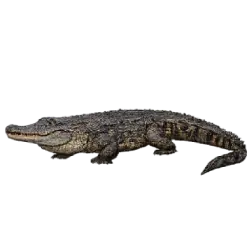
Black CaimanA
Caiman House at Yupukari runs a long-term black caiman tagging project and takes guests out to catch and measure them at night.
Spotting note: Guaranteed on a Caiman House night survey.
Read species guide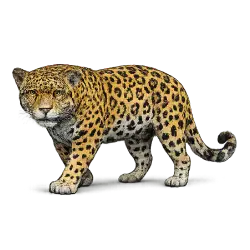
JaguarA
The Iwokrama road and the Essequibo riverbanks have some of the most regular jaguar sightings in South America.
Spotting note: Occasional; a slow dawn drive on the Iwokrama road gives perhaps a one-in-five chance.
Read species guide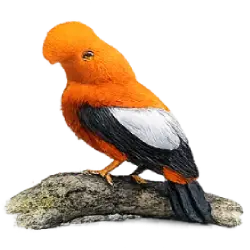
Guianan Cock-of-the-rockC
A cock-of-the-rock lek sits a few minutes' walk from the Kaieteur falls airstrip, and males display there most mornings.
Spotting note: Likely at Kaieteur with the ranger; also at Iwokrama's Turtle Mountain.
Read species guide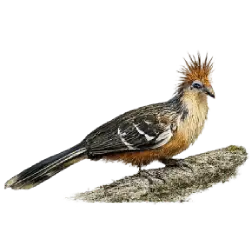
HoatzinD
Guyana's national bird crowds the mangroves and creeks of the Mahaica river east of Georgetown, an easy half-day trip.
Spotting note: Guaranteed on a Mahaica boat trip.
Read species guide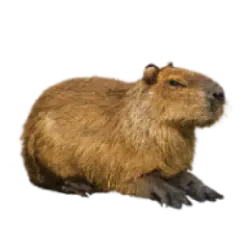
CapybaraD
Capybaras graze the Rupununi riverbanks and savanna ponds, especially around Karanambu.
Spotting note: Common in the Rupununi.
Read species guide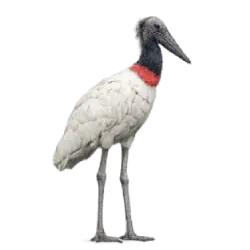
JabiruC
Jabiru storks stand over the drying Rupununi ponds in the dry season, feeding on fish trapped as the water drops.
Spotting note: Regular on the savanna wetlands.
Read species guide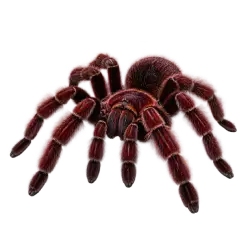
Burgundy Goliath BirdeaterD
The Guyanese form of the goliath birdeater lives in burrows on the forest floor at Iwokrama and comes out at night.
Spotting note: Likely on guided night walks; guides know the burrows.
Read species guide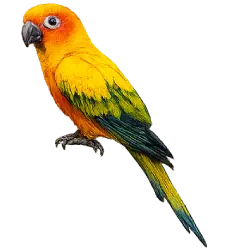
Sun ConureD
Sun parakeets survive in the wild only around Karasabai in the South Rupununi, where the village protects them.
Spotting note: Likely with the Karasabai community guides.
Read species guide
South American TapirB
Tapirs come to the river to drink at dusk along the Essequibo and Rewa and are regular on the Iwokrama camera traps.
Spotting note: Occasional on dusk river trips.
Read species guide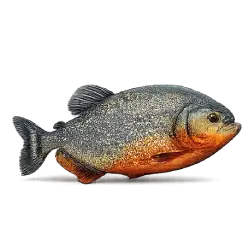
Red-bellied PiranhaD
Piranhas are abundant in the Rupununi rivers and a staple of lodge fishing trips.
Spotting note: Guaranteed if you fish.
Read species guideBest for
Use this section to decide whether the location fits your travel style, skill level, and AnimalDex goals.
- Giant otters, anteaters and arapaima in the Rupununi
- Harpy eagle nests and jaguar odds in Iwokrama
- Kaieteur falls with cock-of-the-rock and golden frogs
- Community-run lodges funding real conservation
Spotting tips
These tips are meant to make the page useful in the field, not just readable on the page.
- 01Visit in the dry season (September to April); the Rupununi savanna is driveable, ponds concentrate arapaima, caimans and storks, and the lodges run full programmes.
- 02At Kaieteur ask the ranger for the cock-of-the-rock lek and the golden frog bromeliads; both are within fifteen minutes of the airstrip.
- 03Book Caiman House at Yupukari for a night on the river catching black caimans with the research team.
- 04Drive the Iwokrama road between Kurupukari and Surama at first light with the windows down; jaguars use the road itself.
Virtual Wildlife Guides
Wildlife guides to Guyana
AnimalDex builds virtual guides from explorers' own wild sightings: which animals they found, how rare they are, and when. A guide is advice from someone who has been there, not a tour. Buying one unlocks the author's notes for every animal, a chat with the author, and introductions to local people they met. Wildlife is never guaranteed.
Checking for virtual guides to Guyana...
How to choose a local wildlife guide in Guyana
- Ask what they usually find in the season you are visiting. A good guide gives an honest answer, not a promised sighting.
- Check how they treat animals: no baiting, calling in, handling, or close flash photography for a better shot.
- Confirm the meeting area, duration, group size, total price, and how you pay before the day, plus any permits or park fees the place requires.
Track the animals you find in Guyana
Build your collection while you travel through Guyana, from easy wins to the species worth planning around.
Related tier lists
These tier lists add broader context around the species that make this location interesting.
Biggest Animals in the World
A structured ranking of the biggest animals in the world, using the AnimalDex size stat to compare body scale across sea, land, and air.
Read tier listBest Hunters in the Animal World
A structured ranking of the best hunters in the animal world, balancing success rate, kill efficiency, tracking ability, coordination, and finishing power.
Read tier listRelated locations
Keep exploring with nearby or similar destinations that support the same kind of AnimalDex discovery.
Animals in French Guiana: What You Can Spot, Learn, and Collect
Wildlife in French Guiana: leatherback turtles at Awala-Yalimapo, black caimans and hoatzins at Kaw, cock-of-the-rock, sloths, jaguars and the Cayenne zoo.
Read location guideAnimals in Trinidad and Tobago: What You Can Spot, Learn, and Collect
Wildlife in Trinidad and Tobago: scarlet ibis at Caroni swamp, leatherback turtles at Grande Riviere, oilbirds and hummingbirds at Asa Wright, Tobago's reefs.
Read location guideAnimals in the Amazon Rainforest: What You Can Spot, Learn, and Collect
What animals live in the Amazon rainforest: pink river dolphins, sloths, macaws, hoatzins, caimans and giant otters, and how realistic a jaguar sighting is.
Read location guideLocation FAQ
Short direct answers to the questions travelers usually ask before choosing a wildlife destination or zoo day.
What wildlife is there in Guyana?
Giant otters, giant anteaters, giant armadillos, arapaima, black caimans, harpy eagles, jaguars, tapirs, capybaras, howler and spider monkeys, cock-of-the-rock, hoatzins, sun parakeets, bellbirds and goliath birdeaters, concentrated in the Rupununi savannas and the Iwokrama forest.
What animals can be found in Guyana?
Hoatzins on the Mahaica river and cock-of-the-rock at Kaieteur are near-certain. The Rupununi lodges deliver capybaras, caimans, jabirus and usually giant otters and anteaters. Harpy eagles depend on an active nest, and jaguars are a realistic possibility on the Iwokrama road.
Is Guyana good for seeing jaguars?
It is one of the better places. The Iwokrama road and the Essequibo and Rewa rivers produce regular sightings, though nothing like the Pantanal's reliability. Dawn drives and dry-season river trips give the best odds.
What are the golden frogs at Kaieteur falls?
The Kaieteur golden rocket frog lives its whole life inside the water-filled leaves of giant tank bromeliads that grow only on the falls' plateau. Rangers show visitors the plants on the short trail from the airstrip.
Have AnimalDex users found animals in Guyana?
Yes. AnimalDex users have publicly logged 1 captures of 1 different species in Guyana, including cayenne tick. Each one was photographed in the app at the moment of the sighting.
How do I find a wildlife guide to Guyana?
Check the Wildlife Guides section on this page or browse Wildlife Guides on AnimalDex. Each one is a virtual guide built from an explorer's own wild sightings around Guyana: the animals they found, how rare they are, and when. It is advice from someone who has been there, not a tour. If you want someone with you on the day, compare local guides on wildlife knowledge, how they treat animals, and clear pricing before you go.