

Animals in Trinidad and Tobago: What You Can Spot, Learn, and Collect
Wildlife in Trinidad and Tobago: scarlet ibis at Caroni swamp, leatherback turtles at Grande Riviere, oilbirds and hummingbirds at Asa Wright, Tobago's reefs.
Quick answer
Start with the direct answer, then use the sections below to see why the location matters and which animals are actually realistic to spot there.
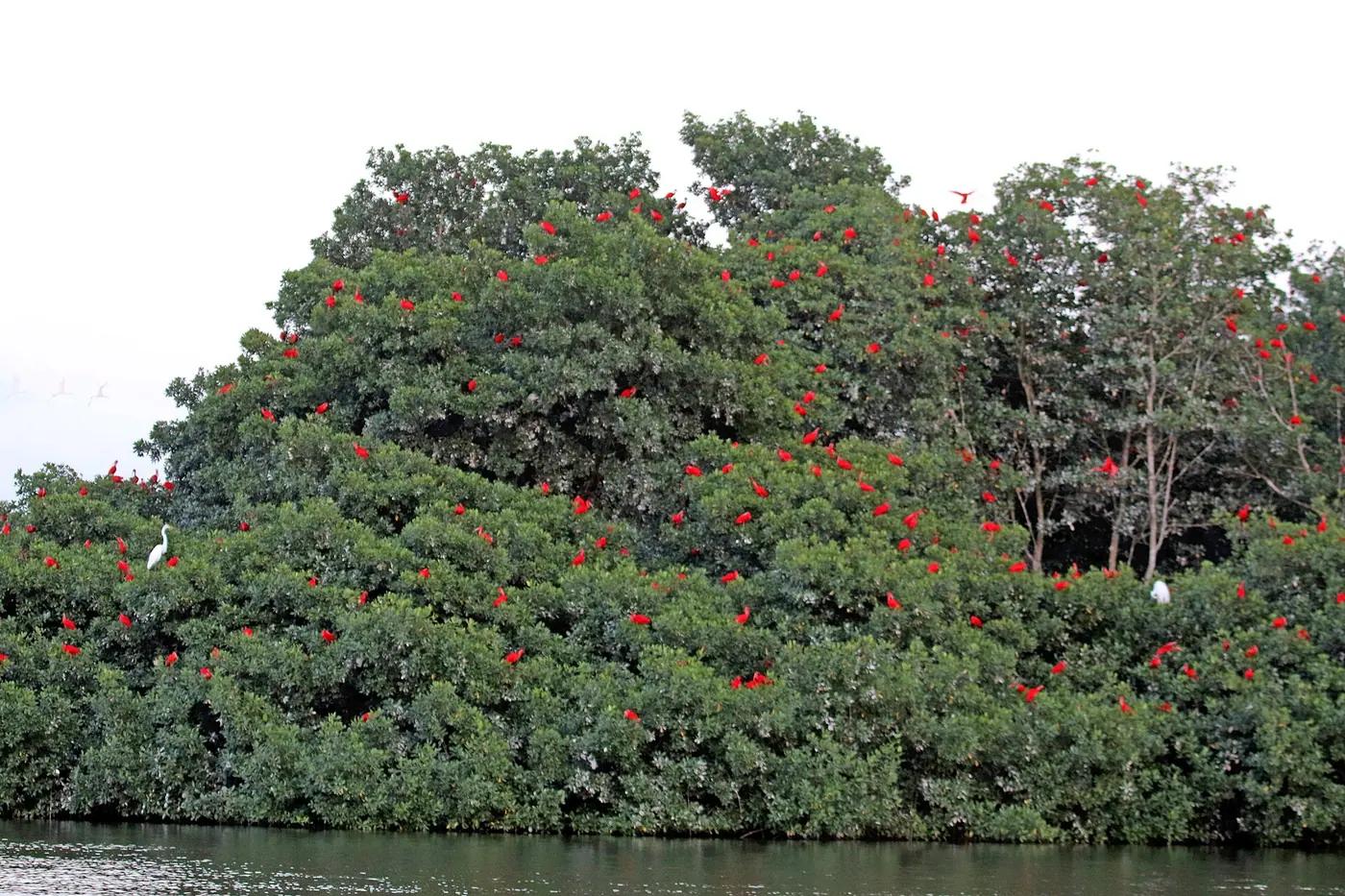
Trinidad has South American wildlife on a Caribbean island because it broke off Venezuela only recently. Thousands of scarlet ibis fly into the Caroni swamp each dusk, leatherback turtles nest on Grande Riviere and Matura beaches from March to August, the Asa Wright centre has oilbirds, hummingbirds and the island's forest birds, and wild guppies swim in every stream. Tobago adds reefs, frigatebirds and boobies.
Trinidad sits a few kilometres off Venezuela and shares its fauna: capuchin and howler monkeys, ocelots, agoutis, armadillos, caimans and over 470 bird species, which is more than any other Caribbean island by a wide margin. The Northern Range is rainforest, the west coast is mangrove swamp and the north coast is turtle beach.
Tobago is smaller, drier and more Caribbean in feel, with reefs at Speyside and Buccoo, the seabird colonies of Little Tobago and a forest reserve that has been protected since 1776. Together the two islands fit a week and deliver two completely different lists.
Why this location matters
Good location pages explain why the place is worth your time, not just which names belong on a destination checklist.
Grande Riviere hosts one of the densest leatherback nesting beaches on earth, with hundreds of two-metre turtles coming ashore on peak nights, and community guides have turned a hunting beach into a conservation success. Seeing it is a genuine privilege.
The scarlet ibis roost at Caroni is the national bird's defining spectacle and one of the most reliable wildlife shows in the Americas. Both are easy to reach from Port of Spain and both reward a collector with species that are hard to find anywhere else in the Caribbean.
Where to look
Wildlife map of Trinidad and Tobago
This guide covers the region shown below. Zoom in to get your bearings before planning a trip.
Positions are geocoded from OpenStreetMap. Habitat access and opening times change — check locally before travelling. Smaller pins are public AnimalDex captures, placed to the nearest kilometre.
Field proof
Found in Trinidad and Tobago by AnimalDex users
Real captures logged in the AnimalDex app inside this area and shared publicly by their collectors, with the animal confirmed by the app's identification. Places are shown to the nearest region, never the exact spot.
- 6
- public captures
- 5
- species recorded
- 1
- collectors
- 6
- wild sightings
Recent captures from the field
Species people have actually logged here
Every name links to its species guide. The count is how many public captures of that animal sit inside this area.
Collectors choose to share these captures on Discover and can withdraw them at any time. Coordinates are rounded to about a kilometre and refreshed with each site build.
Animals to spot
These are intentionally practical species picks, balancing accessibility, excitement, and what travelers can realistically notice in the location.
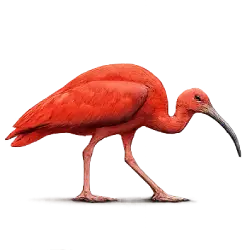
Scarlet IbisC
Thousands of scarlet ibis flight into the Caroni swamp mangroves each evening to roost, turning the trees red.
Spotting note: Guaranteed on the Caroni sunset boat tour.
Read species guide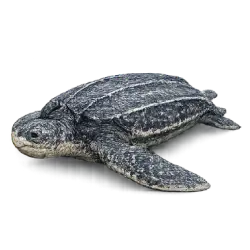
Leatherback Sea TurtleB
Leatherbacks haul out to nest on Grande Riviere, Matura and Fishing Pond beaches on the north and east coasts.
Spotting note: Near-certain on a guided night watch from March to August.
Read species guide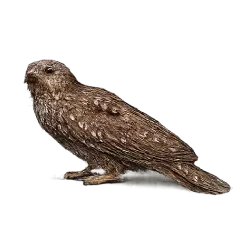
OilbirdC
The nocturnal fruit-eating oilbird roosts in Dunston Cave at the Asa Wright Nature Centre, the most accessible colony in the world.
Spotting note: Reliable with the Asa Wright guided cave walk.
Read species guide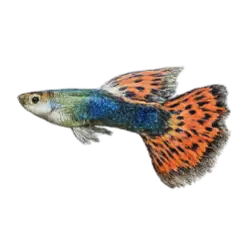
GuppyE
The aquarium guppy is a Trinidad native, swimming wild in every mountain stream and roadside ditch in the Northern Range.
Spotting note: Guaranteed in any clear stream; the original wild form.
Read species guide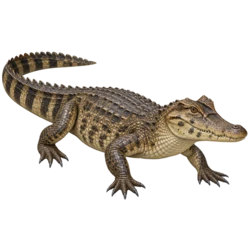
Spectacled CaimanC
Spectacled caimans float in the Caroni channels and the Nariva swamp, visible from the boats.
Spotting note: Regular on Caroni and Nariva tours.
Read species guide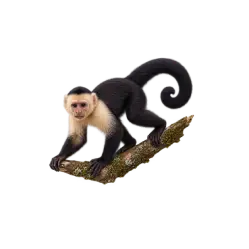
Capuchin MonkeyC
White-fronted capuchins and red howlers move through the Nariva swamp palm forest and the Northern Range canopy.
Spotting note: Likely at Nariva; occasional at Asa Wright.
Read species guide
Blue-and-yellow MacawC
Macaws were reintroduced to the Nariva swamp after being hunted out and now fly over the Bush Bush forest in pairs.
Spotting note: Regular at Nariva, especially at dawn and dusk.
Read species guide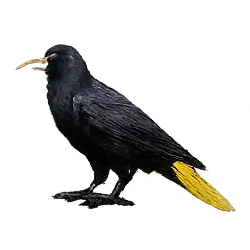
Crested OropendolaC
Oropendolas hang pendulous nests from tall trees at Asa Wright and gurgle their liquid calls across the valley.
Spotting note: Common in the Northern Range.
Read species guide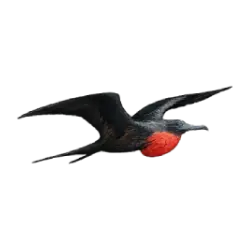
Magnificent FrigatebirdC
Frigatebirds nest on Little Tobago and St Giles islands and patrol the Speyside and Buccoo coasts.
Spotting note: Daily around Tobago.
Read species guide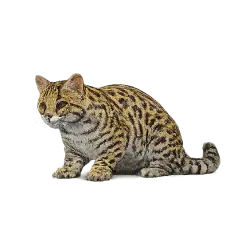
OcelotB
Trinidad's only wild cat hunts the Northern Range and Nariva forests and is caught regularly on Asa Wright's camera traps.
Spotting note: Rare; night drives on the Blanchisseuse road offer a small chance.
Read species guide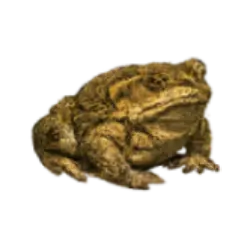
Cane ToadE
The crapaud is native here, calling from ditches and gardens after rain and a frequent capture in the south of Trinidad.
Spotting note: Very common on wet nights.
Read species guide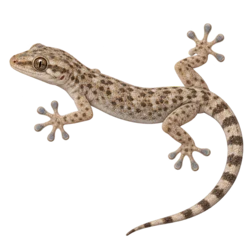
Tropical House GeckoE
The introduced tropical house gecko has colonised walls and ceilings across both islands and is among the most-logged animals in Siparia.
Spotting note: Guaranteed under any porch light.
Read species guide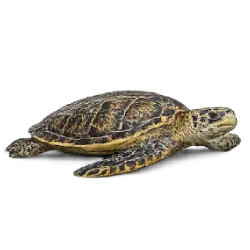
Hawksbill Sea TurtleC
Hawksbills graze the Speyside and Buccoo reefs in Tobago and nest on the smaller Tobago beaches.
Spotting note: Likely on a Speyside snorkel or dive.
Read species guideBest for
Use this section to decide whether the location fits your travel style, skill level, and AnimalDex goals.
- The scarlet ibis sunset roost at Caroni swamp
- Leatherback turtle nesting on Grande Riviere beach
- Rainforest birding and oilbirds at Asa Wright
- Reef snorkelling and seabird colonies on Tobago
Spotting tips
These tips are meant to make the page useful in the field, not just readable on the page.
- 01Book the Caroni swamp boat for the last departure of the day; the ibis arrive in the final half hour before dark.
- 02Turtle watching needs a permit and a guide; stay overnight in Grande Riviere in April or May and go out after 20:00 when the first females land.
- 03Spend a full morning on the Asa Wright veranda; the feeders bring hummingbirds, honeycreepers, tanagers and agoutis within arm's reach.
- 04In Tobago take the glass-bottom boat from Speyside to Little Tobago for frigatebirds and red-billed tropicbirds, and snorkel Angel Reef on the way back.
Virtual Wildlife Guides
Wildlife guides to Trinidad and Tobago
AnimalDex builds virtual guides from explorers' own wild sightings: which animals they found, how rare they are, and when. A guide is advice from someone who has been there, not a tour. Buying one unlocks the author's notes for every animal, a chat with the author, and introductions to local people they met. Wildlife is never guaranteed.
Checking for virtual guides to Trinidad and Tobago...
How to choose a local wildlife guide in Trinidad and Tobago
- Ask what they usually find in the season you are visiting. A good guide gives an honest answer, not a promised sighting.
- Check how they treat animals: no baiting, calling in, handling, or close flash photography for a better shot.
- Confirm the meeting area, duration, group size, total price, and how you pay before the day, plus any permits or park fees the place requires.
Track the animals you find in Trinidad and Tobago
Build your collection while you travel through Trinidad and Tobago, from easy wins to the species worth planning around.
Related tier lists
These tier lists add broader context around the species that make this location interesting.
Biggest Animals in the World
A structured ranking of the biggest animals in the world, using the AnimalDex size stat to compare body scale across sea, land, and air.
Read tier listRelated locations
Keep exploring with nearby or similar destinations that support the same kind of AnimalDex discovery.
Animals in Cartagena and the Caribbean Coast: What You Can Spot, Learn, and Collect
Wildlife on Colombia's Caribbean coast: Rosario islands reefs and turtles, sloths and capuchins in Tayrona, mangrove caimans, scarlet ibis and flamingos at La Guajira.
Read location guideAnimals in Guyana: What You Can Spot, Learn, and Collect
Wildlife in Guyana: harpy eagles and giant otters in the Rupununi, giant anteaters, arapaima, black caimans, cock-of-the-rock at Kaieteur and the hoatzin.
Read location guideAnimals in French Guiana: What You Can Spot, Learn, and Collect
Wildlife in French Guiana: leatherback turtles at Awala-Yalimapo, black caimans and hoatzins at Kaw, cock-of-the-rock, sloths, jaguars and the Cayenne zoo.
Read location guideLocation FAQ
Short direct answers to the questions travelers usually ask before choosing a wildlife destination or zoo day.
What wildlife is there in Trinidad and Tobago?
Scarlet ibis, oilbirds, macaws, hummingbirds and over 470 bird species, leatherback and hawksbill turtles, capuchin and howler monkeys, ocelots, agoutis, armadillos, caimans, boas and bushmasters, wild guppies, and healthy reefs with parrotfish and angelfish off Tobago.
What animals can be found in Trinidad and Tobago?
The guaranteed ones are scarlet ibis at Caroni, oilbirds and hummingbirds at Asa Wright, frigatebirds around Tobago and guppies in any stream. Leatherbacks are near-certain in nesting season, caimans and macaws are regular at Nariva, and ocelots are rare night sightings.
When can you see leatherback turtles in Trinidad?
The nesting season runs from March to August, peaking in April, May and June. Grande Riviere and Matura on the north and east coasts are the main beaches, and all visits must be with a licensed community guide after dark.
Are there dangerous animals in Trinidad and Tobago?
Trinidad has four venomous snakes, including the bushmaster and fer-de-lance, but bites are rare and Tobago has none. Watch your step on forest trails, shake out boots, and treat the Caroni caimans and any scorpion with ordinary caution.
Have AnimalDex users found animals in Trinidad and Tobago?
Yes. AnimalDex users have publicly logged 6 captures of 5 different species in Trinidad and Tobago, including cockroach, cane toad, common house gecko, flower crab spider. Each one was photographed in the app at the moment of the sighting.
How do I find a wildlife guide to Trinidad and Tobago?
Check the Wildlife Guides section on this page or browse Wildlife Guides on AnimalDex. Each one is a virtual guide built from an explorer's own wild sightings around Trinidad and Tobago: the animals they found, how rare they are, and when. It is advice from someone who has been there, not a tour. If you want someone with you on the day, compare local guides on wildlife knowledge, how they treat animals, and clear pricing before you go.