

Animals in North Sumatra: What You Can Spot, Learn, and Collect
North Sumatra wildlife guide: Bukit Lawang's wild orangutans, Tapanuli orangutans in Batang Toru, Tangkahan elephants, siamang and hornbills, Lake Toba.
Quick answer
Start with the direct answer, then use the sections below to see why the location matters and which animals are actually realistic to spot there.
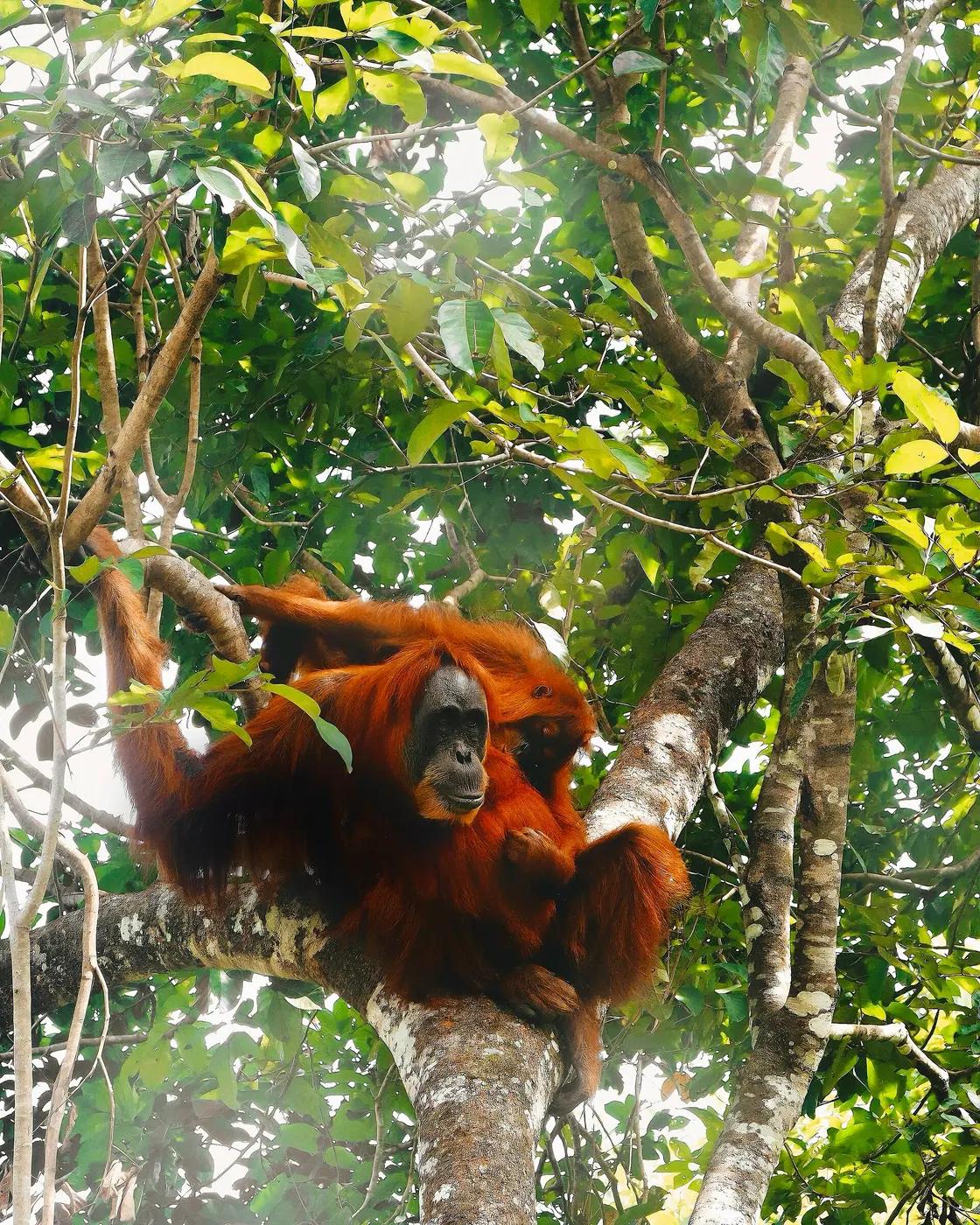
North Sumatra is the orangutan province. Bukit Lawang on the edge of Gunung Leuser National Park gives the most reliable wild Sumatran orangutan sightings anywhere, with Thomas's leaf monkeys, siamang, hornbills and macaques on the same trails. Tangkahan has a patrol herd of Sumatran elephants, the Batang Toru forest south of Lake Toba holds the Tapanuli orangutan, and the province's forests still shelter Sumatran tigers, sun bears and rhinoceros hornbills.
If a traveller sees one wild great ape in Asia it is probably here. The rehabilitated and wild orangutans around Bukit Lawang have made this stretch of the Bohorok river the most visited piece of rainforest in Sumatra, and the surrounding Gunung Leuser park is large enough to hold tigers, elephants and rhinos as well.
North Sumatra is also bigger and more varied than the Bukit Lawang circuit. Lake Toba's highlands have their own birds, the Batang Toru forest south of the lake holds a great ape species only described in 2017, and Medan's zoo and parks account for the province's captive captures.
Why this location matters
Good location pages explain why the place is worth your time, not just which names belong on a destination checklist.
Two of the world's three orangutan species live only in this province and the neighbouring Aceh forests. The Tapanuli orangutan, with fewer than 800 individuals in Batang Toru, is the rarest great ape on earth.
Bukit Lawang shows both the value and the cost of ape tourism. Choose guides who keep distance and never feed the animals; the orangutans that approach for fruit are the ones at risk.
Where to look
Wildlife map of North Sumatra
This guide covers the region shown below. Zoom in to get your bearings before planning a trip.
Positions are geocoded from OpenStreetMap. Habitat access and opening times change — check locally before travelling. Smaller pins are public AnimalDex captures, placed to the nearest kilometre.
Field proof
Found in North Sumatra by AnimalDex users
Real captures logged in the AnimalDex app inside this area and shared publicly by their collectors, with the animal confirmed by the app's identification. Places are shown to the nearest region, never the exact spot.
- 15
- public captures
- 14
- species recorded
- 4
- collectors
- 7
- wild sightings
Recent captures from the field
Species people have actually logged here
Every name links to its species guide. The count is how many public captures of that animal sit inside this area.
- Black Ant2 captures
- Asian Weaver Ant1 capture
- Blue-and-yellow Macaw1 capture
- Blue-headed Macaw1 capture
- Carpenter Ant1 capture
- Chicken1 capture
- Goldfish1 capture
- Guppy1 capture
- Nile Tilapia1 capture
- Oriental Pied Hornbill1 capture
- Rainbow Lorikeet1 capture
- Southern Cassowary1 capture
- Sun Bear1 capture
- Two-spotted Cricket1 capture
Collectors choose to share these captures on Discover and can withdraw them at any time. Coordinates are rounded to about a kilometre and refreshed with each site build.
Animals to spot
These are intentionally practical species picks, balancing accessibility, excitement, and what travelers can realistically notice in the location.
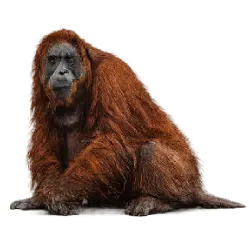
Sumatran OrangutanA
The Bukit Lawang trails along the Bohorok river give the most reliable wild orangutan sightings in Asia, from semi-wild females to fully wild males.
Spotting note: Very likely on a one-day trek; near-certain on two days.
Read species guide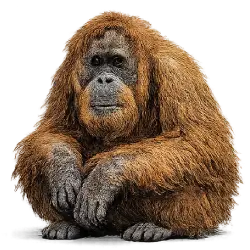
Tapanuli OrangutanA
Found only in the Batang Toru forest south of Lake Toba, where a small research-based tourism effort is starting.
Spotting note: Very rare and remote; a multi-day expedition with local guides.
Read species guide
SiamangB
The largest gibbon's booming duet rolls across the Bukit Lawang and Ketambe forests every morning.
Spotting note: Heard daily; seen with patience in tall trees.
Read species guide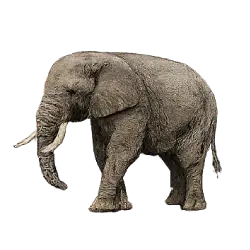
Asian ElephantA
Tangkahan's Conservation Response Unit keeps a patrol herd of Sumatran elephants that visitors bathe in the river; wild herds roam the park behind.
Spotting note: Guaranteed with the CRU herd at Tangkahan; wild herds rarely seen.
Read species guide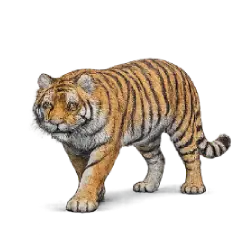
Sumatran TigerA
Gunung Leuser's lowland and hill forest is core tiger habitat, and camera traps around Bukit Lawang record them regularly.
Spotting note: Almost never seen by visitors; tracks on river sand are the realistic find.
Read species guide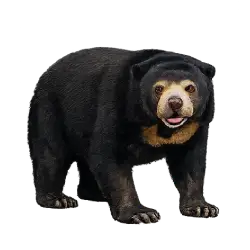
Sun BearB
Claw marks on trees along the Bukit Lawang trails are common; a confirmed user capture in the province.
Spotting note: Rarely seen in the wild; sign is easy, the bear is not.
Read species guide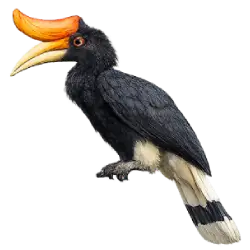
Rhinoceros HornbillB
Pairs cross the Bohorok valley with loud wingbeats and nest in big fig trees above the river.
Spotting note: Regular around Bukit Lawang on clear mornings.
Read species guide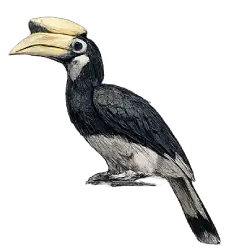
Oriental Pied HornbillC
The small hornbill of forest edge and village fruit trees around Bukit Lawang and Tangkahan; a logged wild capture here.
Spotting note: Common on forest edges.
Read species guide
Long-tailed MacaqueC
Troops wait at the Bukit Lawang bridges and tubing exits for dropped food.
Spotting note: Guaranteed at Bukit Lawang.
Read species guide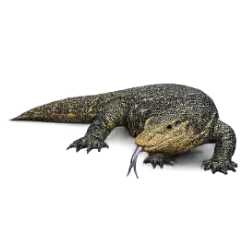
Water MonitorC
Swims the Bohorok river below the guesthouses and basks on boulders at midday.
Spotting note: Regular along the river.
Read species guide
Asian Weaver AntE
Leaf nests in roadside fruit trees from Medan to the park boundary; a logged user capture in the province.
Spotting note: Abundant.
Read species guide
Carpenter AntE
Big black ants trail along logs and guesthouse beams at Bukit Lawang at night; a confirmed capture here.
Spotting note: Common after dark in the forest.
Read species guide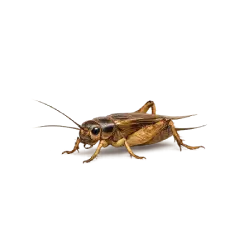
Two-spotted CricketE
The loudest night sound around Lake Toba's guesthouses and farmland; logged by users in the province.
Spotting note: Heard every night; found under lights.
Read species guide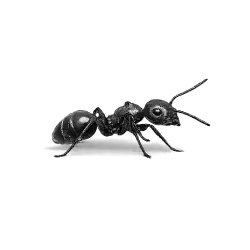
Black AntE
The everyday ant of Medan gardens and Toba homestays that fills casual captures.
Spotting note: Everywhere.
Read species guideBest for
Use this section to decide whether the location fits your travel style, skill level, and AnimalDex goals.
- Wild Sumatran orangutans at Bukit Lawang
- Elephant river-bathing at Tangkahan
- Gibbons, hornbills and macaques on rainforest trails
- Highland lake scenery and birds at Toba
Spotting tips
These tips are meant to make the page useful in the field, not just readable on the page.
- 01Hire a licensed Bukit Lawang guide and insist on no feeding and a ten-metre distance; the best sightings come from waiting quietly under a fruiting tree.
- 02Two-day treks with a river-tube return see more wild orangutans than day trips, and the forest camps add night insects and frogs.
- 03Tangkahan elephant bathing happens mid-morning; arrive early and ask for the walk with the mahouts rather than riding.
- 04The dry months from February to August give clearer trails; the wettest period is October to December.
Virtual Wildlife Guides
Wildlife guides to North Sumatra
AnimalDex builds virtual guides from explorers' own wild sightings: which animals they found, how rare they are, and when. A guide is advice from someone who has been there, not a tour. Buying one unlocks the author's notes for every animal, a chat with the author, and introductions to local people they met. Wildlife is never guaranteed.
Checking for virtual guides to North Sumatra...
How to choose a local wildlife guide in North Sumatra
- Ask what they usually find in the season you are visiting. A good guide gives an honest answer, not a promised sighting.
- Check how they treat animals: no baiting, calling in, handling, or close flash photography for a better shot.
- Confirm the meeting area, duration, group size, total price, and how you pay before the day, plus any permits or park fees the place requires.
Track the animals you find in North Sumatra
Build your collection while you travel through North Sumatra, from easy wins to the species worth planning around.
Related tier lists
These tier lists add broader context around the species that make this location interesting.
100 Smartest Animals Ranked
Animal intelligence ranking of 100 smartest animals, using AnimalDex intelligence profiles and a clear note that social skill, tool use, and solitary problem solving are different jobs.
Read tier listRarest Animals in the World
A structured ranking of the rarest animals in the world, blending scarcity, vulnerability, and conservation pressure to answer the overlap between rarest and most endangered wildlife.
Read tier listRelated locations
Keep exploring with nearby or similar destinations that support the same kind of AnimalDex discovery.
Animals in Gunung Leuser National Park: What You Can Spot, Learn, and Collect
Gunung Leuser guide: wild Sumatran orangutans at Bukit Lawang and Ketambe, siamang, rhinoceros and helmeted hornbills, great argus, and unseen tigers and rhinos.
Read location guideAnimals in Sumatra: What You Can Spot, Learn, and Collect
Sumatra wildlife guide: orangutans at Bukit Lawang, Way Kambas elephants, tigers and tapirs in Kerinci, hornbills, and the macaques and monitors you will see.
Read location guideAnimals in Indonesia: What You Can Spot, Learn, and Collect
A practical guide to animals in Indonesia, from accessible birds and coastal wildlife to headline species that make the country one of the world's strongest wildlife-travel destinations.
Read location guideLocation FAQ
Short direct answers to the questions travelers usually ask before choosing a wildlife destination or zoo day.
What wildlife is there in North Sumatra?
Sumatran orangutans, siamang, Thomas's leaf monkeys, macaques, hornbills and sun bears in Gunung Leuser National Park around Bukit Lawang; Sumatran elephants at Tangkahan; Tapanuli orangutans in Batang Toru; and tigers that are present but almost never seen.
What animals can be found in North Sumatra?
On the trails: Sumatran orangutans, siamang, long-tailed macaques, rhinoceros and oriental pied hornbills, water monitors and sun bear sign. Around towns and Lake Toba: weaver ants, carpenter ants, crickets and the usual geckos and sparrows.
Is Bukit Lawang the best place to see orangutans?
For reliability, yes. Most one-day treks see at least one orangutan and two-day treks often see several, including fully wild animals. Ketambe in Aceh is quieter and wilder but less predictable.
When is the best time to visit Bukit Lawang?
February to August is drier with better trail conditions. Fruiting seasons vary, and a good guide will know which trees are fruiting that week.
Have AnimalDex users found animals in North Sumatra?
Yes. AnimalDex users have publicly logged 15 captures of 14 different species in North Sumatra, including black ant, asian weaver ant, blue-and-yellow macaw, blue-headed macaw. Each one was photographed in the app at the moment of the sighting.
How do I find a wildlife guide to North Sumatra?
Check the Wildlife Guides section on this page or browse Wildlife Guides on AnimalDex. Each one is a virtual guide built from an explorer's own wild sightings around North Sumatra: the animals they found, how rare they are, and when. It is advice from someone who has been there, not a tour. If you want someone with you on the day, compare local guides on wildlife knowledge, how they treat animals, and clear pricing before you go.