

Animals in Sumatra: What You Can Spot, Learn, and Collect
Sumatra wildlife guide: orangutans at Bukit Lawang, Way Kambas elephants, tigers and tapirs in Kerinci, hornbills, and the macaques and monitors you will see.
Quick answer
Start with the direct answer, then use the sections below to see why the location matters and which animals are actually realistic to spot there.
Sumatra is the only island on earth with wild orangutans, tigers, elephants and rhinos together. Realistic sightings are Sumatran orangutans and Thomas's langurs on the Bukit Lawang trails in Gunung Leuser, Asian elephants at Way Kambas, siamang and rhinoceros hornbills calling from the canopy, and water monitors, macaques and tree sparrows around every town and river.
Sumatra runs 1,800 kilometres from Aceh to Lampung and still holds the largest blocks of lowland rainforest left in western Indonesia. Gunung Leuser in the north, Kerinci Seblat down the Bukit Barisan spine and Way Kambas and Bukit Barisan Selatan in the south are the parks that hold the headline mammals.
The honest version for travellers: orangutans at Bukit Lawang are close to guaranteed, elephants at Way Kambas are reliable, and tigers, rhinos and tapirs are camera-trap animals you should not expect to see. Around that core sits a lot of easy wildlife, from hornbills over Lake Toba to monitors in the Musi river at Palembang.
Start with these animals
Why this location matters
Good location pages explain why the place is worth your time, not just which names belong on a destination checklist.
Sumatra has lost more than half its forest since 1985, mostly to oil palm and pulp. The Sumatran tiger, rhino, elephant and orangutan are all Critically Endangered, and every sighting logged here is a data point for where they still hang on.
For a collector the island covers a huge spread of tiers in one trip: a Critically Endangered ape in the morning, a hornbill at lunch, and the geckos, ants and sparrows of a losmen courtyard at night.
Where to look
Wildlife map of Sumatra
This guide covers the region shown below. Zoom in to get your bearings before planning a trip.
Positions are geocoded from OpenStreetMap. Habitat access and opening times change — check locally before travelling. Smaller pins are public AnimalDex captures, placed to the nearest kilometre.
Field proof
Found in Sumatra by AnimalDex users
Real captures logged in the AnimalDex app inside this area and shared publicly by their collectors, with the animal confirmed by the app's identification. Places are shown to the nearest region, never the exact spot.
- 53
- public captures
- 38
- species recorded
- 11
- collectors
- 44
- wild sightings
Recent captures from the field
Species people have actually logged here
Every name links to its species guide. The count is how many public captures of that animal sit inside this area.
- Black Ant3 captures
- Guppy3 captures
- House Fly3 captures
- Siamese Fighting Fish3 captures
- Black Skirt Tetra2 captures
- Cockroach2 captures
- Drain Fly2 captures
- Eurasian Tree Sparrow2 captures
- Ghost Ant2 captures
- Red Ant2 captures
- Two-spotted Cricket2 captures
- Amazon Sailfin Catfish1 capture
- Asian Weaver Ant1 capture
- Bivalve1 capture
- Blue-and-yellow Macaw1 capture
- Blue-headed Macaw1 capture
- Brown Rat1 capture
- Carpenter Ant1 capture
- Chicken1 capture
- Common House Gecko1 capture
- Common Molly1 capture
- Dingy Bushbrown1 capture
- Freshwater Eel1 capture
- Giant Golden Orb-weaver1 capture
- Goldfish1 capture
- Household Casebearer Moth1 capture
- Mosquito1 capture
- Muscovy Duck1 capture
- Nile Tilapia1 capture
- Oriental Pied Hornbill1 capture
- Oscar Fish1 capture
- Rainbow Lorikeet1 capture
- Red Junglefowl1 capture
- Rice Grasshopper1 capture
- Southern Cassowary1 capture
- St Mark's Fly1 capture
- Sun Bear1 capture
- Tobacco Grasshopper1 capture
Collectors choose to share these captures on Discover and can withdraw them at any time. Coordinates are rounded to about a kilometre and refreshed with each site build.
Animals to spot
These are intentionally practical species picks, balancing accessibility, excitement, and what travelers can realistically notice in the location.
Sumatran OrangutanA
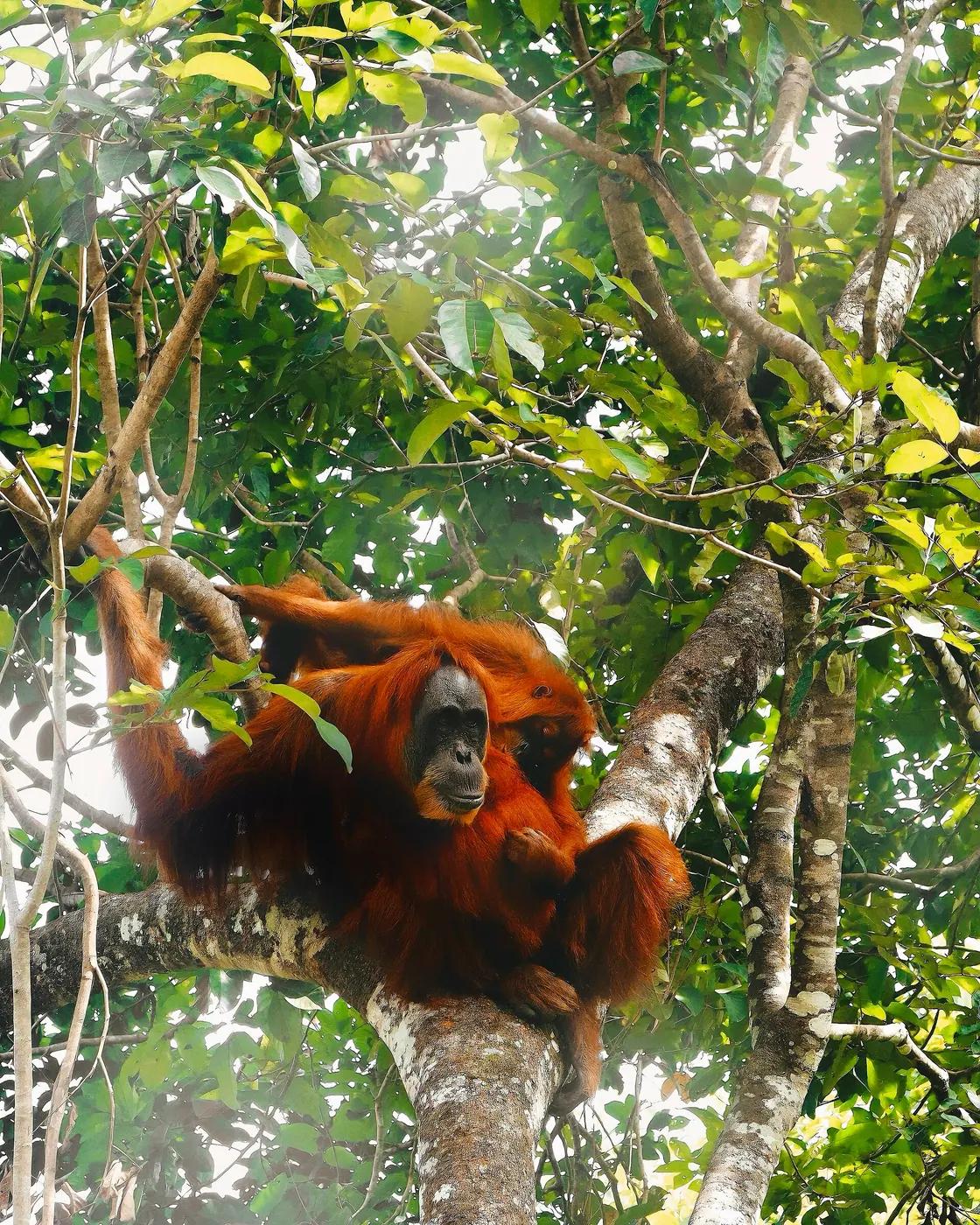
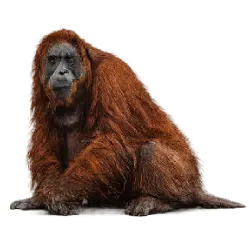
Semi-wild and wild orangutans use the forest above Bukit Lawang on the edge of Gunung Leuser National Park; a two-day trek usually produces several encounters, often with mothers and young.
Spotting note: Near-certain at Bukit Lawang with a licensed guide; wild sightings deeper in Leuser or Ketambe take days.
Read species guide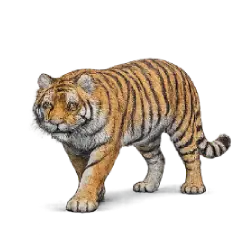
Sumatran TigerA
Around 400 remain, mostly in Kerinci Seblat and Bukit Barisan Selatan, where pugmarks on muddy trails are the usual evidence.
Spotting note: Essentially never seen; tracks and camera-trap images are the realistic outcome.
Read species guide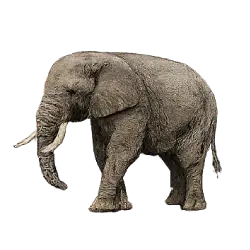
Asian ElephantA
Way Kambas in Lampung has a wild population and the Elephant Response Unit patrol herd, so you can see both captive-managed and free-ranging animals in a day.
Spotting note: Reliable at Way Kambas; wild herds also roam the Leuser lowlands around Tangkahan.
Read species guide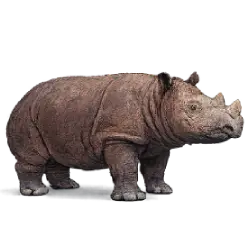
Sumatran RhinocerosA
The Sumatran Rhino Sanctuary inside Way Kambas keeps the breeding population that produced the only calves born in captivity in decades.
Spotting note: Wild animals are effectively unseeable; the sanctuary is visit-by-arrangement only.
Read species guide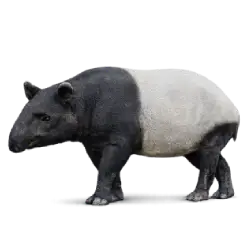
Malayan TapirB
Sumatra is the tapir's last Indonesian stronghold, with the black-and-white adults wading rivers in Kerinci Seblat and Way Kambas at night.
Spotting note: Rare; night walks at Way Kambas or river edges in Kerinci give the only real chance.
Read species guide
SiamangB
The biggest gibbon fills the dawn with throat-sac booming across Bukit Lawang, Kerinci and the Bukit Barisan foothills.
Spotting note: Heard most mornings in forest; seen with patience when a pair crosses a gap.
Read species guide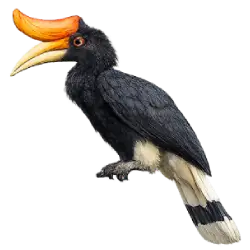
Rhinoceros HornbillB
Pairs commute over the Bohorok river valley and the Harau canyon with wingbeats that sound like a steam engine.
Spotting note: Regular in good lowland forest; look up when you hear the whoosh.
Read species guide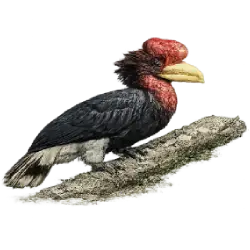
Helmeted HornbillB
Its maniacal laughing call still echoes through the Leuser and Kerinci lowlands, though poaching for the solid casque has emptied many valleys.
Spotting note: Uncommon and declining; a serious prize in the deeper Leuser forest.
Read species guide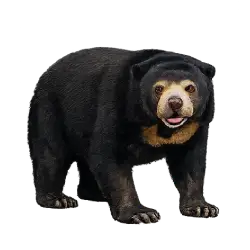
Sun BearB
Claw marks and ripped-open termite nests along Gunung Leuser trails are usually the first sign of the world's smallest bear.
Spotting note: Rare but logged by AnimalDex users in North Sumatra; dawn and dusk in fruiting forest.
Read species guide
Long-tailed MacaqueC
Troops shadow the suspension bridges and losmen of Bukit Lawang and raid Lake Toba picnic spots on Samosir.
Spotting note: Guaranteed anywhere tourists eat near forest.
Read species guide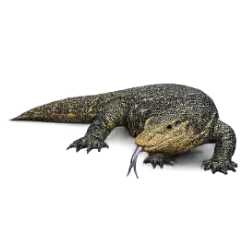
Water MonitorC
Big monitors cruise the Musi at Palembang, the Bohorok shallows and the drainage canals of Medan.
Spotting note: Common along any lowland river; most active late morning.
Read species guide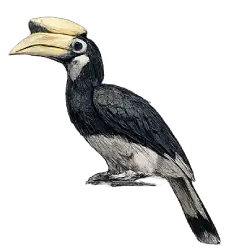
Oriental Pied HornbillC
The small hornbill of forest edge and rubber gardens, already logged by users in North Sumatra, and the easiest hornbill to start with.
Spotting note: Fairly common around Bukit Lawang and Tangkahan.
Read species guide
Eurasian Tree SparrowE
The most-captured bird by Indonesian AnimalDex users, nesting under every warung roof from Banda Aceh to Bandar Lampung.
Spotting note: Guaranteed in every town.
Read species guide
Asian Weaver AntE
Red weaver ants stitch leaf nests in the mango and rambutan trees of every village and bite anyone who leans on the trunk.
Spotting note: Guaranteed; the most-logged invertebrate in Sumatra.
Read species guideBest for
Use this section to decide whether the location fits your travel style, skill level, and AnimalDex goals.
- Orangutan trekking at Bukit Lawang and Ketambe
- Elephant watching at Way Kambas
- Hornbill and gibbon birding in Kerinci Seblat and Harau
- Multi-day jungle treks for serious collectors
Spotting tips
These tips are meant to make the page useful in the field, not just readable on the page.
- 01Book a licensed guide at Bukit Lawang and insist on no feeding; the forest-edge orangutans are habituated enough without it.
- 02Reach Way Kambas for the 6 am elephant patrol departure and stay for a night walk, which is the only realistic tapir chance.
- 03Hornbills are loudest 7 to 9 am; sit on a ridge with a view over the canopy rather than walking under it.
- 04Carry leech socks in the wet season (October to March) and keep a headtorch handy for geckos and civets around your losmen.
Virtual Wildlife Guides
Wildlife guides to Sumatra
AnimalDex builds virtual guides from explorers' own wild sightings: which animals they found, how rare they are, and when. A guide is advice from someone who has been there, not a tour. Buying one unlocks the author's notes for every animal, a chat with the author, and introductions to local people they met. Wildlife is never guaranteed.
Checking for virtual guides to Sumatra...
How to choose a local wildlife guide in Sumatra
- Ask what they usually find in the season you are visiting. A good guide gives an honest answer, not a promised sighting.
- Check how they treat animals: no baiting, calling in, handling, or close flash photography for a better shot.
- Confirm the meeting area, duration, group size, total price, and how you pay before the day, plus any permits or park fees the place requires.
Track the animals you find in Sumatra
Build your collection while you travel through Sumatra, from easy wins to the species worth planning around.
Related locations
Keep exploring with nearby or similar destinations that support the same kind of AnimalDex discovery.
Animals in Indonesia: What You Can Spot, Learn, and Collect
A practical guide to animals in Indonesia, from accessible birds and coastal wildlife to headline species that make the country one of the world's strongest wildlife-travel destinations.
Read location guideAnimals in Bangka Belitung: What You Can Spot, Learn, and Collect
Bangka Belitung wildlife guide: Belitung's boulder beaches and reef fish, tarsiers and lutungs in the forest, mouse-deer, mangrove monitors and mudskippers.
Read location guideAnimals in Borneo: What You Can Spot and Why the Region Matters
A structured Borneo wildlife guide focused on realistic rainforest, river, and sanctuary-linked spotting with strong links into species pages and broader AnimalDex discovery.
Read location guideLocation FAQ
Short direct answers to the questions travelers usually ask before choosing a wildlife destination or zoo day.
What wildlife is there in Sumatra?
Sumatra has orangutans, tigers, elephants, rhinos, tapirs, sun bears, siamang and several hornbill species in its national parks, plus abundant macaques, monitors and birds in towns and along rivers. Orangutans at Bukit Lawang and elephants at Way Kambas are the two reliable big-mammal sightings.
What animals can be found in Sumatra?
The flagship species are the Sumatran orangutan, Sumatran tiger, Sumatran rhinoceros, Asian elephant and Malayan tapir. Everyday animals include long-tailed macaques, water monitors, oriental pied hornbills, tree sparrows and weaver ants.
Can you see wild tigers in Sumatra?
Realistically no. Around 400 Sumatran tigers survive in dense forest and almost all sightings are by camera trap. Treks in Kerinci Seblat can turn up fresh tracks, which is a good outcome in itself.
When is the best time to visit Sumatra for wildlife?
The drier months from May to September make trekking easier and rivers safer to cross. Fruiting peaks vary by park, but Bukit Lawang orangutans are seen year-round.
Have AnimalDex users found animals in Sumatra?
Yes. AnimalDex users have publicly logged 53 captures of 38 different species in Sumatra, including black ant, guppy, house fly, siamese fighting fish. Each one was photographed in the app at the moment of the sighting.
How do I find a wildlife guide to Sumatra?
Check the Wildlife Guides section on this page or browse Wildlife Guides on AnimalDex. Each one is a virtual guide built from an explorer's own wild sightings around Sumatra: the animals they found, how rare they are, and when. It is advice from someone who has been there, not a tour. If you want someone with you on the day, compare local guides on wildlife knowledge, how they treat animals, and clear pricing before you go.