

Animals in Papua: What You Can Spot, Learn, and Collect
Papua wildlife guide: birds-of-paradise in the Arfak hills, cassowaries and crowned pigeons, cuscus and wallabies at Wasur, and Cenderawasih Bay whale sharks.
Quick answer
Start with the direct answer, then use the sections below to see why the location matters and which animals are actually realistic to spot there.
Indonesian Papua is the western half of New Guinea, where the wildlife is Australian rather than Asian: birds-of-paradise, cassowaries, cuscus, echidnas, tree kangaroos and giant crowned pigeons instead of monkeys and cats. The Arfak mountains above Manokwari are the birding hub, Lorentz National Park runs from glaciers to mangroves, and Raja Ampat and Cenderawasih Bay hold the richest reefs on earth.
Indonesian Papua is now six provinces, with Jayapura, Sorong, Manokwari and Timika as the gateways. Travel is slow and permits are needed for the interior, so most wildlife trips concentrate on the Arfak hides near Manokwari, the Nimbokrang lowlands near Jayapura, Wasur National Park by Merauke, and the sea around Raja Ampat.
The reward is a list that reads like nothing else in Indonesia: lesser and magnificent birds-of-paradise displaying on cleared courts, Victoria crowned pigeons on the forest floor, spotted cuscus in village trees, and whale sharks drifting under fishing platforms in Cenderawasih Bay.
Why this location matters
Good location pages explain why the place is worth your time, not just which names belong on a destination checklist.
New Guinea has more plant species than any other island and most of its 40 or so birds-of-paradise; Lorentz is Southeast Asia's largest protected area and a UNESCO site.
Logging roads, palm oil near Sorong and the Grasberg mine put pressure on lowland forest, and birds-of-paradise are still trapped for feathers. Visitor money for village-run hides at Arfak and Waigeo is one of the things that keeps display trees standing.
Where to look
Wildlife map of Papua
This guide covers the region shown below. Zoom in to get your bearings before planning a trip.
Positions are geocoded from OpenStreetMap. Habitat access and opening times change — check locally before travelling.
Animals to spot
These are intentionally practical species picks, balancing accessibility, excitement, and what travelers can realistically notice in the location.

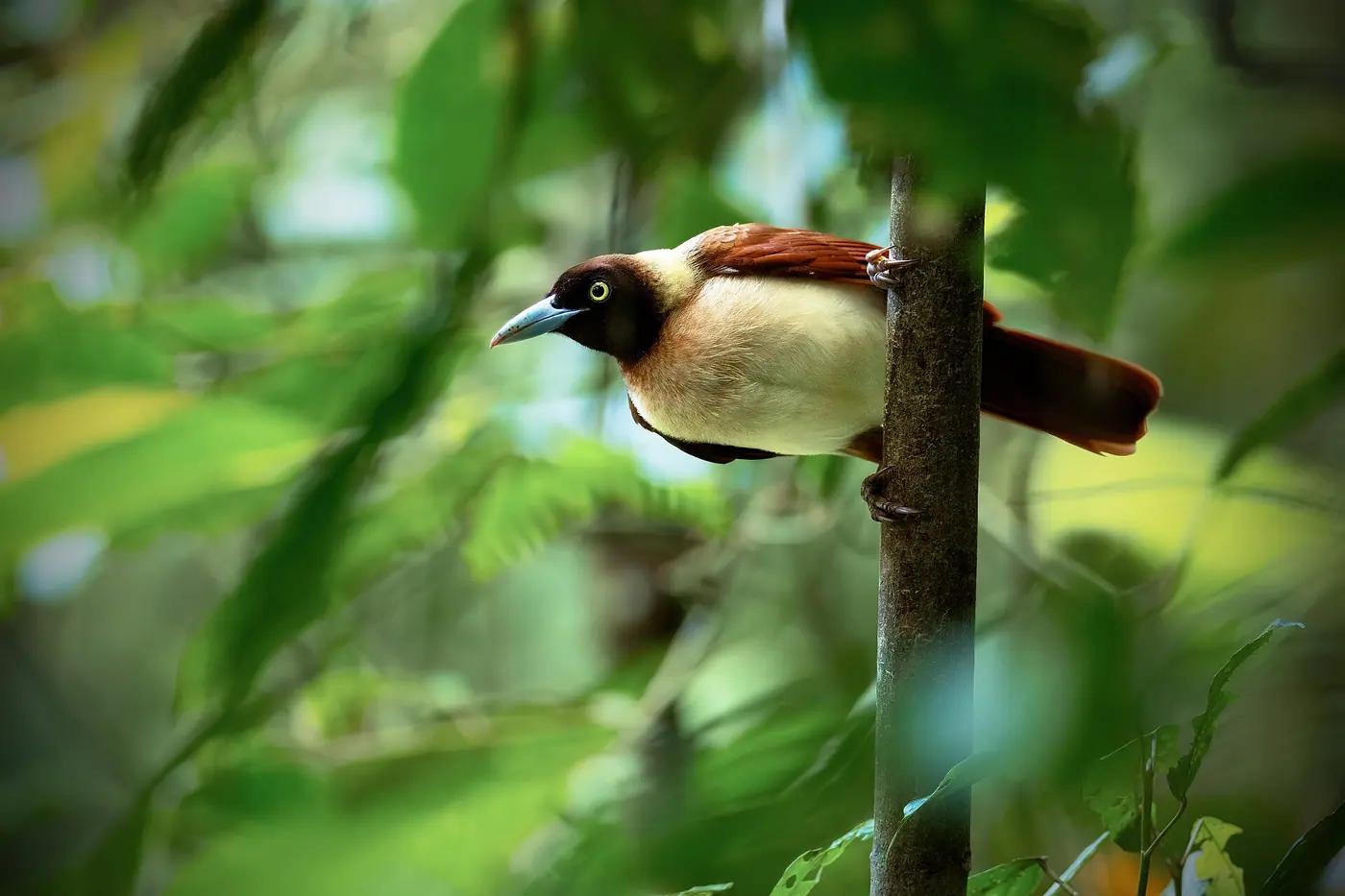
Lesser Bird-of-paradiseC
Males display in groups in tall lowland trees at Nimbokrang near Jayapura and around Klasow valley east of Sorong, cackling and shaking yellow plumes.
Spotting note: Reliable at known display trees at dawn with a local guide.
Read species guide
Magnificent Bird-of-paradiseC
Clears a display court on the forest floor in the Arfak foothills, where hides at Syioubri and Mokwam let you watch from a few metres.
Spotting note: Regular from the Arfak hides between 6 and 8 am.
Read species guide
King Bird-of-paradiseC
A tiny crimson bird that displays in vine tangles in the lowland forest around Nimbokrang and Sorong.
Spotting note: Uncommon; guides know individual display vines.
Read species guide
Twelve-wired Bird-of-paradiseC
Displays on bare dead trunks in the Nimbokrang swamp forest at first light, wiping its wire plumes across the female.
Spotting note: Regular at Nimbokrang with a pre-dawn start.
Read species guide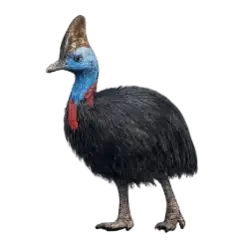
Southern CassowaryA
Wild cassowaries walk the lowland forest of Wasur and the Lorentz coast and are kept in Papuan villages; AnimalDex users have logged them in Sumatra and Java zoos.
Spotting note: Wild sightings rare and slightly dangerous; village birds and zoo birds are the usual capture.
Read species guide
Victoria Crowned PigeonC
The largest pigeon on earth walks the forest floor of Papua's northern lowlands around Nimbokrang and Biak.
Spotting note: Uncommon and shy; booming calls give it away.
Read species guide
Western Crowned PigeonC
The Vogelkop peninsula's own crowned pigeon forages under the trees of the Klasow valley and lowland Sorong forest.
Spotting note: Uncommon; best around Klasow and Waigeo lowlands.
Read species guide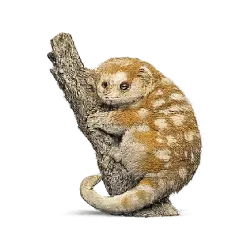
Spotted CuscusC
A slow, round-faced marsupial that dozes in village fruit trees and mangroves across lowland Papua, logged by users at Indonesian zoos.
Spotting note: Fairly common; spotlight fruiting trees at night.
Read species guide
Short-beaked EchidnaD
Echidnas snuffle through the Wasur savanna and Trans-Fly grasslands near Merauke, Indonesia's slice of Australian wildlife.
Spotting note: Rare; dusk drives at Wasur in the dry season.
Read species guide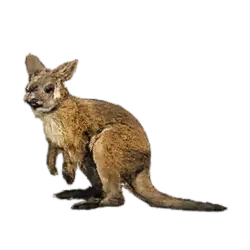
Agile WallabyC
Mobs of wallabies graze the Wasur National Park grasslands at dusk, the only kangaroo relatives you can see in Indonesia in the open.
Spotting note: Common at Wasur from July to November.
Read species guide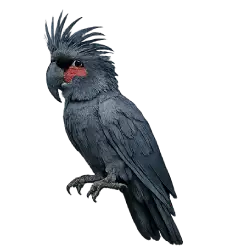
Palm CockatooB
Huge black cockatoos with red cheek patches drum on hollow trees with sticks in the lowland forest of Wasur and the south coast.
Spotting note: Uncommon; most reliable at Wasur and Lorentz lowlands.
Read species guide
Green Tree PythonC
Coils on branches in lowland and hill forest from Sorong to Biak, bright green as an adult and yellow or red as a juvenile.
Spotting note: Rare by day; night walks with a guide give a real chance.
Read species guide Saltwater CrocodileA
The Mamberamo, Digul and Lorentz rivers hold some of the largest crocodile populations left in the region.
Spotting note: Common in lowland rivers; seen from boats in Lorentz and Wasur.
Read species guide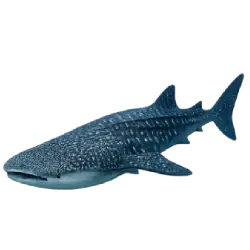
Whale SharkA
In Cenderawasih Bay whale sharks hang under bagan fishing platforms year-round, taking anchovies the fishermen throw to them.
Spotting note: Near-guaranteed at Kwatisore in Cenderawasih Bay by liveaboard or from Nabire.
Read species guideBest for
Use this section to decide whether the location fits your travel style, skill level, and AnimalDex goals.
- Birds-of-paradise hides in the Arfak mountains and Nimbokrang
- Whale sharks in Cenderawasih Bay
- Marsupials and wallabies at Wasur National Park
- Reef diving in Raja Ampat
Spotting tips
These tips are meant to make the page useful in the field, not just readable on the page.
- 01Arrange hides through village guides at Mokwam or Syioubri above Manokwari; you sleep in the village and sit in the hide before 5.30 am.
- 02Nimbokrang, two hours from Jayapura, covers lowland birds-of-paradise and crowned pigeons; book a local guide well ahead.
- 03Carry passport copies and ask your guide whether the district still wants a surat jalan police permit; rules change and interior checkpoints still ask.
- 04Wasur near Merauke is a dry-season park (July to November); in the wet it floods and the roads close.
Virtual Wildlife Guides
Wildlife guides to Papua
AnimalDex builds virtual guides from explorers' own wild sightings: which animals they found, how rare they are, and when. A guide is advice from someone who has been there, not a tour. Buying one unlocks the author's notes for every animal, a chat with the author, and introductions to local people they met. Wildlife is never guaranteed.
Checking for virtual guides to Papua...
How to choose a local wildlife guide in Papua
- Ask what they usually find in the season you are visiting. A good guide gives an honest answer, not a promised sighting.
- Check how they treat animals: no baiting, calling in, handling, or close flash photography for a better shot.
- Confirm the meeting area, duration, group size, total price, and how you pay before the day, plus any permits or park fees the place requires.
Track the animals you find in Papua
Build your collection while you travel through Papua, from easy wins to the species worth planning around.
Related locations
Keep exploring with nearby or similar destinations that support the same kind of AnimalDex discovery.
Animals in Raja Ampat: What You Can Spot, Learn, and Collect
Raja Ampat wildlife guide: reef mantas at Manta Sandy, walking sharks and wobbegongs, record reef fish counts, and red and Wilson's birds-of-paradise on Waigeo.
Read location guideAnimals in the Maluku Islands: What You Can Spot, Learn, and Collect
Maluku wildlife guide: Wallace's standardwing on Halmahera, umbrella and salmon-crested cockatoos, red lories on Ambon, and the sea kraits of the Banda islands.
Read location guideAnimals in Indonesia: What You Can Spot, Learn, and Collect
A practical guide to animals in Indonesia, from accessible birds and coastal wildlife to headline species that make the country one of the world's strongest wildlife-travel destinations.
Read location guideLocation FAQ
Short direct answers to the questions travelers usually ask before choosing a wildlife destination or zoo day.
What wildlife is there in Papua?
Indonesian Papua has birds-of-paradise, cassowaries, crowned pigeons, palm cockatoos, tree kangaroos, cuscus, echidnas and wallabies on land, plus saltwater crocodiles in its rivers and whale sharks, mantas and reef fish in Cenderawasih Bay and Raja Ampat.
What animals can be found in Papua?
The animals are Australian in character: marsupials such as spotted cuscus and agile wallabies, egg-laying echidnas, and birds including lesser, magnificent, king and twelve-wired birds-of-paradise. Green tree pythons and crocodiles are the notable reptiles.
Where can you see birds-of-paradise in Papua?
The Arfak mountains above Manokwari (Mokwam and Syioubri hides) for magnificent and other montane species, Nimbokrang near Jayapura for lesser and twelve-wired, and Waigeo in Raja Ampat for red and Wilson's. All use village guides and dawn hides.
Do I need a permit to travel in Papua?
It depends where you go. The surat jalan police permit has been formally relaxed but interior districts still ask for it, and guides in Jayapura, Manokwari or Sorong can arrange one. Raja Ampat and the main towns need only the marine park fee or no permit at all.
How do I find a wildlife guide to Papua?
Check the Wildlife Guides section on this page or browse Wildlife Guides on AnimalDex. Each one is a virtual guide built from an explorer's own wild sightings around Papua: the animals they found, how rare they are, and when. It is advice from someone who has been there, not a tour. If you want someone with you on the day, compare local guides on wildlife knowledge, how they treat animals, and clear pricing before you go.