

Animals in Alabama: What You Can Spot, Learn, and Collect
Alabama wildlife guide: alligators and gar in the Mobile-Tensaw Delta, Dauphin Island spring migration, gopher tortoises and indigo snakes in the pine woods, and the squirrels and hornets of Prattville backyards.
Quick answer
Start with the direct answer, then use the sections below to see why the location matters and which animals are actually realistic to spot there.
Alabama's richest wildlife sits in the Mobile-Tensaw Delta, a 250,000-acre swamp with alligators, alligator gar, black bears and ospreys, and on Dauphin Island, where exhausted spring migrants drop into the first trees after crossing the Gulf. Statewide you get white-tailed deer, turkeys, armadillos and fox squirrels, with gopher tortoises and reintroduced indigo snakes in the southern pine woods.
Alabama is quietly one of the most biodiverse states in the country, with more freshwater fish, turtle and mussel species than anywhere else in North America. Most of that lives in the rivers that converge on Mobile Bay.
The Prattville and Autauga County area north of Montgomery is typical of the state's everyday wildlife: fox squirrels in the pecans, Muscovy ducks on the mill pond, wolf spiders and hornets in the garden, and deer on the edge of every field. AnimalDex users there have even logged a vinegaroon.
Start with these animals
Why this location matters
Good location pages explain why the place is worth your time, not just which names belong on a destination checklist.
Dauphin Island is a Globally Important Bird Area for one reason: it is the first land that trans-Gulf migrants reach in April. After a north wind, the Shell Mounds and Audubon Sanctuary fill with warblers, buntings, orioles and hummingbirds in a single morning.
The eastern indigo snake, North America's longest native snake, had vanished from Alabama by the 1950s. Releases in Conecuh National Forest since 2010 have brought it back, and wild-hatched young were confirmed in 2020.
Where to look
Wildlife map of Alabama
This guide covers the region shown below. Zoom in to get your bearings before planning a trip.
Positions are geocoded from OpenStreetMap. Habitat access and opening times change — check locally before travelling. Smaller pins are public AnimalDex captures, placed to the nearest kilometre.
Field proof
Found in Alabama by AnimalDex users
Real captures logged in the AnimalDex app inside this area and shared publicly by their collectors, with the animal confirmed by the app's identification. Places are shown to the nearest region, never the exact spot.
- 12
- public captures
- 11
- species recorded
- 1
- collectors
- 10
- wild sightings
Recent captures from the field
Species people have actually logged here
Every name links to its species guide. The count is how many public captures of that animal sit inside this area.
Collectors choose to share these captures on Discover and can withdraw them at any time. Coordinates are rounded to about a kilometre and refreshed with each site build.
Animals to spot
These are intentionally practical species picks, balancing accessibility, excitement, and what travelers can realistically notice in the location.
American AlligatorB
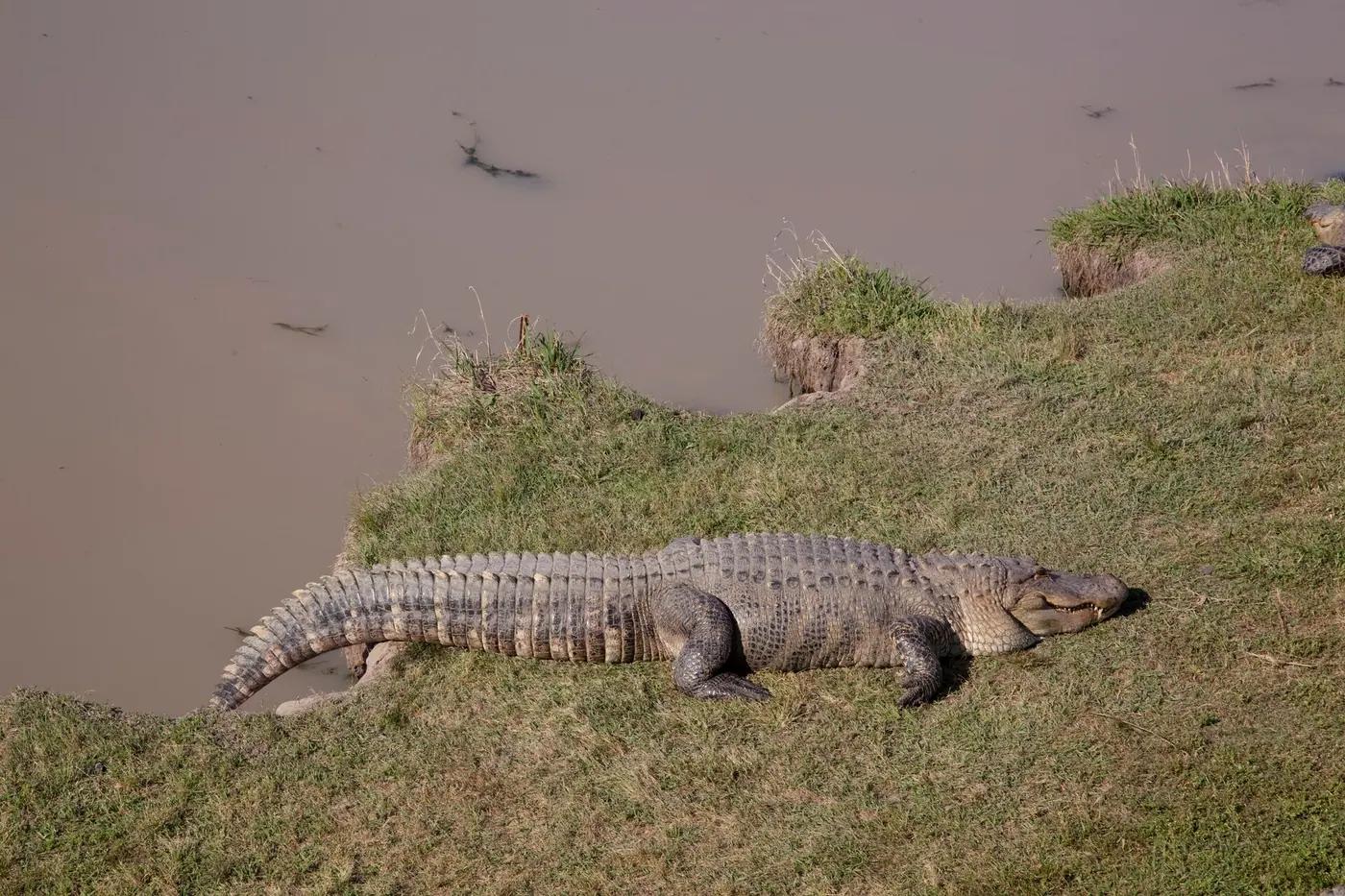
The Mobile-Tensaw Delta is Alabama's alligator heartland; the Five Rivers Delta Resource Center boat tours and the causeway pullouts along US 90 and 98 give easy views.
Spotting note: Near-guaranteed in the Delta from April to October.
Read species guide
Gopher TortoiseD
The keystone species of the longleaf pine sandhills digs its burrows in Conecuh National Forest and Geneva State Forest in the south, sheltering hundreds of other animals.
Spotting note: Common in southern pine sandhills on warm mornings; look for the half-moon burrow mouths.
Read species guide
Eastern Indigo SnakeC
Reintroduced to Conecuh National Forest from 2010, where it shelters in gopher tortoise burrows and now breeds in the wild again.
Spotting note: Rare; a spring day in Conecuh gives a slim chance, and the snake is protected and harmless.
Read species guide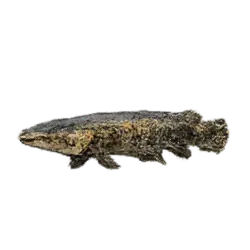
Alligator GarB
Fish over two metres long roll at the surface of the Mobile Delta's backwaters, and the state record came from the Alabama River.
Spotting note: Uncommon to see; watch calm Delta sloughs in summer for surfacing fish.
Read species guide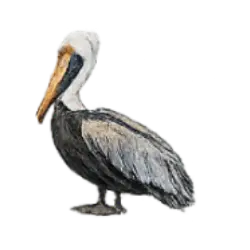
Brown PelicanC
Lines the Dauphin Island fishing pier and the Gulf State Park pier at Gulf Shores, diving beside the anglers.
Spotting note: Guaranteed on the Gulf coast.
Read species guide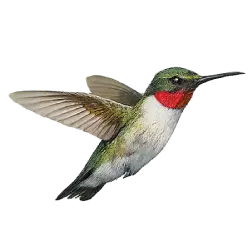
Ruby-throated HummingbirdD
Arrives on Dauphin Island in April straight from Yucatan, and Fort Morgan runs public hummingbird banding in autumn as the birds fatten before the return crossing.
Spotting note: Common from April to October; the Fort Morgan banding days are a highlight.
Read species guide
White-tailed DeerC
Alabama has one of the densest deer populations in the country, standing in Autauga County soybean fields and Black Belt pastures at dusk.
Spotting note: Guaranteed statewide at dawn and dusk.
Read species guide
Wild TurkeyD
The state game bird gobbles across the Black Belt and the Talladega National Forest each spring, and crosses county roads in flocks of a dozen or more.
Spotting note: Common; most visible in March and April.
Read species guide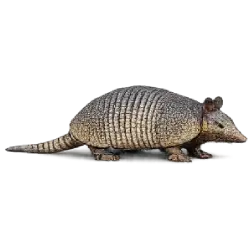
Nine-banded ArmadilloD
Has spread north through the whole state since the 1990s and roots through Prattville lawns and roadside ditches after dark.
Spotting note: Common at night; look for freshly dug cone-shaped holes in the grass.
Read species guide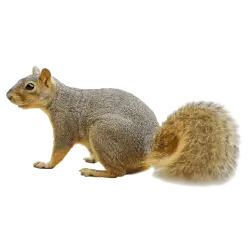
Fox SquirrelD
The big, variably coloured squirrel of Alabama pecan orchards and pine woods, logged by AnimalDex users in Autauga County and across the state.
Spotting note: Common in open pine and pecan country.
Read species guide Muscovy DuckD
Feral Muscovy ducks loaf around Prattville's Creek Walk and most small-town ponds in central Alabama, warty faces and all.
Spotting note: Guaranteed on town ponds; a tier-E capture that still counts.
Read species guide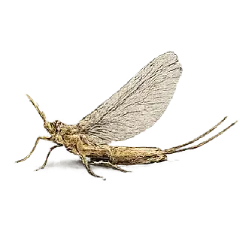
Giant Burrowing MayflyE
Hatches off the Tennessee River and Wheeler Lake in summer, carpeting bridge lights in Decatur and Guntersville overnight.
Spotting note: Seasonal; check riverfront lights on warm nights from June to August.
Read species guide
Bald-faced HornetE
Builds grey paper nests in central Alabama trees and visits flowers and dropped fruit in late summer gardens.
Spotting note: Common from July to October; keep clear of the nest.
Read species guide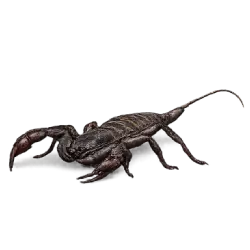
VinegaroonE
A whip scorpion that sprays acetic acid when alarmed. Its normal range is Texas, the Southwest and Florida, so the single Alabama capture logged by an AnimalDex user is a notable record rather than something to plan around.
Spotting note: Exceptional in Alabama; if you find one under a board or log on a humid night, photograph it and note the location.
Read species guideBest for
Use this section to decide whether the location fits your travel style, skill level, and AnimalDex goals.
- Alligators, gar and ospreys in the Mobile-Tensaw Delta
- Spring songbird fallouts on Dauphin Island
- Gopher tortoises and indigo snakes in the longleaf pine woods
- Everyday backyard wildlife in the Prattville and Montgomery area
Spotting tips
These tips are meant to make the page useful in the field, not just readable on the page.
- 01Book a Delta boat tour from the Five Rivers Delta Resource Center in Spanish Fort, or paddle the Bartram Canoe Trail; alligators, ospreys and gar are closest from the water.
- 02On Dauphin Island, check the wind: a north or northwest wind in April grounds migrants in the Shell Mound Park and Audubon Bird Sanctuary trees by late morning.
- 03Walk Conecuh National Forest's Open Pond or Blue Lake trails in spring on a warm morning for gopher tortoises; stay on the trail and leave burrows undisturbed.
- 04In towns like Prattville, leave a porch light on in summer and check pecan trees at dawn; squirrels, hornets, wolf spiders and moths make up most Alabama captures.
Virtual Wildlife Guides
Wildlife guides to Alabama
AnimalDex builds virtual guides from explorers' own wild sightings: which animals they found, how rare they are, and when. A guide is advice from someone who has been there, not a tour. Buying one unlocks the author's notes for every animal, a chat with the author, and introductions to local people they met. Wildlife is never guaranteed.
Checking for virtual guides to Alabama...
How to choose a local wildlife guide in Alabama
- Ask what they usually find in the season you are visiting. A good guide gives an honest answer, not a promised sighting.
- Check how they treat animals: no baiting, calling in, handling, or close flash photography for a better shot.
- Confirm the meeting area, duration, group size, total price, and how you pay before the day, plus any permits or park fees the place requires.
Track the animals you find in Alabama
Build your collection while you travel through Alabama, from easy wins to the species worth planning around.
Related locations
Keep exploring with nearby or similar destinations that support the same kind of AnimalDex discovery.
Animals in the United States: What You Can Spot, Learn, and Collect
A practical United States wildlife guide built around habitat variety, from wetlands and coastlines to migration corridors and iconic American species.
Read location guideAnimals in Florida: What You Can Spot, Learn, and Collect
Florida wildlife guide: Everglades alligators and crocodiles, manatees at Crystal River and Blue Spring, roseate spoonbills, Kissimmee eagles, nesting sea turtles and the anoles on every fence.
Read location guideAnimals in Georgia (USA): What You Can Spot, Learn, and Collect
Georgia wildlife guide: Okefenokee alligators and sandhill cranes, Cumberland Island's loggerhead turtles and wild horses, gopher tortoises, Atlanta's backyard birds and the Georgia Aquarium's whale sharks.
Read location guideLocation FAQ
Short direct answers to the questions travelers usually ask before choosing a wildlife destination or zoo day.
What wildlife is there in Alabama?
Alligators, alligator gar, black bears and ospreys in the Mobile-Tensaw Delta; white-tailed deer, turkeys, armadillos, coyotes and fox squirrels statewide; gopher tortoises and eastern indigo snakes in the southern pine woods; and spectacular spring songbird migration on Dauphin Island.
What animals can be found in Alabama's Mobile-Tensaw Delta?
Alligators by the dozen, alligator gar, river otters, a small black bear population, ospreys, bald eagles, swallow-tailed kites in summer, and a huge diversity of turtles and fish. Boat tours leave from Spanish Fort.
Are there alligators in Alabama?
Yes, mainly in the southern third of the state: the Mobile-Tensaw Delta, Eufaula National Wildlife Refuge and the Gulf coast bayous. They are most active from April to October.
When is the best time for birds on Dauphin Island?
The first three weeks of April, especially the morning after a cold front with north winds, when trans-Gulf migrants land exhausted in the first trees they reach.
Have AnimalDex users found animals in Alabama?
Yes. AnimalDex users have publicly logged 12 captures of 11 different species in Alabama, including domestic goose, bald-faced hornet, black ant, carolina wolf spider. Each one was photographed in the app at the moment of the sighting.
How do I find a wildlife guide to Alabama?
Check the Wildlife Guides section on this page or browse Wildlife Guides on AnimalDex. Each one is a virtual guide built from an explorer's own wild sightings around Alabama: the animals they found, how rare they are, and when. It is advice from someone who has been there, not a tour. If you want someone with you on the day, compare local guides on wildlife knowledge, how they treat animals, and clear pricing before you go.