

Animals in Flores: What You Can Spot, Learn, and Collect
Flores wildlife guide: wild Komodo dragons at Wae Wuul, Riung flying foxes, Flores hawk-eagles over Kelimutu, rusa deer, macaques and pit vipers along the road.

Quick answer
Start with the direct answer, then use the sections below to see why the location matters and which animals are actually realistic to spot there.
Flores is the gateway to Komodo and has its own wild Komodo dragons in the Wae Wuul reserve and around Pota in the north. Along the Trans-Flores road expect rusa deer, long-tailed macaques, water monitors, brahminy kites and Sundas pit vipers, while Riung's Seventeen Islands have a flying-fox colony that fills the sky at dusk.
Flores is 350 kilometres of volcanoes between Labuan Bajo in the west and Larantuka in the east, with Kelimutu's three coloured crater lakes near Moni as the centrepiece. It is drier and more open than Java or Bali, which makes the wildlife easier to see.
The famous animals live on the edges: Komodo dragons in the western reserves and the north coast, flying foxes and reef fish at Riung, and sperm and blue whales in the straits off the far east. Inland, the Ruteng forest and the Mbeliling hills above Labuan Bajo are where the island's endemic birds live.
Why this location matters
Good location pages explain why the place is worth your time, not just which names belong on a destination checklist.
Flores still has wild Komodo dragons outside the national park, a population that is declining and poorly protected compared with Komodo and Rinca.
Several birds exist only on Flores and its closest neighbours, including the Flores hawk-eagle, Flores monarch and Flores crow, and the island's dry forest is being cleared for cashew and candlenut.
Where to look
Wildlife map of Flores
This guide covers the region shown below. Zoom in to get your bearings before planning a trip.
Positions are geocoded from OpenStreetMap. Habitat access and opening times change — check locally before travelling. Smaller pins are public AnimalDex captures, placed to the nearest kilometre.
Field proof
Found in Flores by AnimalDex users
Real captures logged in the AnimalDex app inside this area and shared publicly by their collectors, with the animal confirmed by the app's identification. Places are shown to the nearest region, never the exact spot.
- 3
- public captures
- 3
- species recorded
- 1
- collectors
- 3
- wild sightings
Recent captures from the field
Species people have actually logged here
Every name links to its species guide. The count is how many public captures of that animal sit inside this area.
Collectors choose to share these captures on Discover and can withdraw them at any time. Coordinates are rounded to about a kilometre and refreshed with each site build.
Animals to spot
These are intentionally practical species picks, balancing accessibility, excitement, and what travelers can realistically notice in the location.
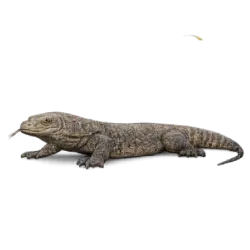
Komodo DragonA
Wild dragons still live on Flores itself in the Wae Wuul reserve south of Labuan Bajo and around Pota and Riung on the north coast, hunting deer and goats.
Spotting note: Uncommon on Flores; Wae Wuul needs a ranger and luck, Rinca is the reliable option.
Read species guide
Large Flying FoxD
A huge colony roosts in the mangroves of Pulau Ontoloe in Riung's Seventeen Islands park and streams out over the boats at dusk.
Spotting note: Guaranteed on a Riung sunset boat trip.
Read species guide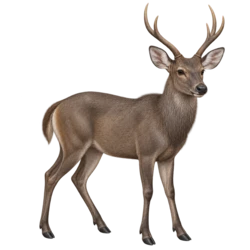
Javan Rusa DeerC
Timor deer graze the dry grassland of western Flores and are the main prey of the island's dragons.
Spotting note: Fairly common around Wae Wuul and the north coast at dawn.
Read species guide
Long-tailed MacaqueC
Troops sit on the Trans-Flores road hairpins near Ruteng and raid the fruit stalls at Bajawa; logged by users in East Nusa Tenggara.
Spotting note: Common along roads and at waterfalls.
Read species guide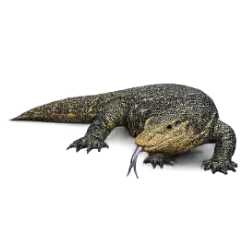
Water MonitorC
Big monitors forage along the Riung mangroves and the river mouths at Maumere and Labuan Bajo.
Spotting note: Common on the coast.
Read species guide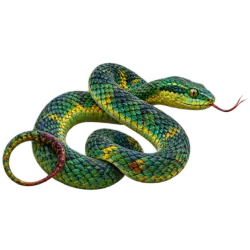
Sundas Pit ViperC
The green pit viper of the Lesser Sundas coils in bamboo and coffee bushes around Bajawa and Moni after dark.
Spotting note: Uncommon; night walks near villages, and never handle it.
Read species guide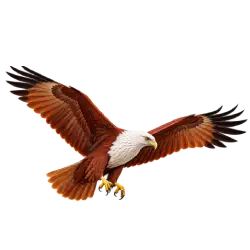
Brahminy KiteD
Chestnut kites patrol every harbour and fish market from Labuan Bajo to Maumere, and are a frequent East Nusa Tenggara capture.
Spotting note: Guaranteed on the coast.
Read species guide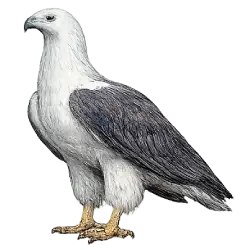
White-bellied Sea EagleB
Nests on the sea cliffs of the Seventeen Islands and fishes the bays around Maumere.
Spotting note: Regular on boat trips.
Read species guide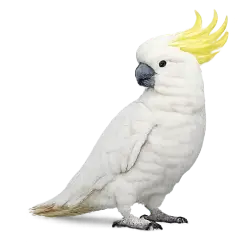
Sulphur-crested CockatooC
Flores's small yellow-crested cockatoos, filed in AnimalDex under their larger cousin, survive in a few dry-forest pockets near Riung and in the Mbeliling hills.
Spotting note: Rare and Critically Endangered; most reliable on Komodo and Rinca.
Read species guide
Edible-nest SwiftletD
Swiftlets pour out of limestone caves near Riung and Maumere and are farmed in concrete nest-houses along the coast, as users in NTT have logged.
Spotting note: Common at dusk near caves and nest-houses.
Read species guide
Wild BoarB
Pigs root through the dry forest of Wae Wuul and the Mbeliling foothills and are the dragons' other main meal.
Spotting note: Common but shy; look for churned ground.
Read species guide
Spinner DolphinA
Pods ride the bow waves of boats crossing from Labuan Bajo to Komodo and off Maumere bay.
Spotting note: Regular on morning crossings.
Read species guide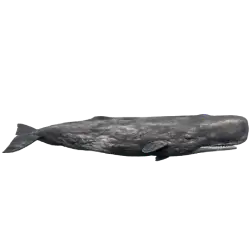
Sperm WhaleS
The Lamalera whalers of Lembata, just east of Flores, still hunt sperm whales by hand; the whales migrate through the Savu Sea from May to October.
Spotting note: Seasonal; boat trips from Lamalera or Larantuka between May and October.
Read species guide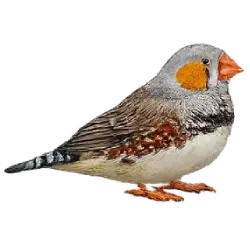
Zebra FinchD
Wild Timor zebra finches, the species behind every pet-shop bird, hop through the dry grass of eastern Flores and Lembata.
Spotting note: Common in dry open country in the east.
Read species guideBest for
Use this section to decide whether the location fits your travel style, skill level, and AnimalDex goals.
- Flying-fox sunsets at Riung's Seventeen Islands
- Wild Komodo dragons outside the national park
- Trans-Flores road trips with roadside macaques and deer
- Whale watching in the Savu Sea from Lembata
Spotting tips
These tips are meant to make the page useful in the field, not just readable on the page.
- 01Riung boat trips leave around 9 am for snorkelling and return past the flying-fox island at 5.30 pm; insist the boatman stays until the bats fly.
- 02Wae Wuul reserve is 20 km from Labuan Bajo by motorbike; register at the BBKSDA office first and take a ranger.
- 03Drive the Trans-Flores road early; macaques and deer cross before 8 am and the mist lifts off Ruteng's forest for birds.
- 04The Mbeliling hills above Labuan Bajo hold Flores's endemic birds; Puarlolo at dawn is the standard spot.
Virtual Wildlife Guides
Wildlife guides to Flores
AnimalDex builds virtual guides from explorers' own wild sightings: which animals they found, how rare they are, and when. A guide is advice from someone who has been there, not a tour. Buying one unlocks the author's notes for every animal, a chat with the author, and introductions to local people they met. Wildlife is never guaranteed.
Checking for virtual guides to Flores...
How to choose a local wildlife guide in Flores
- Ask what they usually find in the season you are visiting. A good guide gives an honest answer, not a promised sighting.
- Check how they treat animals: no baiting, calling in, handling, or close flash photography for a better shot.
- Confirm the meeting area, duration, group size, total price, and how you pay before the day, plus any permits or park fees the place requires.
Track the animals you find in Flores
Build your collection while you travel through Flores, from easy wins to the species worth planning around.
Related locations
Keep exploring with nearby or similar destinations that support the same kind of AnimalDex discovery.
Animals in Labuan Bajo: What You Can Spot, Learn, and Collect
Labuan Bajo wildlife guide: Komodo dragons on Rinca, mantas at Manta Point, flying foxes at Kalong island, Padar deer, and the kites and monitors of the harbour.
Read location guideAnimals in Komodo National Park: What You Can Realistically Spot
A structured guide to Komodo National Park focused on what visitors can realistically spot, from Komodo dragons and marine life to smaller species that reward patient observation.
Read location guideAnimals in East Nusa Tenggara: What You Can Spot, Learn, and Collect
East Nusa Tenggara wildlife guide: Komodo dragons, Timor deer, Kupang Bay crocodiles, Savu Sea sperm and blue whales, Alor dugongs, lorikeets and swiftlets.
Read location guideLocation FAQ
Short direct answers to the questions travelers usually ask before choosing a wildlife destination or zoo day.
What wildlife is there in Flores?
Flores has wild Komodo dragons in its western and northern reserves, Timor rusa deer, wild boar, macaques, water monitors, flying foxes, pit vipers and endemic birds such as the Flores hawk-eagle. Dolphins and, in season, sperm and blue whales pass through the straits at either end.
What animals can be found in Flores?
Along the main road you will see long-tailed macaques, brahminy kites and rusa deer. Riung has a flying-fox colony and reef fish, Wae Wuul has dragons, and the Mbeliling and Ruteng forests hold the island's endemic birds.
Are there Komodo dragons on Flores island itself?
Yes, but far fewer than on Komodo and Rinca. Wild dragons survive in the Wae Wuul reserve near Labuan Bajo and along the north coast around Pota and Riung. Sightings are not guaranteed, so most visitors go to Rinca.
When is the best time to visit Flores for wildlife?
The dry season from April to October gives easy roads, clear boat trips and concentrated wildlife at waterholes. Whale watching off Lembata runs May to October.
Have AnimalDex users found animals in Flores?
Yes. AnimalDex users have publicly logged 3 captures of 3 different species in Flores, including long-spined sea urchin, long-tailed macaque, pagoda cup coral. Each one was photographed in the app at the moment of the sighting.
How do I find a wildlife guide to Flores?
Check the Wildlife Guides section on this page or browse Wildlife Guides on AnimalDex. Each one is a virtual guide built from an explorer's own wild sightings around Flores: the animals they found, how rare they are, and when. It is advice from someone who has been there, not a tour. If you want someone with you on the day, compare local guides on wildlife knowledge, how they treat animals, and clear pricing before you go.