

Animals in Penang: What You Can Spot, Learn, and Collect
Penang wildlife: dusky leaf monkeys and giant squirrels on Penang Hill, otters at Gurney Drive, sea eagles and turtles in the national park, Entopia's butterflies.
Quick answer
Start with the direct answer, then use the sections below to see why the location matters and which animals are actually realistic to spot there.
Penang island has dusky leaf monkeys and black giant squirrels on Penang Hill and in the Botanic Gardens, smooth-coated otters fishing off Gurney Drive and in the national park's mangroves, white-bellied sea eagles over Teluk Bahang and green turtles nesting at Pantai Kerachut. The mainland mudflats at Teluk Air Tawar add mudskippers and migratory shorebirds, and Entopia at Teluk Bahang is the place for butterflies up close.
Penang is best known for food and heritage shophouses, but the northwest corner of the island is a national park, the central spine is forested hill and the mainland shore is mudflat and mangrove. Wildlife here is a half-day add-on to a city trip rather than an expedition, which is exactly what makes it worth planning.
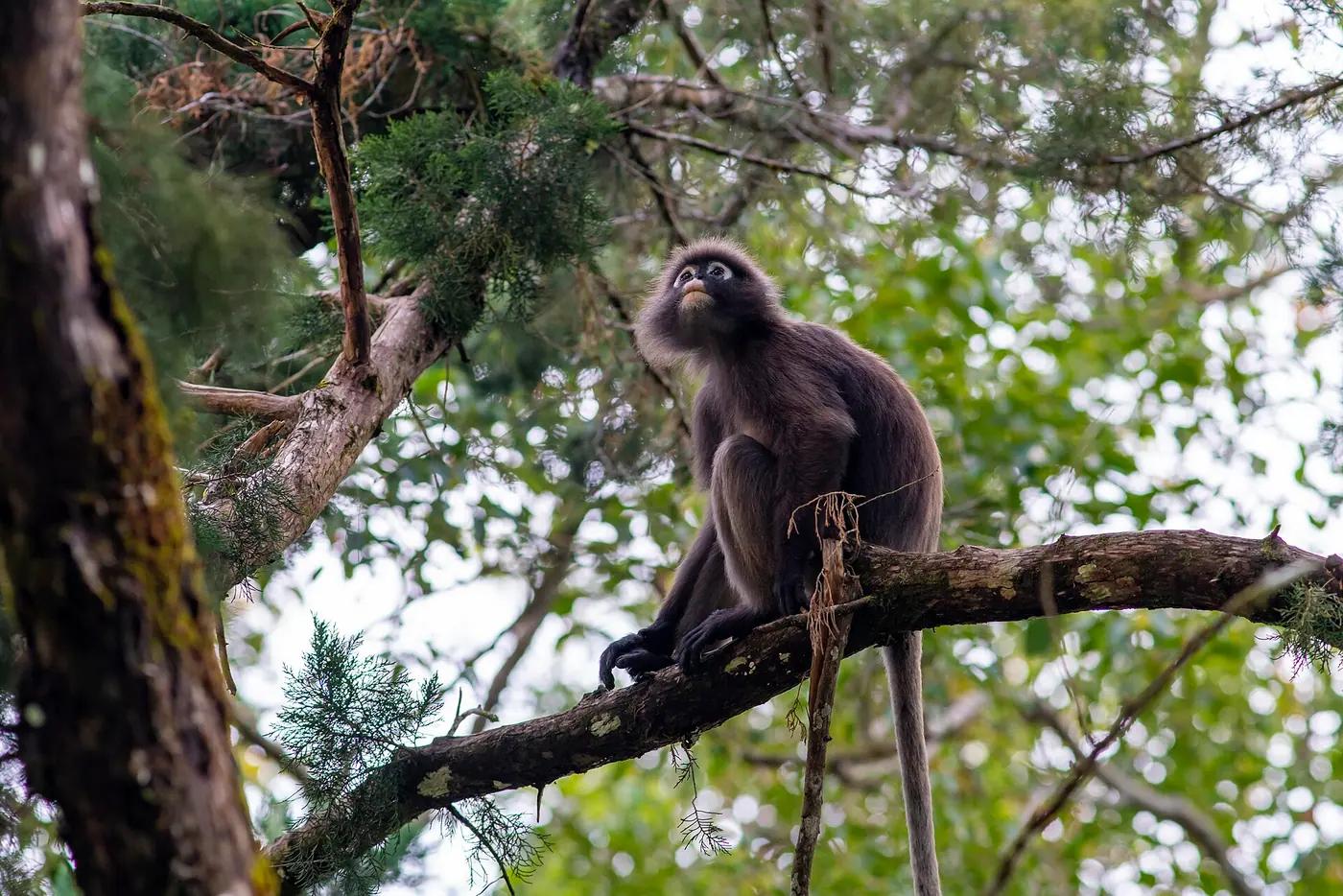
The island's star is the dusky leaf monkey, a grey langur with white eye-rings that lives in the trees above Penang Hill's funicular station and the Botanic Gardens' edges. Otters, giant squirrels, hornbills and sea eagles round out a list that feels far too good for an island of 700,000 people.
Why this location matters
Good location pages explain why the place is worth your time, not just which names belong on a destination checklist.
Penang's wildlife survives in a tight ring of protected hill and coast around a dense city. The Habitat on Penang Hill and the national park's turtle centre both depend on visitor numbers, and what people log there feeds straight back into the case for keeping the hill forest unbuilt.
The mainland mudflats at Teluk Air Tawar are an East Asian-Australasian Flyway stopover under constant reclamation pressure. Shorebird counts there matter well beyond Malaysia.
Where to look
Wildlife map of Penang
This guide covers the region shown below. Zoom in to get your bearings before planning a trip.
Positions are geocoded from OpenStreetMap. Habitat access and opening times change — check locally before travelling. Smaller pins are public AnimalDex captures, placed to the nearest kilometre.
Field proof
Found in Penang by AnimalDex users
Real captures logged in the AnimalDex app inside this area and shared publicly by their collectors, with the animal confirmed by the app's identification. Places are shown to the nearest region, never the exact spot.
- 4
- public captures
- 4
- species recorded
- 1
- collectors
- 4
- wild sightings
Recent captures from the field
Species people have actually logged here
Every name links to its species guide. The count is how many public captures of that animal sit inside this area.
Collectors choose to share these captures on Discover and can withdraw them at any time. Coordinates are rounded to about a kilometre and refreshed with each site build.
Animals to spot
These are intentionally practical species picks, balancing accessibility, excitement, and what travelers can realistically notice in the location.
Dusky Leaf MonkeyC
Troops feed in the canopy around the Penang Hill upper station, The Habitat's canopy walk and the Botanic Gardens, often with orange-furred infants in the early year.
Spotting note: Regular in the morning on Penang Hill; patient scanning of the treetops pays off.
Read species guide
Long-tailed MacaqueC
Macaques patrol the Botanic Gardens entrance and Monkey Beach in the national park, where they have learned to open bags and coolers.
Spotting note: Guaranteed; feeding them is illegal and fined.
Read species guide
Smooth-coated OtterC
A family of otters fishes the seawall at Gurney Drive and the Pulau Tikus shore at dawn, and others hunt the national park's mangroves at Teluk Bahang.
Spotting note: Regular at Gurney Drive just after first light, especially on a rising tide.
Read species guide
Black Giant SquirrelD
The big dark squirrel with a long bushy tail crashes through the canopy on Penang Hill and along the Moongate trail.
Spotting note: Uncommon; listen for falling fruit and heavy branch movement.
Read species guide
Sunda ColugoC
Colugos spend the day flattened against trunks on Penang Hill and in the Botanic Gardens, and glide between trees at dusk.
Spotting note: Uncommon; The Habitat's guides know the regular roost trunks.
Read species guide
White-bellied Sea EagleB
Pairs patrol the rocky coast of Penang National Park between Teluk Bahang and Muka Head, taking fish off the surface.
Spotting note: Regular from the coastal trail and the Muka Head lighthouse.
Read species guide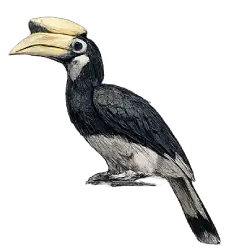
Oriental Pied HornbillC
Hornbills have spread across the island from the national park into Balik Pulau's orchards and the hill forest.
Spotting note: Uncommon; fruiting figs in the national park are the best bet.
Read species guide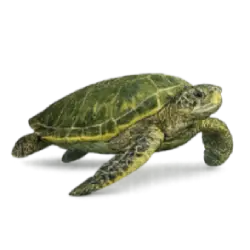
Green Sea TurtleC
Pantai Kerachut in the national park has a turtle conservation centre where green turtles nest and hatchlings are reared for release.
Spotting note: Nesting is seasonal (roughly April to August); hatchlings at the centre are near-certain.
Read species guide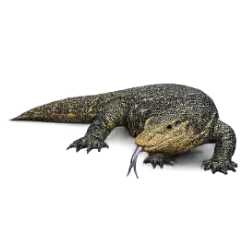
Water MonitorC
Monitors cruise the mangrove channels at Teluk Bahang, the Air Itam dam shore and the drains of George Town's outskirts.
Spotting note: Common near any water.
Read species guide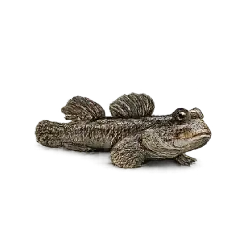
MudskipperE
Thousands skip across the Teluk Air Tawar mudflats and the national park's mangrove creeks at low tide, sparring and flagging their fins.
Spotting note: Abundant at low tide.
Read species guide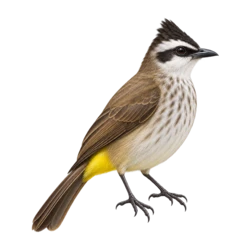
Yellow-vented BulbulE
The most-logged bird in Penang's captures, singing from garden hedges in George Town and every kampung on the island.
Spotting note: Very common.
Read species guide
Eurasian Tree SparrowE
The sparrow of Penang's coffee shops and hawker centres, logged by users in the city, hopping under tables for crumbs.
Spotting note: Guaranteed in any open-air eatery.
Read species guide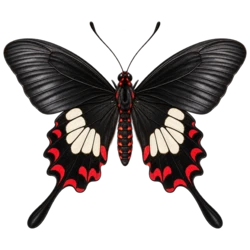
Common RoseE
A red-bodied swallowtail that flies in Entopia's garden dome at Teluk Bahang and wild through the island's hill gardens where its birthwort host grows.
Spotting note: Guaranteed at Entopia; regular wild on Penang Hill.
Read species guide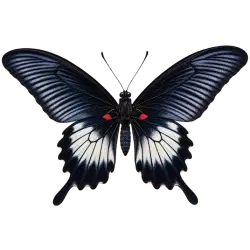
Great MormonE
A huge black swallowtail of Penang's citrus gardens and the Entopia dome, where several female forms fly together.
Spotting note: Common in gardens and guaranteed at Entopia.
Read species guideBest for
Use this section to decide whether the location fits your travel style, skill level, and AnimalDex goals.
- City-break travelers adding a morning of langurs and otters to the food tour
- Families: Entopia, The Habitat canopy walk and Monkey Beach by boat
- Birders working the Teluk Air Tawar mudflats in the northern winter
- Coastal hikers on the national park's Muka Head and Kerachut trails
Spotting tips
These tips are meant to make the page useful in the field, not just readable on the page.
- 01Ride the first funicular up Penang Hill and walk the Habitat's canopy walk before 10 am; langurs, giant squirrels and colugos are all more visible in the cool.
- 02Check the Gurney Drive seawall at sunrise for the otter family, especially on a rising tide when fish push in toward the rocks.
- 03Take the Teluk Bahang to Pantai Kerachut trail rather than the boat: sea eagles, monitors and hornbills along the way, turtles at the end.
- 04Visit Teluk Air Tawar on the mainland two hours before low tide between October and March for mudskippers, shorebirds and herons.
Virtual Wildlife Guides
Wildlife guides to Penang
AnimalDex builds virtual guides from explorers' own wild sightings: which animals they found, how rare they are, and when. A guide is advice from someone who has been there, not a tour. Buying one unlocks the author's notes for every animal, a chat with the author, and introductions to local people they met. Wildlife is never guaranteed.
Checking for virtual guides to Penang...
How to choose a local wildlife guide in Penang
- Ask what they usually find in the season you are visiting. A good guide gives an honest answer, not a promised sighting.
- Check how they treat animals: no baiting, calling in, handling, or close flash photography for a better shot.
- Confirm the meeting area, duration, group size, total price, and how you pay before the day, plus any permits or park fees the place requires.
Track the animals you find in Penang
Build your collection while you travel through Penang, from easy wins to the species worth planning around.
Related tier lists
These tier lists add broader context around the species that make this location interesting.
100 Most Agile Animals
Most agile animals ranked: turning, braking, and body control across land, air, and water — not a recycled fastest-animals list.
Read tier listRelated locations
Keep exploring with nearby or similar destinations that support the same kind of AnimalDex discovery.
Animals in Malaysia: What You Can Spot, Learn, and Collect
Malaysia wildlife guide: Malayan tigers and tapirs in Taman Negara, orangutans and proboscis monkeys in Sabah, hornbills at Belum, plus everyday macaques and monitors.
Read location guideAnimals in Kuala Lumpur: What You Can Spot, Learn, and Collect
Wildlife in Kuala Lumpur: macaques at Batu Caves, dusky leaf monkeys under the KL Tower, colugos at FRIM, monitors in the Lake Gardens and Zoo Negara's tigers.
Read location guideAnimals in Thailand: What You Can Spot, Learn, and Collect
A practical Thailand wildlife guide built around forests, coasts, reptiles, and the travel-friendly species that make the country feel biologically rewarding without extreme logistics.
Read location guideLocation FAQ
Short direct answers to the questions travelers usually ask before choosing a wildlife destination or zoo day.
What wildlife is there in Penang?
Dusky leaf monkeys, long-tailed macaques, black giant squirrels, colugos and civets in the hill forest; smooth-coated otters at Gurney Drive and the national park; white-bellied sea eagles, hornbills and green turtles on the northwest coast; and mudskippers, crabs and shorebirds on the mainland mudflats.
What animals can be found in Penang?
Langurs, macaques, otters, giant squirrels, colugos, flying foxes, monitors, sea eagles, brahminy kites, hornbills, kingfishers, bulbuls, sea turtles, mudskippers and a rich butterfly fauna. Entopia at Teluk Bahang and the Habitat on Penang Hill are the two managed sites worth adding.
Where can I see monkeys in Penang?
Dusky leaf monkeys on Penang Hill around the upper station and The Habitat, and in the Botanic Gardens' forest edge. Long-tailed macaques are everywhere in the Botanic Gardens and at Monkey Beach in Penang National Park.
Is Penang National Park worth it for wildlife?
Yes, for a half day. The coastal trail to Pantai Kerachut has sea eagles, monitors, macaques and hornbills, the beach has a turtle centre, and the Teluk Bahang mangrove boardwalk adds mudskippers and otters.
Have AnimalDex users found animals in Penang?
Yes. AnimalDex users have publicly logged 4 captures of 4 different species in Penang, including eurasian tree sparrow, ladybird beetle, mosquito, yellow-vented bulbul. Each one was photographed in the app at the moment of the sighting.
How do I find a wildlife guide to Penang?
Check the Wildlife Guides section on this page or browse Wildlife Guides on AnimalDex. Each one is a virtual guide built from an explorer's own wild sightings around Penang: the animals they found, how rare they are, and when. It is advice from someone who has been there, not a tour. If you want someone with you on the day, compare local guides on wildlife knowledge, how they treat animals, and clear pricing before you go.