

Animals in Poland: What You Can Spot, Learn, and Collect
Poland's wildlife from Białowieża bison and Biebrza moose to Tatra chamois, Baltic grey seals at Hel and the white storks that nest on half the country's barns.
Quick answer
Start with the direct answer, then use the sections below to see why the location matters and which animals are actually realistic to spot there.
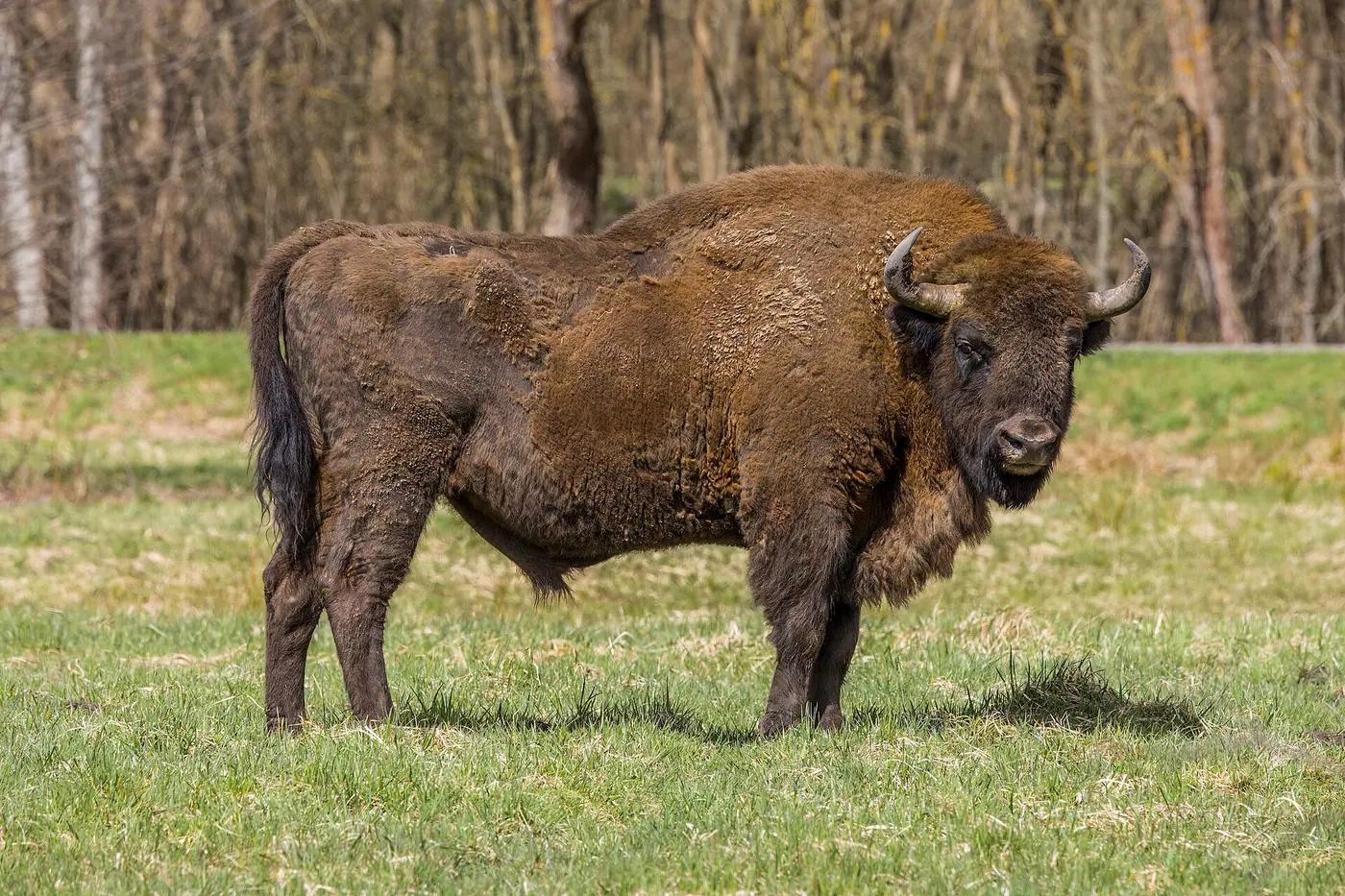
Poland holds Europe's largest free-living herd of European bison in Białowieża Forest, around 600 moose in the Biebrza marshes, wolves and lynx across the eastern forests and the Carpathians, and chamois, marmots and brown bears in the Tatras. The Baltic coast adds grey seals at the Vistula mouth and Hel, and roughly a fifth of the world's white storks nest on Polish farms every summer.
Poland is the easiest country in Europe to see big mammals that the rest of the continent lost centuries ago. The Białowieża Forest on the Belarus border still has old-growth oaks, lime and spruce, and bison walk out of it onto farm fields at dawn in winter. The Biebrza National Park to the north is a river marsh the size of a small county where moose stand in the sedge within sight of the wooden towers.
Away from the headline species the country is dense with ordinary European wildlife. Storks nest on poles in nearly every village between April and August, the Tatra mountains have alpine animals a few hours from Kraków, and the Baltic beaches around Gdańsk and the Hel peninsula are the best place in the southern Baltic to watch grey seals from the sand. AnimalDex captures from Poland so far come mostly from Pomorskie and Dolnośląskie, a mix of Gdańsk zoo visits and insects photographed around Wrocław.
Why this location matters
Good location pages explain why the place is worth your time, not just which names belong on a destination checklist.
Poland is where the European bison was saved, bred back from a dozen zoo animals after the last wild one was shot in 1919, and the free-ranging herds here are now the source for reintroductions across the continent. Seeing them in Białowieża is seeing the result of a century of deliberate conservation.
It is also a cheap, well-connected country for a wildlife trip. Trains reach Białystok for Białowieża and Biebrza, Zakopane sits at the foot of the Tatras, and the coast is an hour from Gdańsk. A week can cover primeval forest, marsh, high mountain and sea without a long drive.
Where to look
Wildlife map of Poland
This guide covers the region shown below. Zoom in to get your bearings before planning a trip.
Positions are geocoded from OpenStreetMap. Habitat access and opening times change — check locally before travelling. Smaller pins are public AnimalDex captures, placed to the nearest kilometre.
Field proof
Found in Poland by AnimalDex users
Real captures logged in the AnimalDex app inside this area and shared publicly by their collectors, with the animal confirmed by the app's identification. Places are shown to the nearest region, never the exact spot.
- 19
- public captures
- 18
- species recorded
- 3
- collectors
- 10
- wild sightings
Recent captures from the field
Species people have actually logged here
Every name links to its species guide. The count is how many public captures of that animal sit inside this area.
- House Fly2 captures
- African Penguin1 capture
- Alderfly1 capture
- Asian Elephant1 capture
- Barbary Macaque1 capture
- Black-and-white Colobus1 capture
- Chicken Mite1 capture
- Common European Harvestman1 capture
- Common Field Grasshopper1 capture
- Degu1 capture
- Giraffe1 capture
- Greater Bee Fly1 capture
- Harbor Seal1 capture
- Hermann's Tortoise1 capture
- Humboldt Penguin1 capture
- Lowland Anoa1 capture
- Orb-weaver Spider1 capture
- Western Gorilla1 capture
Collectors choose to share these captures on Discover and can withdraw them at any time. Coordinates are rounded to about a kilometre and refreshed with each site build.
Animals to spot
These are intentionally practical species picks, balancing accessibility, excitement, and what travelers can realistically notice in the location.
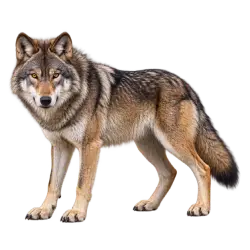
Eurasian WolfA
Poland has more than 2,000 wolves, with packs in Białowieża, the Carpathians and even the forests west of the Vistula. Tracks in snow along Białowieża's forest roads are the usual evidence.
Spotting note: Rarely seen, routinely tracked. Winter dawn drives on the forest edge give the best odds.
Read species guide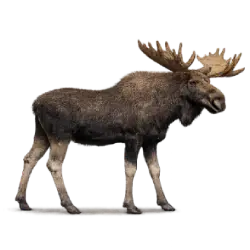
MooseA
The Biebrza marshes hold Poland's biggest moose population, and the animals feed in the open sedge where the park's towers and the Carska Droga causeway overlook them.
Spotting note: Likely on a dawn or dusk visit to Biebrza, especially in late autumn and winter.
Read species guide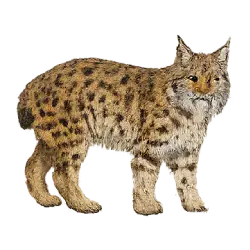
Eurasian LynxB
Around 200 lynx live in Poland, split between the north-eastern forests and the Carpathian foothills of Bieszczady. Białowieża's lynx are collared and studied but almost never seen.
Spotting note: Very rare. Camera-trap territory; count a track as a win.
Read species guide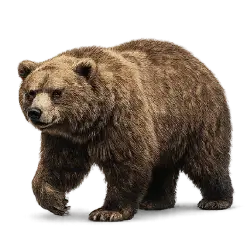
Brown BearA
Poland's bears live in the Carpathians, with the Bieszczady mountains holding most of them and a small number ranging through the Tatra National Park above Zakopane.
Spotting note: Uncommon. Bieszczady in autumn is the realistic chance; Tatra sightings are occasional.
Read species guide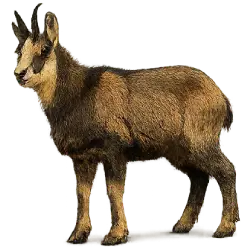
ChamoisC
The Tatra chamois is a distinct subspecies shared with Slovakia, and it feeds on the ledges above Morskie Oko and in Dolina Pięciu Stawów within reach of the marked trails.
Spotting note: Regular in the high Tatras in summer and autumn if you scan the cliffs with binoculars.
Read species guide
Alpine MarmotD
Tatra marmots are a protected relic population that whistles from the boulder fields of the Gąsienicowa and Pięć Stawów valleys from May until the September hibernation.
Spotting note: Heard before seen; common on warm summer mornings above the treeline.
Read species guide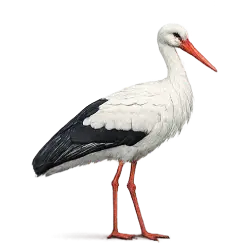
White StorkC
Roughly 50,000 pairs nest in Poland, around a fifth of the world total. Villages like Żywkowo in Warmia have more stork nests than houses.
Spotting note: Guaranteed anywhere rural between April and August.
Read species guide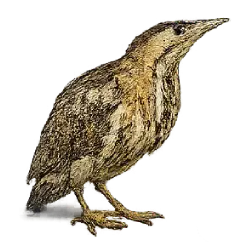
Eurasian BitternC
The Biebrza and Narew reedbeds boom with bitterns at dusk in May, a sound like someone blowing across a bottle that carries for a kilometre.
Spotting note: Heard easily in spring; seeing one in flight over the reeds takes patience.
Read species guide
Grey SealB
Grey seals haul out on the sandbars of the Mewia Łacha reserve at the Vistula mouth, and the Hel seal sanctuary on the peninsula rehabilitates and shows them close up.
Spotting note: Reliable at Hel; wild groups at Mewia Łacha depend on tide and season.
Read species guide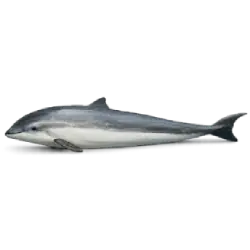
Harbor PorpoiseB
The Baltic's small, critically endangered porpoise population includes the Puck Bay and the waters off the Hel peninsula, where ferry and fishing-boat sightings are logged by the Hel station.
Spotting note: Genuinely rare. A flat calm day off Hel gives a slim chance.
Read species guide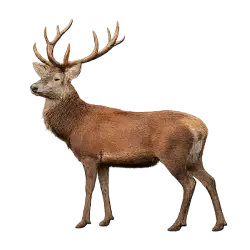
Red DeerB
Big stags roar through the beech and oak of Białowieża and the Carpathian foothills in late September, and herds graze the forest meadows at first light all year.
Spotting note: Common. The rut in the last two weeks of September is the spectacle.
Read species guide
Wild BoarB
Boar churn up the forest floor across the whole country and wander into the edges of Warsaw and Gdańsk, where they have become a routine urban sight.
Spotting note: Very common; night drives on forest roads almost always produce a sounder.
Read species guide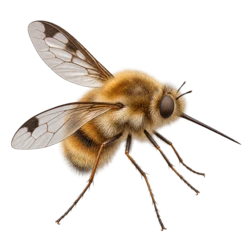
Greater Bee FlyE
A furry, long-tongued fly that hovers at primroses and lungwort on sunny banks in March and April, one of the first insects users have photographed around Wrocław.
Spotting note: Common in early spring in parks and woodland edges.
Read species guide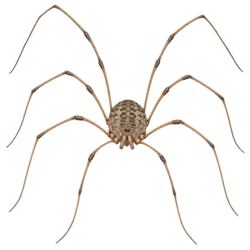
Common European HarvestmanE
The long-legged harvestman of Polish meadows and garden walls, photographed by users in Lower Silesia and typical of the easy summer finds across the country.
Spotting note: Abundant from midsummer to the first frosts.
Read species guideBest for
Use this section to decide whether the location fits your travel style, skill level, and AnimalDex goals.
- European bison and wolf tracking in Białowieża Forest in winter
- Moose, bitterns and marsh birds from the towers of Biebrza National Park
- Chamois and marmots on day hikes from Zakopane in the Tatras
- Grey seals and Baltic beach life on the Hel peninsula
Spotting tips
These tips are meant to make the page useful in the field, not just readable on the page.
- 01For bison, go between December and March, hire a local guide in Białowieża village and be on the forest-edge meadows before sunrise; the herds leave the trees to feed on fields when snow is deep.
- 02The Biebrza marsh is best from the Carska Droga road and the Długa Luka boardwalk at dawn in May, when moose feed in the open and the reedbeds are full of calling birds.
- 03In the Tatras start early from Palenica Białczańska or Kuźnice; marmots and chamois are active in the cool morning and the trails fill up by ten.
- 04Carry binoculars on the Hel peninsula beaches and check the sandbars at the Vistula mouth near Mikoszewo at low water for hauled-out seals.
Virtual Wildlife Guides
Wildlife guides to Poland
AnimalDex builds virtual guides from explorers' own wild sightings: which animals they found, how rare they are, and when. A guide is advice from someone who has been there, not a tour. Buying one unlocks the author's notes for every animal, a chat with the author, and introductions to local people they met. Wildlife is never guaranteed.
Checking for virtual guides to Poland...
How to choose a local wildlife guide in Poland
- Ask what they usually find in the season you are visiting. A good guide gives an honest answer, not a promised sighting.
- Check how they treat animals: no baiting, calling in, handling, or close flash photography for a better shot.
- Confirm the meeting area, duration, group size, total price, and how you pay before the day, plus any permits or park fees the place requires.
Track the animals you find in Poland
Build your collection while you travel through Poland, from easy wins to the species worth planning around.
Related tier lists
These tier lists add broader context around the species that make this location interesting.
Biggest Animals in the World
A structured ranking of the biggest animals in the world, using the AnimalDex size stat to compare body scale across sea, land, and air.
Read tier listRarest Animals in the World
A structured ranking of the rarest animals in the world, blending scarcity, vulnerability, and conservation pressure to answer the overlap between rarest and most endangered wildlife.
Read tier listRelated locations
Keep exploring with nearby or similar destinations that support the same kind of AnimalDex discovery.
Animals in Germany: What You Can Spot, Learn, and Collect
A practical Germany wildlife guide for forest edges, rivers, farmland margins, and the kind of steady species list that rewards patience instead of spectacle.
Read location guideAnimals in Belarus: What You Can Spot, Learn, and Collect
Belarus wildlife: European bison and wolves in Belovezhskaya Pushcha, bitterns on the flooded Pripyat marshes, great grey owls on the bogs and storks in every village.
Read location guideAnimals in Lithuania: What You Can Spot, Learn, and Collect
Lithuania's wildlife: Europe's densest white storks, moose and boar on the Curonian Spit, the Juodkrantė cormorant colony, Nemunas Delta migration and Baltic grey seals.
Read location guideLocation FAQ
Short direct answers to the questions travelers usually ask before choosing a wildlife destination or zoo day.
What wildlife is there in Poland?
Poland has European bison, wolves, lynx, moose, red deer, wild boar and brown bears, plus Tatra chamois and marmots in the mountains and grey seals on the Baltic coast. It is also one of the best countries in Europe for white storks, bitterns and other marsh birds.
What animals can be found in Poland?
The famous ones are the Białowieża bison and the Biebrza moose, but wolves and lynx live across the eastern forests, bears range through the Carpathians, and the Tatras hold chamois, marmots and golden eagles. Every farming village has nesting storks in summer.
Where is the best place to see bison in Poland?
Białowieża Forest on the eastern border, between December and March, when the herds leave the forest to feed on open fields at dawn. The Bison Show Reserve in the national park guarantees a view if the wild search fails.
Does Poland have good zoos?
Yes. Wrocław Zoo's Afrykarium is the most visited in the country, Warsaw Zoo sits by the Vistula, and Gdańsk Zoo in the Oliwa valley is where most of the AnimalDex captures from Pomorskie were made.
Have AnimalDex users found animals in Poland?
Yes. AnimalDex users have publicly logged 19 captures of 18 different species in Poland, including house fly, african penguin, alderfly, asian elephant. Each one was photographed in the app at the moment of the sighting.
How do I find a wildlife guide to Poland?
Check the Wildlife Guides section on this page or browse Wildlife Guides on AnimalDex. Each one is a virtual guide built from an explorer's own wild sightings around Poland: the animals they found, how rare they are, and when. It is advice from someone who has been there, not a tour. If you want someone with you on the day, compare local guides on wildlife knowledge, how they treat animals, and clear pricing before you go.