

Animals in Belarus: What You Can Spot, Learn, and Collect
Belarus wildlife: European bison and wolves in Belovezhskaya Pushcha, bitterns on the flooded Pripyat marshes, great grey owls on the bogs and storks in every village.
Quick answer
Start with the direct answer, then use the sections below to see why the location matters and which animals are actually realistic to spot there.
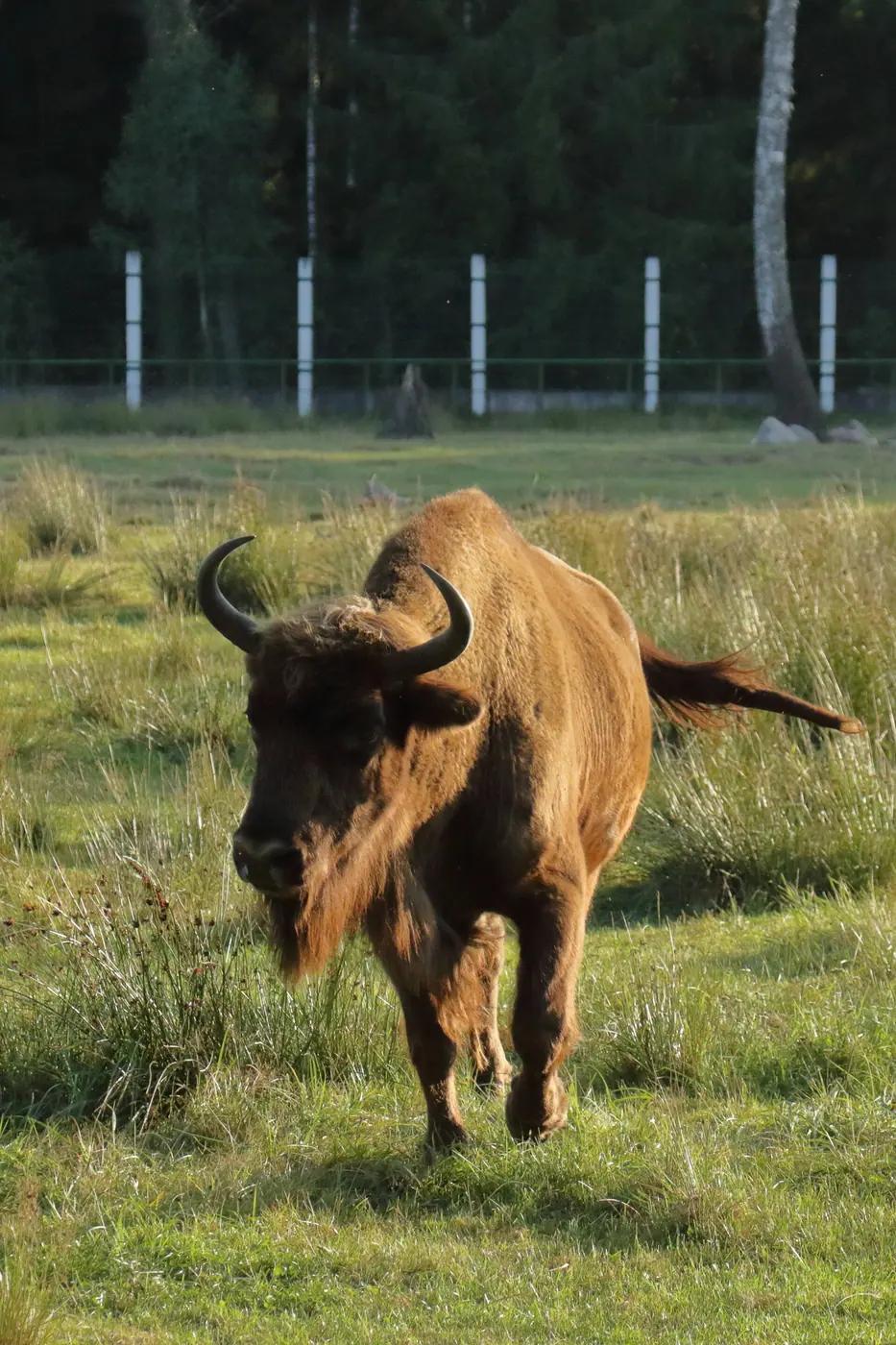
Belarus has Europe's largest European bison population after Poland, with herds in Belovezhskaya Pushcha and a dozen other forests, plus wolves, lynx, moose, red deer, boar and a small brown bear population in the north. The Pripyat marshes of Polesie are among the biggest wetlands left in Europe, with bitterns, terns and spring floods full of waders, and the northern bogs hold great grey owls and golden eagles. White storks nest in every village.
Belarus is the flattest, wettest and most forested country in this part of Europe, and its wildlife reflects that. Belovezhskaya Pushcha on the Polish border is the Belarusian half of the Białowieża primeval forest, with the same ancient oaks and a bison herd of several hundred that is easier to see here than on the Polish side, because the animals are fed at winter stations near the park roads. Wolves, lynx, red deer and boar share the forest.
The south is Polesie, a region of river marsh along the Pripyat that floods every spring to the horizon. The Pripyatsky National Park and the Turov meadows see one of Europe's great wader and tern migrations in April and May, bitterns boom from the reeds, and pond terrapins live near the northern edge of their range. The north around Vitebsk is bog country, where Yelnya and the Berezinsky reserve hold golden eagles, great grey owls, moose and the country's few bears.
Why this location matters
Good location pages explain why the place is worth your time, not just which names belong on a destination checklist.
Belarus has kept wetland on a scale the rest of Europe drained a century ago. The Pripyat floodplain and the northern raised bogs store carbon, breed birds that are rare everywhere else, and earn the country its nickname as the lungs of Europe.
It is also a bison stronghold in its own right, with more than 2,000 animals across the country and herds that have been reintroduced to forests far from Belovezhskaya Pushcha, including the Naliboki forest west of Minsk and the Polesie radiation-ecology reserve in the Chernobyl exclusion zone.
Where to look
Wildlife map of Belarus
This guide covers the region shown below. Zoom in to get your bearings before planning a trip.
Positions are geocoded from OpenStreetMap. Habitat access and opening times change — check locally before travelling.
Animals to spot
These are intentionally practical species picks, balancing accessibility, excitement, and what travelers can realistically notice in the location.
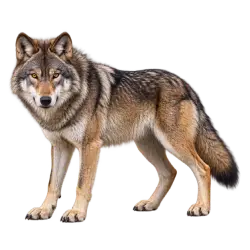
Eurasian WolfA
Belarus has one of the densest wolf populations in Europe, with packs in Belovezhskaya Pushcha, the Polesie forests and the northern bogs, and winter tracking from the Pushcha hotels.
Spotting note: Rarely seen; tracks on snowy forest roads and dusk howling are the usual evidence.
Read species guide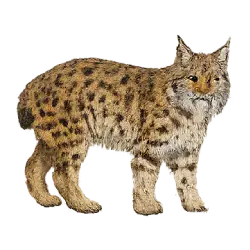
Eurasian LynxB
Lynx live across the Belarusian forests, with Belovezhskaya Pushcha and the Berezinsky Biosphere Reserve holding studied populations tracked by camera trap.
Spotting note: Very rare to see; winter snow tracking with a park ranger.
Read species guide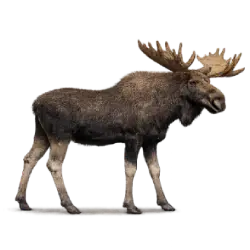
MooseA
Moose are common in the Berezinsky reserve, the Polesie bogs and Belovezhskaya Pushcha, feeding in the flooded alder woods and at bog edges at dawn.
Spotting note: Likely at dawn or dusk in Berezinsky and on forest roads in autumn.
Read species guide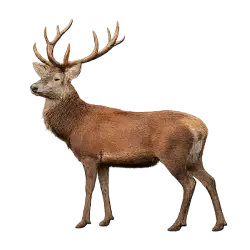
Red DeerB
Red deer herds graze the Belovezhskaya Pushcha meadows and the Naliboki forest west of Minsk, with a loud rut in the oak woods every September.
Spotting note: Common; the September rut from the Pushcha forest roads is the highlight.
Read species guide
Wild BoarB
Boar root through every Belarusian forest and were abundant in Belovezhskaya Pushcha before swine fever cut numbers; they are recovering and still common at dusk.
Spotting note: Fairly common at dusk in forest clearings.
Read species guide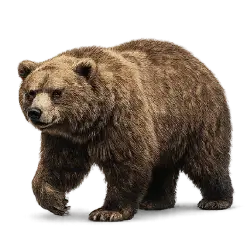
Brown BearA
A small bear population of a few hundred animals survives in the northern forests of Vitebsk region, centred on the Berezinsky Biosphere Reserve.
Spotting note: Rare; Berezinsky in late summer with a reserve guide is the realistic chance.
Read species guide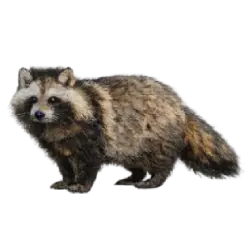
Raccoon DogD
Raccoon dogs, introduced from the Far East, are common across Belarus and trot along the Pripyat levees and village edges after dark.
Spotting note: Fairly common on night drives, especially in Polesie.
Read species guide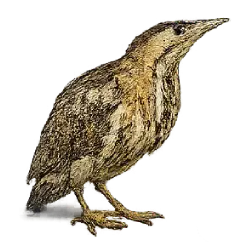
Eurasian BitternC
The Pripyat reedbeds and the Sporovsky and Zvanets fen mires hold hundreds of booming bitterns in spring, among the largest numbers in Europe.
Spotting note: Heard easily at dusk in April and May in Polesie; seen with patience.
Read species guide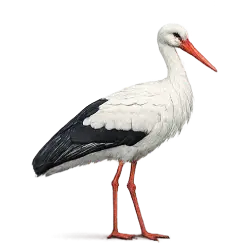
White StorkC
More than 20,000 pairs nest on poles and water towers across Belarus, with the Pripyat villages like Turov carrying several nests each.
Spotting note: Guaranteed in any village from April to August.
Read species guide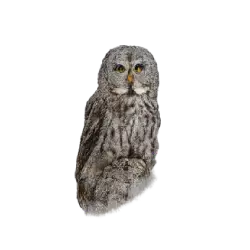
Great Gray OwlC
Belarus is a European stronghold for great grey owls, which breed in the bog forests of the north and the Polesie swamps and hunt clearings in daylight in summer.
Spotting note: Uncommon; Berezinsky and the Vitebsk bogs with a local guide in May and June.
Read species guide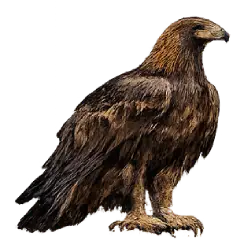
Golden EagleA
Around 30 pairs of golden eagles nest on the raised bogs of northern Belarus, with the Yelnya bog and Berezinsky reserve the best-known sites.
Spotting note: Rare; the Yelnya boardwalk in spring or autumn gives a chance of a soaring bird.
Read species guide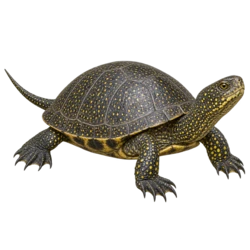
European Pond TerrapinE
Pond terrapins are near the northern edge of their range in the Polesie marshes, basking on logs in the Pripyat oxbows and the Olmany mires in May and June.
Spotting note: Uncommon; slow boat trips on Pripyat side channels in late spring.
Read species guide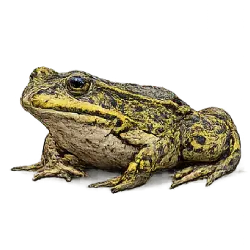
Marsh FrogE
Marsh frogs chorus from every Pripyat backwater and Minsk pond on warm May evenings, the loud, sprawling frog of the Belarusian lowlands.
Spotting note: Very common from April to September.
Read species guide
Northern PikeD
The Pripyat and its oxbows are famous pike water, and the spring floods push big pike into the meadows where locals fish them from the levees.
Spotting note: Caught rather than seen; spring and autumn on the Pripyat are the seasons.
Read species guideBest for
Use this section to decide whether the location fits your travel style, skill level, and AnimalDex goals.
- European bison, wolves and primeval forest in Belovezhskaya Pushcha
- Spring floods, waders and bitterns on the Pripyat marshes at Turov
- Great grey owls, golden eagles and bears on the northern bogs of Berezinsky and Yelnya
- Storks and marsh frogs in every lowland village
Spotting tips
These tips are meant to make the page useful in the field, not just readable on the page.
- 01Belovezhskaya Pushcha has winter feeding stations where bison gather near the park roads from December to March; the park's guided drives from Kamianiuki are the simplest way to see them.
- 02The Turov meadow on the Pripyat floods in April; stand on the levee at dawn for thousands of ruff, godwits and terns, and listen for bitterns in the reeds at dusk.
- 03Berezinsky Biosphere Reserve has boardwalks, towers and guided night drives; book through the reserve and go in May for owls or September for moose and the deer rut.
- 04Entry rules for Belarus change frequently; check the visa-free arrangements for the Brest and Grodno regions, which cover Belovezhskaya Pushcha, before planning.
Virtual Wildlife Guides
Wildlife guides to Belarus
AnimalDex builds virtual guides from explorers' own wild sightings: which animals they found, how rare they are, and when. A guide is advice from someone who has been there, not a tour. Buying one unlocks the author's notes for every animal, a chat with the author, and introductions to local people they met. Wildlife is never guaranteed.
Checking for virtual guides to Belarus...
How to choose a local wildlife guide in Belarus
- Ask what they usually find in the season you are visiting. A good guide gives an honest answer, not a promised sighting.
- Check how they treat animals: no baiting, calling in, handling, or close flash photography for a better shot.
- Confirm the meeting area, duration, group size, total price, and how you pay before the day, plus any permits or park fees the place requires.
Track the animals you find in Belarus
Build your collection while you travel through Belarus, from easy wins to the species worth planning around.
Related tier lists
These tier lists add broader context around the species that make this location interesting.
Biggest Animals in the World
A structured ranking of the biggest animals in the world, using the AnimalDex size stat to compare body scale across sea, land, and air.
Read tier listBest Hunters in the Animal World
A structured ranking of the best hunters in the animal world, balancing success rate, kill efficiency, tracking ability, coordination, and finishing power.
Read tier listRelated locations
Keep exploring with nearby or similar destinations that support the same kind of AnimalDex discovery.
Animals in Poland: What You Can Spot, Learn, and Collect
Poland's wildlife from Białowieża bison and Biebrza moose to Tatra chamois, Baltic grey seals at Hel and the white storks that nest on half the country's barns.
Read location guideAnimals in Lithuania: What You Can Spot, Learn, and Collect
Lithuania's wildlife: Europe's densest white storks, moose and boar on the Curonian Spit, the Juodkrantė cormorant colony, Nemunas Delta migration and Baltic grey seals.
Read location guideAnimals in Ukraine: What You Can Spot, Learn, and Collect
Ukraine's wildlife: saiga and demoiselle cranes on the Askania-Nova steppe, pelicans in the Danube Biosphere Reserve, Carpathian bears and lynx, and Black Sea porpoises.
Read location guideLocation FAQ
Short direct answers to the questions travelers usually ask before choosing a wildlife destination or zoo day.
What wildlife is there in Belarus?
Belarus has European bison, wolves, lynx, moose, red deer, wild boar, beavers, raccoon dogs and a small number of brown bears, plus great grey owls, golden eagles, bitterns, cranes and white storks. The Pripyat marshes and the northern bogs are among the most important wetlands in Europe.
What animals can be found in Belarus?
Bison and wolves in Belovezhskaya Pushcha, moose and bears in the Berezinsky reserve, bitterns and migrating waders on the Pripyat at Turov, great grey owls and golden eagles on the Vitebsk bogs, and storks on every village pole.
Where can you see bison in Belarus?
Belovezhskaya Pushcha National Park near Brest, where several hundred bison live and gather at winter feeding stations visible from the park roads. The park also has an enclosure with bison, bears and wolves for guaranteed views.
Is Belarus open to wildlife tourists?
Visa-free entry has been available for some nationalities to the Brest and Grodno regions, which include Belovezhskaya Pushcha, but rules change and many governments advise against travel. Check current advice and entry requirements before planning a trip.
How do I find a wildlife guide to Belarus?
Check the Wildlife Guides section on this page or browse Wildlife Guides on AnimalDex. Each one is a virtual guide built from an explorer's own wild sightings around Belarus: the animals they found, how rare they are, and when. It is advice from someone who has been there, not a tour. If you want someone with you on the day, compare local guides on wildlife knowledge, how they treat animals, and clear pricing before you go.