

Animals in the United Arab Emirates: What You Can Spot, Learn, and Collect
UAE wildlife guide: Ras Al Khor flamingos in Dubai, Arabian oryx and sand gazelles in the desert reserves, Sir Bani Yas Island, Abu Dhabi's dugongs and dhub lizards.
Quick answer
Start with the direct answer, then use the sections below to see why the location matters and which animals are actually realistic to spot there.
The UAE keeps more wildlife than its skyline suggests. Greater flamingos feed at Ras Al Khor in the middle of Dubai; Arabian oryx and sand gazelles roam the Dubai Desert Conservation Reserve and Sir Bani Yas Island; Abu Dhabi's shallow Gulf waters hold the second-largest dugong population in the world plus hawksbill and green turtles and humpback dolphins; dhub lizards, sand cats and Arabian foxes live in the dunes; and Al Ain Zoo and the Sir Bani Yas safari add Arabian and African species in managed settings.
The Emirates are two habitats, desert and sea, with cities in between. The desert is not empty: the Dubai Desert Conservation Reserve, Al Marmoom and the Al Wathba wetland outside Abu Dhabi hold oryx, gazelles, foxes and thousands of flamingos, and the dunes are busy with dhubs, geckos and beetles once the sun drops. Sir Bani Yas Island, off the western coast, is a 1970s wildlife project turned safari island with free-roaming oryx, gazelles, giraffes and cheetahs behind the fence.
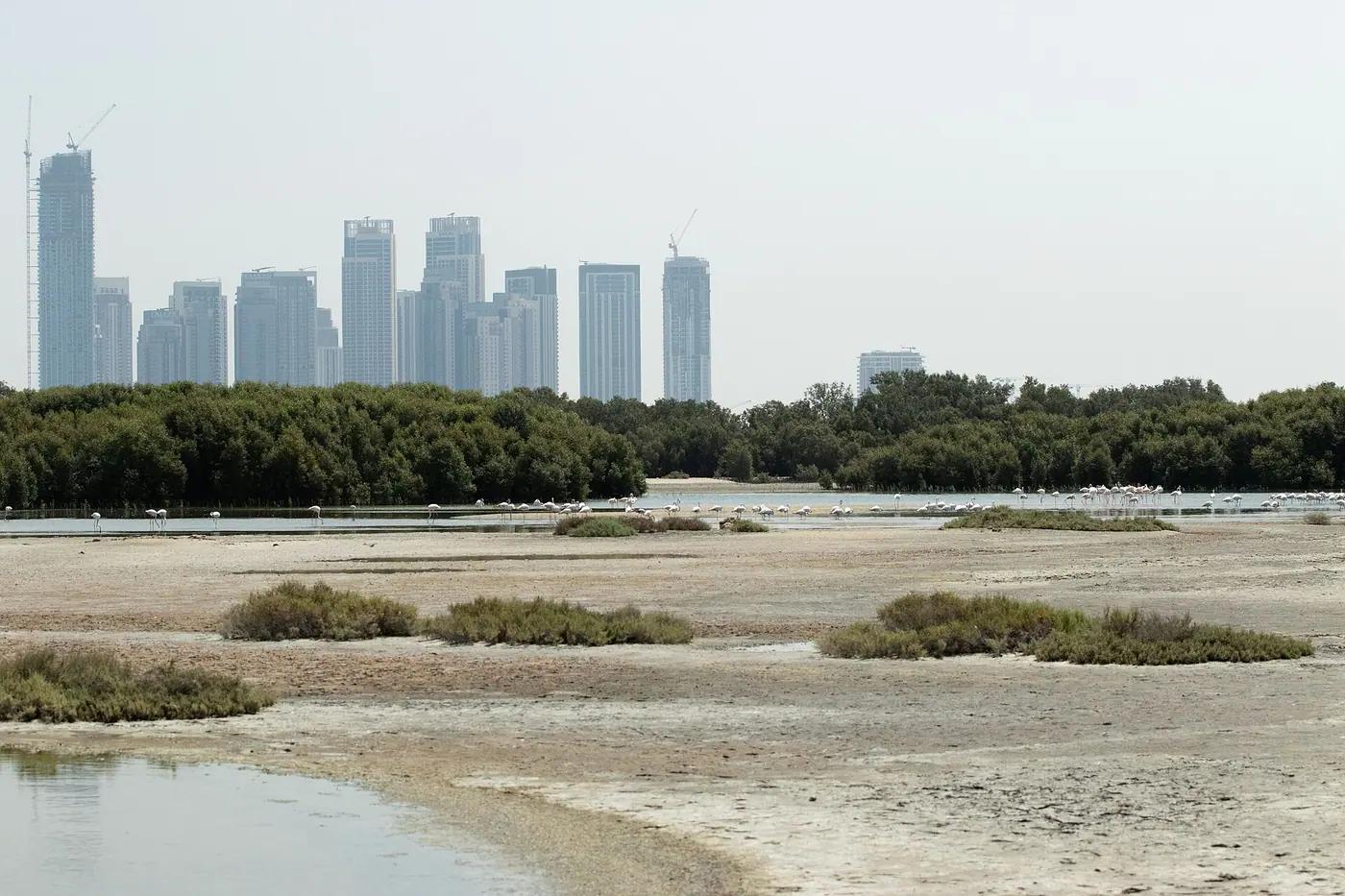
The Gulf side of Abu Dhabi, with Bu Tinah and the Marawah marine reserve, is seagrass and coral country for dugongs, turtles and dolphins, while Dubai's Ras Al Khor sanctuary is a flamingo lagoon with a skyline backdrop. For the city of Dubai itself, including the aquarium and the Ras Al Khor hides, see the separate Dubai page.
Why this location matters
Good location pages explain why the place is worth your time, not just which names belong on a destination checklist.
Abu Dhabi's dugong herd, about 3,000 animals, is the largest outside Australia and depends on seagrass beds right beside one of the fastest-developing coasts on earth. Its protection in the Marawah reserve is one of the Gulf's most important conservation decisions.
The UAE was also central to bringing the Arabian oryx back, breeding herds that were later released across the peninsula, and Sir Bani Yas and the Dubai reserve are where visitors can see that work on the ground.
Where to look
Wildlife map of United Arab Emirates
This guide covers the region shown below. Zoom in to get your bearings before planning a trip.
Positions are geocoded from OpenStreetMap. Habitat access and opening times change — check locally before travelling.
Animals to spot
These are intentionally practical species picks, balancing accessibility, excitement, and what travelers can realistically notice in the location.
Greater FlamingoC
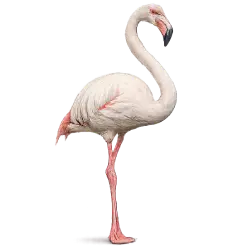
Ras Al Khor Wildlife Sanctuary in Dubai has free hides where hundreds of flamingos feed against the towers, and Al Wathba wetland near Abu Dhabi hosts a breeding colony of thousands.
Spotting note: Guaranteed at Ras Al Khor in winter; Al Wathba from October to April.
Read species guide
Arabian OryxB
Herds roam the 225 square kilometre Dubai Desert Conservation Reserve, Al Marmoom and Sir Bani Yas Island, and the UAE bred much of the stock used to restore the species.
Spotting note: Reliable on desert safaris in the DDCR and on Sir Bani Yas (fenced reserves).
Read species guide
Goitered GazelleB
Arabian sand gazelles, treated by many as a form of the goitered gazelle, graze the DDCR and Sir Bani Yas, and mountain gazelles live on the same reserves.
Spotting note: Regular on reserve safaris.
Read species guide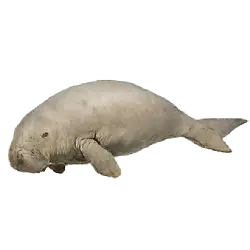
DugongC
Around 3,000 feed on the seagrass beds of the Marawah marine reserve and Bu Tinah shoals west of Abu Dhabi, the largest population outside Australia.
Spotting note: Rarely seen by visitors; the Bu Tinah area is restricted. Jubail Mangrove Park kayak trips occasionally spot them.
Read species guide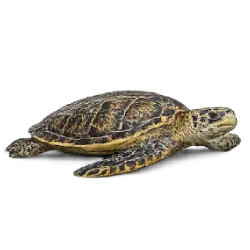
Hawksbill Sea TurtleC
Nests on Sir Bu Nair and the Abu Dhabi islands in spring and feeds on the Gulf reefs; the Dubai Turtle Rehabilitation Project at Jumeirah releases rescued ones each year.
Spotting note: Nesting March to June on protected islands; rescued turtles are on view at the Burj Al Arab turtle lagoon (a rehabilitation centre).
Read species guide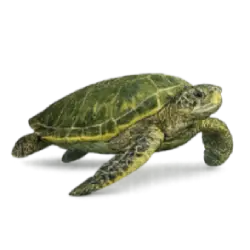
Green Sea TurtleC
Grazes the seagrass of the Abu Dhabi islands and Ras Al Khaimah coast and is a regular sight from the Jubail Mangrove Park kayaks.
Spotting note: Regular in the Abu Dhabi mangroves and shallows.
Read species guide
DolphinB
Indo-Pacific humpback and bottlenose dolphins live in Abu Dhabi's channels and off Dubai's coast and are seen from the Jubail mangroves and the Palm Jumeirah boats.
Spotting note: Regular on coastal boat trips.
Read species guide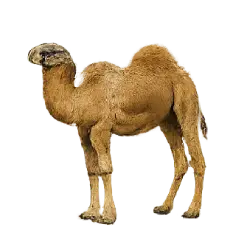
Dromedary CamelB
Racing camels train at Al Marmoom and Al Wathba every morning, and free-grazing herds cross the Liwa and Al Ain roads.
Spotting note: Guaranteed on any desert drive; log as domestic.
Read species guide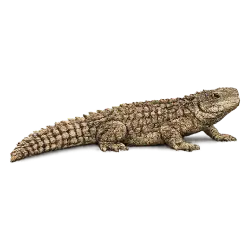
Spiny-tailed LizardC
The dhub sits outside its burrow on the gravel plains of the DDCR and the Al Ain road at mid-morning, and is a protected species in the UAE.
Spotting note: Common in the reserves on warm mornings.
Read species guide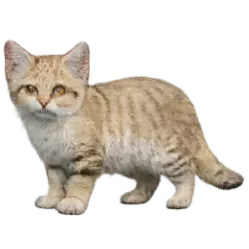
Sand CatC
Rediscovered in Abu Dhabi's western desert in 2015 by camera traps and now known from several sites around Baynouna and the Liwa dunes.
Spotting note: Very rare; a camera-trap animal, not a sighting to plan for.
Read species guide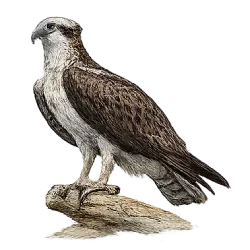
OspreyC
Nests on the Abu Dhabi islands and fishes the lagoons at Ras Al Khor and Khor Kalba on the east coast.
Spotting note: Regular along the coast in winter.
Read species guide
Rose-ringed ParakeetD
Flocks screech over the parks of Dubai, Sharjah and Abu Dhabi, an introduced species now one of the commonest city birds.
Spotting note: Abundant in city parks.
Read species guide
Common MynaD
The default bird of every café terrace, car park and lawn in the Emirates.
Spotting note: Abundant everywhere.
Read species guide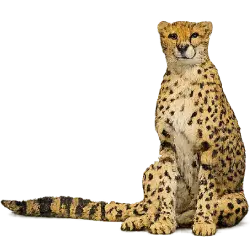
CheetahA
Sir Bani Yas Island's Arabian Wildlife Park keeps cheetahs in a large fenced landscape alongside the oryx and gazelle herds, and Al Ain Zoo runs a breeding programme.
Spotting note: Reliable on the Sir Bani Yas safari and at Al Ain Zoo (both managed settings).
Read species guideBest for
Use this section to decide whether the location fits your travel style, skill level, and AnimalDex goals.
- City visitors who want oryx and flamingos within an hour of a Dubai or Abu Dhabi hotel.
- Families combining Sir Bani Yas Island or Al Ain Zoo with a beach stay.
- Kayakers in the Abu Dhabi and Khor Kalba mangroves for turtles, dolphins and herons.
- Birders at Ras Al Khor, Al Wathba and the east coast in winter.
Spotting tips
These tips are meant to make the page useful in the field, not just readable on the page.
- 01Ras Al Khor's hides are free; go late afternoon in winter when the flamingos are closest and the light is behind you.
- 02Book a DDCR safari with a licensed operator rather than a dune-bashing tour; the reserve limits numbers and the guides know where the oryx herds drink.
- 03Kayak the Jubail Mangrove Park at high tide in the early morning for turtles, rays and sometimes dolphins in the channels.
- 04Sir Bani Yas is a two-and-a-half hour drive west of Abu Dhabi; stay a night for the dawn safari when the cheetahs and gazelles are active.
Virtual Wildlife Guides
Wildlife guides to United Arab Emirates
AnimalDex builds virtual guides from explorers' own wild sightings: which animals they found, how rare they are, and when. A guide is advice from someone who has been there, not a tour. Buying one unlocks the author's notes for every animal, a chat with the author, and introductions to local people they met. Wildlife is never guaranteed.
Checking for virtual guides to United Arab Emirates...
How to choose a local wildlife guide in United Arab Emirates
- Ask what they usually find in the season you are visiting. A good guide gives an honest answer, not a promised sighting.
- Check how they treat animals: no baiting, calling in, handling, or close flash photography for a better shot.
- Confirm the meeting area, duration, group size, total price, and how you pay before the day, plus any permits or park fees the place requires.
Track the animals you find in United Arab Emirates
Build your collection while you travel through United Arab Emirates, from easy wins to the species worth planning around.
Related tier lists
These tier lists add broader context around the species that make this location interesting.
100 Most Resilient Animals
Most resilient animals ranked by recovery, climate toughness, and staying functional under stress — not a copy of the strongest or most dangerous lists.
Read tier list100 Fastest Animals in the World
Ranked list of the fastest animals in the world, with land, flying, and marine speed kept separate so a diving falcon is not treated as the same kind of fast as a cheetah.
Read tier listRelated locations
Keep exploring with nearby or similar destinations that support the same kind of AnimalDex discovery.
Animals in Dubai: What You Can Spot, Learn, and Collect
A practical Dubai wildlife guide built around urban-edge nature, coast, desert context, and the species that make the city more biologically interesting than a skyline-first stereotype suggests.
Read location guideAnimals in Oman: What You Can Spot, Learn, and Collect
Oman wildlife guide: nesting green turtles at Ras Al Jinz, Arabian leopards in Dhofar, humpback whales and dolphins off Muscat, Daymaniyat whale sharks and oryx.
Read location guideAnimals in Saudi Arabia: What You Can Spot, Learn, and Collect
Saudi Arabia wildlife guide: Arabian oryx at AlUla, hamadryas baboons in the Asir highlands, Red Sea whale sharks, Farasan gazelles, dugongs and Gulf flamingos.
Read location guideLocation FAQ
Short direct answers to the questions travelers usually ask before choosing a wildlife destination or zoo day.
What wildlife is there in the UAE?
Greater flamingos and wetland birds at Ras Al Khor and Al Wathba, Arabian oryx and sand gazelles in the desert reserves and on Sir Bani Yas, dugongs, turtles and dolphins in the Abu Dhabi marine reserves, and desert reptiles and small mammals such as dhubs, geckos, sand cats and Arabian foxes in the dunes.
What animals can be found in the United Arab Emirates?
About 50 native mammal species, mostly small and nocturnal, around 450 recorded birds including large numbers of migrants, over 70 reptiles, and a Gulf marine fauna with the world's second-largest dugong population. Managed reserves and zoos add cheetahs, giraffes and other African species.
Where can you see flamingos in Dubai?
Ras Al Khor Wildlife Sanctuary at the head of Dubai Creek, which has three free bird hides open daily. Hundreds of greater flamingos feed there from October to April, with smaller numbers in summer.
Are there wild animals in the UAE desert?
Yes, though most are nocturnal. Arabian oryx and gazelles live in the reserves, and Arabian red foxes, sand foxes, sand cats, hedgehogs, gerbils and dhub lizards live across the dunes and gravel plains. A guided night drive or a dawn walk reading tracks is the best way to see them.
How do I find a wildlife guide to United Arab Emirates?
Check the Wildlife Guides section on this page or browse Wildlife Guides on AnimalDex. Each one is a virtual guide built from an explorer's own wild sightings around United Arab Emirates: the animals they found, how rare they are, and when. It is advice from someone who has been there, not a tour. If you want someone with you on the day, compare local guides on wildlife knowledge, how they treat animals, and clear pricing before you go.