

Animals in South Sumatra: What You Can Spot, Learn, and Collect
South Sumatra wildlife guide: Sembilang's shorebirds and storks, crocodiles and false gharials in the peat rivers, otters on Palembang's Musi, garden insects.

Quick answer
Start with the direct answer, then use the sections below to see why the location matters and which animals are actually realistic to spot there.
South Sumatra's wildlife is wetland wildlife. Sembilang National Park on the east coast is one of the most important shorebird sites in Asia, with tens of thousands of godwits and sandpipers, lesser adjutant storks and saltwater crocodiles in the mangroves. The Berbak-Sembilang peat swamps hold false gharials and a tiger population, the Musi river through Palembang has smooth-coated otters and monitors, and the city's gardens produce the butterflies, orb-weaver spiders and grasshoppers that fill users' logs.
Palembang is one of the oldest cities in Indonesia and sits on one of its widest rivers. The Musi is still the province's main road, and following it downstream takes you past fish ponds and mangroves to Sembilang, a national park most Indonesians have never heard of that is a world-class site for migratory shorebirds.
Inland, South Sumatra is plantation and peat swamp. The peat rivers are difficult country for people and good country for crocodiles, false gharials and the tigers that still hold on in Berbak-Sembilang. Users in Palembang itself log the small stuff: butterflies, spiders, grasshoppers and tree sparrows.
Why this location matters
Good location pages explain why the place is worth your time, not just which names belong on a destination checklist.
Sembilang's mudflats host up to a hundred thousand migratory waders between September and April, including species that breed in Siberia and Alaska. It is one of the few places on Sumatra where birding is about numbers.
The false gharial, a slender-snouted crocodilian found only in Southeast Asian peat swamps, still breeds in the Berbak-Sembilang rivers. Very few visitors have seen one, which is a reason to go rather than a reason not to.
Where to look
Wildlife map of South Sumatra
This guide covers the region shown below. Zoom in to get your bearings before planning a trip.
Positions are geocoded from OpenStreetMap. Habitat access and opening times change — check locally before travelling. Smaller pins are public AnimalDex captures, placed to the nearest kilometre.
Field proof
Found in South Sumatra by AnimalDex users
Real captures logged in the AnimalDex app inside this area and shared publicly by their collectors, with the animal confirmed by the app's identification. Places are shown to the nearest region, never the exact spot.
- 24
- public captures
- 21
- species recorded
- 3
- collectors
- 24
- wild sightings
Recent captures from the field
Species people have actually logged here
Every name links to its species guide. The count is how many public captures of that animal sit inside this area.
- Black Skirt Tetra2 captures
- Drain Fly2 captures
- House Fly2 captures
- Amazon Sailfin Catfish1 capture
- Bivalve1 capture
- Black Ant1 capture
- Cockroach1 capture
- Common Molly1 capture
- Dingy Bushbrown1 capture
- Eurasian Tree Sparrow1 capture
- Ghost Ant1 capture
- Giant Golden Orb-weaver1 capture
- Guppy1 capture
- Household Casebearer Moth1 capture
- Mosquito1 capture
- Oscar Fish1 capture
- Red Ant1 capture
- Rice Grasshopper1 capture
- Siamese Fighting Fish1 capture
- St Mark's Fly1 capture
- Two-spotted Cricket1 capture
Collectors choose to share these captures on Discover and can withdraw them at any time. Coordinates are rounded to about a kilometre and refreshed with each site build.
Animals to spot
These are intentionally practical species picks, balancing accessibility, excitement, and what travelers can realistically notice in the location.

Bar-tailed GodwitC
Flocks of thousands feed on Sembilang's mudflats on migration and in the northern winter.
Spotting note: Abundant September to April on a boat trip to the flats.
Read species guide
Lesser Adjutant StorkB
Sembilang holds one of the largest breeding populations of this stork in Asia, nesting in mangrove and peat forest trees.
Spotting note: Regular on the Sembilang mudflats and river edges.
Read species guide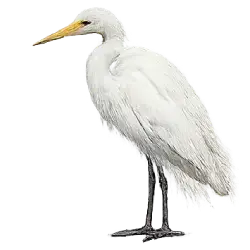
Great EgretD
Lines the Musi's fish ponds and the Sembilang mangrove channels in loose white ranks.
Spotting note: Common on any waterway.
Read species guide Saltwater CrocodileA
Patrols the Sembilang mangrove creeks and the lower Musi estuary; a genuine danger to fishermen here.
Spotting note: Regular in the mangroves; never swim in brackish water.
Read species guide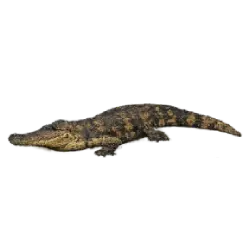
False GharialA
The peat rivers of Berbak-Sembilang are one of the last breeding strongholds of this slender-snouted crocodilian.
Spotting note: Very rare to see; night boat trips with a spotlight are the only realistic method.
Read species guide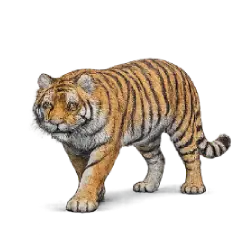
Sumatran TigerA
Berbak-Sembilang's swamp forest supports a small tiger population recorded on camera traps.
Spotting note: Almost never seen.
Read species guide
Smooth-coated OtterC
Family groups fish the Musi and its tributaries at dawn, sometimes within sight of the Ampera bridge.
Spotting note: Uncommon; best from a boat at first light.
Read species guide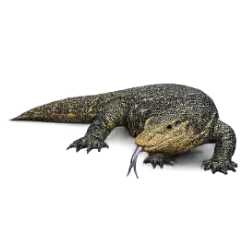
Water MonitorC
Hauls out on the Musi's floating houses and fish-pond banks all along the river.
Spotting note: Common along the river.
Read species guide
Long-tailed MacaqueC
Troops live in the riverside trees of Kemaro island and the Musi's mangrove fringe.
Spotting note: Common on river trips.
Read species guide
Eurasian Tree SparrowE
The sparrow of Palembang's markets and warungs; the province's most-logged bird.
Spotting note: Everywhere.
Read species guide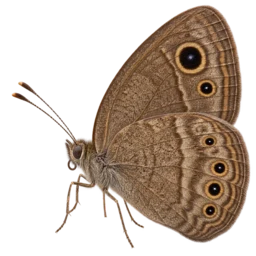
Dingy BushbrownE
A small brown butterfly of shaded gardens and plantation edges, logged by users in Palembang.
Spotting note: Common in dappled shade.
Read species guide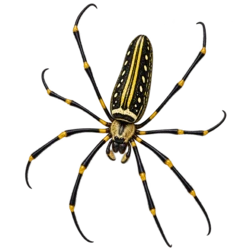
Giant Golden Orb-weaverE
Strings metre-wide golden webs between trees on plantation and garden edges; a confirmed capture in the province.
Spotting note: Common in the wet season.
Read species guide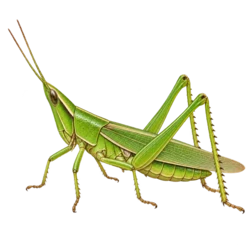
Rice GrasshopperE
Fills the flooded paddies and wet grass around Palembang's outskirts; a logged user capture.
Spotting note: Abundant in wet fields.
Read species guide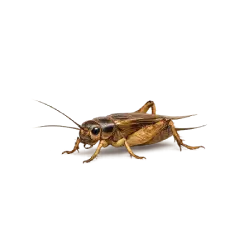
Two-spotted CricketE
Chirps from every patch of waste ground in the city after dark; another real capture here.
Spotting note: Heard nightly.
Read species guideBest for
Use this section to decide whether the location fits your travel style, skill level, and AnimalDex goals.
- Mass shorebird flocks at Sembilang
- River wildlife on the Musi by boat
- Crocodile and false gharial country in the peat swamps
- Garden insects and spiders around Palembang
Spotting tips
These tips are meant to make the page useful in the field, not just readable on the page.
- 01Sembilang is reached by speedboat from Palembang or Sungsang; go with a local operator at a spring low tide between October and March for the biggest flocks.
- 02Hire a Musi river boat at dawn from Benteng Kuto Besak and head downstream past Kemaro; otters and monitors are out before the traffic.
- 03Peat-swamp rivers are crocodile water; stay in the boat and let the boatman spotlight the banks at night.
- 04Palembang's garden butterflies and orb-weavers are easiest after rain in the late afternoon when the sun returns.
Virtual Wildlife Guides
Wildlife guides to South Sumatra
AnimalDex builds virtual guides from explorers' own wild sightings: which animals they found, how rare they are, and when. A guide is advice from someone who has been there, not a tour. Buying one unlocks the author's notes for every animal, a chat with the author, and introductions to local people they met. Wildlife is never guaranteed.
Checking for virtual guides to South Sumatra...
How to choose a local wildlife guide in South Sumatra
- Ask what they usually find in the season you are visiting. A good guide gives an honest answer, not a promised sighting.
- Check how they treat animals: no baiting, calling in, handling, or close flash photography for a better shot.
- Confirm the meeting area, duration, group size, total price, and how you pay before the day, plus any permits or park fees the place requires.
Track the animals you find in South Sumatra
Build your collection while you travel through South Sumatra, from easy wins to the species worth planning around.
Related tier lists
These tier lists add broader context around the species that make this location interesting.
100 Most Dangerous Animals in the World
Dangerous animals list ranking 100 species by lethal capability, aggression, and encounter risk — not a jump-scare trivia page and not a disease-vector list.
Read tier listRelated locations
Keep exploring with nearby or similar destinations that support the same kind of AnimalDex discovery.
Animals in Sumatra: What You Can Spot, Learn, and Collect
Sumatra wildlife guide: orangutans at Bukit Lawang, Way Kambas elephants, tigers and tapirs in Kerinci, hornbills, and the macaques and monitors you will see.
Read location guideAnimals in Lampung: What You Can Spot, Learn, and Collect
Lampung wildlife guide: Sumatran elephants and the rhino sanctuary at Way Kambas, tigers and tapirs in Bukit Barisan Selatan, spinner dolphins off Kiluan.
Read location guideAnimals in Indonesia: What You Can Spot, Learn, and Collect
A practical guide to animals in Indonesia, from accessible birds and coastal wildlife to headline species that make the country one of the world's strongest wildlife-travel destinations.
Read location guideLocation FAQ
Short direct answers to the questions travelers usually ask before choosing a wildlife destination or zoo day.
What wildlife is there in South Sumatra?
Huge migratory shorebird flocks, lesser adjutant storks, egrets and saltwater crocodiles in Sembilang National Park; false gharials and a small tiger population in the Berbak-Sembilang peat swamps; smooth-coated otters, monitors and macaques along the Musi river; and garden butterflies, spiders and grasshoppers around Palembang.
What animals can be found in South Sumatra?
Users in Palembang mostly log tree sparrows, dingy bushbrown butterflies, giant golden orb-weavers, rice grasshoppers and crickets. The wetlands add godwits, storks, egrets, crocodiles and otters.
How do I visit Sembilang National Park?
By boat from Palembang or the fishing town of Sungsang at the Musi mouth, typically a long day or an overnight trip arranged through a local guide. October to March brings the biggest shorebird numbers.
Are there crocodiles in the Musi river?
Saltwater crocodiles live in the lower Musi and the Sembilang mangroves, and attacks on fishermen do occur. In central Palembang they are rare, but treat all brackish water as crocodile habitat.
Have AnimalDex users found animals in South Sumatra?
Yes. AnimalDex users have publicly logged 24 captures of 21 different species in South Sumatra, including black skirt tetra, drain fly, house fly, amazon sailfin catfish. Each one was photographed in the app at the moment of the sighting.
How do I find a wildlife guide to South Sumatra?
Check the Wildlife Guides section on this page or browse Wildlife Guides on AnimalDex. Each one is a virtual guide built from an explorer's own wild sightings around South Sumatra: the animals they found, how rare they are, and when. It is advice from someone who has been there, not a tour. If you want someone with you on the day, compare local guides on wildlife knowledge, how they treat animals, and clear pricing before you go.