

Animals in Baños, Ecuador: What You Can Spot, Learn, and Collect
Wildlife in Baños, Ecuador: hummingbirds and cock-of-the-rock on the waterfall road, spectacled bears and tapirs in Llanganates, and the San Martín rescue zoo.
Quick answer
Start with the direct answer, then use the sections below to see why the location matters and which animals are actually realistic to spot there.
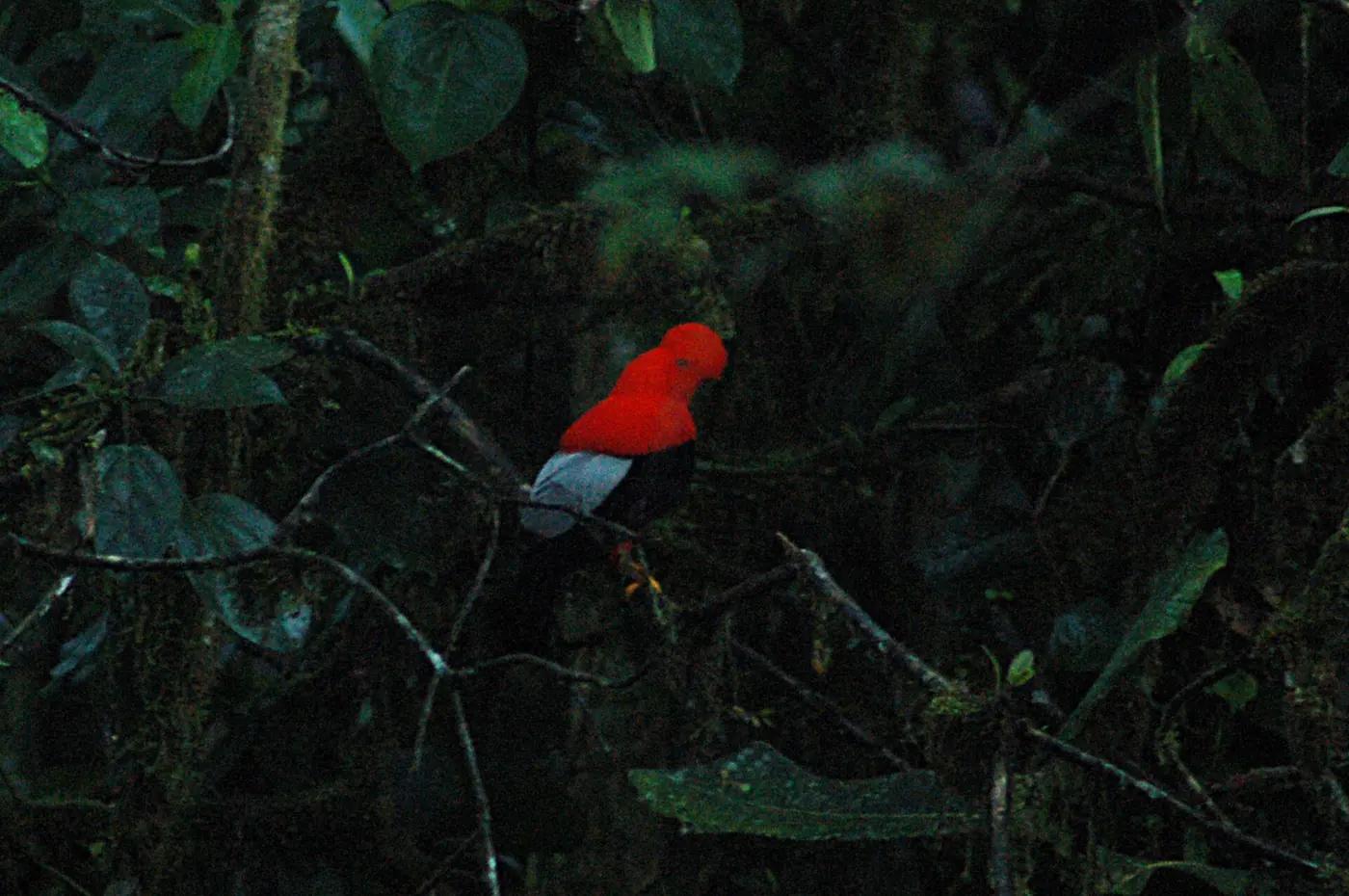
Baños sits where the Andes drop into the Amazon, so the wildlife changes with every kilometre of the Pastaza valley. The waterfall road to Puyo has hummingbirds, tanagers and Andean cock-of-the-rock leks near Río Verde; Llanganates National Park above town hides spectacled bears, mountain tapirs and condors; and the San Martín zoo on the gorge edge keeps capuchins, tapirs and hawks, which is where most captures in Tungurahua are logged.
Baños is famous for hot springs, swings and the Ruta de las Cascadas, but the same gorge that gives it waterfalls makes it one of the fastest elevational transects in Ecuador. In an hour you drop from 1,800 m cloud forest to 950 m Amazon foothills at Puyo, and the birds change completely.
Tungurahua volcano looms over the town and the Llanganates range sits to the north, both cloaked in cloud forest that is almost unvisited. Most travellers meet the wildlife at the Zoológico San Martín above the gorge or along the cycling road, and both are worth doing properly.
Why this location matters
Good location pages explain why the place is worth your time, not just which names belong on a destination checklist.
The eastern Andean slope is one of the richest bird regions on the planet, and Baños is its most accessible entry point in Ecuador. A morning on the waterfall road with binoculars can produce twenty species of hummingbird and tanager without a guide.
The San Martín zoo is also a real rehabilitation site for animals confiscated from the pet trade, and the capuchins, tapirs and raptors users log there are mostly rescued Ecuadorian natives rather than imports.
Where to look
Wildlife map of Baños de Agua Santa
This guide covers the region shown below. Zoom in to get your bearings before planning a trip.
Positions are geocoded from OpenStreetMap. Habitat access and opening times change — check locally before travelling. Smaller pins are public AnimalDex captures, placed to the nearest kilometre.
Field proof
Found in Baños de Agua Santa by AnimalDex users
Real captures logged in the AnimalDex app inside this area and shared publicly by their collectors, with the animal confirmed by the app's identification. Places are shown to the nearest region, never the exact spot.
- 11
- public captures
- 10
- species recorded
- 1
- collectors
- 0
- wild sightings
Recent captures from the field
Species people have actually logged here
Every name links to its species guide. The count is how many public captures of that animal sit inside this area.
Collectors choose to share these captures on Discover and can withdraw them at any time. Coordinates are rounded to about a kilometre and refreshed with each site build.
Animals to spot
These are intentionally practical species picks, balancing accessibility, excitement, and what travelers can realistically notice in the location.
Andean Cock-of-the-rockC
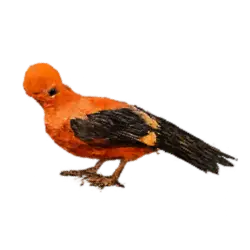
The orange, crested cotinga displays at dawn leks in the cloud forest around Río Verde and Machay on the road to Puyo.
Spotting note: Likely with a local guide at dawn; occasional from the Pailón del Diablo trail.
Read species guide
Sword-billed HummingbirdD
The only bird with a bill longer than its body feeds on hanging datura flowers in the higher cloud forest above Baños and in Llanganates.
Spotting note: Uncommon; check flowering trees around 2,500 m.
Read species guide
Spectacled BearB
Bears forage the bromeliad-rich cloud forest of Llanganates National Park north of town, occasionally descending to the maize fields above Baños.
Spotting note: Rare; fresh claw marks and torn bromeliads are the realistic sighting.
Read species guide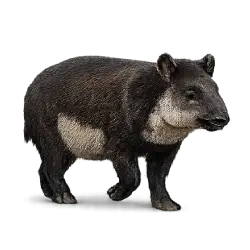
Mountain TapirB
The woolly Andean tapir survives in the páramo and cloud forest of Llanganates, one of its last Ecuadorian strongholds.
Spotting note: Very rare; tracks at high lakes on multi-day treks.
Read species guide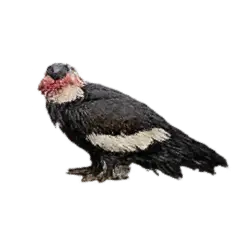
Andean CondorB
Condors soar along the Tungurahua flanks and the Llanganates ridges on clear mornings.
Spotting note: Uncommon; scan ridgelines from the Casa del Árbol viewpoint early.
Read species guide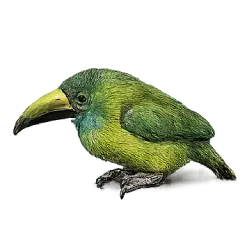
Emerald ToucanetC
Small green toucanets hop through the fruiting trees along the Ruta de las Cascadas and around Río Verde.
Spotting note: Regular on the lower waterfall road.
Read species guide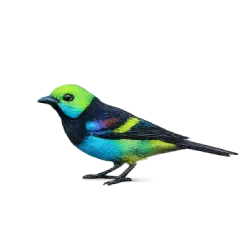
Paradise TanagerD
As the road drops towards Puyo the forest edge fills with mixed tanager flocks, with this seven-coloured species the showpiece.
Spotting note: Common below Río Negro, especially mid-morning.
Read species guide
OlinguitoC
The cloud-forest carnivore described only in 2013 lives in the wet Andean forest around Baños and comes to fruit feeders after dark at a few lodges.
Spotting note: Rare; night watches at lodges above 2,000 m.
Read species guide
Glass FrogC
Translucent frogs call from leaves over the fast streams that feed the Pastaza, visible by torch after dusk.
Spotting note: Likely on a guided night walk near Río Verde.
Read species guide
Blue MorphoE
Morphos float along the Pastaza gorge and the lower waterfall road once the sun warms the valley.
Spotting note: Common from Río Verde down to Puyo.
Read species guide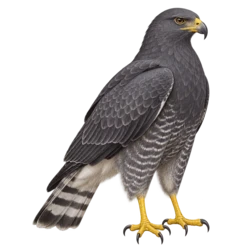
Variable HawkC
Variable hawks hang over the Pastaza canyon and the pastures above town; one of the raptors kept at the San Martín zoo too.
Spotting note: Regular overhead on clear days.
Read species guide
Capuchin MonkeyC
The San Martín zoo's rescued capuchins are the most-logged animal in Tungurahua; wild troops live downhill in the foothill forest towards Puyo.
Spotting note: Guaranteed at the zoo; wild sightings start below Río Negro.
Read species guide
South American TapirB
The zoo on the gorge edge keeps rescued lowland tapirs, the Amazon species that wild-roams the forest east of Puyo.
Spotting note: Guaranteed at Zoológico San Martín.
Read species guide
Common OpossumD
Common opossums raid fruit trees and bins on the edge of town after dark and are also on show at the zoo.
Spotting note: Common at night; often seen on the road to the Casa del Árbol.
Read species guideBest for
Use this section to decide whether the location fits your travel style, skill level, and AnimalDex goals.
- Cloud-forest birding along the Baños to Puyo waterfall road
- Hummingbirds and tanagers without leaving the roadside
- A rescue zoo with Ecuadorian natives above the gorge
- Multi-day Llanganates treks for bears, tapirs and condors
Spotting tips
These tips are meant to make the page useful in the field, not just readable on the page.
- 01Cycle or taxi the Ruta de las Cascadas at first light and stop at Río Verde and Machay; the cock-of-the-rock lek is a dawn event only.
- 02Carry binoculars on the Pailón del Diablo trail; toucanets and tanagers feed in the fruiting trees beside the path.
- 03Ask in Baños for guides to the Llanganates lakes; the park has no infrastructure and bear country needs a local who knows the trails.
- 04Clear mornings are rare on Tungurahua; if you wake to a clear sky go straight up to the Casa del Árbol for condors before cloud closes in by 10:00.
Virtual Wildlife Guides
Wildlife guides to Baños de Agua Santa
AnimalDex builds virtual guides from explorers' own wild sightings: which animals they found, how rare they are, and when. A guide is advice from someone who has been there, not a tour. Buying one unlocks the author's notes for every animal, a chat with the author, and introductions to local people they met. Wildlife is never guaranteed.
Checking for virtual guides to Baños de Agua Santa...
How to choose a local wildlife guide in Baños de Agua Santa
- Ask what they usually find in the season you are visiting. A good guide gives an honest answer, not a promised sighting.
- Check how they treat animals: no baiting, calling in, handling, or close flash photography for a better shot.
- Confirm the meeting area, duration, group size, total price, and how you pay before the day, plus any permits or park fees the place requires.
Track the animals you find in Baños de Agua Santa
Build your collection while you travel through Baños de Agua Santa, from easy wins to the species worth planning around.
Related locations
Keep exploring with nearby or similar destinations that support the same kind of AnimalDex discovery.
Animals in Ecuador: What You Can Spot, Learn, and Collect
A practical Ecuador wildlife guide built around tropical color, coast-linked species, and the short-distance habitat shifts that make the country feel dense with animal possibility.
Read location guideAnimals in the Galápagos Islands: What You Can Spot, Learn, and Collect
Galápagos wildlife guide: marine iguanas, giant tortoises, blue-footed boobies, sea lions, Darwin's finches, penguins and hammerheads, island by island.
Read location guideAnimals in the Amazon Rainforest: What You Can Spot, Learn, and Collect
What animals live in the Amazon rainforest: pink river dolphins, sloths, macaws, hoatzins, caimans and giant otters, and how realistic a jaguar sighting is.
Read location guideLocation FAQ
Short direct answers to the questions travelers usually ask before choosing a wildlife destination or zoo day.
What wildlife is there in Baños, Ecuador?
Cloud-forest birds dominate: Andean cock-of-the-rock, sword-billed and dozens of other hummingbirds, toucanets and tanagers along the waterfall road. The Llanganates range holds spectacled bears, mountain tapirs and condors, and the San Martín zoo keeps rescued capuchins, tapirs and raptors.
What animals can be found in Baños, Ecuador?
Easily: hummingbirds, tanagers, toucanets, morpho butterflies, variable hawks and opossums around town and on the road to Puyo. With a dawn guide, the cock-of-the-rock. With real effort, spectacled bears and tapirs in Llanganates. The zoo guarantees capuchins and tapirs.
Is the Baños zoo worth visiting?
Zoológico San Martín is a small rescue centre on the edge of the Pastaza gorge, not a modern zoo, but most of its animals are confiscated Ecuadorian natives and it is the one reliable place near Baños to see tapirs, capuchins and Andean raptors up close.
Can you see the Amazon from Baños?
Baños is the gateway: Puyo, an hour down the waterfall road, is already in Amazon foothill forest, and lodges around Puyo and further east offer monkeys, macaws and river trips. For deep Amazon wildlife continue to the Napo or Yasuní.
Have AnimalDex users found animals in Baños de Agua Santa?
Yes. AnimalDex users have publicly logged 11 captures of 10 different species in Baños de Agua Santa, including capuchin monkey, bengal tiger, cockatiel, common opossum. Each one was photographed in the app at the moment of the sighting.
How do I find a wildlife guide to Baños de Agua Santa?
Check the Wildlife Guides section on this page or browse Wildlife Guides on AnimalDex. Each one is a virtual guide built from an explorer's own wild sightings around Baños de Agua Santa: the animals they found, how rare they are, and when. It is advice from someone who has been there, not a tour. If you want someone with you on the day, compare local guides on wildlife knowledge, how they treat animals, and clear pricing before you go.