

Animals in Croatia: What You Can Spot, Learn, and Collect
Croatia's wildlife: bottlenose dolphins off Lošinj, griffon vultures on Cres, bears and lynx around Plitvice, the Kopački Rit deer rut and the storks of Lonjsko Polje.
Quick answer
Start with the direct answer, then use the sections below to see why the location matters and which animals are actually realistic to spot there.
Croatia has around a thousand brown bears, a recovering lynx population and wolves in the forests of Gorski kotar and Velebit behind Plitvice, a resident group of bottlenose dolphins around Lošinj, griffon vultures nesting on the sea cliffs of Cres, and the Kopački Rit wetland on the Danube with spoonbills, herons and Europe's loudest red deer rut. Hermann's tortoises, wall lizards, geckos and dice snakes are everywhere on the Dalmatian coast.
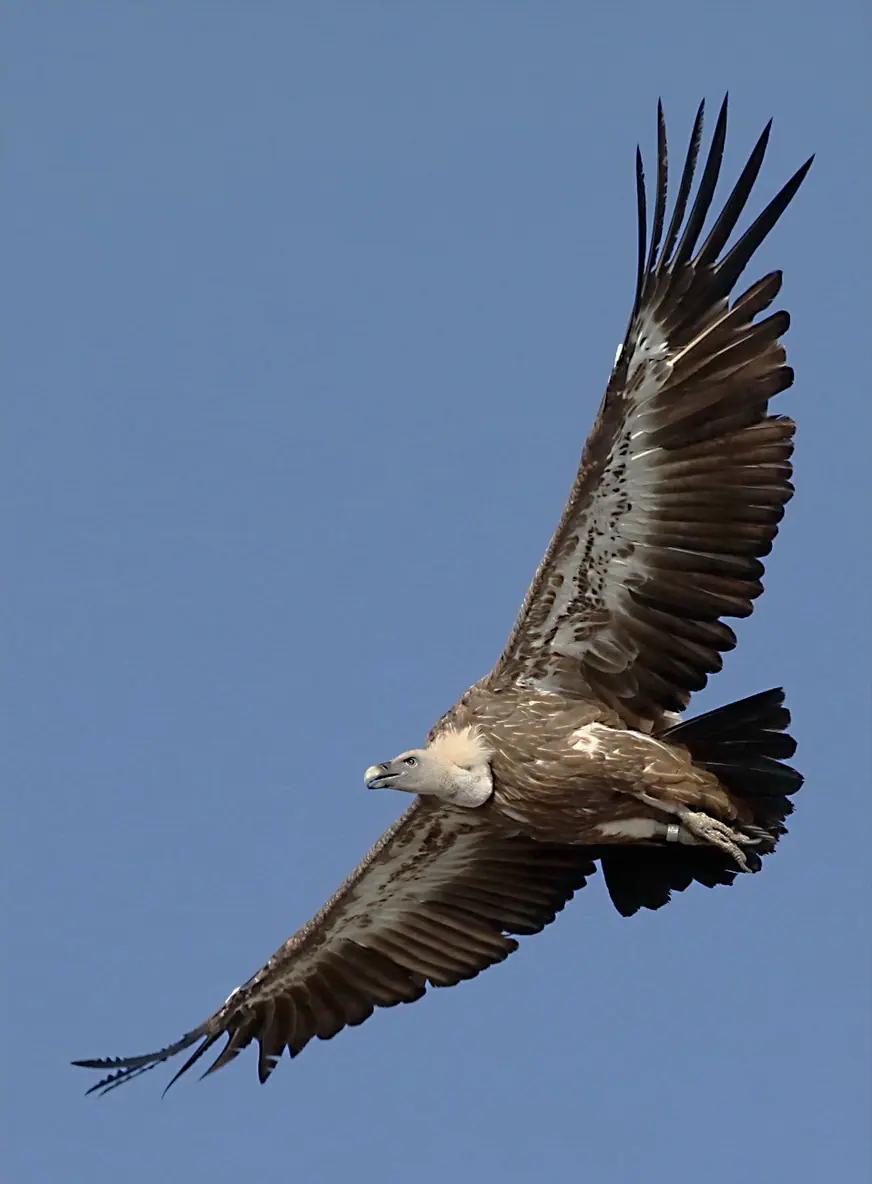
Croatia's coast and islands get the visitors, and they are genuinely good for wildlife. The waters off Lošinj and Cres hold a studied population of around 200 bottlenose dolphins, the northern Adriatic is a feeding ground for loggerhead turtles, and the cliffs of Cres are one of the last places in the Adriatic where griffon vultures still nest above the sea. On land every dry-stone wall has wall lizards and every village has house geckos on the lamps at night.
Inland, the limestone mountains between Zagreb and the sea are among the wildest in southern Europe. Plitvice Lakes is the famous park, but the bears, wolves and lynx that give Risnjak National Park its name (ris means lynx) live across Gorski kotar and Velebit. In the far east Kopački Rit, where the Drava meets the Danube, is a floodplain of herons, spoonbills and red deer, and the Lonjsko Polje village of Čigoč has more stork nests than houses.
Start with these animals
Why this location matters
Good location pages explain why the place is worth your time, not just which names belong on a destination checklist.
Croatia keeps a complete set of European large carnivores and a healthy Adriatic marine ecosystem in a country that is also a major beach destination, which makes it a model for how tourism and wildlife can coexist. The Lošinj dolphin research is one of the longest-running studies of its kind in the Mediterranean.
It is also home to the olm, a blind, pale cave salamander found only in the Dinaric karst, one of the strangest vertebrates in Europe and a reminder that Croatia's caves are as biologically important as its coast.
Where to look
Wildlife map of Croatia
This guide covers the region shown below. Zoom in to get your bearings before planning a trip.
Positions are geocoded from OpenStreetMap. Habitat access and opening times change — check locally before travelling. Smaller pins are public AnimalDex captures, placed to the nearest kilometre.
Field proof
Found in Croatia by AnimalDex users
Real captures logged in the AnimalDex app inside this area and shared publicly by their collectors, with the animal confirmed by the app's identification. Places are shown to the nearest region, never the exact spot.
- 2
- public captures
- 1
- species recorded
- 1
- collectors
- 2
- wild sightings
Recent captures from the field
Species people have actually logged here
Every name links to its species guide. The count is how many public captures of that animal sit inside this area.
Collectors choose to share these captures on Discover and can withdraw them at any time. Coordinates are rounded to about a kilometre and refreshed with each site build.
Animals to spot
These are intentionally practical species picks, balancing accessibility, excitement, and what travelers can realistically notice in the location.

DolphinB
A resident population of around 200 bottlenose dolphins lives in the waters around Lošinj and Cres, studied by the Blue World Institute in Veli Lošinj since the 1980s.
Spotting note: Likely on a Lošinj boat trip in summer; often seen from the ferries between the islands.
Read species guide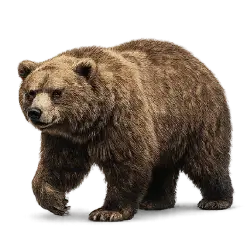
Brown BearA
Croatia's thousand or so bears live in Gorski kotar, Velebit and around Plitvice, and the Kuterevo bear refuge near Otočac keeps orphaned animals in forest enclosures.
Spotting note: Uncommon in the wild; dawn or dusk in Gorski kotar with a guide, guaranteed at Kuterevo.
Read species guide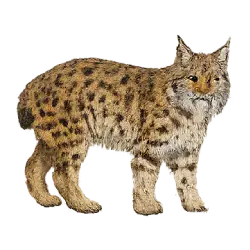
Eurasian LynxB
Lynx returned to Gorski kotar after Slovak animals were released just across the border in Slovenia in 1973, and the population was bolstered with Carpathian lynx from 2019; Risnjak National Park is named for them.
Spotting note: Very rare to see; camera traps and snow tracks are the usual evidence.
Read species guide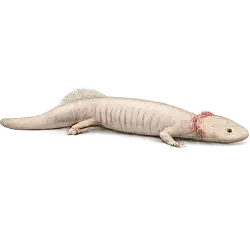
OlmD
The blind cave salamander lives in the flooded karst caves of Istria, Gorski kotar and Lika, and can be seen in captivity at Postojna across the Slovenian border or at show caves with viewing pools.
Spotting note: Wild sightings are for cavers only; visit a show cave with an olm display.
Read species guide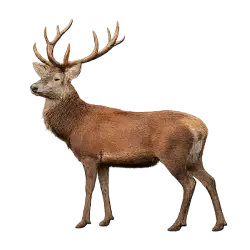
Red DeerB
Kopački Rit on the Danube has one of Europe's largest red deer herds, and the September rut in the flooded forest is watched from boats and the park's wooden walkways.
Spotting note: Common in Kopački Rit; the rut in mid to late September is the highlight.
Read species guide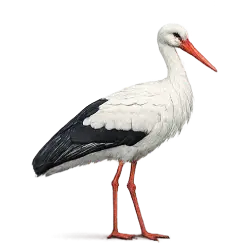
White StorkC
Čigoč in Lonjsko Polje Nature Park was Europe's first European Stork Village, with nests on nearly every wooden house roof, and Kopački Rit and the Sava floodplain hold hundreds more pairs.
Spotting note: Guaranteed in Čigoč from April to August.
Read species guide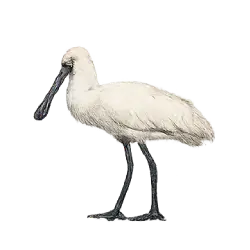
Eurasian SpoonbillC
Spoonbills breed in the mixed heron colonies of Kopački Rit and feed in the shallow floodplain lakes along the Danube in the Baranja region.
Spotting note: Regular on Kopački Rit boat tours from April to August.
Read species guide
Hermann's TortoiseE
Hermann's tortoises live in the maquis and olive groves of Dalmatia and the islands, crossing paths on Hvar, Brač and the Pelješac peninsula in spring.
Spotting note: Fairly common in spring and early summer on the southern coast.
Read species guide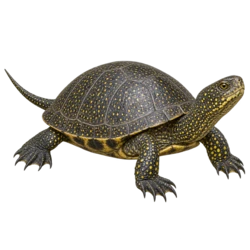
European Pond TerrapinE
Terrapins bask in rows along the channels of Kopački Rit and Lonjsko Polje, and in Lake Vrana near Biograd on the Dalmatian coast.
Spotting note: Common in slow freshwater from April to October.
Read species guide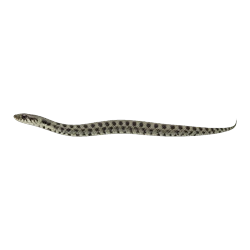
Dice SnakeE
Dice snakes hunt fish in the shallows of Krka National Park, the Cetina river and the Adriatic coast itself, where they swim in rock pools.
Spotting note: Common at rivers and coastal rock pools in summer; harmless.
Read species guide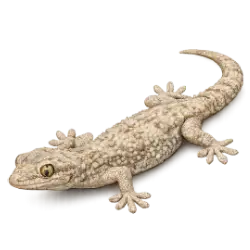
Mediterranean House GeckoE
House geckos patrol the walls of Split, Dubrovnik and every island village under the street lights, the classic Dalmatian night-time capture.
Spotting note: Guaranteed on lit walls from May to October.
Read species guide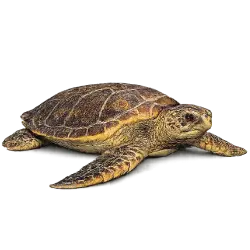
Loggerhead Sea TurtleC
The northern Adriatic is an important feeding and wintering ground for loggerheads, and the Marine Turtle Rescue Centre at Pula's aquarium treats injured animals.
Spotting note: Occasional from boats in summer; reliable at the Pula rescue centre.
Read species guide
Yellow-legged GullD
The big, pale gull of every Croatian harbour, ferry and island cliff, nesting on rooftops in Split and Rijeka and following every boat.
Spotting note: Abundant on the coast, all year.
Read species guide
Fire SalamanderE
Fire salamanders live in the wet beech forests around Plitvice and Risnjak and come out onto the boardwalks and trails after rain.
Spotting note: Common on damp spring and autumn days in the inland forests.
Read species guideBest for
Use this section to decide whether the location fits your travel style, skill level, and AnimalDex goals.
- Bottlenose dolphin boat trips from Veli Lošinj
- Griffon vultures on the sea cliffs of Cres and the Beli eco-centre
- Red deer, spoonbills and herons at Kopački Rit on the Danube
- Bears, lynx and salamanders in Gorski kotar and around Plitvice
Spotting tips
These tips are meant to make the page useful in the field, not just readable on the page.
- 01Dolphin trips from Veli Lošinj go out in the morning when the sea is calmest; choose a small boat and an operator that follows the Blue World code of conduct.
- 02On Cres walk the coastal paths north of Beli at midday when the thermals build; griffons leave the cliffs to patrol the sheep pastures.
- 03Kopački Rit is best from a boat booked at the Kopačevo visitor centre; the September deer rut and the spring heron colonies are the two peak times.
- 04Dalmatian walls and ruins are reptile habitat: check them in the morning sun for wall lizards and after dark with a torch for geckos.
Virtual Wildlife Guides
Wildlife guides to Croatia
AnimalDex builds virtual guides from explorers' own wild sightings: which animals they found, how rare they are, and when. A guide is advice from someone who has been there, not a tour. Buying one unlocks the author's notes for every animal, a chat with the author, and introductions to local people they met. Wildlife is never guaranteed.
Checking for virtual guides to Croatia...
How to choose a local wildlife guide in Croatia
- Ask what they usually find in the season you are visiting. A good guide gives an honest answer, not a promised sighting.
- Check how they treat animals: no baiting, calling in, handling, or close flash photography for a better shot.
- Confirm the meeting area, duration, group size, total price, and how you pay before the day, plus any permits or park fees the place requires.
Track the animals you find in Croatia
Build your collection while you travel through Croatia, from easy wins to the species worth planning around.
Related tier lists
These tier lists add broader context around the species that make this location interesting.
100 Smartest Animals Ranked
Animal intelligence ranking of 100 smartest animals, using AnimalDex intelligence profiles and a clear note that social skill, tool use, and solitary problem solving are different jobs.
Read tier listRarest Animals in the World
A structured ranking of the rarest animals in the world, blending scarcity, vulnerability, and conservation pressure to answer the overlap between rarest and most endangered wildlife.
Read tier listRelated locations
Keep exploring with nearby or similar destinations that support the same kind of AnimalDex discovery.
Animals in Hungary: What You Can Spot, Learn, and Collect
Hungary's wildlife guide: autumn crane roosts on the Hortobágy puszta, spoonbills and wels catfish at Lake Balaton, red deer in Gemenc and golden jackals in the south.
Read location guideAnimals in Greece: What You Can Spot, Learn, and Collect
What lives in Greece: loggerhead turtles on Zakynthos, cinereous vultures at Dadia, pelicans on Prespa, Pindos bears and the tortoises and geckos of every olive grove.
Read location guideAnimals in Bulgaria: What You Can Spot, Learn, and Collect
Bulgaria's wildlife: bears and chamois in Rila and Pirin, the Via Pontica stork migration, pelicans at Srebarna, red-breasted geese at Durankulak and dense jackals.
Read location guideLocation FAQ
Short direct answers to the questions travelers usually ask before choosing a wildlife destination or zoo day.
What wildlife is there in Croatia?
Croatia has brown bears, wolves, lynx and wildcats in its mountain forests, bottlenose dolphins and loggerhead turtles in the Adriatic, griffon vultures on Cres, and spoonbills, herons, storks and red deer in the Danube and Sava floodplains. Tortoises, lizards, geckos and dice snakes are common along the coast.
What animals can be found in Croatia?
Dolphins around Lošinj, vultures on Cres, bears around Plitvice and Risnjak, red deer and spoonbills at Kopački Rit, storks at Čigoč and the blind cave olm in the karst. Every Dalmatian island has Hermann's tortoises, wall lizards and house geckos.
Are there sharks or dangerous animals in Croatia?
Shark encounters in the Adriatic are extremely rare. The nose-horned viper lives in rocky inland areas and should be left alone, sea urchins cause most beach injuries, and bears avoid people. Croatia is a very safe wildlife destination.
Can you see animals at Plitvice Lakes?
The lakes themselves are busy and the big mammals keep away from the boardwalks, but you will see trout in the clear water, fire salamanders after rain, and plenty of birds. Bears and lynx are in the surrounding forest and need early mornings, quiet trails or a local guide.
Have AnimalDex users found animals in Croatia?
Yes. AnimalDex users have publicly logged 2 captures of 1 different species in Croatia, including indian peafowl. Each one was photographed in the app at the moment of the sighting.
How do I find a wildlife guide to Croatia?
Check the Wildlife Guides section on this page or browse Wildlife Guides on AnimalDex. Each one is a virtual guide built from an explorer's own wild sightings around Croatia: the animals they found, how rare they are, and when. It is advice from someone who has been there, not a tour. If you want someone with you on the day, compare local guides on wildlife knowledge, how they treat animals, and clear pricing before you go.