

Animals in Quebec: What You Can Spot, Learn, and Collect
Quebec wildlife guide: Tadoussac belugas and blue whales, Bonaventure Island's gannets, Cap Tourmente snow geese, Forillon moose and seals, Parc Omega's wolves and bison, and winter snowy owls.
Quick answer
Start with the direct answer, then use the sections below to see why the location matters and which animals are actually realistic to spot there.
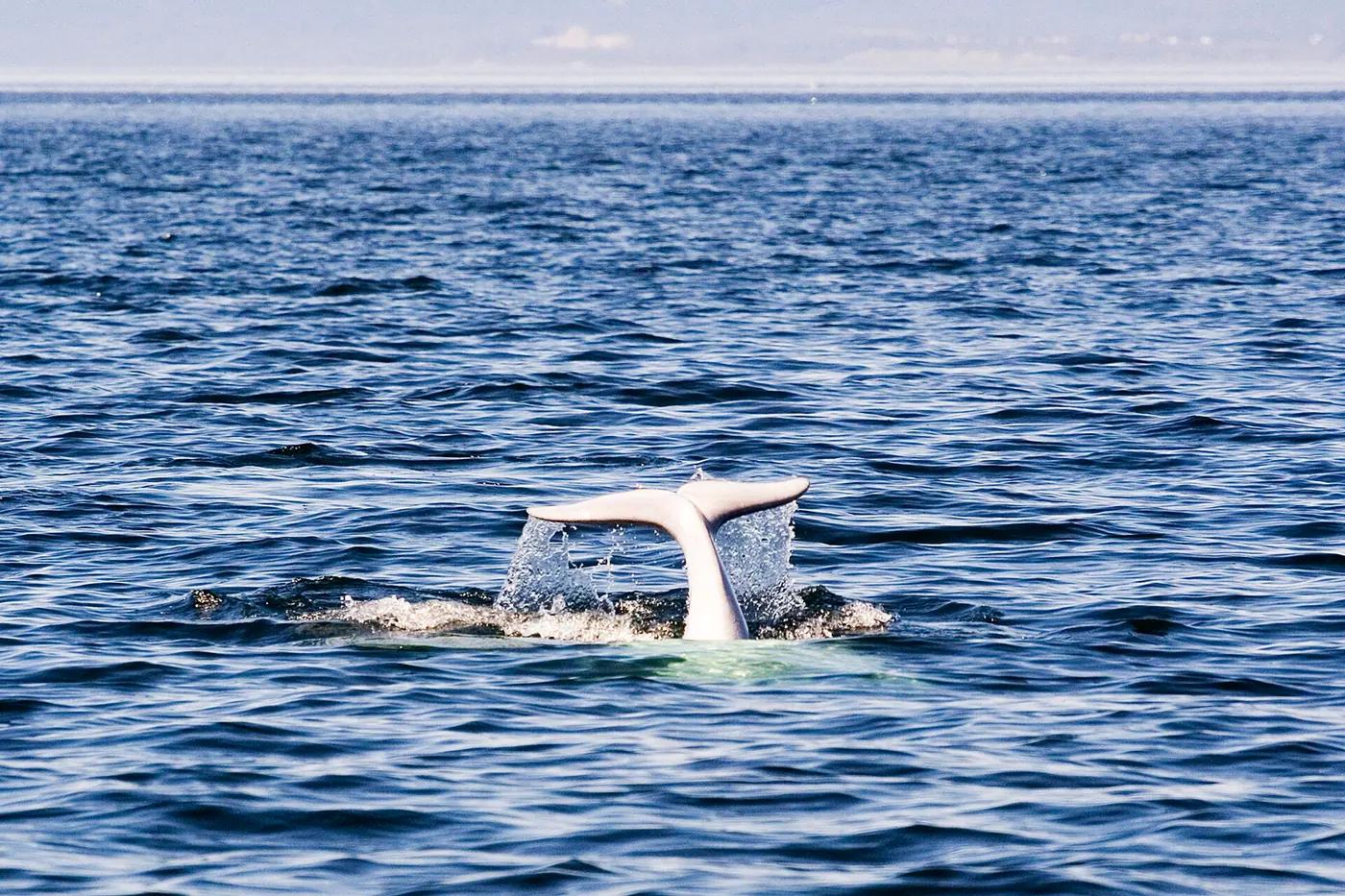
Quebec's St. Lawrence estuary is one of the great whale-watching rivers of the world: belugas live year-round off Tadoussac and the Saguenay fjord, and humpbacks, fin, minke and even blue whales feed there from June to October. Add 100,000 northern gannets on Bonaventure Island, hundreds of thousands of snow geese at Cap Tourmente in October, moose and seals in Forillon National Park, and snowy owls on the winter fields around Montreal.
Where the Saguenay fjord meets the St. Lawrence at Tadoussac, cold upwelling water feeds krill and capelin, and the whales follow. The Saguenay-St. Lawrence Marine Park is the only place in the world to see belugas this far south, and the shore at Cap de Bon-Désir lets you watch minkes from the rocks without a boat.
The Gaspé Peninsula continues the show: Bonaventure Island off Percé holds the most accessible gannet colony on earth, and Forillon National Park's cliffs have grey and harbour seals, moose, black bears and porcupines within a day's walk.
Why this location matters
Good location pages explain why the place is worth your time, not just which names belong on a destination checklist.
The St. Lawrence belugas are an isolated, endangered population of under 1,000, and Tadoussac is the only place where ordinary visitors can see belugas from a kayak or a shoreline. Strict approach rules exist precisely because the population is fragile.
Parc Omega near Montebello, between Montreal and Ottawa, lets a car drive through a 2,200-acre park of wolves, bison, elk, moose and bears, which makes it the most reliable way in eastern Canada to see every large mammal of the boreal forest in a single afternoon.
Where to look
Wildlife map of Quebec
This guide covers the region shown below. Zoom in to get your bearings before planning a trip.
Positions are geocoded from OpenStreetMap. Habitat access and opening times change — check locally before travelling. Smaller pins are public AnimalDex captures, placed to the nearest kilometre.
Field proof
Found in Quebec by AnimalDex users
Real captures logged in the AnimalDex app inside this area and shared publicly by their collectors, with the animal confirmed by the app's identification. Places are shown to the nearest region, never the exact spot.
- 13
- public captures
- 13
- species recorded
- 2
- collectors
- 4
- wild sightings
Recent captures from the field
Species people have actually logged here
Every name links to its species guide. The count is how many public captures of that animal sit inside this area.
Collectors choose to share these captures on Discover and can withdraw them at any time. Coordinates are rounded to about a kilometre and refreshed with each site build.
Animals to spot
These are intentionally practical species picks, balancing accessibility, excitement, and what travelers can realistically notice in the location.
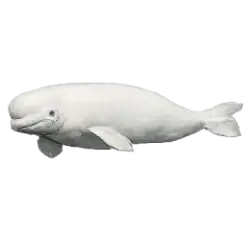
Beluga WhaleA
The endangered St. Lawrence population lives year-round around the Saguenay fjord mouth, surfacing in white pods off Baie-Sainte-Catherine and Pointe-Noire.
Spotting note: Likely from shore at Pointe-Noire or on a Tadoussac boat trip from June to October; boats must keep 400 metres.
Read species guide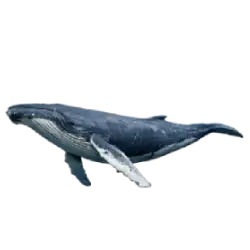
Humpback WhaleA
Feeds off Tadoussac and Les Escoumins from June to October, breaching and tail-slapping within sight of the zodiacs.
Spotting note: Near-guaranteed on a Tadoussac whale trip in July and August.
Read species guide
Fin WhaleA
The second-largest animal on earth surfaces in the deep channel off Les Bergeronnes and Les Escoumins all summer.
Spotting note: Likely on a longer boat trip from July to September.
Read species guide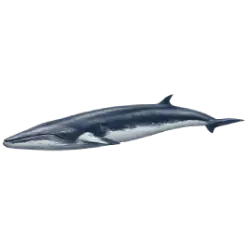
Common Minke WhaleA
Hunts capelin so close to the rocks at Cap de Bon-Désir that the Parks Canada interpretation site lets you watch from the shore.
Spotting note: Near-guaranteed from the Cap de Bon-Désir rocks in July and August.
Read species guide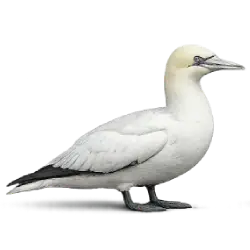
Northern GannetC
Bonaventure Island off Percé holds over 100,000 gannets on cliffs you can walk to within arm's reach, the largest accessible colony anywhere.
Spotting note: Guaranteed on Bonaventure Island from May to September; boats from Percé.
Read species guide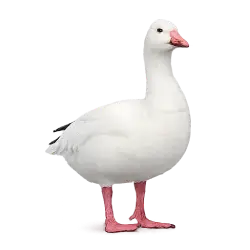
Snow GooseC
Cap Tourmente National Wildlife Area east of Quebec City stages hundreds of thousands of greater snow geese on the tidal marsh each October and again in April.
Spotting note: Guaranteed in the first three weeks of October at Cap Tourmente.
Read species guide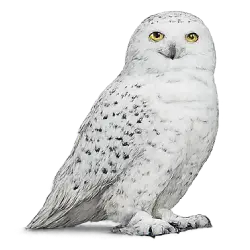
Snowy OwlB
Quebec's provincial bird winters on the open farmland of the Montérégie and the Montreal airport fields, sitting on snow-covered fence posts.
Spotting note: Regular from December to March south of Montreal; irruption years bring dozens.
Read species guide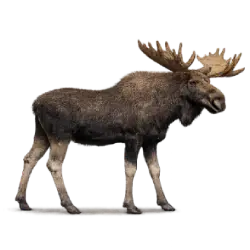
MooseA
Forillon National Park and Jacques-Cartier National Park have dense populations, with moose on the Forillon roadsides at dawn and in the Jacques-Cartier valley in autumn.
Spotting note: Likely at dawn in Forillon from June to October.
Read species guide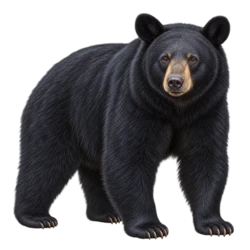
American Black BearB
Feeds on the roadside clover of Forillon and the Laurentians in June, and in the blueberry barrens of the Saguenay-Lac-Saint-Jean in August.
Spotting note: Possible in Forillon and the Laurentides reserve at dusk; common at Parc Omega.
Read species guide
Grey SealB
Hauls out below Forillon's Cap Bon-Ami cliffs and on the Iles de la Madeleine, where the grey seal colony is one of the largest in the gulf.
Spotting note: Common at Forillon from June to October; the Cap Bon-Ami lookout is reliable.
Read species guide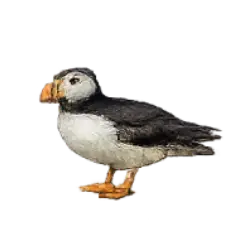
Atlantic PuffinC
Nests on the islands of the Mingan Archipelago on the north shore, reachable by boat from Longue-Pointe-de-Mingan and Havre-Saint-Pierre.
Spotting note: Reliable on Mingan boat trips from June to August.
Read species guide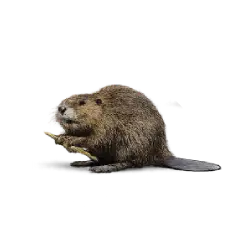
North American BeaverC
Canada's national animal dams the streams of every Quebec provincial park, from Mont-Tremblant to La Mauricie, and slaps its tail at canoeists at dusk.
Spotting note: Common at dusk in La Mauricie and Mont-Tremblant.
Read species guide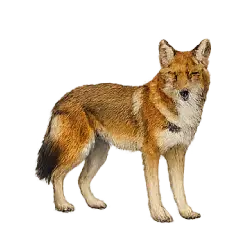
WolfC
Parc Omega's grey and Arctic wolf packs are seen from the car and the raised walkways, and wild wolves howl in the Laurentides and Papineau-Labelle reserves.
Spotting note: Guaranteed at Parc Omega; wild wolves are rarely seen.
Read species guide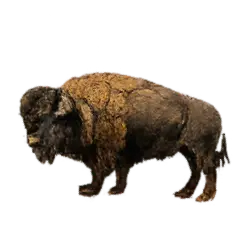
American BisonA
Parc Omega's bison herd grazes beside the drive-through road near Montebello, with elk, wild boar and deer coming to the car for carrots.
Spotting note: Guaranteed at Parc Omega on any day.
Read species guideBest for
Use this section to decide whether the location fits your travel style, skill level, and AnimalDex goals.
- Belugas and baleen whales at Tadoussac
- Gannets on Bonaventure Island and puffins at Mingan
- October snow geese at Cap Tourmente
- Parc Omega's drive-through boreal mammals
Spotting tips
These tips are meant to make the page useful in the field, not just readable on the page.
- 01Stay in Tadoussac or Les Bergeronnes and take a zodiac in the morning when the water is calmer; then visit Cap de Bon-Désir and Pointe-Noire in the afternoon for free shore-based minkes and belugas.
- 02For Bonaventure Island, take the first boat from Percé, walk the Chemin du Roy trail to the colony, and plan at least two hours with the gannets.
- 03Cap Tourmente's geese peak around the second week of October; arrive at dawn when flocks lift off the marsh, and bring a scope for the thousands feeding on the bulrushes.
- 04Parc Omega sells bags of carrots at the gate; keep windows half-closed for the wild boar and never feed the bears or wolves, which are in separate enclosures.
Virtual Wildlife Guides
Wildlife guides to Quebec
AnimalDex builds virtual guides from explorers' own wild sightings: which animals they found, how rare they are, and when. A guide is advice from someone who has been there, not a tour. Buying one unlocks the author's notes for every animal, a chat with the author, and introductions to local people they met. Wildlife is never guaranteed.
Checking for virtual guides to Quebec...
How to choose a local wildlife guide in Quebec
- Ask what they usually find in the season you are visiting. A good guide gives an honest answer, not a promised sighting.
- Check how they treat animals: no baiting, calling in, handling, or close flash photography for a better shot.
- Confirm the meeting area, duration, group size, total price, and how you pay before the day, plus any permits or park fees the place requires.
Track the animals you find in Quebec
Build your collection while you travel through Quebec, from easy wins to the species worth planning around.
Related tier lists
These tier lists add broader context around the species that make this location interesting.
Biggest Animals in the World
A structured ranking of the biggest animals in the world, using the AnimalDex size stat to compare body scale across sea, land, and air.
Read tier listRelated locations
Keep exploring with nearby or similar destinations that support the same kind of AnimalDex discovery.
Animals in Canada: What You Can Spot, Learn, and Collect
A practical Canada wildlife guide built around coasts, forests, migration, and the cold-region species that make the country feel spacious and serious.
Read location guideAnimals in Ontario: What You Can Spot, Learn, and Collect
Ontario wildlife guide: Algonquin moose and wolf howls, Toronto raccoons and the Toronto Zoo, Point Pelee's monarch and warbler migrations, loons on cottage lakes and polar bears on Hudson Bay.
Read location guideAnimals in Nova Scotia: What You Can Spot, Learn, and Collect
Nova Scotia wildlife guide: Bay of Fundy humpbacks, Sable Island grey seals, Cape Breton moose and eagles, Halifax harbour seals, puffins on the Bird Islands, and Shubenacadie Wildlife Park.
Read location guideLocation FAQ
Short direct answers to the questions travelers usually ask before choosing a wildlife destination or zoo day.
What wildlife is there in Quebec?
Belugas, humpbacks, fin, minke and blue whales in the St. Lawrence; gannets, puffins, seals and seabirds on the Gaspé and north shore; moose, black bears, beavers, lynx and wolves in the boreal forest; snow geese and snowy owls in migration and winter; and caribou and polar bears in the far north.
What animals can be found in Quebec's Tadoussac area?
Belugas year-round, minke whales from the rocks at Cap de Bon-Désir, humpbacks and fin whales on boat trips from June to October, occasional blue whales in late summer, plus harbour and grey seals, harbour porpoises and seabirds.
Can you see belugas in Quebec from shore?
Yes. The Pointe-Noire interpretation centre at Baie-Sainte-Catherine, the Tadoussac dunes and the Saguenay fjord lookouts regularly give shore sightings, especially on calm mornings from June to October.
Is Parc Omega worth visiting?
Yes if you want certainty. The drive-through route near Montebello passes bison, elk, moose, wild boar, deer and separate wolf and bear areas in about two hours, with walking trails and a wolf observatory. It sits halfway between Montreal and Ottawa.
Have AnimalDex users found animals in Quebec?
Yes. AnimalDex users have publicly logged 13 captures of 13 different species in Quebec, including fisher, giant honey bee, hoverfly, indian peafowl. Each one was photographed in the app at the moment of the sighting.
How do I find a wildlife guide to Quebec?
Check the Wildlife Guides section on this page or browse Wildlife Guides on AnimalDex. Each one is a virtual guide built from an explorer's own wild sightings around Quebec: the animals they found, how rare they are, and when. It is advice from someone who has been there, not a tour. If you want someone with you on the day, compare local guides on wildlife knowledge, how they treat animals, and clear pricing before you go.