

Animals in North Sulawesi: What You Can Spot, Learn, and Collect
North Sulawesi wildlife guide: Tangkoko's tarsiers and crested macaques, Bunaken's turtles and walls, Lembeh's mimic octopus, Sulawesi's endemic hornbills.
Quick answer
Start with the direct answer, then use the sections below to see why the location matters and which animals are actually realistic to spot there.
North Sulawesi packs Wallacea's strangest animals into a small, well-connected area. Tangkoko reserve near Bitung has spectral tarsiers and crested black macaques within a short walk, Bunaken National Park off Manado has turtles, dugongs and reef walls, and the Lembeh Strait is the world capital of muck diving for mimic octopus, flamboyant cuttlefish and pygmy seahorses. Inland forests hold knobbed hornbills, babirusa and anoa, and the Minahasa farmland is full of weaver ants and finch-billed mynas.
Sulawesi sits east of Wallace's line, and North Sulawesi is where that matters most to a traveller. Its monkeys, hornbills, pigs and buffalo are found nowhere else, and most of them can be seen from one base at Manado or Bitung with a rental car and a boat.
The province is also two of the best dive destinations in the world, Bunaken for walls and turtles and Lembeh for small, bizarre things on black sand. A week here splits naturally between forest mornings and reef afternoons.
Why this location matters
Good location pages explain why the place is worth your time, not just which names belong on a destination checklist.
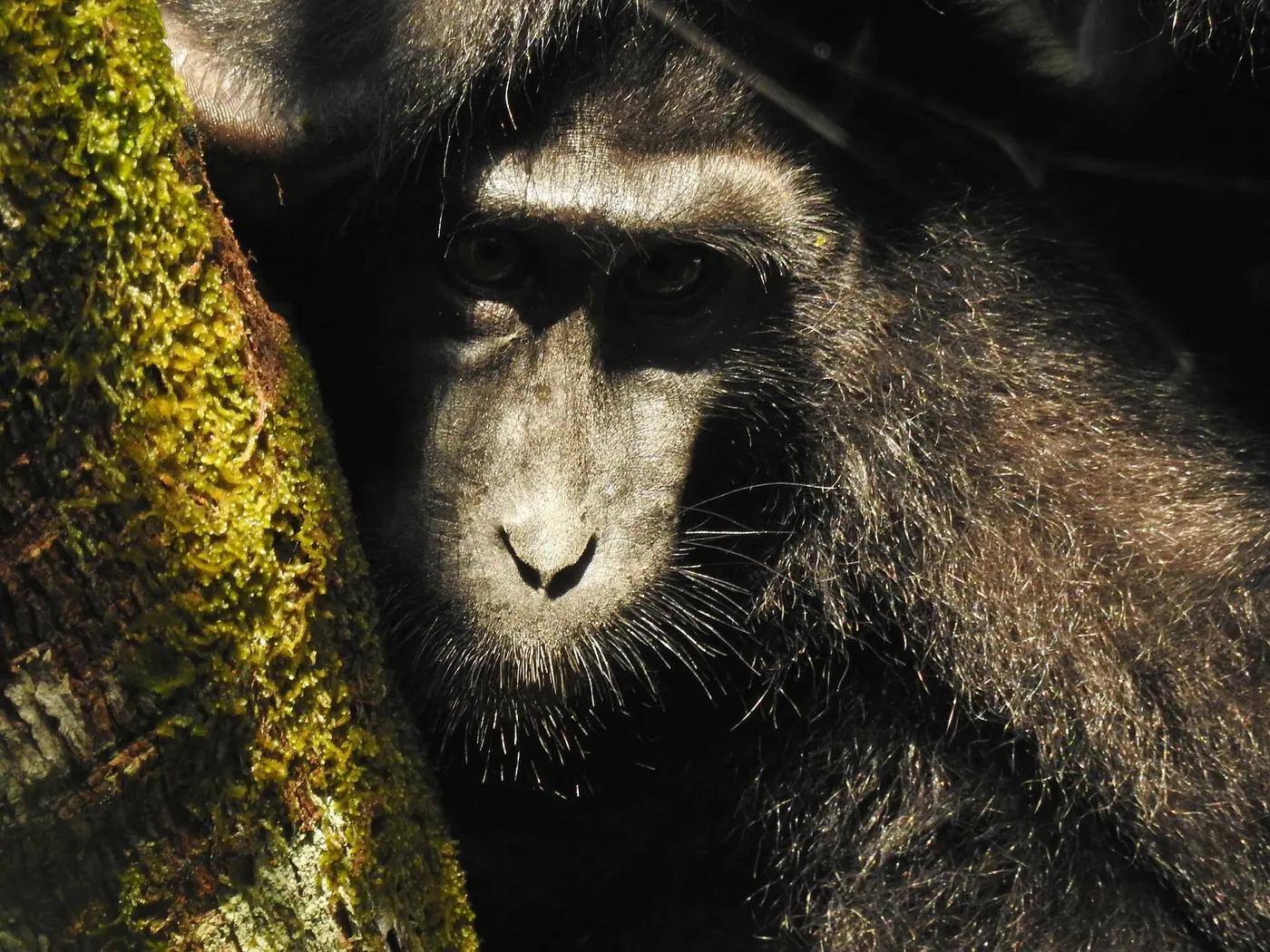
The Celebes crested macaque is critically endangered and Tangkoko holds its best-protected population; sitting with a troop at dawn is one of the great primate experiences in Asia.
Bunaken and Lembeh are an hour and a half apart by road yet show opposite marine worlds. Learning to look for a two-centimetre seahorse one day and a dugong the next changes how you see any reef afterwards.
Where to look
Wildlife map of North Sulawesi
This guide covers the region shown below. Zoom in to get your bearings before planning a trip.
Positions are geocoded from OpenStreetMap. Habitat access and opening times change — check locally before travelling. Smaller pins are public AnimalDex captures, placed to the nearest kilometre.
Field proof
Found in North Sulawesi by AnimalDex users
Real captures logged in the AnimalDex app inside this area and shared publicly by their collectors, with the animal confirmed by the app's identification. Places are shown to the nearest region, never the exact spot.
- 3
- public captures
- 3
- species recorded
- 1
- collectors
- 3
- wild sightings
Recent captures from the field
Species people have actually logged here
Every name links to its species guide. The count is how many public captures of that animal sit inside this area.
Collectors choose to share these captures on Discover and can withdraw them at any time. Coordinates are rounded to about a kilometre and refreshed with each site build.
Animals to spot
These are intentionally practical species picks, balancing accessibility, excitement, and what travelers can realistically notice in the location.
Spectral TarsierD
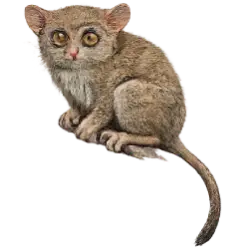
Family groups emerge from strangler-fig roosts in Tangkoko at dusk, calling in high duets before they hunt.
Spotting note: Near-guaranteed at known roost trees with a ranger at dusk.
Read species guide
Celebes Crested MacaqueB
Tangkoko's black, crested, punk-haired macaques forage along the beach forest in troops of fifty or more.
Spotting note: Very likely on a morning walk in Tangkoko.
Read species guide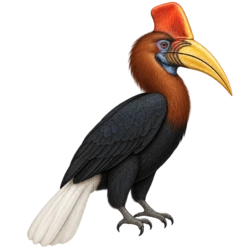
Knobbed HornbillC
Sulawesi's big red-knobbed hornbill crashes into fruiting figs at Tangkoko and over the Tomohon highlands.
Spotting note: Regular in Tangkoko; heard before seen.
Read species guide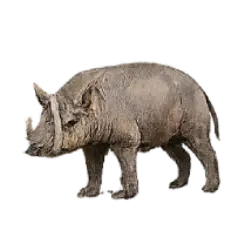
BabirusaB
The curly-tusked 'deer-pig' of Sulawesi survives in Bogani Nani Wartabone National Park and the Nantu forest to the west.
Spotting note: Rare; salt-lick hides at Nantu are the realistic chance.
Read species guide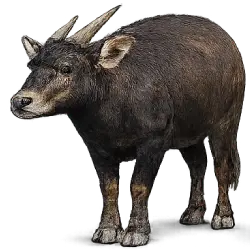
Lowland AnoaB
Sulawesi's dwarf buffalo still lives in the forests of Bogani Nani Wartabone and the Minahasa highlands.
Spotting note: Very rare; tracks and camera traps rather than sightings.
Read species guide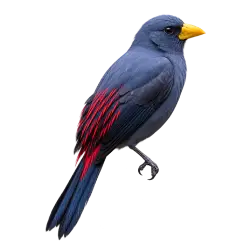
Finch-billed MynaD
Flocks of this Sulawesi-endemic starling nest in dead trees across the Minahasa farmland and Tangkoko's edge.
Spotting note: Common in open country.
Read species guide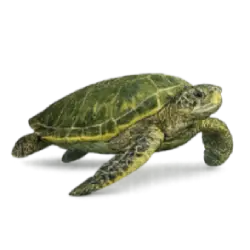
Green Sea TurtleC
Grazes the shallows and rests on the ledges of Bunaken's reef walls, often several on a single dive.
Spotting note: Near-guaranteed at Bunaken.
Read species guide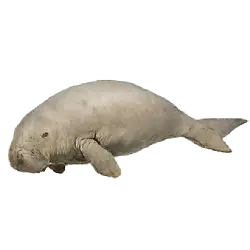
DugongC
A few dugongs feed on the seagrass meadows around Bunaken and the Lembeh Strait.
Spotting note: Rare and lucky; most often seen from the boat on calm mornings.
Read species guide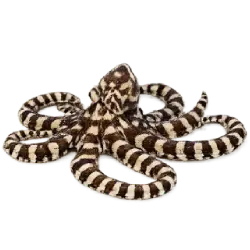
Mimic OctopusC
Lembeh's black-sand slopes are where this shape-shifting octopus was first filmed and remain the best place to find it.
Spotting note: Regular with a Lembeh dive guide; impossible without one.
Read species guide
Flamboyant CuttlefishC
Walks across Lembeh's sand on its arms flashing purple and yellow, a signature find of the strait.
Spotting note: Regular on Lembeh muck dives.
Read species guide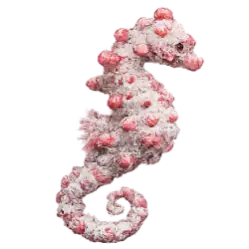
Pygmy SeahorseE
Lives on gorgonian fans along the Bunaken walls and in Lembeh, where guides know the individual fans.
Spotting note: Reliable with a guide who knows the fan.
Read species guide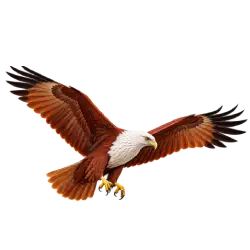
Brahminy KiteD
Patrols the Manado waterfront, the Bitung harbour and every fishing village in between.
Spotting note: Common on the coast.
Read species guide
Asian Weaver AntE
Leaf nests in the clove and nutmeg trees of Minahasa; a logged user capture in the province.
Spotting note: Abundant.
Read species guide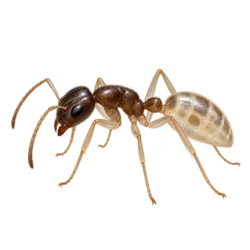
Ghost AntE
The tiny pale-legged ant of Manado kitchens and guesthouses; a confirmed capture here.
Spotting note: Common indoors.
Read species guideBest for
Use this section to decide whether the location fits your travel style, skill level, and AnimalDex goals.
- Tarsiers and crested macaques in one reserve
- Wall diving and turtles at Bunaken
- World-class macro and muck diving in Lembeh
- Endemic hornbills and mynas in the Minahasa highlands
Spotting tips
These tips are meant to make the page useful in the field, not just readable on the page.
- 01Stay the night at Batu Putih so you can do Tangkoko's dawn macaque walk and the dusk tarsier roost on the same day.
- 02Bunaken's walls are best at the Lekuan sites on an incoming tide; Lembeh is a guide-led hunt, so pick a resort with experienced spotters.
- 03The Tomohon market sells wild meat including bats and pythons; it is a difficult but honest picture of the pressure on Sulawesi's wildlife.
- 04Dry season (May to October) gives clearer water and easier forest trails; Lembeh's critters are good year-round.
Virtual Wildlife Guides
Wildlife guides to North Sulawesi
AnimalDex builds virtual guides from explorers' own wild sightings: which animals they found, how rare they are, and when. A guide is advice from someone who has been there, not a tour. Buying one unlocks the author's notes for every animal, a chat with the author, and introductions to local people they met. Wildlife is never guaranteed.
Checking for virtual guides to North Sulawesi...
How to choose a local wildlife guide in North Sulawesi
- Ask what they usually find in the season you are visiting. A good guide gives an honest answer, not a promised sighting.
- Check how they treat animals: no baiting, calling in, handling, or close flash photography for a better shot.
- Confirm the meeting area, duration, group size, total price, and how you pay before the day, plus any permits or park fees the place requires.
Track the animals you find in North Sulawesi
Build your collection while you travel through North Sulawesi, from easy wins to the species worth planning around.
Related tier lists
These tier lists add broader context around the species that make this location interesting.
Animals with the Best Camouflage
A structured ranking of animals with the best camouflage, focusing on concealment quality, background matching, adaptive color change, and how often camouflage changes outcomes.
Read tier list100 Smartest Animals Ranked
Animal intelligence ranking of 100 smartest animals, using AnimalDex intelligence profiles and a clear note that social skill, tool use, and solitary problem solving are different jobs.
Read tier listRelated locations
Keep exploring with nearby or similar destinations that support the same kind of AnimalDex discovery.
Animals in Tangkoko Nature Reserve: What You Can Spot, Learn, and Collect
Tangkoko guide: spectral tarsiers at dusk, Celebes crested macaques in the beach forest, knobbed hornbills in the figs, flying dragons and pythons.
Read location guideAnimals in Bunaken National Park: What You Can Spot, Learn, and Collect
Bunaken marine park guide: green and hawksbill turtles on the walls, pygmy seahorses on the fans, reef sharks, Napoleon wrasse, bumphead parrotfish, dugong.
Read location guideAnimals in Sulawesi: What You Can Spot, Learn, and Collect
Sulawesi wildlife guide: tarsiers and crested macaques at Tangkoko, babirusa and anoa at Nantu, knobbed hornbills, and the reefs of Bunaken and Lembeh.
Read location guideLocation FAQ
Short direct answers to the questions travelers usually ask before choosing a wildlife destination or zoo day.
What wildlife is there in North Sulawesi?
Spectral tarsiers, Celebes crested macaques and knobbed hornbills at Tangkoko; babirusa and anoa in the western forests; green turtles, dugongs and pygmy seahorses at Bunaken; and mimic octopus and flamboyant cuttlefish in the Lembeh Strait.
What animals can be found in North Sulawesi?
On land, the endemic macaques, tarsiers, hornbills and finch-billed mynas are the realistic targets. Underwater, turtles are near-certain at Bunaken and the Lembeh muck sites produce octopus, cuttlefish, frogfish and seahorses on almost every dive.
Can you see tarsiers without diving or long treks?
Yes. Tangkoko is a 90-minute drive from Manado and the tarsier roost trees are a 20-minute flat walk from the entrance. Go with a ranger at dusk.
Bunaken or Lembeh for a first-time diver?
Bunaken. Its walls are clear, warm and full of turtles and big fish, which suits new divers. Lembeh rewards patience and a trained eye and is better once you know what you are looking for.
Have AnimalDex users found animals in North Sulawesi?
Yes. AnimalDex users have publicly logged 3 captures of 3 different species in North Sulawesi, including asian weaver ant, cockroach, ghost ant. Each one was photographed in the app at the moment of the sighting.
How do I find a wildlife guide to North Sulawesi?
Check the Wildlife Guides section on this page or browse Wildlife Guides on AnimalDex. Each one is a virtual guide built from an explorer's own wild sightings around North Sulawesi: the animals they found, how rare they are, and when. It is advice from someone who has been there, not a tour. If you want someone with you on the day, compare local guides on wildlife knowledge, how they treat animals, and clear pricing before you go.